Artwork
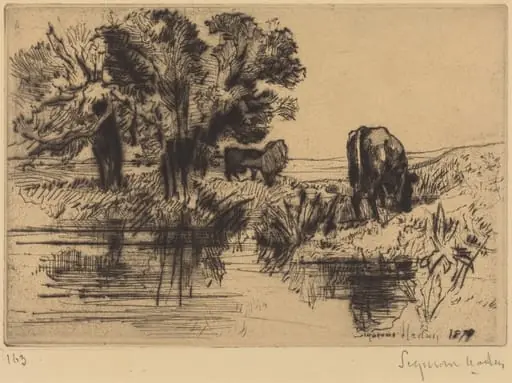
The Three Cows
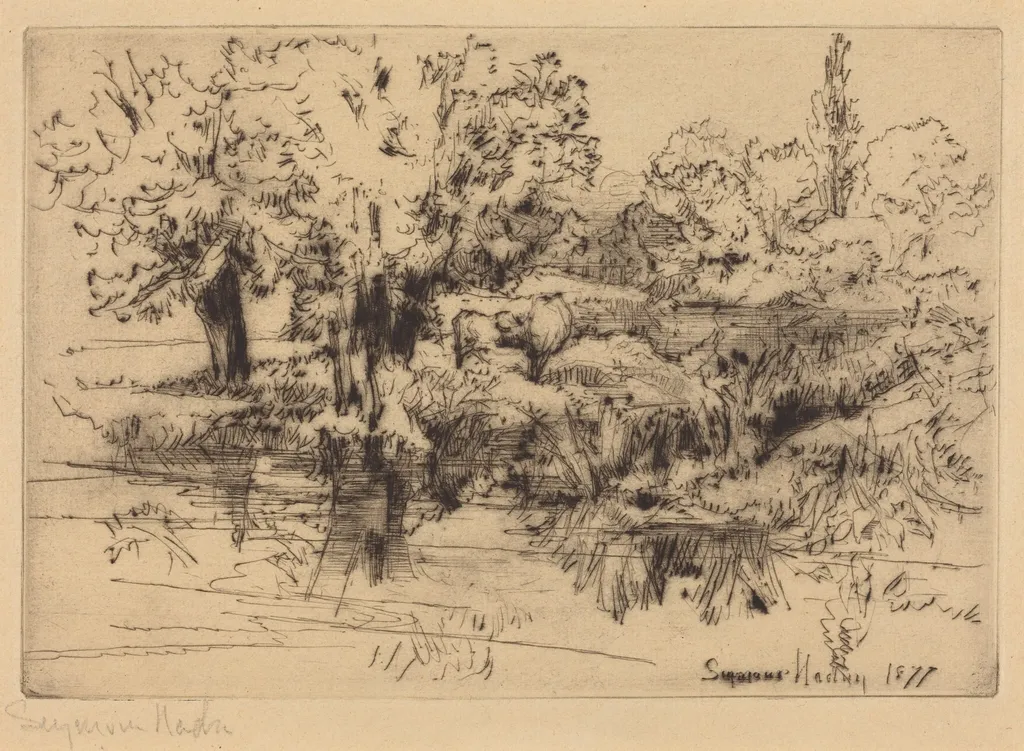
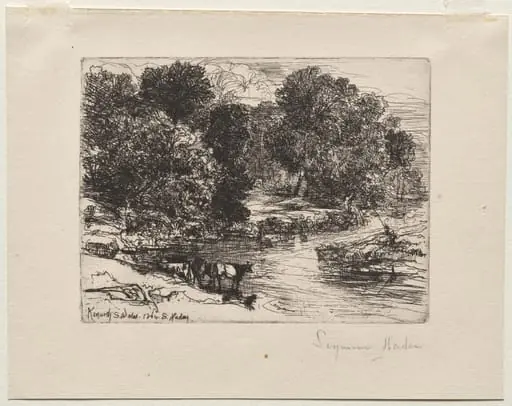
The Three Cows is an ink print by the Impressionist artist Francis Seymour Haden. It dates from 1877 and is held in the collection of the National Gallery of Art.
About this work
Overview
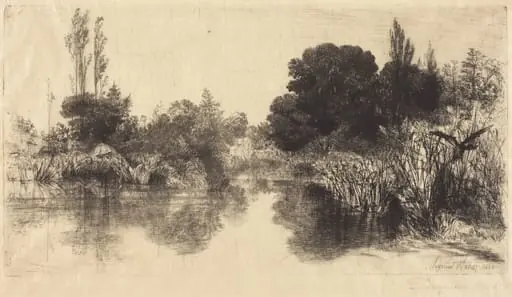
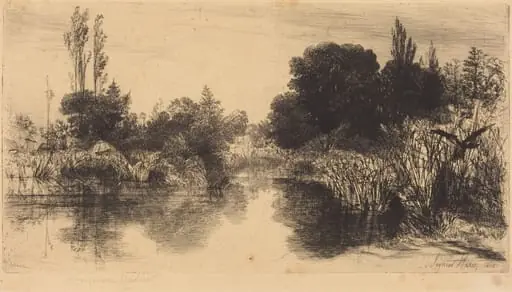
The composition depicts three bovines standing amid tall, uneven grass, with sparse, gestural trees receding into the background.
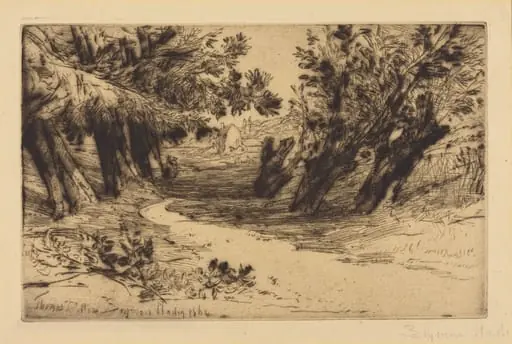
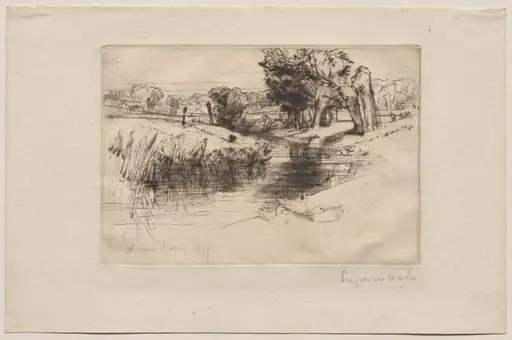
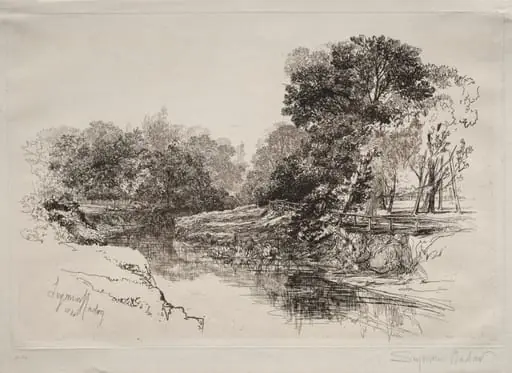
Created in 1877, The Three Cows is a drypoint print by Francis Seymour Haden, executed in black ink on laid paper. The composition depicts three bovines standing amid tall, uneven grass, with sparse, gestural trees receding into the background. The image relies entirely on line and tone, with no color or shading beyond the inked marks. The paper’s natural texture and the plate’s scratched surface contribute to a raw, immediate quality.
Subject & Meaning
The subject is a quiet rural scene: three cows in a field, unposed and unidealized. There is no narrative or symbolic intent evident; the focus is on observation rather than storytelling. The animals appear absorbed in their environment, their forms rendered with minimal detail. The emptiness surrounding them suggests solitude and the quiet rhythm of pastoral life, grounded in the artist’s direct engagement with the landscape.
Technique & Style
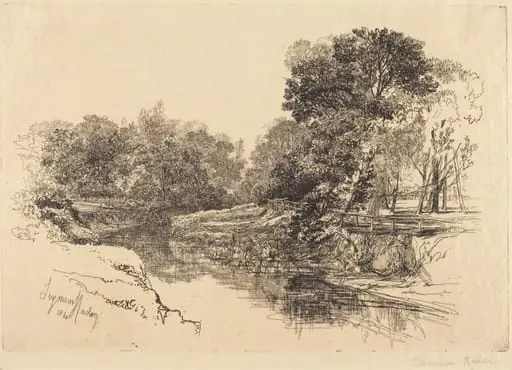
Haden employed drypoint, scratching lines directly into a metal plate with a hardened needle. This technique produces burrs along the edges of lines, resulting in soft, velvety blacks when printed. The marks are uneven and urgent—grass is suggested by dense, jagged strokes; trees by flickering, interrupted lines. The absence of wash or tone emphasizes the medium’s inherent immediacy, favoring spontaneity over refinement.
History & Provenance
The print was made in 1877 during Haden’s active period as a printmaker, following his earlier career as a surgeon. He was deeply involved in the etching revival in Britain and often worked en plein air, sketching directly from nature. The Three Cows was likely part of a series of rural studies, though its early ownership history is undocumented. It entered institutional collections in the 20th century through donations or acquisitions by print-focused museums.
Context
Haden worked alongside contemporaries like James McNeill Whistler, promoting printmaking as a fine art form distinct from reproductive engraving. The Three Cows reflects a broader 19th-century interest in naturalism and direct observation, influenced by French Barbizon painters and Japanese woodcuts. Unlike idealized pastoral imagery of the time, Haden’s work embraces imperfection, capturing the tactile reality of the countryside without embellishment.
Legacy
The print exemplifies Haden’s role in elevating drypoint as a medium for personal expression. Its unpolished aesthetic influenced later generations of printmakers who valued process over polish. Though not widely exhibited, it remains a key example of British etching revival work, valued for its honesty and technical clarity. Institutions preserve it as a testament to the quiet power of direct observation in printmaking.
Artist & collection