Artwork
The Shah of Persia Nāser ad-Dīn Shāh
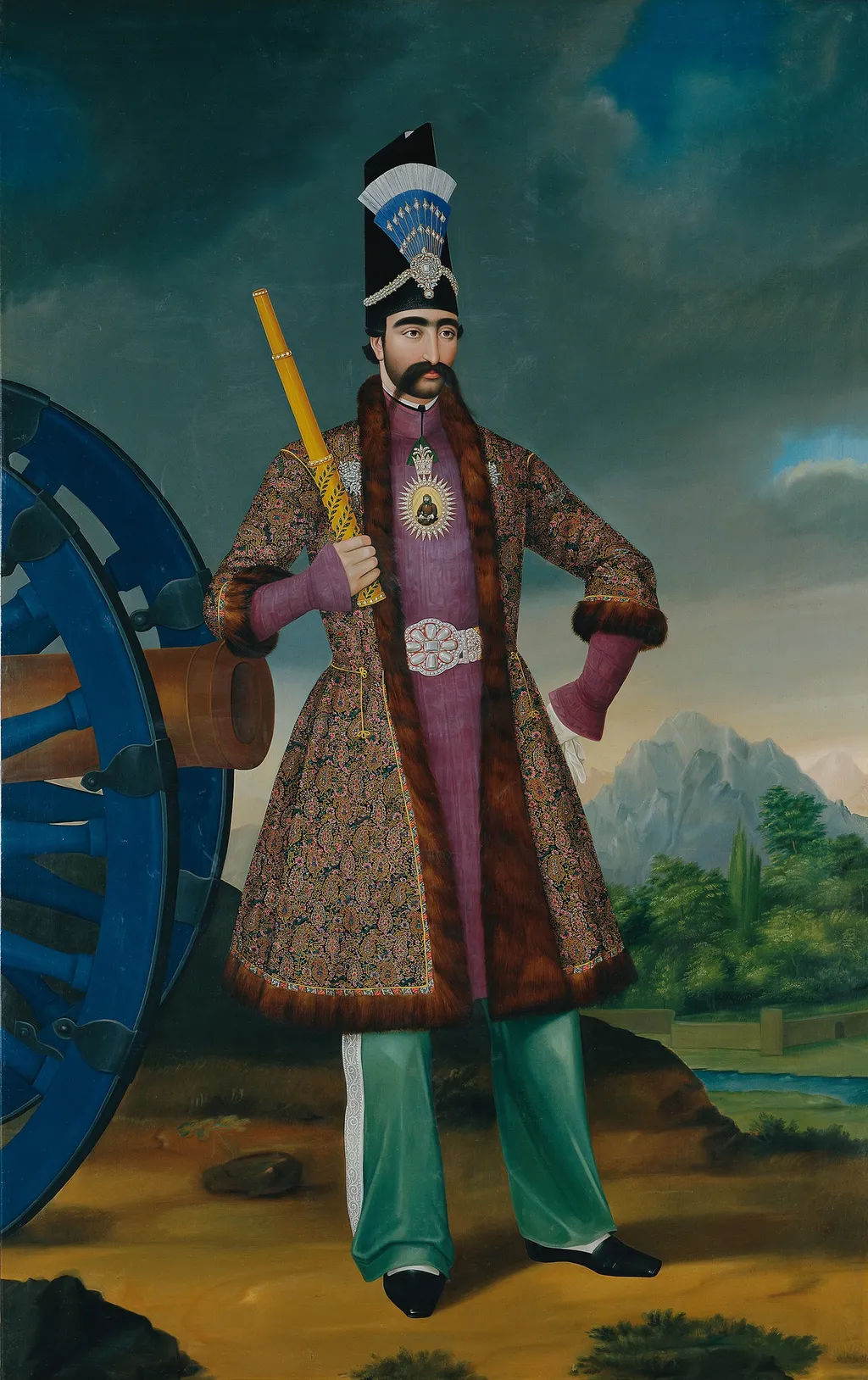
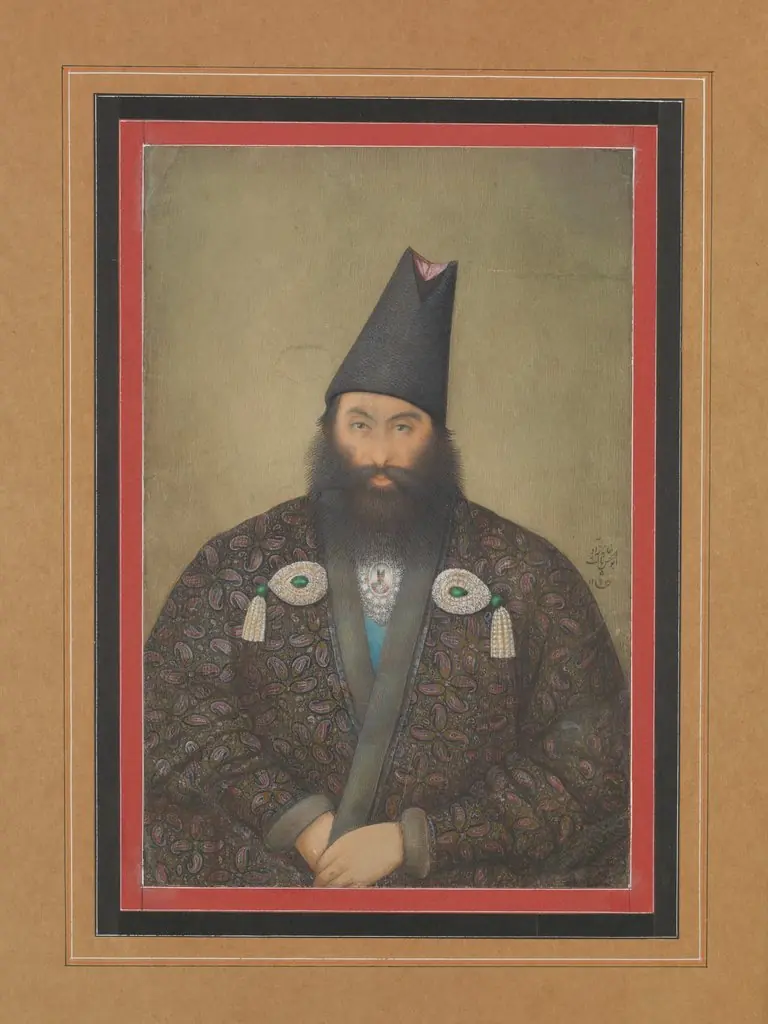
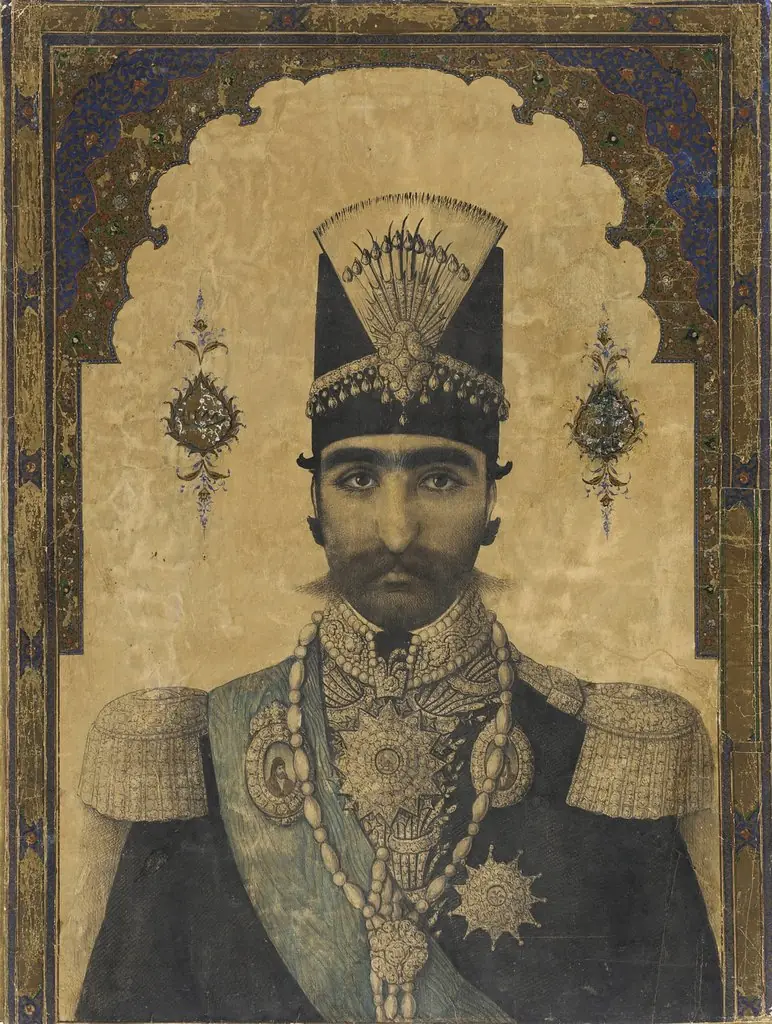
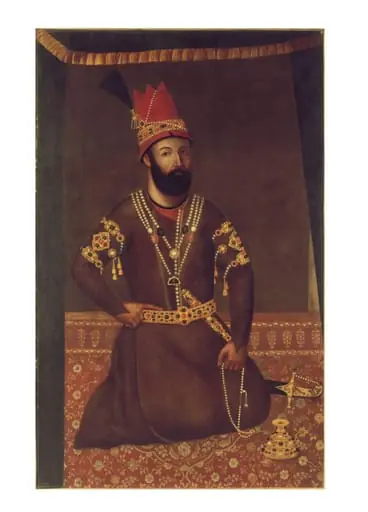
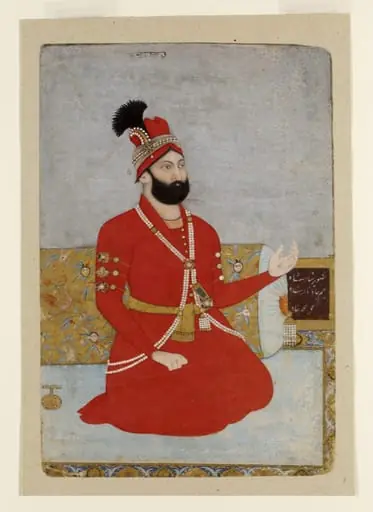
The Shah of Persia Nāser ad-Dīn Shāh is an oil painting by Hakob Mkrtum Hovnatanyan. It dates from 1865 and is held in the collection of the Kunsthistorisches Museum.
About this work
Overview
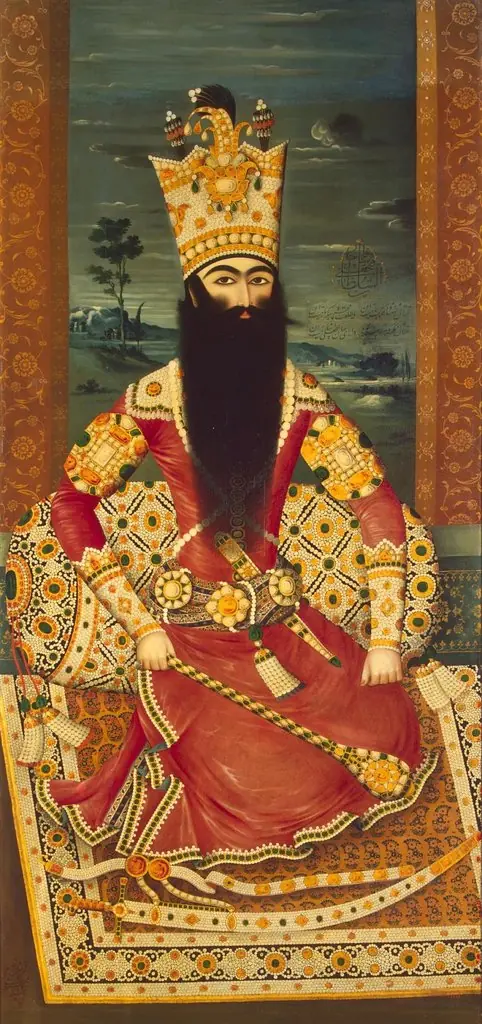
In 1865 Hakob Hovnatanyan, a prominent figure in the development of modern Armenian painting, produced an oil portrait titled *The Shah of Persia Nāser ad‑Dīn Shāh*. The canvas, now part of the Kunsthistorisches Museum’s holdings, presents the Persian monarch in elaborate dress against a stylised landscape.
Subject & Meaning
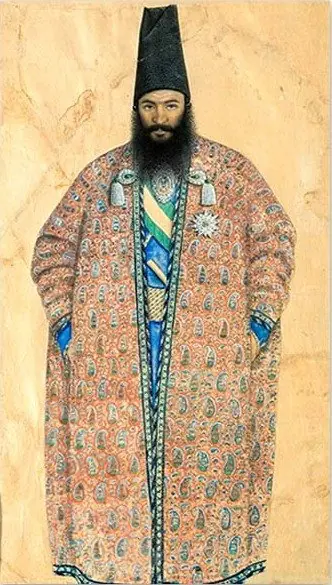
The sitter is shown in richly ornamented garments—a patterned coat trimmed with fur, a purple shirt, green trousers, and a tall black hat crowned with a blue‑white plume—signalling his royal status. He holds a yellow staff, a conventional attribute of sovereignty, while the backdrop of mountains and clouds reinforces the notion of power and authority.
Technique & Style
Hovnatanyan combines the detailed precision of his family’s miniature tradition with the broader brushwork of nineteenth‑century portraiture. Executed in oil, the work balances fine decorative elements—such as the intricate coat pattern—with a more expansive treatment of the surrounding landscape, reflecting his dual training.
History & Provenance
Created during a period of heightened cultural exchange between Persia and the Ottoman‑Armenian world, the painting entered the Kunsthistorisches Museum’s collection at an unspecified date, where it remains accessible to scholars and the public.
Context
The portrait emerges from a time when Armenian artists were increasingly engaging with European media and courtly commissions. Hovnatanyan’s depiction of Nāser ad‑Dīn Shāh illustrates the artist’s role in bridging local artistic heritage with the visual language of imperial portraiture.
Own this work as a print
Artist & collection
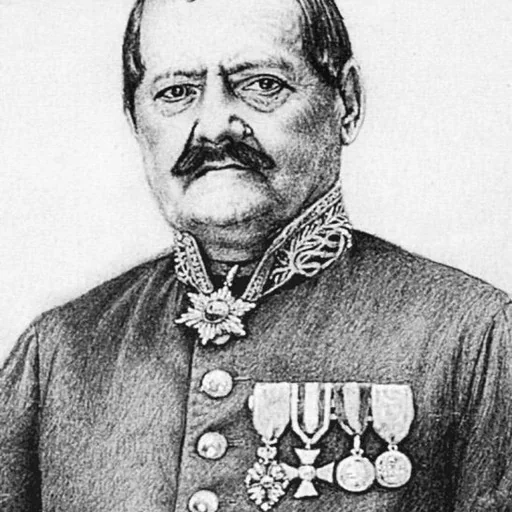
Artist
Hakob Hovnatanyan (Armenian: Հակոբ Մկրտումի Հովնաթանյան; 1806–1881) was an Armenian artist.