Artwork
Star Embellished with Flowers
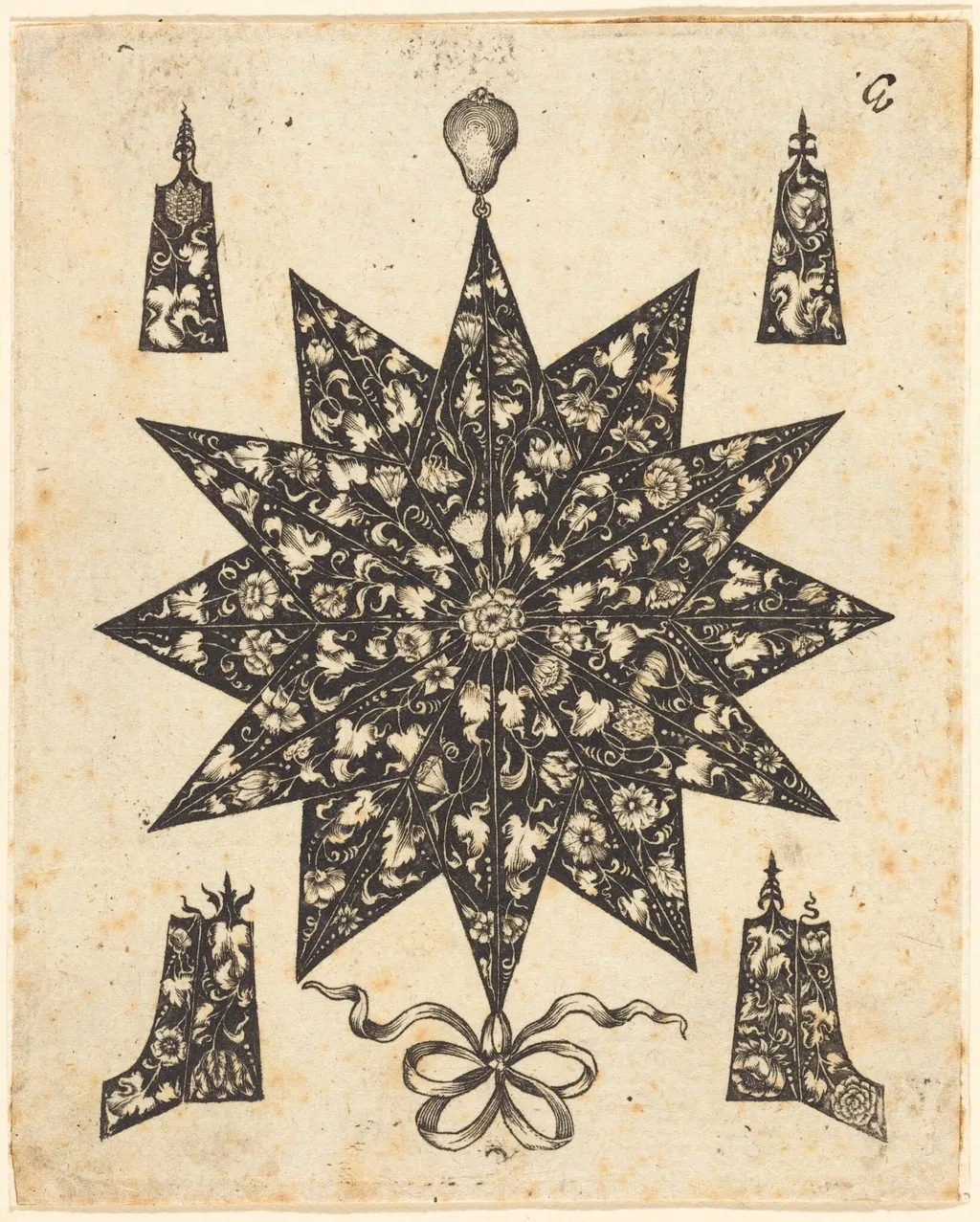
Star Embellished with Flowers is an ink print by the Baroque artist Johannes Hanias. It dates from 1650 and is held in the collection of the National Gallery of Art.
About this work
Overview
The composition centers on an eight-pointed star adorned with floral motifs, each arm terminating in delicate petal-like forms.
Star Embellished with Flowers is a black-and-white engraving on laid paper, dated to around 1650, created by Johannes Hanias. The composition centers on an eight-pointed star adorned with floral motifs, each arm terminating in delicate petal-like forms. A single bloom occupies the center, while four smaller floral elements surround the star. The paper’s laid texture subtly enhances the print’s tactile quality, reinforcing its handcrafted origin.
Subject & Meaning
The image presents a geometric star as a vessel for botanical ornamentation, blending celestial and natural forms. The repetition of floral patterns suggests an interest in harmony between order and organic growth. While no explicit symbolic narrative is documented, the fusion of star and bloom may reflect contemporary allegorical traditions linking divine structure with earthly beauty, common in mid-17th-century decorative arts.
Technique & Style
Hanias employed fine cross-hatching to model light and shadow, giving the star and flowers a subtle three-dimensionality. The lines are precise yet fluid, demonstrating mastery of the burin tool on copper. The intricate detailing and rhythmic repetition of floral elements align with Baroque sensibilities, emphasizing ornamentation and visual complexity over minimalism. The use of laid paper further grounds the work in the material practices of its time.
History & Provenance
The print originates from the mid-17th century, a period when engraved decorative designs circulated widely among artisans and collectors. Johannes Hanias, though not widely documented, appears to have worked within regional printmaking circles in Central Europe. No known early ownership records exist, but the work’s survival suggests it was valued as a study piece or decorative sample, possibly used in textile or metalwork design.
Context
In the 1650s, engraved floral and geometric patterns were frequently reproduced in pattern books and used as templates for embroidery, metalwork, and architecture. Hanias’s work fits within this tradition of applied design, where artistic precision served functional purposes. The Baroque era’s fascination with ornamentation and natural forms found expression in such prints, bridging fine art and craft.
Legacy
Though Johannes Hanias left few surviving works, this engraving exemplifies the quiet influence of minor printmakers in shaping decorative aesthetics of the period. Its detailed execution reflects a broader culture of visual reference, where such designs informed the ornamentation of everyday objects. The piece endures as a quiet testament to the craftsmanship behind ornamental arts in early modern Europe.
Artist & collection


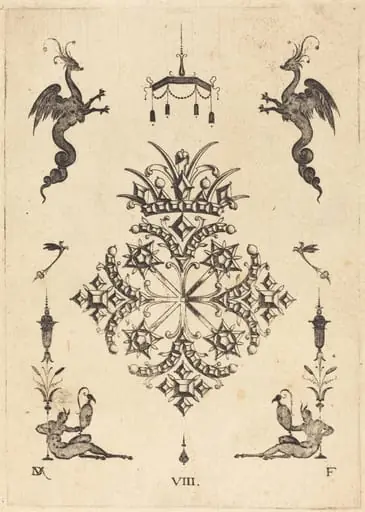 Brooch with Fantasy Animals at Top and Fauns with Vases at Bottom
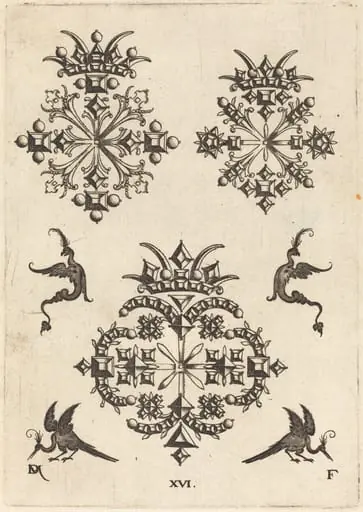 Three Brooches with Fantasy Birds at Left, Right, and Bottom
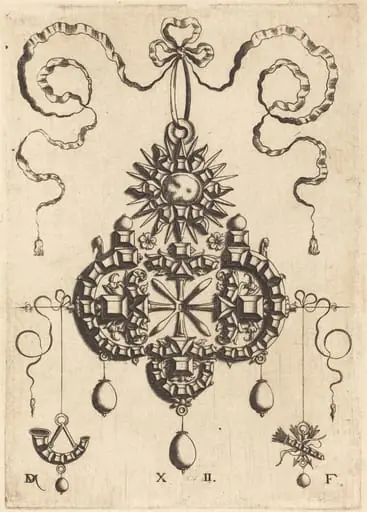 Large Pendant
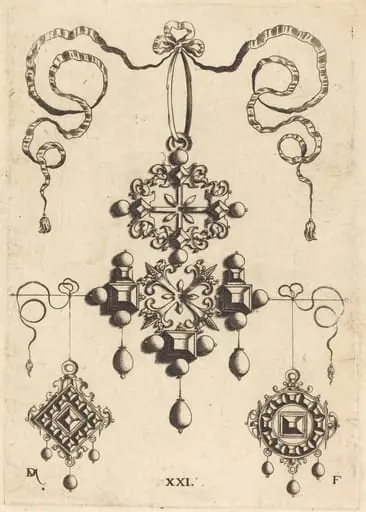 Pendant with Wheel at Centre, Surrounded by Four Table-Stones
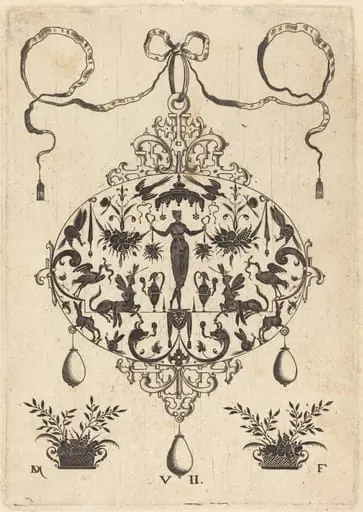 Large Pendant, Flora Standing, Holding a Fruit Garland
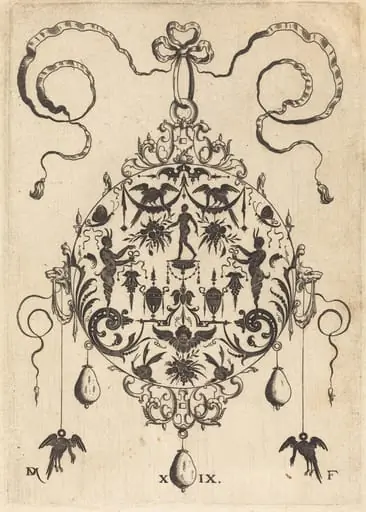 Large Pendant, In Circular Form, Nude Man Flanked by Two Herms
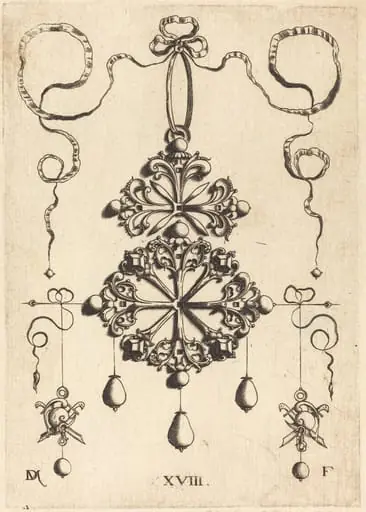 Pendant with Two Double Crosses
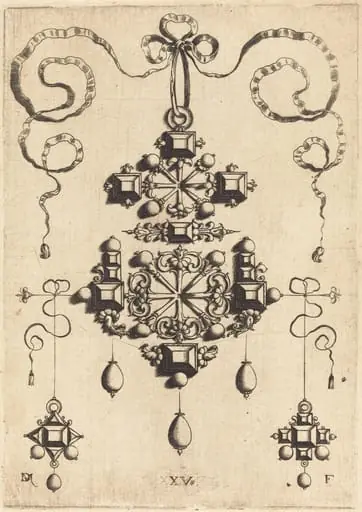 Pendant with Two Double Crosses, Surrounded by Four Diamond-Shaped Stones, Five Table-Stones, and Thirteen Pearls