Artwork
Desiderius Erasmus
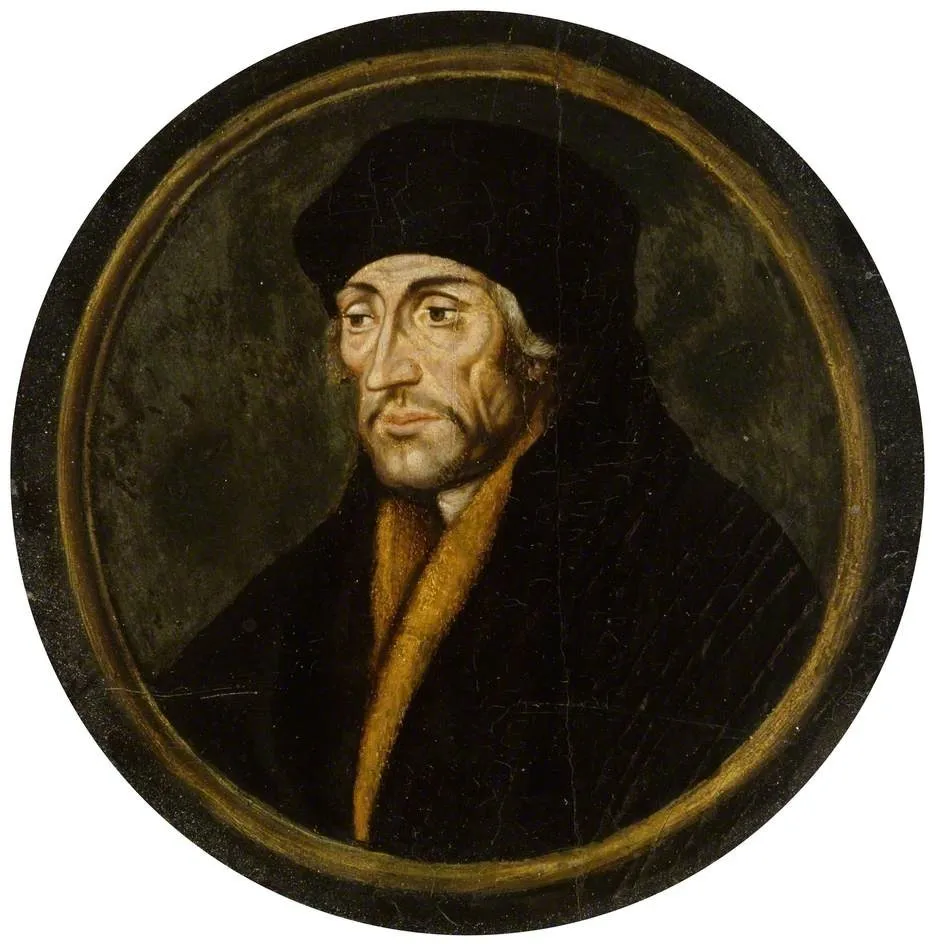
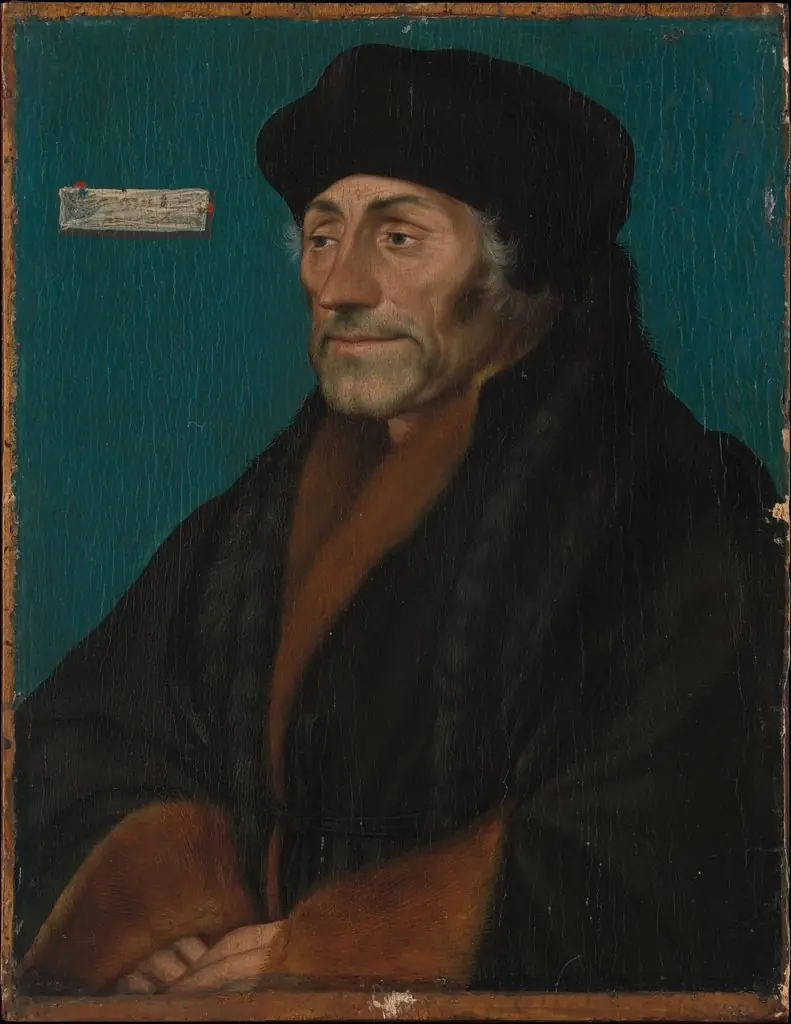
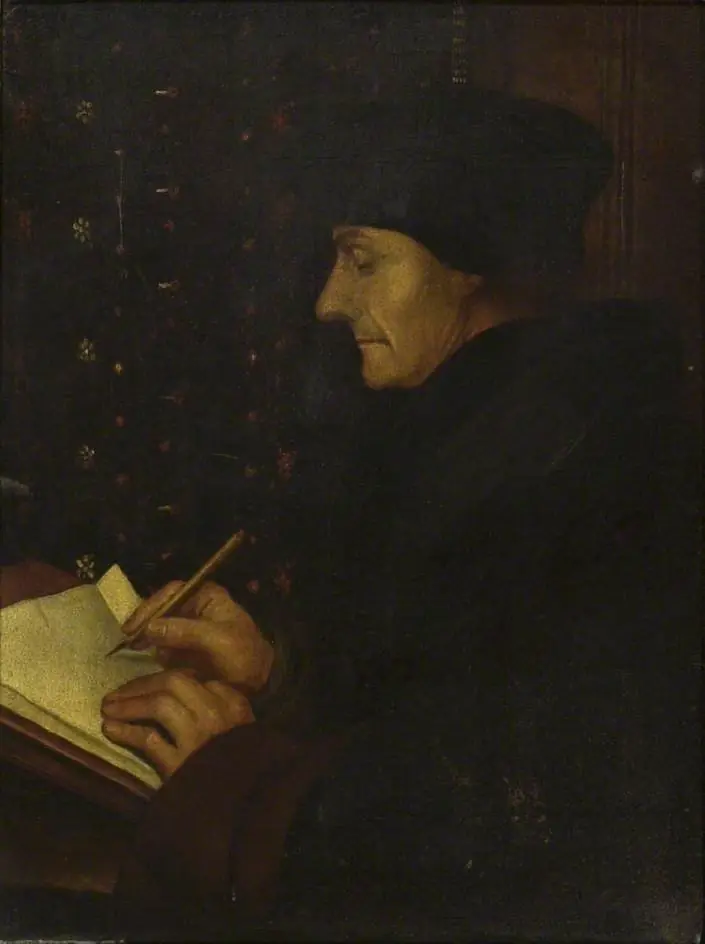
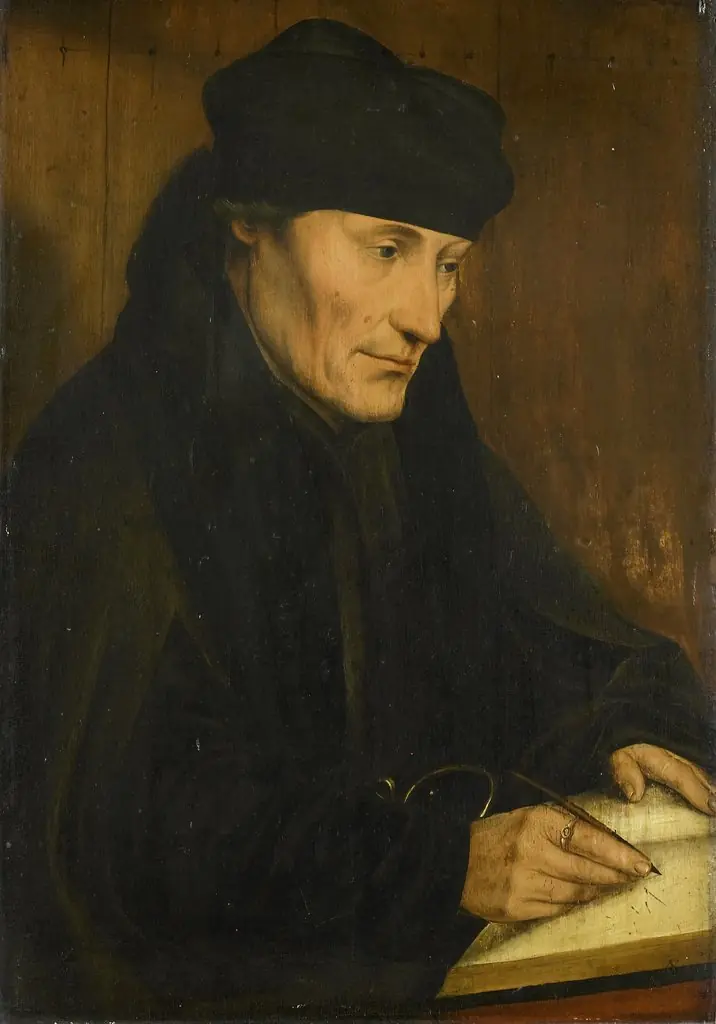
Desiderius Erasmus is an oil painting by the Northern Renaissance artist Hans Holbein the Younger. It dates from 1530 and is held in the collection of the Ashmolean Museum.
About this work
Overview
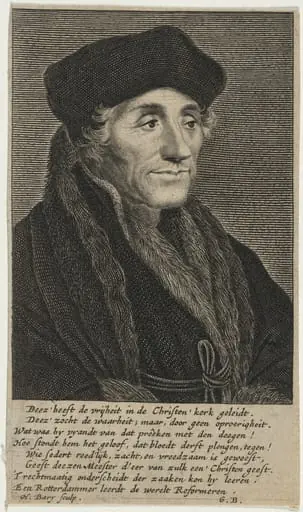
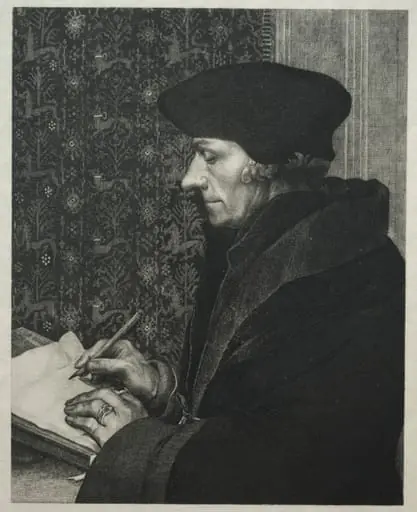
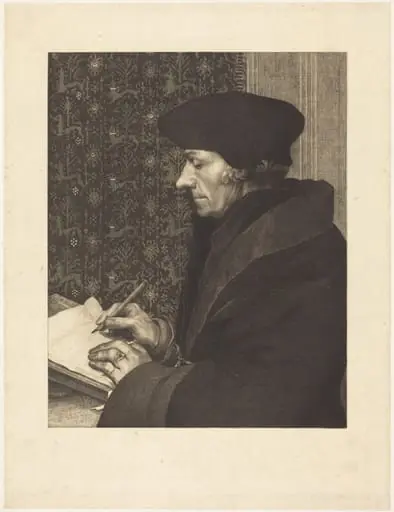
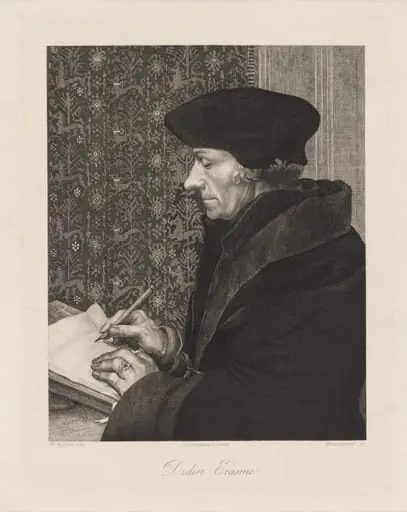
Painted around 1530, this oil portrait depicts the Dutch scholar Desiderius Erasmus, rendered by Hans Holbein the Younger during his time in England.
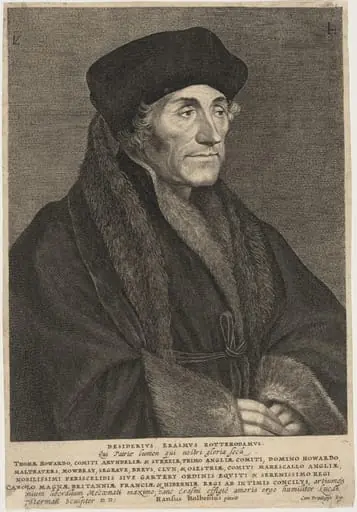
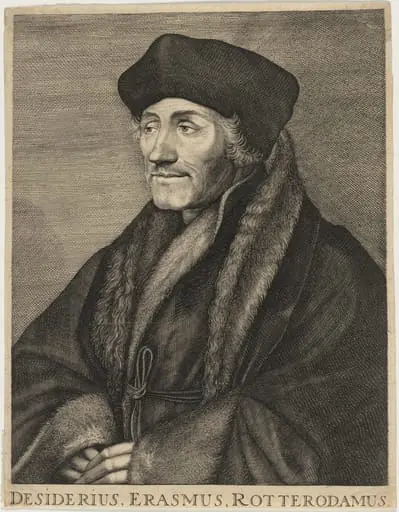
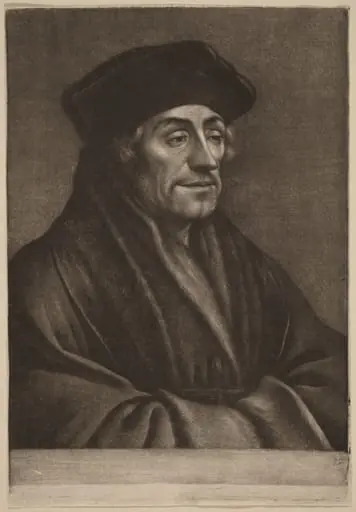
Painted around 1530, this oil portrait depicts the Dutch scholar Desiderius Erasmus, rendered by Hans Holbein the Younger during his time in England. The composition focuses tightly on Erasmus’s head and shoulders, set against a muted, indistinct background. Holbein’s approach emphasizes quiet presence over ornamentation, aligning with the intellectual gravitas of his subject and the Northern Renaissance preference for restrained realism.
Subject & Meaning
Erasmus, a leading humanist thinker of the early 16th century, is portrayed not as a clergyman or noble, but as a man of letters. His sober expression, closed mouth, and direct gaze convey contemplation rather than authority. The dark clothing and minimal adornment reflect his scholarly identity and rejection of ecclesiastical display, reinforcing his role as a reformer grounded in textual study and moral philosophy.
Technique & Style
Holbein employed oil paint with precise brushwork to capture subtle textures: the weave of Erasmus’s woolen coat, the sheen of his silk scarf, and the fine hairs of his beard. The dark, blurred background isolates the figure, directing attention to facial detail and posture. This method—characteristic of Northern Renaissance portraiture—prioritizes psychological depth and material fidelity over idealized form.
History & Provenance
The portrait was likely commissioned during Erasmus’s stay in England, where Holbein was active as a court painter. It circulated among humanist circles before entering the Ashmolean Museum’s collection. While its early ownership is not fully documented, its survival in a major institutional collection underscores its enduring value as a representation of Renaissance intellectual culture.
Context
Created amid the religious upheavals of the Reformation, the portrait reflects a broader cultural shift toward valuing individual intellect over institutional hierarchy. Erasmus’s image, devoid of religious symbols, aligns with his advocacy for scholarly reform through classical texts. Holbein’s depiction mirrors this ethos, presenting the scholar as a modern figure defined by thought rather than rank.
Legacy
This portrait became one of the most recognizable images of Erasmus, shaping his posthumous identity as a quiet, principled thinker. Its restrained aesthetic influenced later generations of portraitists seeking to convey intellectual character through understated realism. Today, it remains a key example of how Northern Renaissance art fused personal likeness with cultural ideals.
Artist & collection
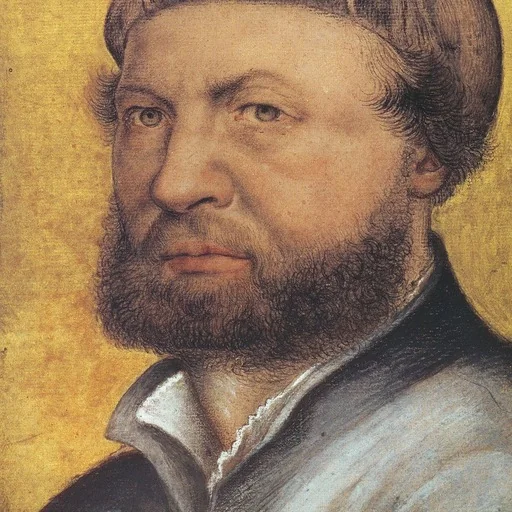
Artist
Hans Holbein the Younger (UK: HOL-byne, US: HOHL-byne, HAWL-; German: Hans Holbein der Jüngere; c.