Artwork
Dance of Death: The Nobleman
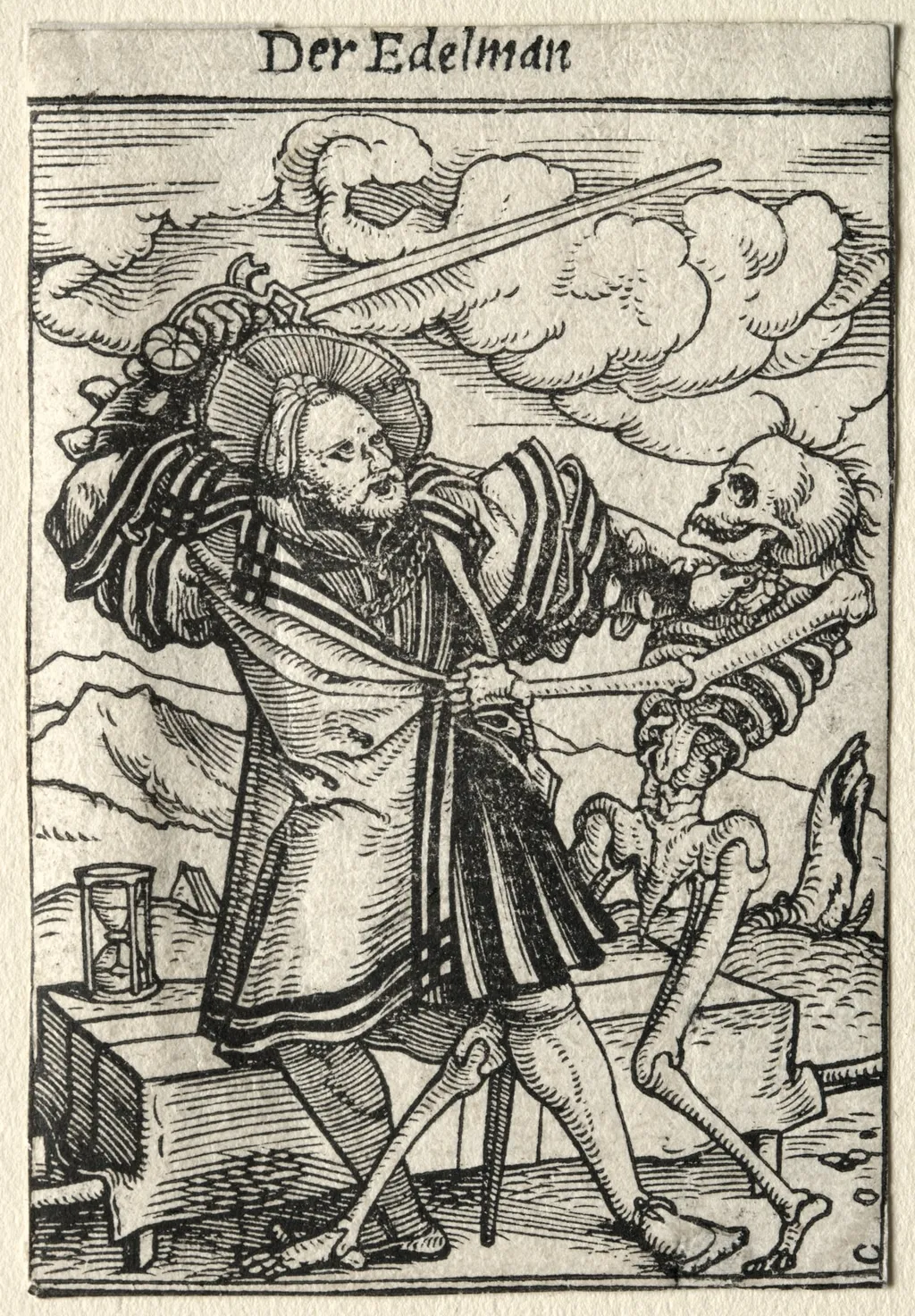
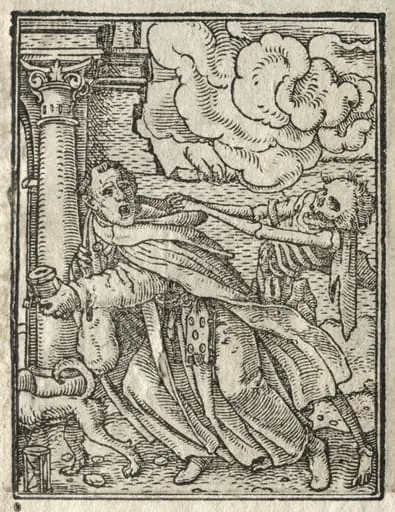
Dance of Death: The Nobleman is a print by the Renaissance artist Hans Holbein the Younger. It dates from 1526 and is held in the collection of the Cleveland Museum of Art.
About this work
Overview
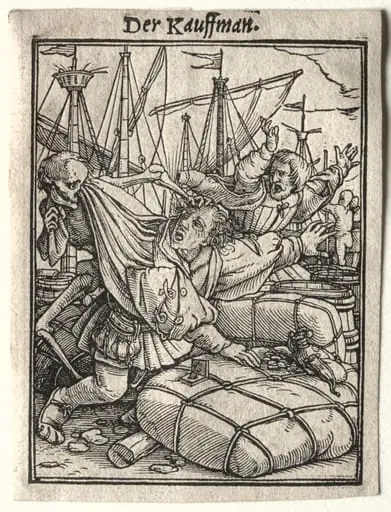
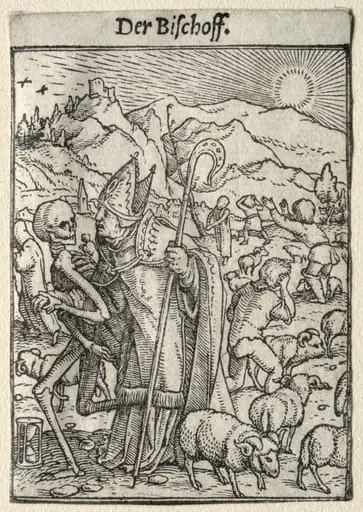
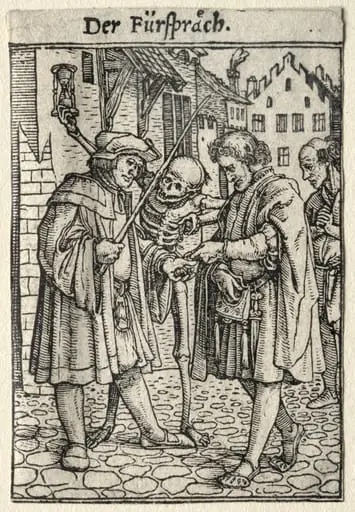
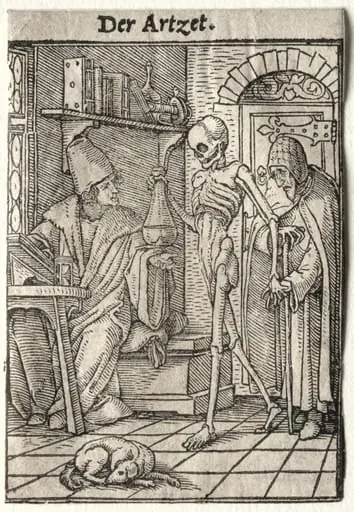
This image belongs to a sequence designed to confront viewers with the inevitability of mortality, regardless of status or wealth.
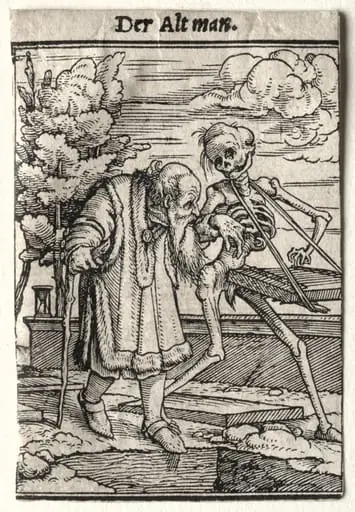
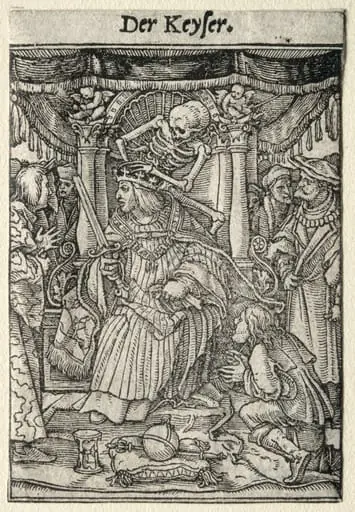
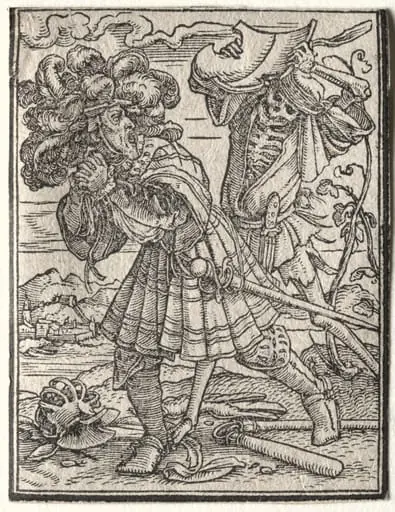
Created around 1526, *Dance of Death: The Nobleman* is a woodcut by Hans Holbein the Younger, part of a larger series illustrating Death’s impartial approach to all social ranks. Holbein, a German artist of Swiss origin, worked within the Northern Renaissance tradition, producing prints that blended religious themes with social commentary. This image belongs to a sequence designed to confront viewers with the inevitability of mortality, regardless of status or wealth.
Subject & Meaning
The print shows a nobleman, clad in ornate attire and clutching a staff, being pulled by a skeletal figure representing Death. His expression conveys fear, contrasting with the calm, mechanical grip of the skeleton. Nearby, an hourglass symbolizes the passage of time, while other skeletal figures loom in the background, suggesting no escape. The title, *Der Edelman*, underscores the series’ central message: social rank offers no protection from death’s reach.
Technique & Style
Holbein employed bold, incised lines typical of woodcut printing to create stark contrasts between light and shadow. The rough, urgent texture of the lines heightens the scene’s tension, avoiding refinement in favor of emotional immediacy. The composition is tightly framed, focusing attention on the confrontation between the nobleman and Death, while minimal background detail reinforces the universality of the encounter.
History & Provenance
The print was produced as part of Holbein’s *Dance of Death* series, first published in 1538 in Lyon. Though the original designs date to around 1526, the woodblocks were later used for multiple print runs across Europe. The series gained wide circulation, particularly in Protestant regions, where its moral message aligned with Reformation ideals. Surviving impressions are held in major collections, including the Cleveland Museum of Art.
Context
In early 16th-century Europe, the *Dance of Death* motif was a common artistic response to plague, war, and religious upheaval. Holbein’s version drew from medieval traditions but infused them with contemporary realism and social critique. By depicting Death confronting figures from all walks of life, the series challenged the assumption that privilege could shield one from fate, resonating in an age of shifting power structures.
Legacy
Holbein’s *Dance of Death* series became one of the most influential visual treatments of mortality in early modern Europe. Its clear, direct imagery was widely reproduced and adapted in printed books and broadsheets. The series helped standardize the iconography of Death as a skeletal figure interacting with secular society, leaving a lasting imprint on Northern European visual culture beyond the Reformation era.
Artist & collection
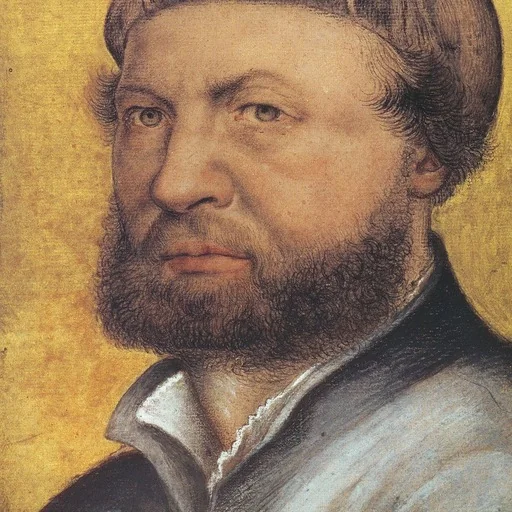
Artist
Hans Holbein the Younger (UK: HOL-byne, US: HOHL-byne, HAWL-; German: Hans Holbein der Jüngere; c.