Artwork
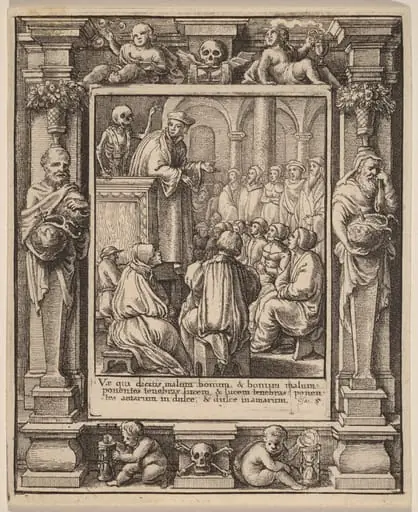
Dance of Death: The Preacher
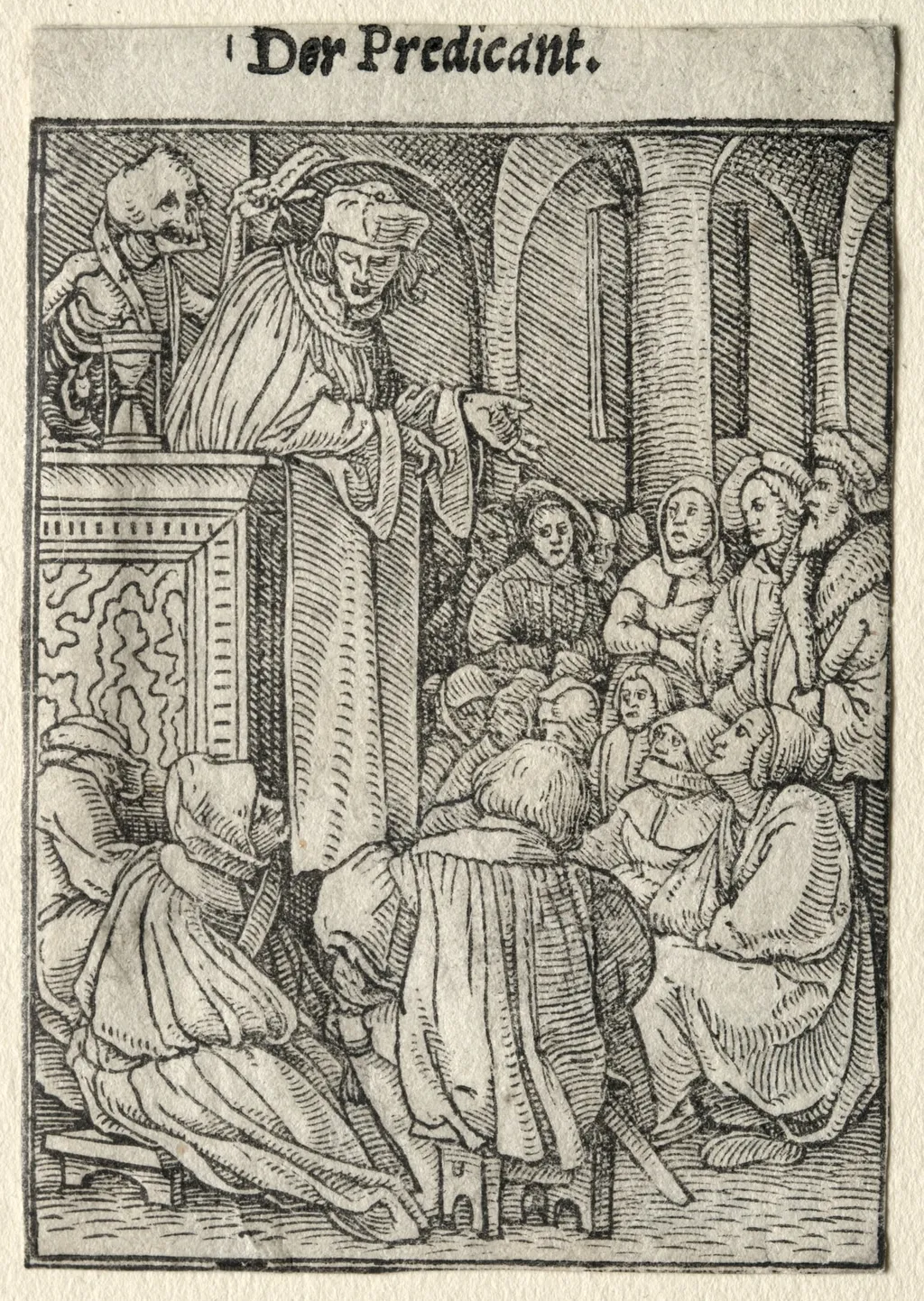
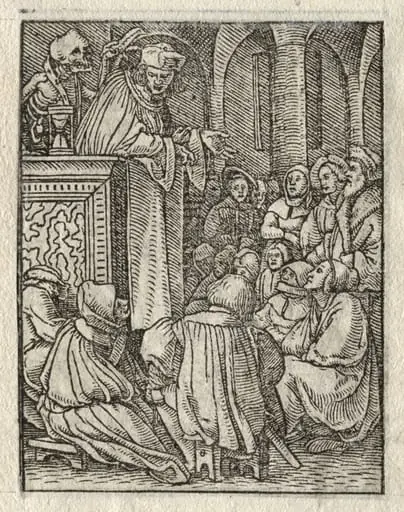
Dance of Death: The Preacher is a print by the Renaissance artist Hans Holbein the Younger. It dates from 1526 and is held in the collection of the Cleveland Museum of Art.
About this work
Overview
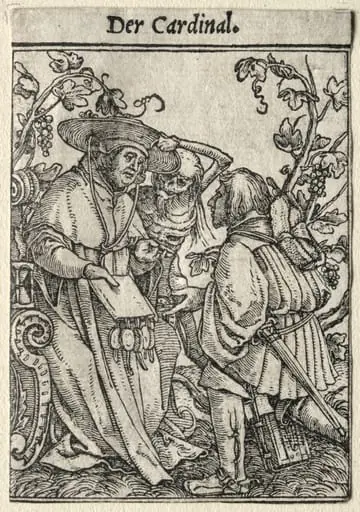
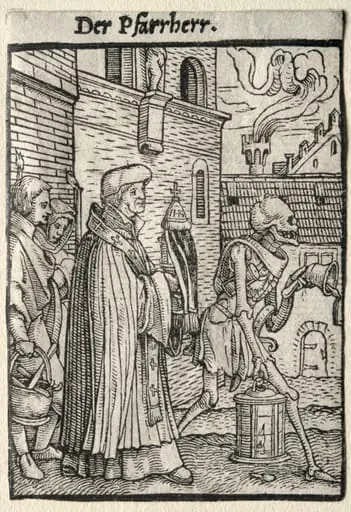
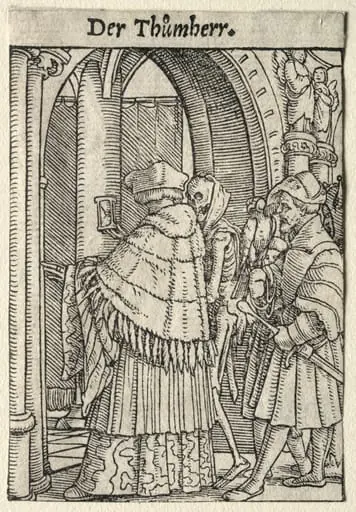
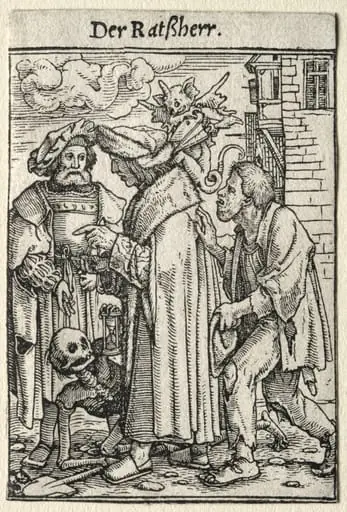
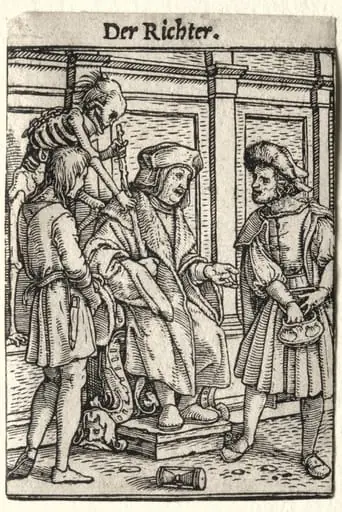
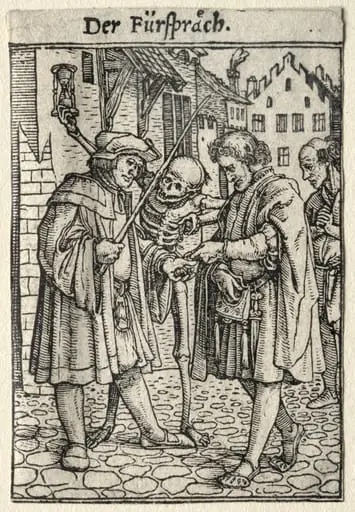
Hans Holbein the Younger produced the woodcut *Dance of Death: The Preacher* circa 1526. Executed in the Northern Renaissance idiom, the print forms part of his larger *Dance of Death* series, which uses the figure of a skeleton to underscore the universality of mortality.
Subject & Meaning
The image shows a preacher on a raised dais addressing a mixed audience of seated and kneeling figures, all dressed in modest, period attire. A skeletal figure peers from a window behind the speaker, clutching a cross, symbolizing death’s inevitable presence even within sacred spaces.
Technique & Style
Holbein employs crisp, linear carving and strong chiaroscuro to render the scene’s architectural elements—tall columns and a carved wall panel—with striking clarity. The contrast of deep shadows against the white of the woodcut intensifies the dramatic, almost foreboding atmosphere.
History & Provenance
Created during the early years of the Reformation, the print reflects contemporary anxieties about religious authority and mortality. It entered the Cleveland Museum of Art’s collection, where it remains on display as part of the museum’s Northern Renaissance holdings.
Context
The *Dance of Death* series was a popular didactic genre in the 16th century, intended to remind viewers that death spares no rank or vocation. Holbein’s contribution aligns with his broader work as a portraitist and book illustrator, merging moralizing content with precise visual detail.
Artist & collection
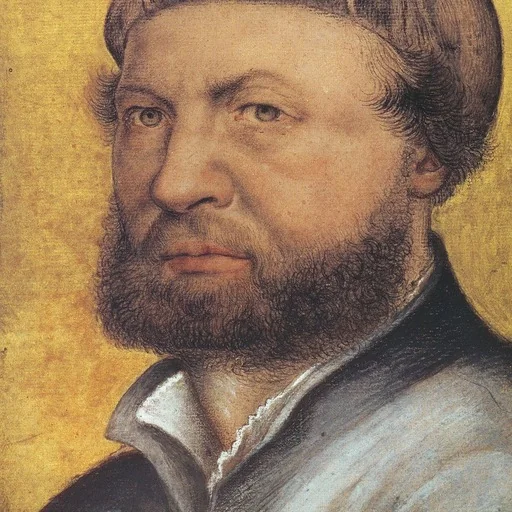
Artist
Hans Holbein the Younger (UK: HOL-byne, US: HOHL-byne, HAWL-; German: Hans Holbein der Jüngere; c.