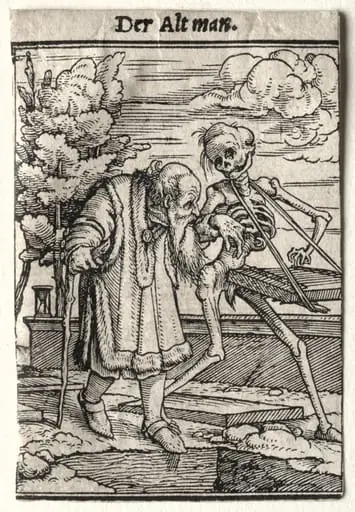
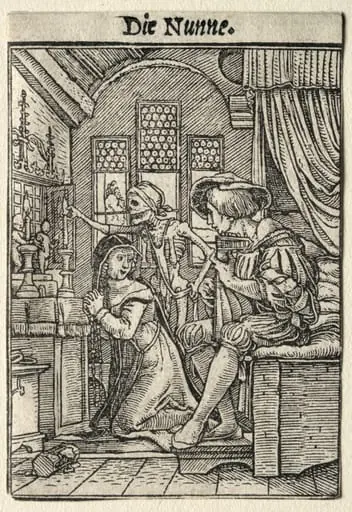
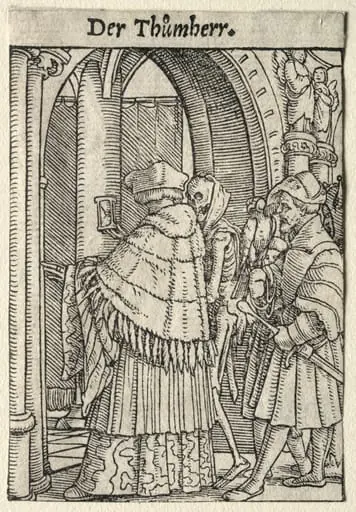
Artwork
The Dance of Death: The Mendicant Friar; The Nun
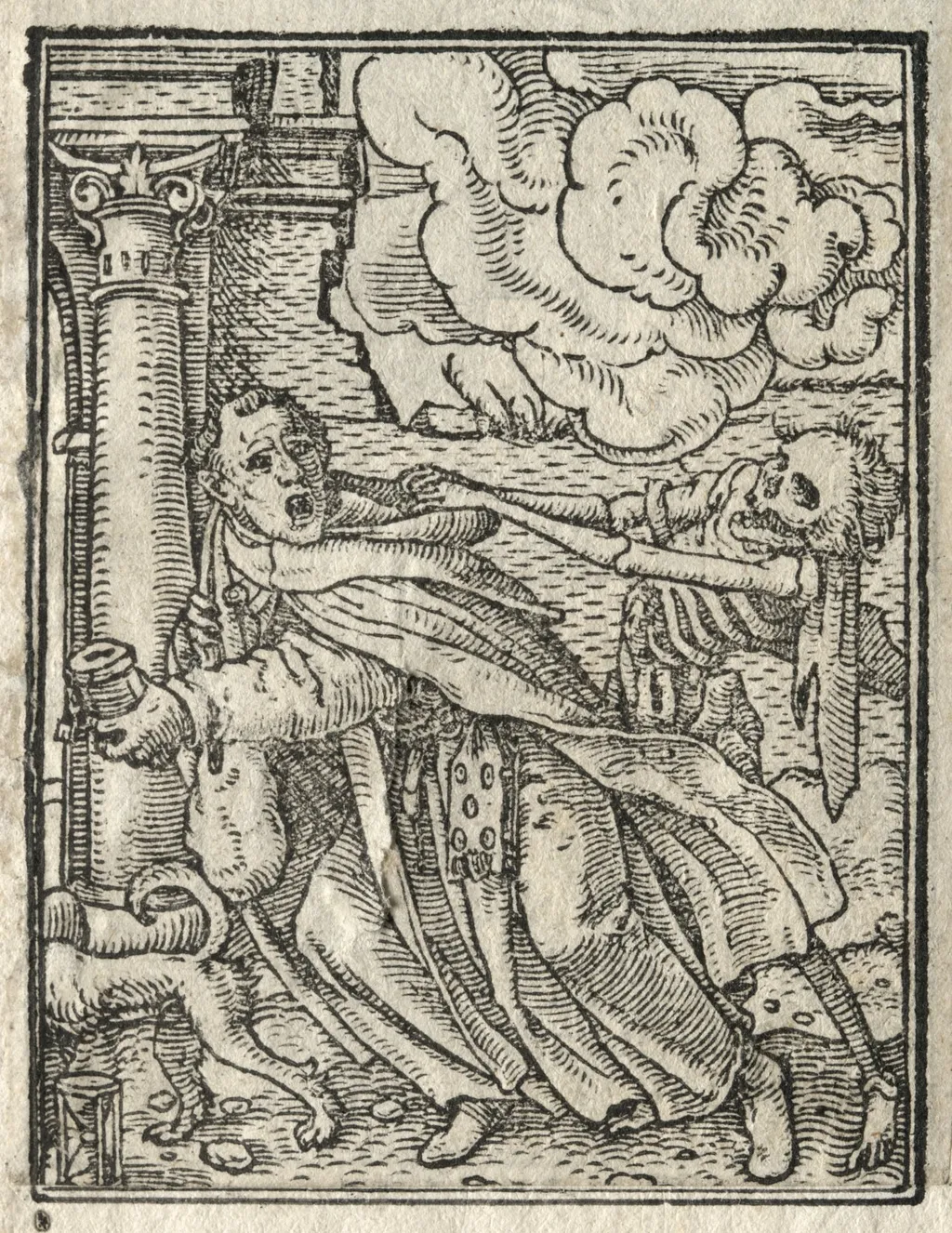
The Dance of Death: The Mendicant Friar; The Nun is a print by the Renaissance artist Hans Holbein the Younger. It dates from 1526 and is held in the collection of the Cleveland Museum of Art.
About this work
Overview
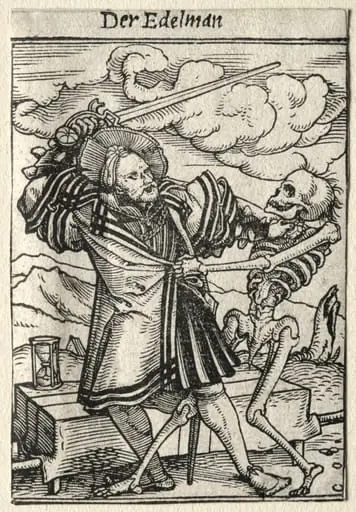
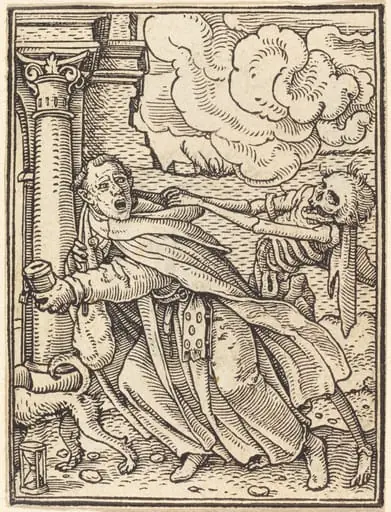
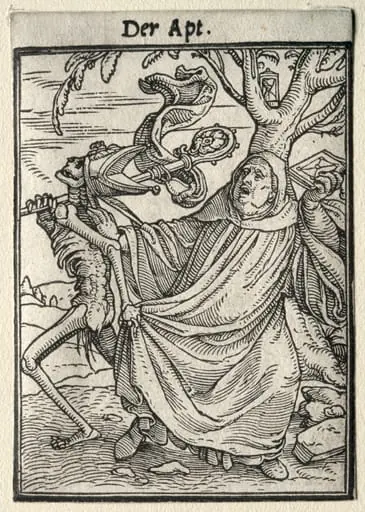
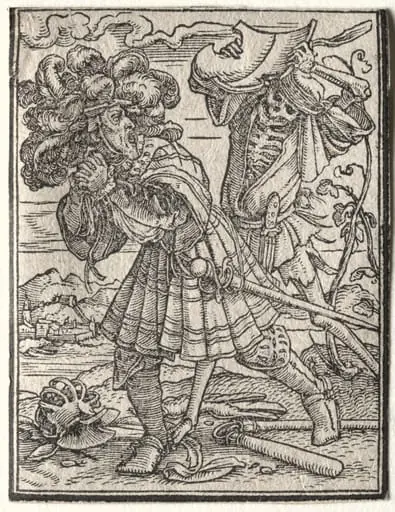
Created circa 1526, this black‑and‑white woodcut by Hans Holbein the Younger presents a stark encounter between death and two religious figures—a mendicant friar and a nun. The skeletal figure seizes the monk’s shoulders, pulling both clerics into a contorted pose that emphasizes the inevitability of mortality, a common preoccupation of early‑16th‑century art.
Subject & Meaning
The composition juxtaposes the living, represented by the friar clutching a book and the nun shielding her face, with the dead, embodied by the dancing skeleton. By forcing the holy figures into a fearful, twisted stance, Holbein underscores the medieval allegory of the Dance of Death, reminding viewers that death spares no social or spiritual rank.
Technique & Style
Holbein employs the woodcut medium’s capacity for strong contrast, carving deep incisions that generate pronounced shadows and make the skeletal bones stand out against the dark robes. This chiaroscuro‑like effect heightens the drama and reinforces the stark, didactic tone typical of Northern Renaissance printmaking.
History & Provenance
The print belongs to Holbein’s series of Dance of Death images, a motif revived during the Reformation as a moralizing commentary on human frailty. As a leading figure in German‑Swiss art, Holbein produced the work while active in Basel, where he also contributed to book design and portraiture.
Context
In the early 1500s, the Dance of Death served as a visual sermon, reflecting anxieties about plague, war, and religious upheaval. Holbein’s rendition aligns with contemporary concerns, using familiar monastic attire to personalize the universal warning that death is an equalizer across all classes and vocations.
Artist & collection
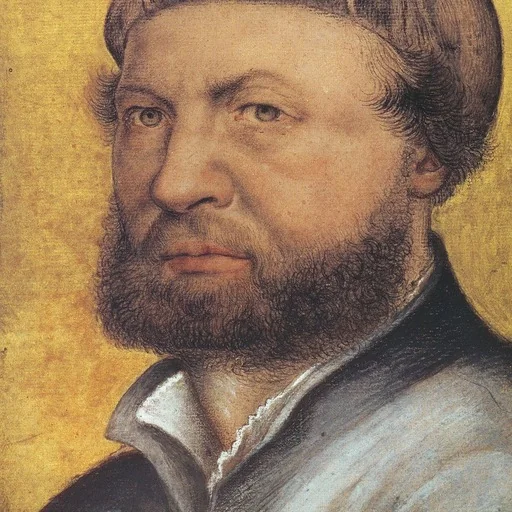
Artist
Hans Holbein the Younger (UK: HOL-byne, US: HOHL-byne, HAWL-; German: Hans Holbein der Jüngere; c.