Artwork
The Dance of Death: The Astrologer; The Rich Man
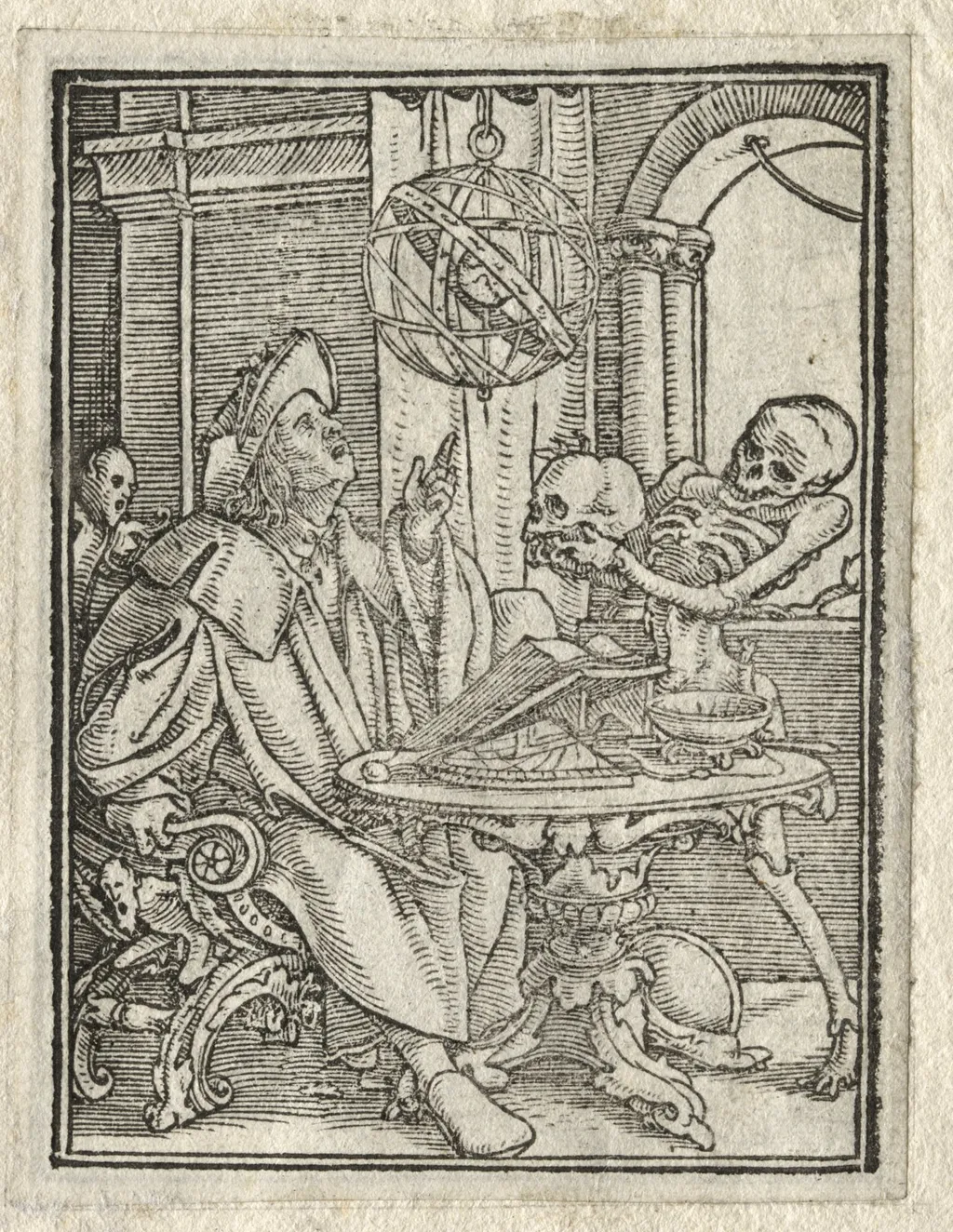
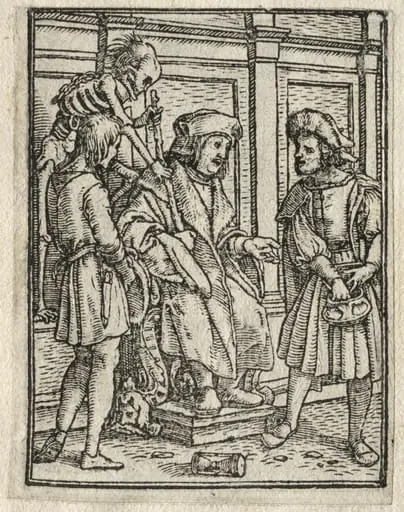
The Dance of Death: The Astrologer; The Rich Man is a print by the Renaissance artist Hans Holbein the Younger. It dates from 1526 and is held in the collection of the Cleveland Museum of Art.
About this work
Overview
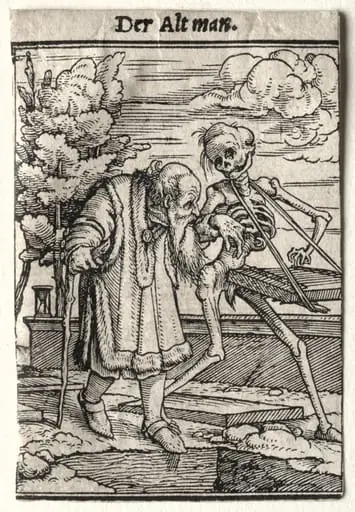
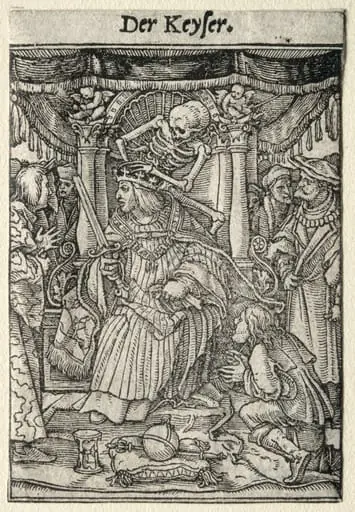
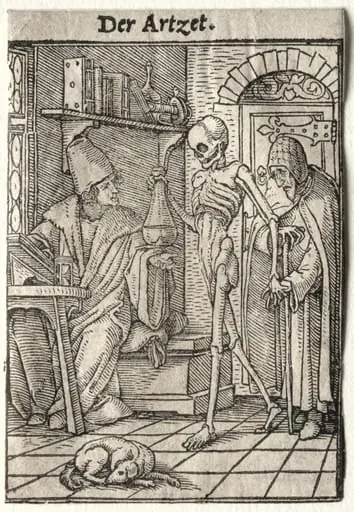
Hans Holbein the Younger's *The Dance of Death: The Astrologer; The Rich Man* (c. 1526) is a print from a series emphasizing death's universality, characteristic of the Northern Renaissance.
Subject & Meaning
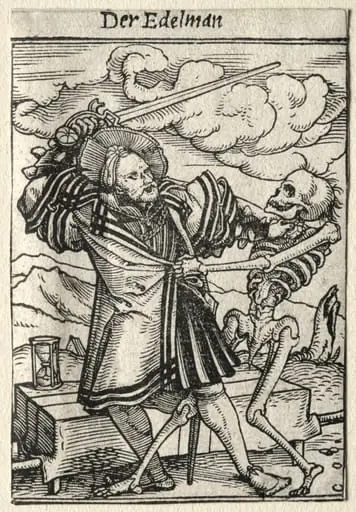
The print depicts a richly attired man, holding a globe and gesturing upwards, being summoned by a skeleton. Surrounding skeletons engage in activities like music and holding a baby, underscoring the inescapability of death regardless of status or pursuits.
Technique & Style
Executed in black-and-white, the print showcases Holbein's Northern Renaissance style, blending detailed, symbolic imagery with moralistic themes, set against a backdrop of opulent architectural elements.
History & Provenance
Created around 1526 by the German-Swiss artist, this work reflects Holbein's versatility in printmaking, portraiture, religious art, and book design, with its satirical and moral undertones typical of his output.
Context
Emblematic of Renaissance themes, the piece aligns with the era's use of death as a motif to comment on mortality's equality, transcending wealth or knowledge.
Artist & collection
Artist
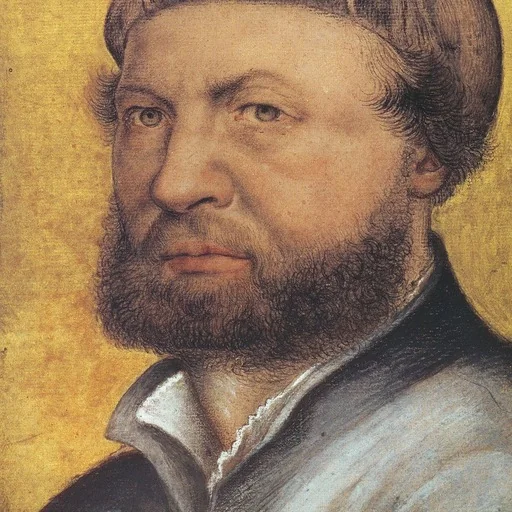
Hans Holbein the Younger (UK: HOL-byne, US: HOHL-byne, HAWL-; German: Hans Holbein der Jüngere; c.