Artwork
Trajan
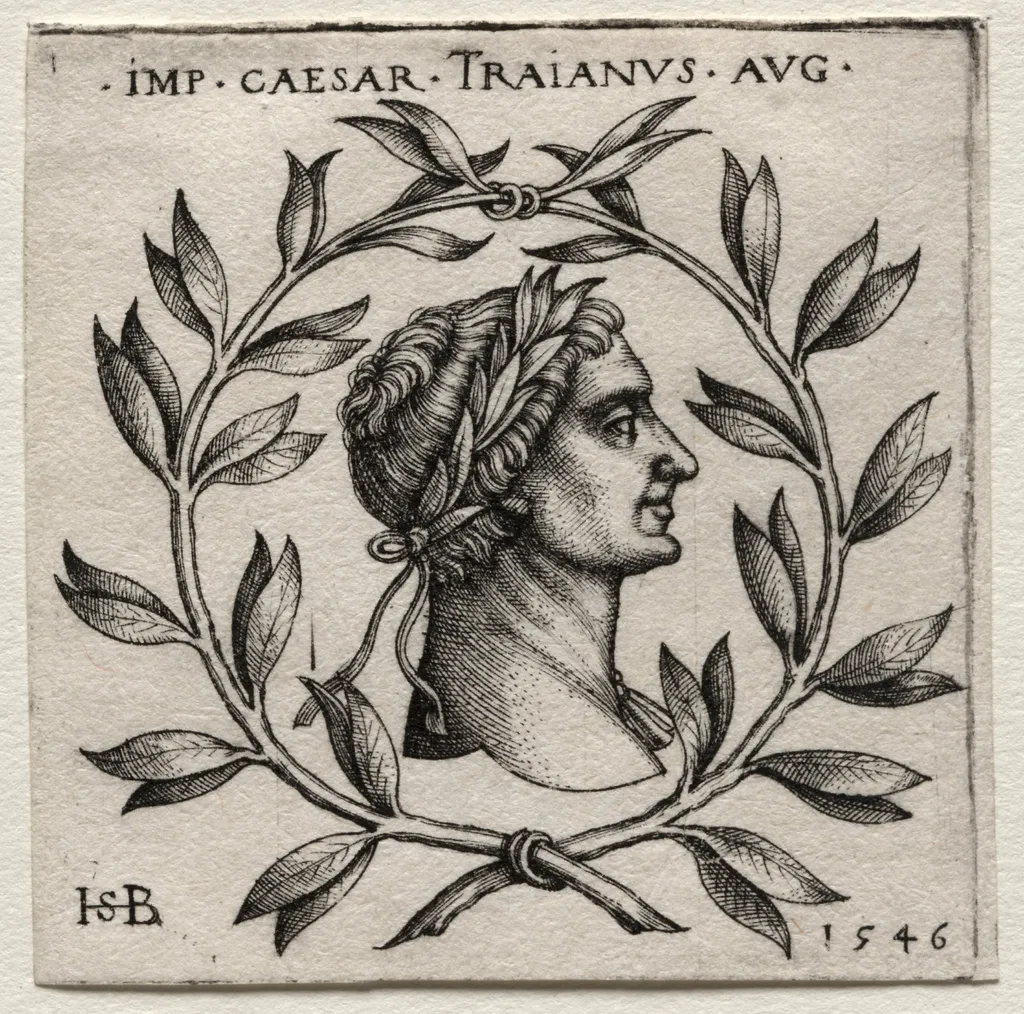
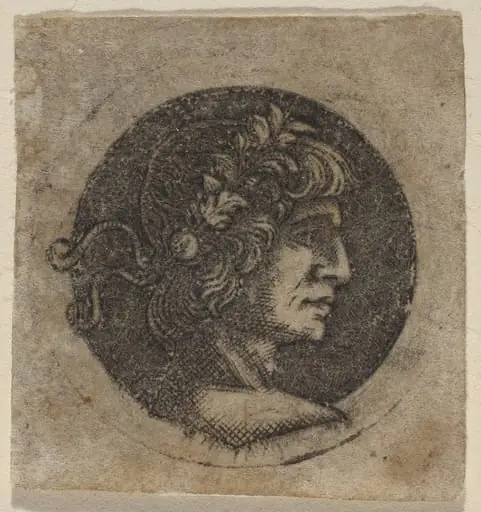
Trajan is a print by the Renaissance artist Sebald Beham. It dates from 1546 and is held in the collection of the Cleveland Museum of Art.
About this work
Overview
A member of the group known as the 'Little Masters,' he specialized in intricate, miniature prints that demanded close viewing.
Hans Sebald Beham, a German artist active in the mid-16th century, produced *Trajan* in 1546 as a small copper engraving. A member of the group known as the 'Little Masters,' he specialized in intricate, miniature prints that demanded close viewing. This work is one of over 250 engravings he created, reflecting his prolific output and technical precision in a period when printmaking was a primary medium for disseminating imagery.
Subject & Meaning
The engraving depicts the Roman Emperor Trajan mounted on horseback, rendered with meticulous attention to his armor and the animal’s musculature. Trajan, admired in Renaissance humanist circles for his just rule, served as a symbolic figure of virtuous leadership. Beham’s choice of subject reflects contemporary interest in classical antiquity as a model for political and moral ideals during a time of religious and social upheaval in Germany.
Technique & Style
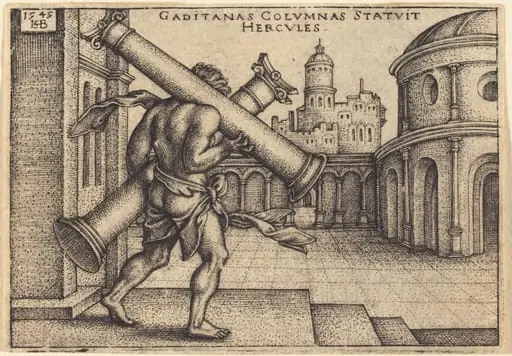
Beham employed fine, controlled lines to carve minute details into a copper plate, resulting in an image only a few centimeters wide. His technique relied on dense hatching and delicate cross-contours to suggest texture and volume, a hallmark of the Little Masters’ approach. The scale required magnification for full appreciation, emphasizing the print’s role as an object of intimate, contemplative viewing rather than public display.
History & Provenance
Created during Beham’s time in Frankfurt, where he worked after leaving Nuremberg, *Trajan* belongs to a broader series of historical and mythological subjects he produced for collectors. His prints circulated widely across German-speaking regions, often acquired by urban elites interested in classical themes. Though specific early ownership records are sparse, the work’s survival in museum collections attests to its enduring presence in print collections of the early modern period.
Context
In the 1540s, Germany was deeply divided by the Reformation, and printed images became crucial vehicles for both religious and secular ideas. Beham’s classical subjects offered a non-doctrinal alternative to religious polemics, appealing to humanist tastes. His small-scale engravings were portable and reproducible, making them ideal for private study and collecting among educated audiences seeking cultural continuity amid political fragmentation.
Legacy
Beham’s *Trajan* exemplifies the refinement and intellectual ambition of 16th-century German printmaking. His ability to convey complex forms at miniature scale influenced later engravers and contributed to the prestige of small-format prints. Today, his works are held in major collections, valued not for grandeur but for their technical mastery and the quiet intensity of their detail.
Artist & collection
Artist
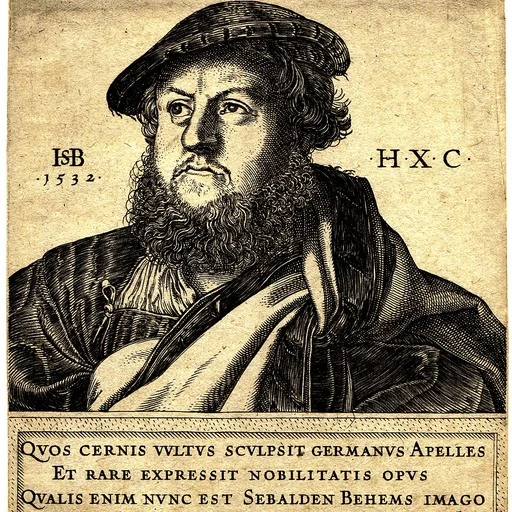
Sebald Beham (1500–1550) was a German painter and printmaker, mainly known for his very small engravings.


![Study of a Man [verso], by Théodore Géricault](https://artifactworldgallery.com/img/theodore-gericault--study-of-a-man-verso--2f224271ff698bb3-w320.webp)