Artwork
The Labors of Hercules: Hercules Receiving the Garment Steeped in Nessus' Blood
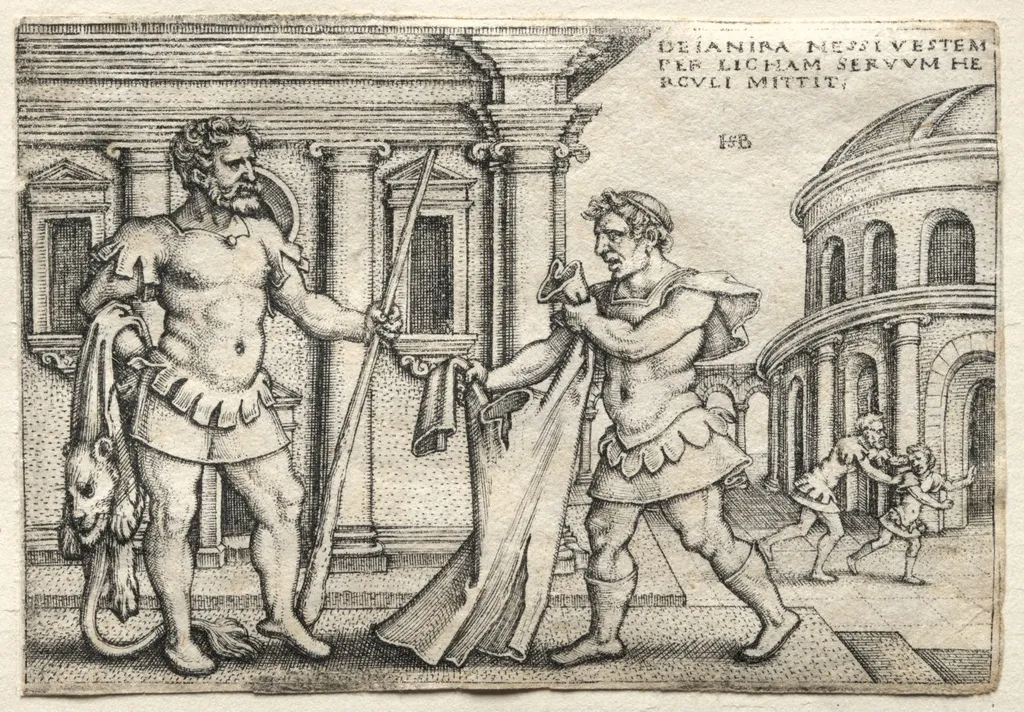
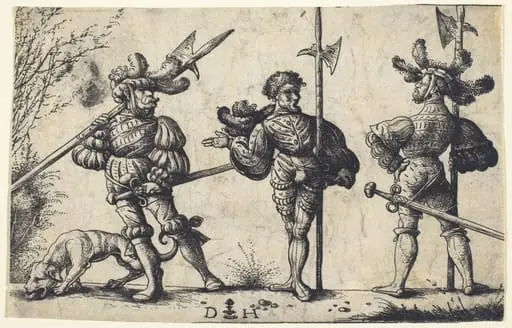
The Labors of Hercules: Hercules Receiving the Garment Steeped in Nessus' Blood is a print by the Renaissance artist Sebald Beham. It dates from 1542 and is held in the collection of the Cleveland Museum of Art. This 1542 German print captures the moment when a servant presents a blood‑stained shirt to a hesitant figure within a cramped interior.
About this work
Check out the dramatic lighting—it’s called chiaroscuro, where light and dark contrast sharply.
A man hands another a blood-soaked shirt in a cluttered room. The second man looks uneasy as he takes it. One woman watches from the shadows, her face half-hidden.
Deianeira sent the shirt to kill Hercules. She thought the centaur’s blood would keep him faithful. Instead, it burned his skin. This German print from 1542 shows a moment of deadly trickery.
Check out the dramatic lighting—it’s called chiaroscuro, where light and dark contrast sharply.
Overview
This 1542 German print captures the moment when a servant presents a blood‑stained shirt to a hesitant figure within a cramped interior. A partially concealed woman watches from the shadows, her expression ambiguous. The scene illustrates a fatal act of deception rooted in myth, rendered in a compact, highly detailed composition typical of the period’s miniature prints.
Subject & Meaning
The narrative derives from the myth of Hercules, whose wife Deianeira, fearing rivalry from the princess Iole, commissions a shirt soaked in the centaur Nessus’s blood. Believing the fluid to be a love charm, she intends to secure Hercules’s fidelity, yet the concoction proves lethal, causing the hero’s skin to burn and ultimately leading to his demise.
Technique & Style
Executed with fine engraving, the work exemplifies the chiaroscuro technique, employing stark contrasts between illuminated figures and deep shadows to heighten drama. The artist’s meticulous line work achieves a remarkable level of detail on a small scale, reflecting the precision valued by collectors of miniature prints.
History & Provenance
Created by a German printmaker associated with the so‑called “Little Masters,” artists renowned for their diminutive yet intricate engravings, the piece was likely produced for a market of connoisseurs attracted to curiosities and portable artworks. Its survival in collections attests to the lasting appeal of such finely crafted prints.
Context
The image belongs to a broader Renaissance fascination with classical mythology, particularly the tragic episodes surrounding Hercules. By focusing on the moment of the poisoned garment’s delivery, the print underscores themes of jealousy, misguided love, and the fatal consequences of deception within the mythic tradition.
Artist & collection
Artist
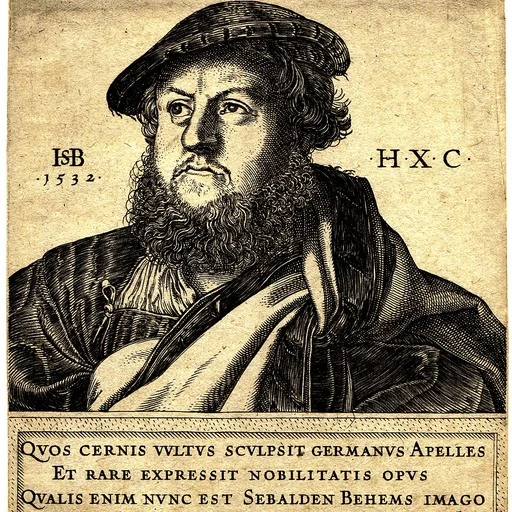
Sebald Beham (1500–1550) was a German painter and printmaker, mainly known for his very small engravings.