Artwork
The Labors of Hercules: Hercules Killing the Giant Cacus
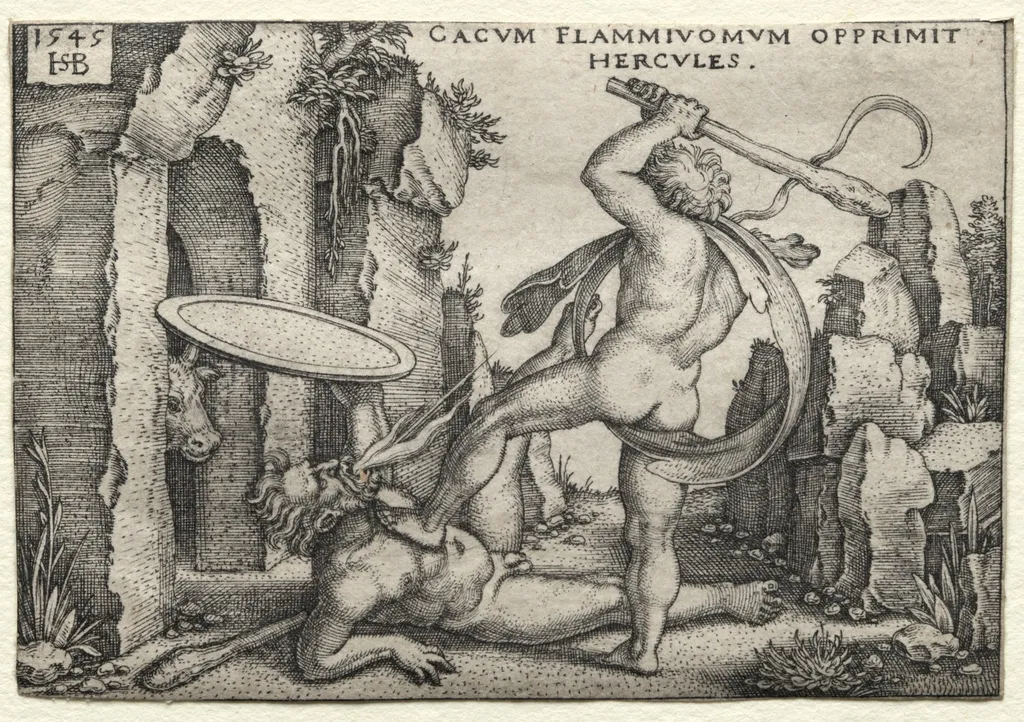
The Labors of Hercules: Hercules Killing the Giant Cacus is a print by the Renaissance artist Sebald Beham. It dates from 1545 and is held in the collection of the Cleveland Museum of Art.
About this work
Notice how light and shadow fight on Cacus’s body—Beham’s lines feel almost three-dimensional.
This engraving shows Hercules strangling the giant Cacus. A beastly figure lies under the hero’s grip while fire spouts from a cave behind. Beham packs muscle and drama into every line, making the tiny print feel huge.
The German artist was part of the “Little Masters.” They carved super-small prints that collectors loved like tiny treasures. Notice how light and shadow fight on Cacus’s body—Beham’s lines feel almost three-dimensional.
Want to see more? Look up Hans Sebald Beham (German, 1500–1550).
Overview
This small engraving by Hans Sebald Beham is part of a series depicting the Labors of Hercules. The print shows Hercules killing the giant Cacus, a scene from classical mythology.
Subject & Meaning
The scene represents Hercules, a demigod hero, overcoming the monstrous Cacus. The story is drawn from ancient mythology, highlighting Hercules' strength and bravery.
Technique & Style
Beham's engraving is characterized by its intricate detail and use of line to convey texture and depth. The contrast between light and shadow on Cacus's body creates a sense of volume and drama.
Context
Beham was a member of a group of German printmakers known as the 'Little Masters', who specialized in creating small, detailed engravings that appealed to collectors of miniature objects.
Artist & collection
Artist
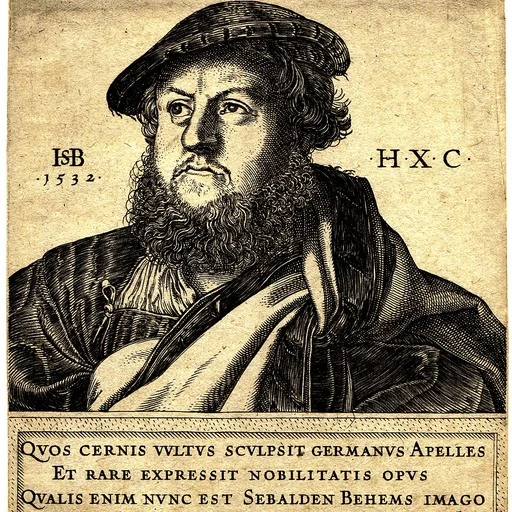
Sebald Beham (1500–1550) was a German painter and printmaker, mainly known for his very small engravings.


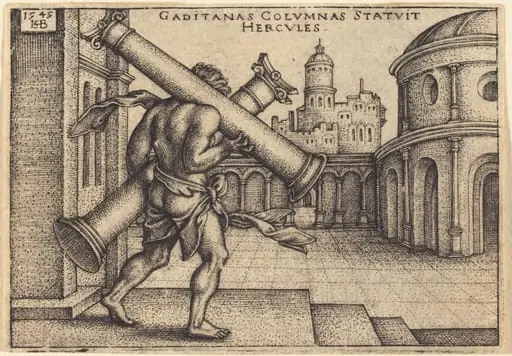
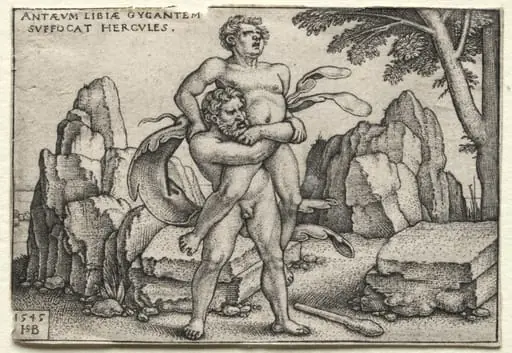 The Labors of Hercules: Hercules Crushing Antaeus
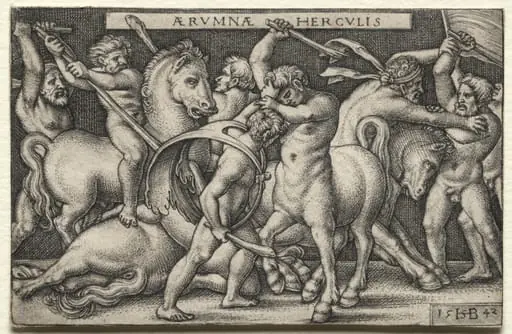 The Labors of Hercules: Hercules Defeating the Centaurs
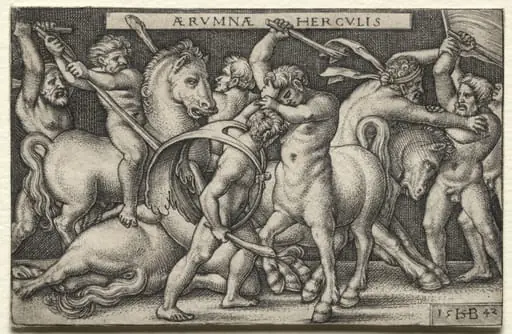 The Labors of Hercules
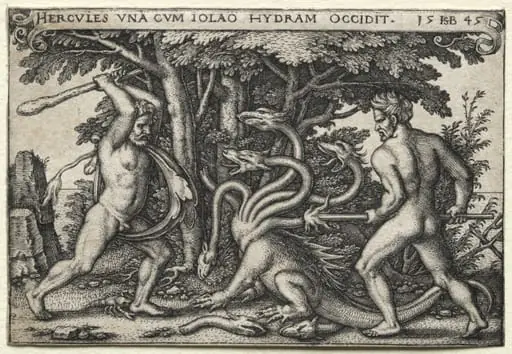 The Labors of Hercules: Hercules Killing the Lernean Hydra
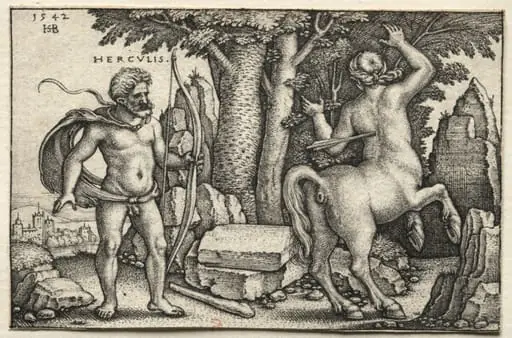 The Labors of Hercules: Hercules Shooting Nessus
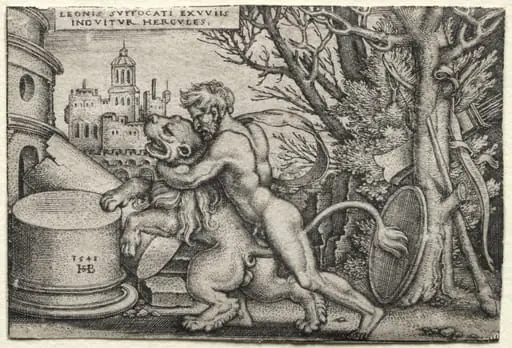 The Labors of Hercules: Hercules Strangling the Nemean Lion
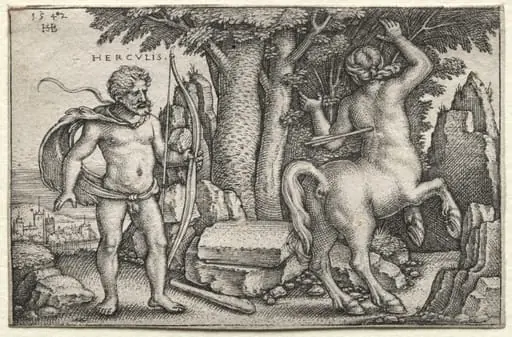 The Labors of Hercules: Hercules and Nessus
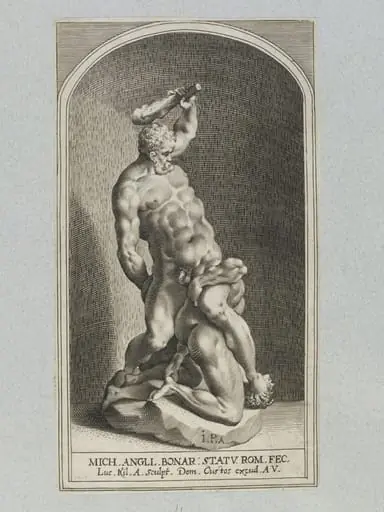 Hercules Killing Cacus
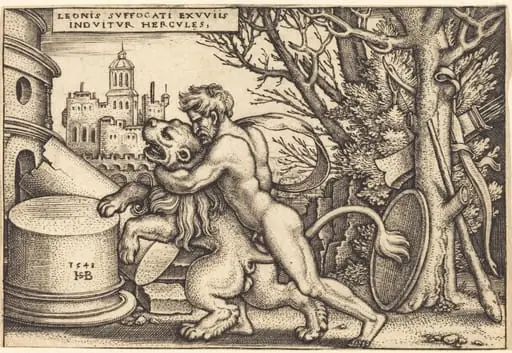 Hercules Killing the Nemean Lion
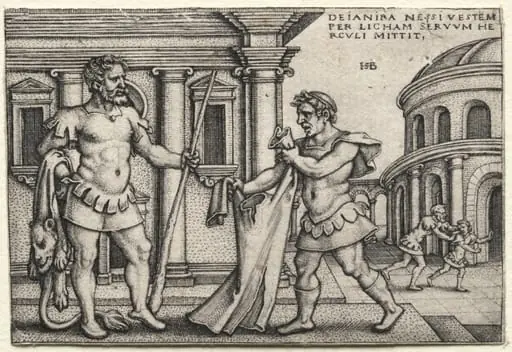 The Labors of Hercules: Hercules Receiving the Garment Steeped in Nessus's Blood