Artwork
The Labors of Hercules: Hercules Strangling the Nemean Lion
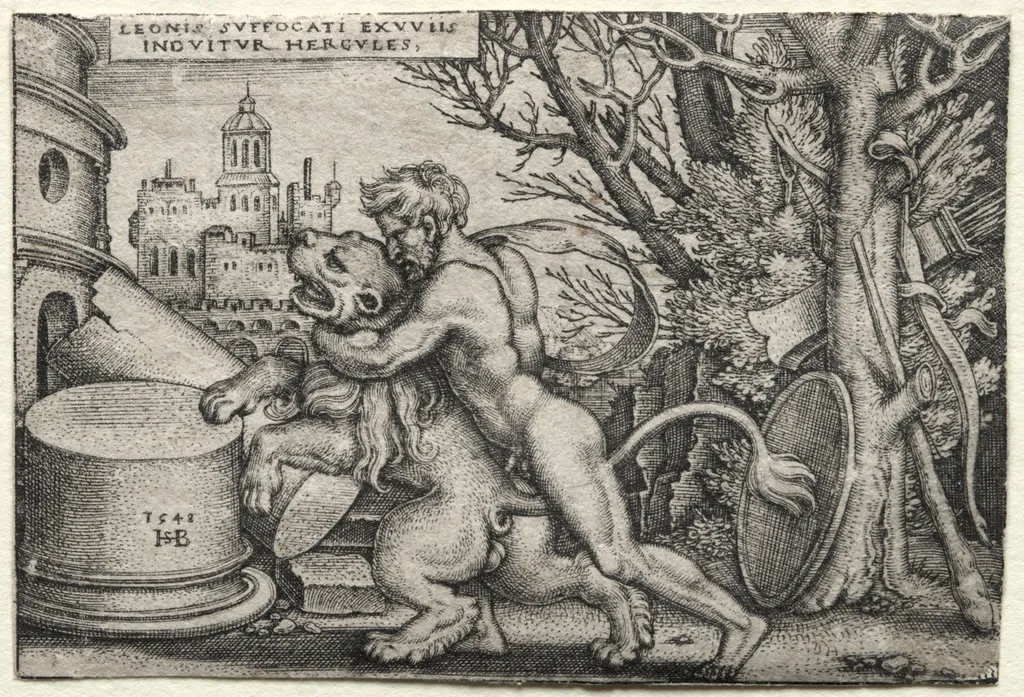
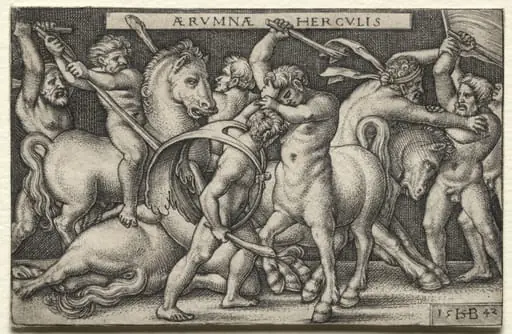
The Labors of Hercules: Hercules Strangling the Nemean Lion is a print by the Renaissance artist Sebald Beham. It dates from 1548 and is held in the collection of the Cleveland Museum of Art. This print is part of a series by Bartholomeus Beham, a German artist of the early 16th century known as one of the 'Little Masters.
About this work
Overview
Beham’s series condenses twelve episodes from the myth of Hercules into miniature compositions, each rendered with precision despite their size.
This print is part of a series by Bartholomeus Beham, a German artist of the early 16th century known as one of the 'Little Masters.' These artists specialized in finely detailed engravings on a small scale, catering to collectors who prized intricate, portable works. Beham’s series condenses twelve episodes from the myth of Hercules into miniature compositions, each rendered with precision despite their size.
Subject & Meaning
The scene depicts Hercules overpowering the Nemean Lion, the first of his twelve labors imposed as penance for killing his family in a fit of divine madness. The lion’s impenetrable hide, which no weapon could pierce, forced Hercules to use brute strength alone. This moment symbolizes the triumph of human will over insurmountable natural force, a theme that resonated with Renaissance audiences who saw in Hercules a model of moral endurance.
Technique & Style
Beham employed fine-line engraving to achieve remarkable detail within a compact format. The muscular tension of Hercules and the lion’s contorted form are rendered with delicate hatching and cross-contour lines, creating volume and movement. The composition is tightly framed, emphasizing the physical struggle without extraneous detail, reflecting the constraints and strengths of the engraving medium.
History & Provenance
Created around 1540, the series was produced during a period of renewed interest in classical mythology among Northern European patrons. Beham’s prints circulated widely among collectors and scholars, often bound into albums. Their small size made them ideal for private contemplation, and surviving examples are now held in major European print collections, including those of the British Museum and the Albertina.
Context
Hercules’ myth was a favored subject in Renaissance art, symbolizing virtue through suffering. Beham’s series responded to a market eager for portable, narrative-driven imagery rooted in antiquity. While Italian artists often depicted Hercules on grand scales, Northern printmakers like Beham adapted the hero’s legend into intimate formats, aligning with the era’s fascination with micro-art and scholarly collecting.
Legacy
Beham’s Hercules series helped define the aesthetic of the Little Masters, influencing later generations of printmakers who pursued narrative compression and technical precision. Though overshadowed by larger paintings of the period, these engravings remain significant for their role in disseminating classical stories to a broader, literate audience and for demonstrating the expressive potential of small-scale printmaking.
Artist & collection
Artist
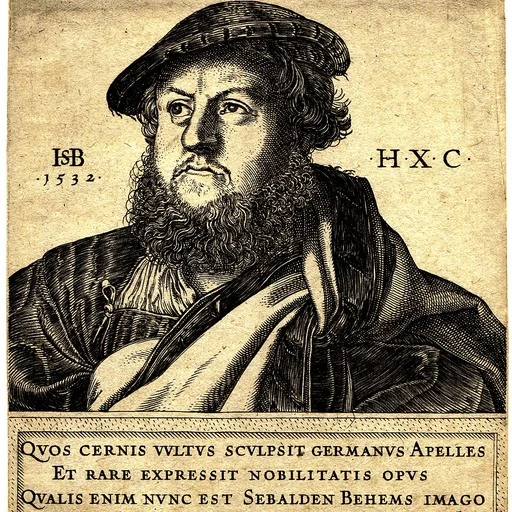
Sebald Beham (1500–1550) was a German painter and printmaker, mainly known for his very small engravings.


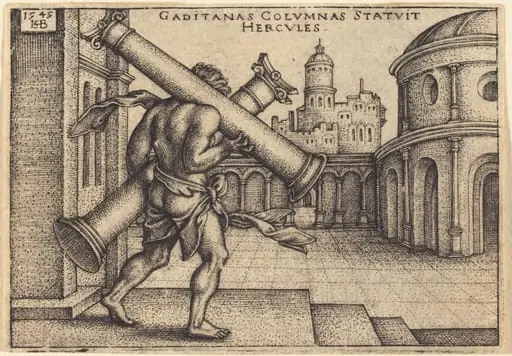
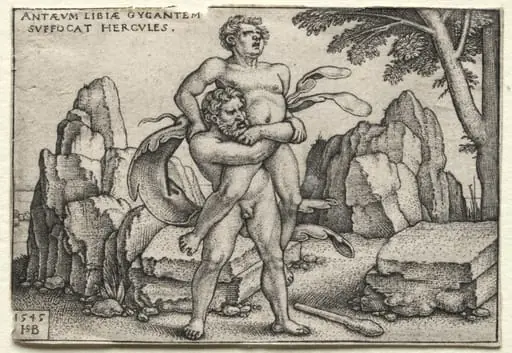 The Labors of Hercules: Hercules Crushing Antaeus
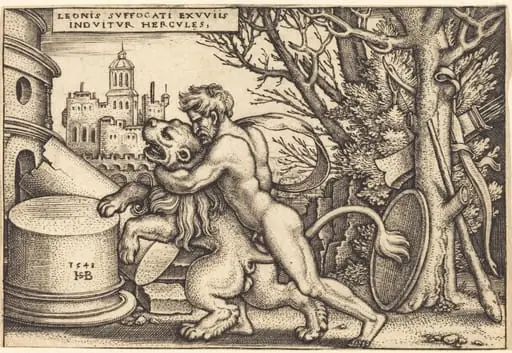 Hercules Killing the Nemean Lion
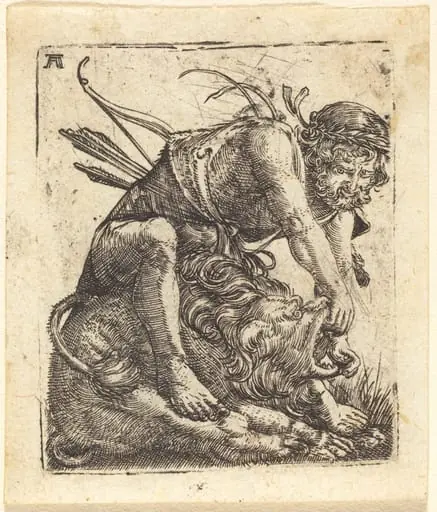 Hercules Overcoming the Nemean Lion
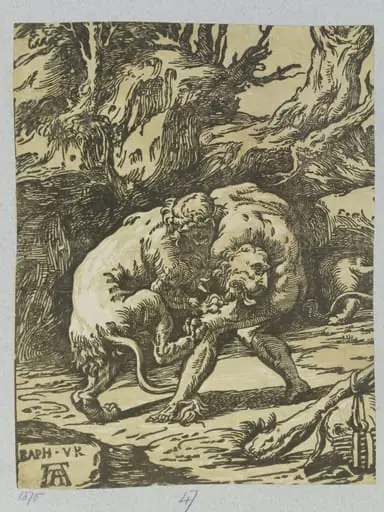 Hercules Strangling the Nemean Lion
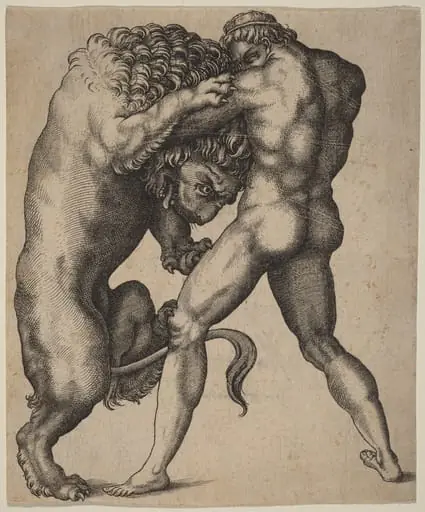 Hercules and the Nemean Lion
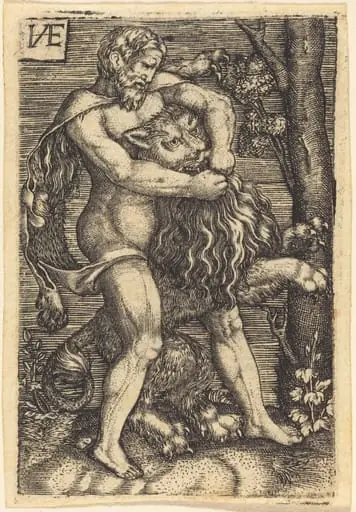 Hercules Killing the Lion
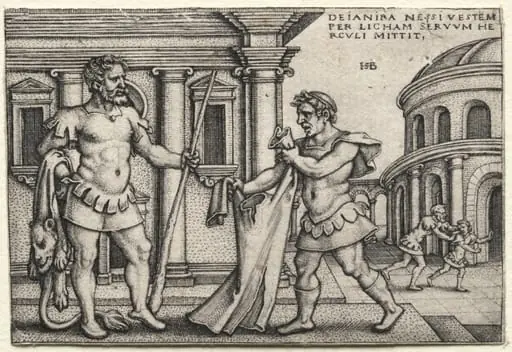 The Labors of Hercules: Hercules Receiving the Garment Steeped in Nessus's Blood
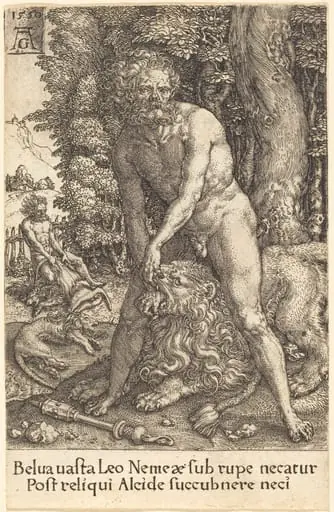 Hercules Slaying the Lion of Nemea
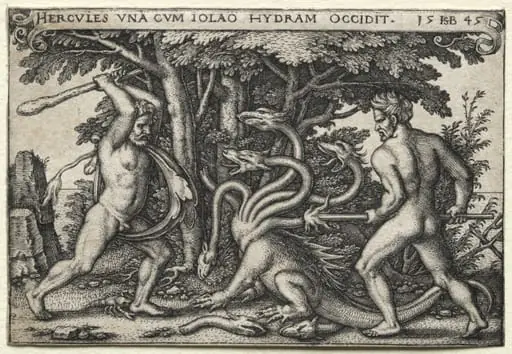 The Labors of Hercules: Hercules Killing the Lernean Hydra
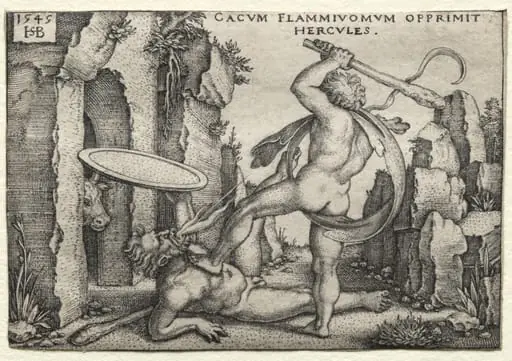 The Labors of Hercules: Hercules Killing the Giant Cacus
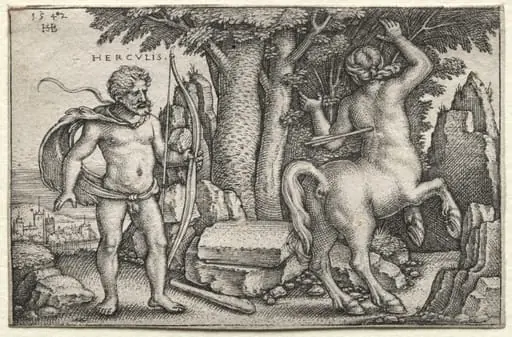 The Labors of Hercules: Hercules and Nessus
 The Labors of Hercules