Artwork
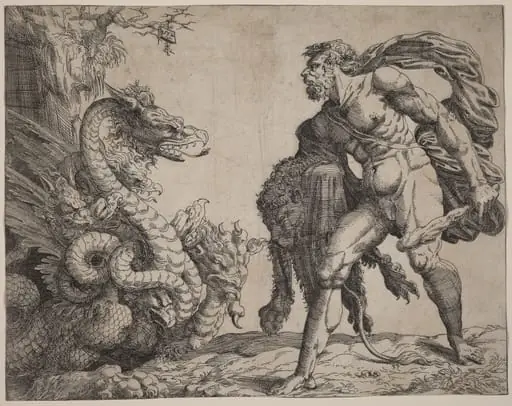
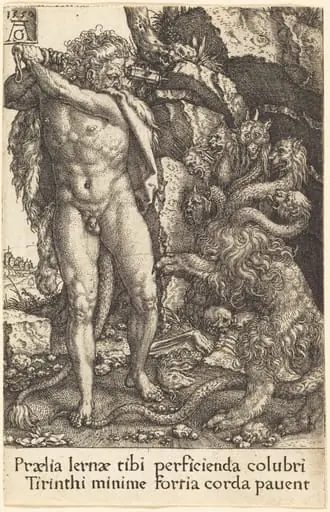
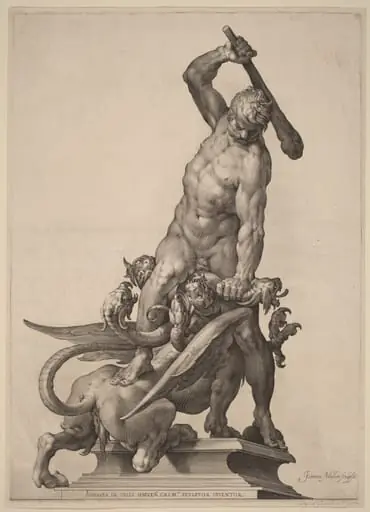
The Labors of Hercules: Hercules Killing the Lernean Hydra
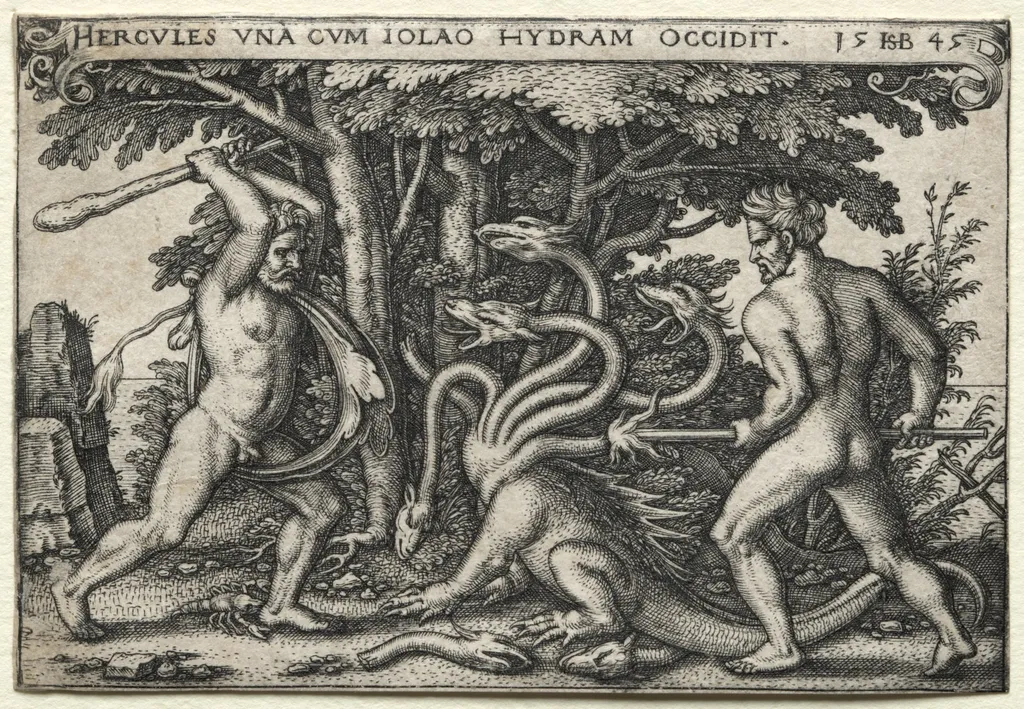
The Labors of Hercules: Hercules Killing the Lernean Hydra is a print by the Renaissance artist Sebald Beham. It dates from 1545 and is held in the collection of the Cleveland Museum of Art. The print is one of twelve small engravings by Barthel Beham, part of a series depicting the Twelve Labors of Hercules.
About this work
Overview
Beham’s technical precision allowed complex narratives to be rendered at a diminutive scale, turning each print into a compact visual epic.
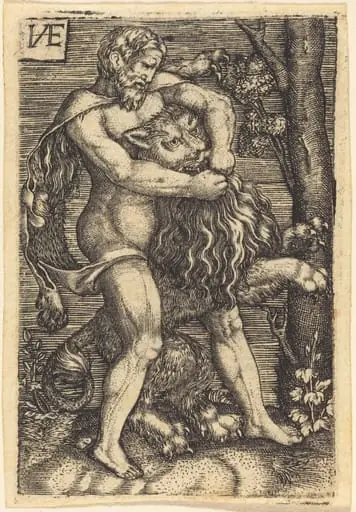
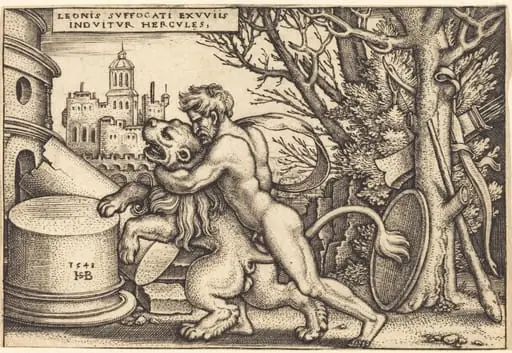
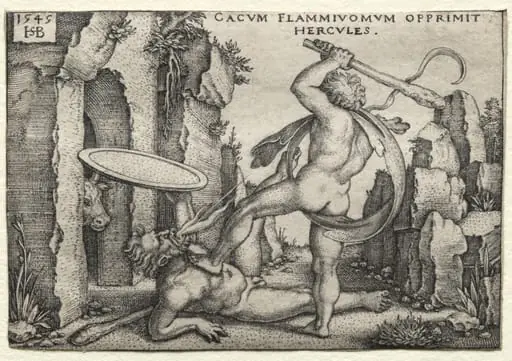
The print is one of twelve small engravings by Barthel Beham, part of a series depicting the Twelve Labors of Hercules. Created in the early 16th century, these miniatures reflect the German 'Little Masters' tradition of intricate, finely detailed work designed for private collectors. Beham’s technical precision allowed complex narratives to be rendered at a diminutive scale, turning each print into a compact visual epic.
Subject & Meaning
The scene portrays Hercules battling the Lernean Hydra, a multi-headed serpent whose heads regrew when cut. This labor, undertaken as penance for killing his family in a fit of divine wrath, symbolizes perseverance against overwhelming odds. The myth’s moral weight—endurance, courage, and redemption—resonated with Renaissance audiences, who saw in Hercules a model of human struggle tempered by divine will.
Technique & Style
Beham employed fine-line engraving to achieve remarkable detail within a small format. His use of cross-hatching and controlled tonal gradations creates depth and texture, particularly in the muscular forms of Hercules and the scaled, writhing body of the Hydra. The composition is tightly packed, emphasizing tension and motion without relying on broad chiaroscuro; instead, clarity and precision define the visual language.
History & Provenance
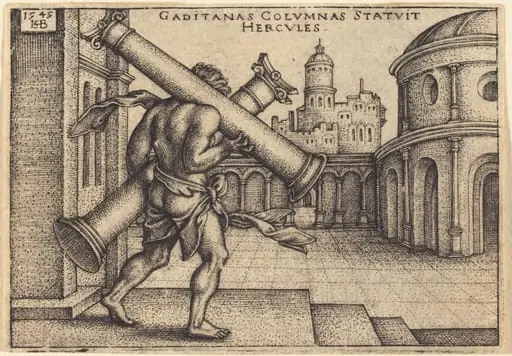
Created around 1530–1540, Beham’s series circulated among educated collectors in German-speaking regions and beyond. The prints were often bound in albums or displayed as cabinet pieces, valued for their craftsmanship and mythological content. While individual impressions survive in major European collections, the original set’s complete provenance remains fragmented, typical of small-scale Renaissance prints.
Context
During the Renaissance, classical mythology experienced a revival among humanist circles, and Hercules’ labors became a favored subject for illustrating virtue through adversity. Beham’s series aligned with broader trends in Northern European printmaking, where mythological cycles were adapted for intimate, scholarly audiences. The emphasis on narrative economy and technical mastery reflected both artistic ambition and market demand for collectible miniatures.
Legacy
Beham’s Hercules series exemplifies the Little Masters’ contribution to print culture, demonstrating how small-scale art could convey grand narratives. His influence extended to later engravers who refined the art of micro-narrative. Though overshadowed by larger paintings, these prints preserved classical myths in accessible form, ensuring their continued circulation and study among collectors and artists well into the 17th century.
Artist & collection
Artist
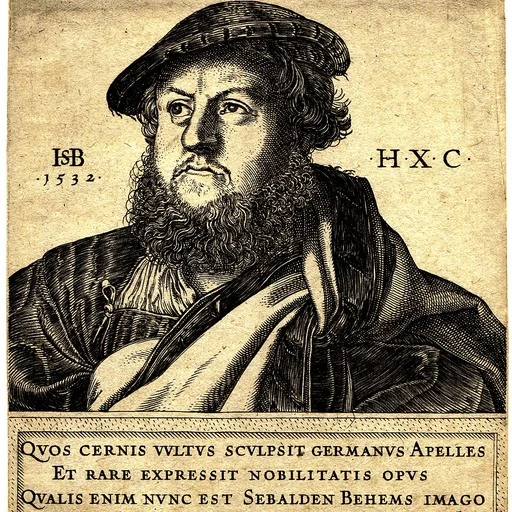
Sebald Beham (1500–1550) was a German painter and printmaker, mainly known for his very small engravings.