Artwork
The Twelve Months: The Year's End
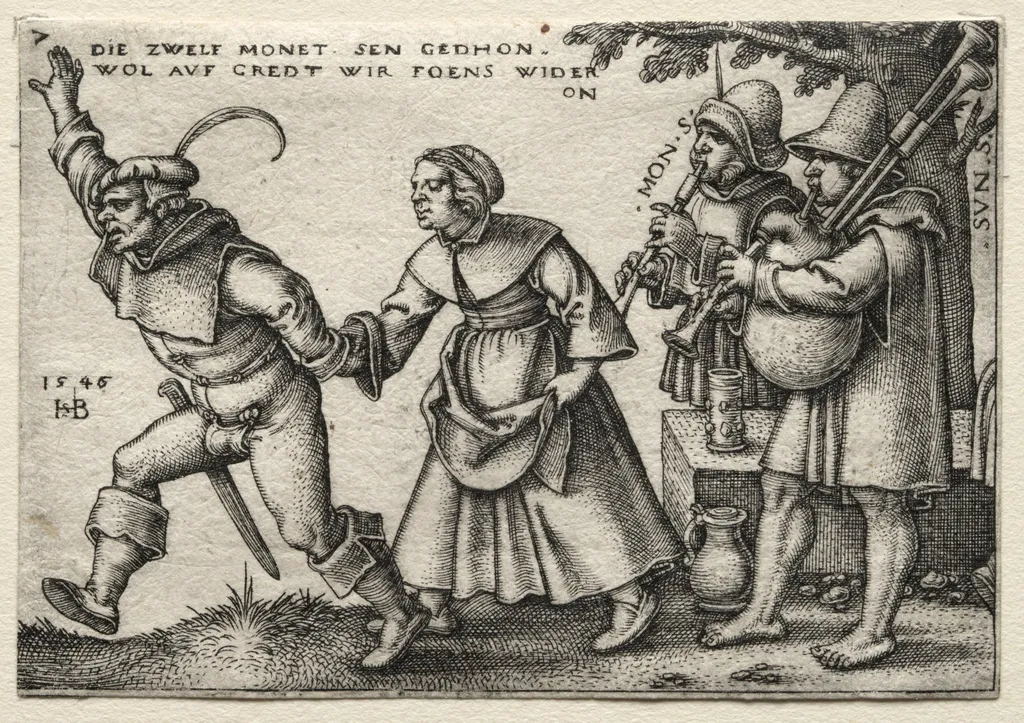
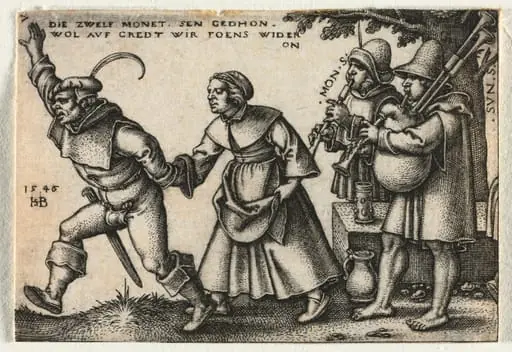
The Twelve Months: The Year's End is a print by the Renaissance artist Sebald Beham. It dates from 1546 and is held in the collection of the Cleveland Museum of Art.
About this work
Overview
The composition rests on a textured ground of earth or straw, topped by a banner of text in a foreign language.
Created in 1546 by German printmaker Hans Sebald Beham, *The Twelve Months: The Year's End* is a small black‑and‑white engraving that concludes a series illustrating each month. The image portrays a chaotic scene of four men in distinctive headgear, with a central figure in a long robe clutching a staff while appearing agitated, surrounded by three companions who restrain him and display a bag of coins and a jug. The composition rests on a textured ground of earth or straw, topped by a banner of text in a foreign language.
Subject & Meaning
The work represents December, the final month of the calendar, and suggests themes of commerce and hardship. The central, upset figure may symbolize the strain of winter or the closing of the fiscal year, while the other men, one bearing money, hint at the economic transactions that intensify as the year ends. The banner’s inscription, though not translated here, likely reinforces the seasonal or temporal context of the scene.
Technique & Style
Beham employed fine line engraving on a copper plate, a hallmark of the “Little Masters” who specialized in intricate, diminutive prints. The rendering relies on cross‑hatching and delicate stippling to convey texture—from the roughness of the ground to the folds of clothing—while maintaining a clear, narrative focus despite the limited scale. The figures’ exaggerated hats and gestures reflect a stylized, almost caricatural approach common in mid‑16th‑century German prints.
History & Provenance
Hans Sebald Beham, born in Nuremberg and later active in Frankfurt, produced this piece as part of his month series, a popular format for didactic and decorative prints in the Renaissance. The engraving entered the collection of the Cleveland Museum of Art, where it remains catalogued as an example of Beham’s prolific output and the broader tradition of German printmaking.
Context
The series belongs to a broader European tradition of visual calendars that combined allegorical figures with everyday activities to mark the passage of time. In the mid‑16th century, such prints served both educational purposes and market demand for affordable art. Beham’s work reflects the economic anxieties of the period, as well as the technical virtuosity that allowed small prints to circulate widely among collectors and merchants.
Artist & collection
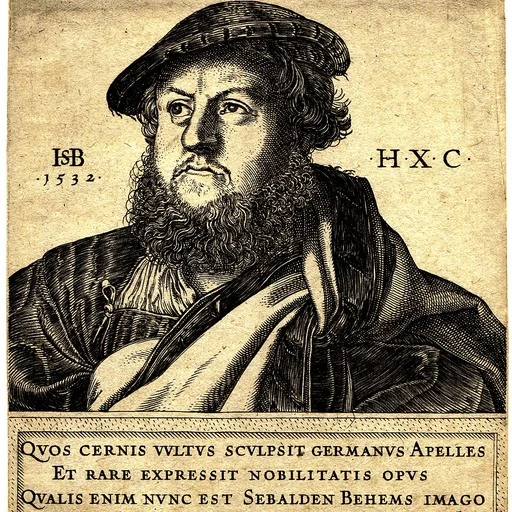
Artist
Sebald Beham (1500–1550) was a German painter and printmaker, mainly known for his very small engravings.


 The Peasant Wedding or the Twelve Months: No. 7
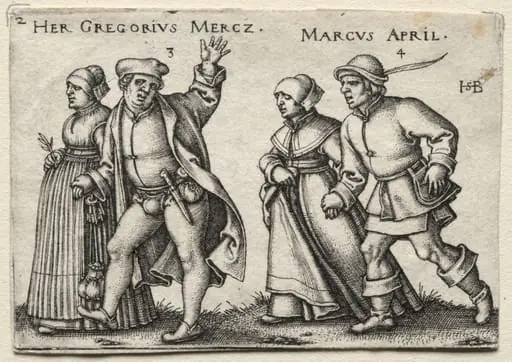 The Village Wedding: Her Gregorius Mercz
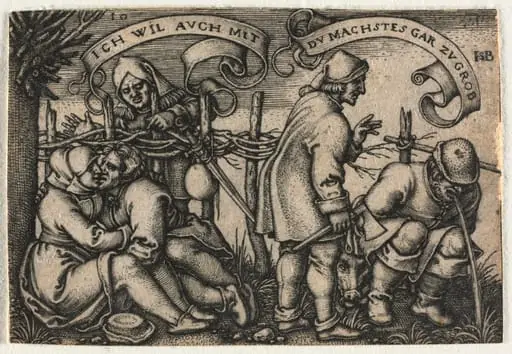 The Peasant Wedding or the Twelve Months: No. 10
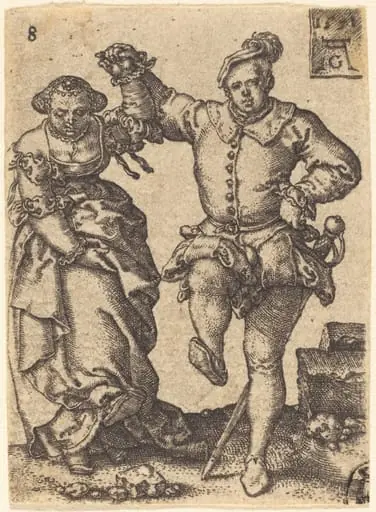 Dancing Couple
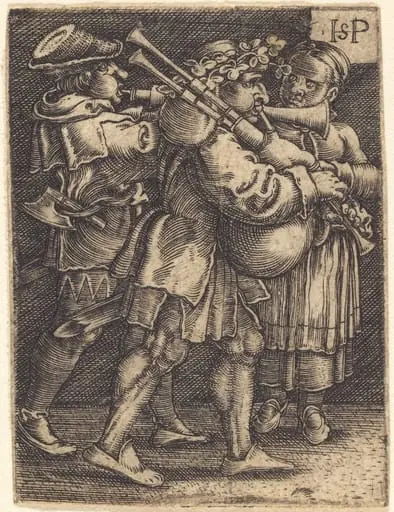 Two Street Players and a Girl
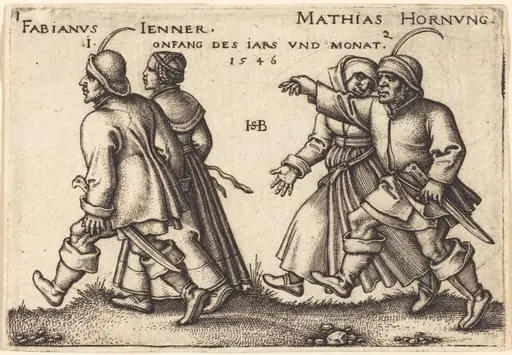 January and February
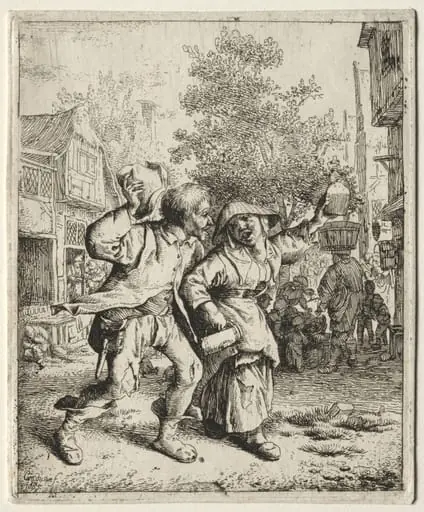 The Drunken Couple
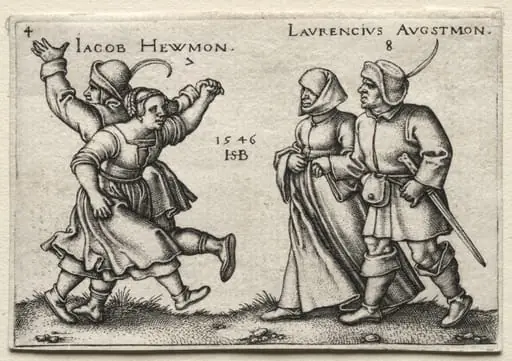 The Village Wedding: Jacob Hewmon
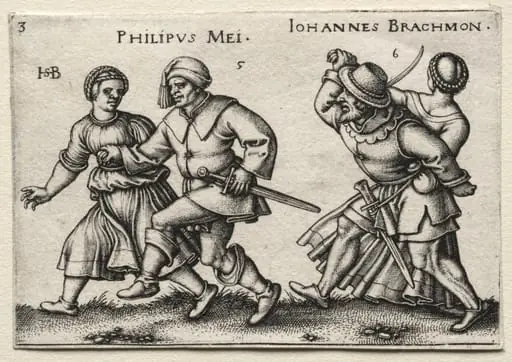 The Village Wedding: Philipus Mei
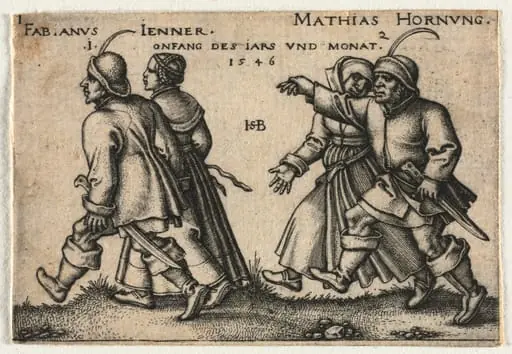 The Peasant Wedding or the Twelve Months: 1-Fabianus Jenner 2-Mathias Hornung