Artwork
Tasso's Oak in the monastery garden of San Onofrio, Rome
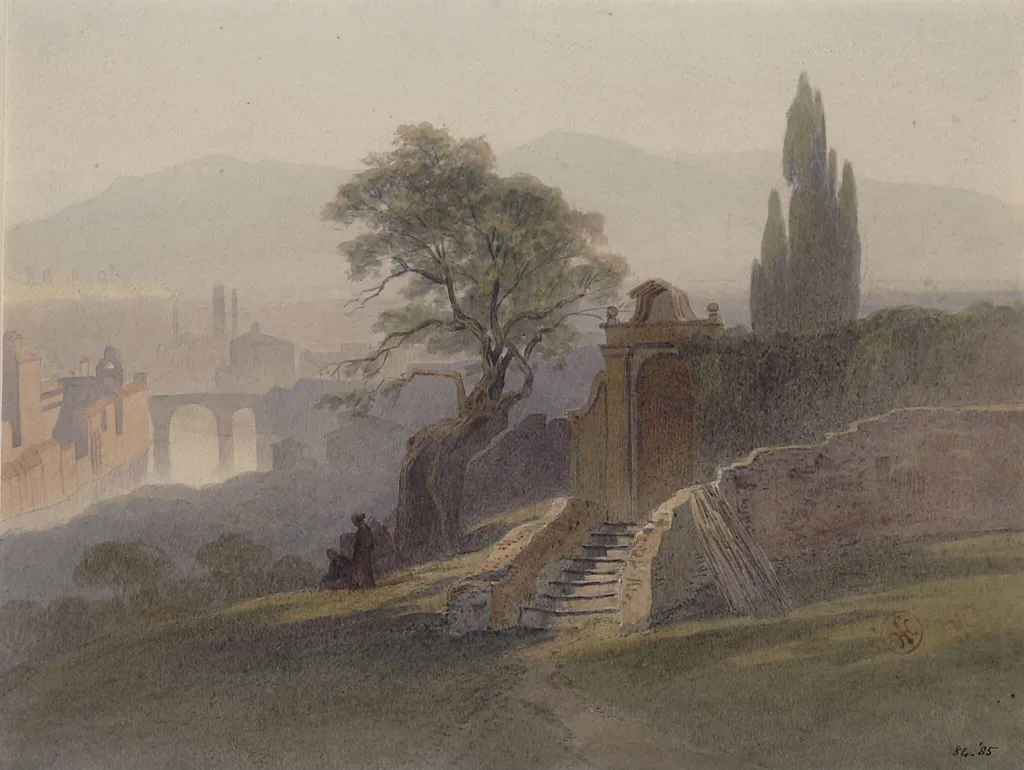
Tasso's Oak in the monastery garden of San Onofrio, Rome is a watercolor work on paper by the British Romanticist artist Harry Johnson. It dates from 1850 and is held in the collection of the Victoria and Albert Museum.
About this work
Overview
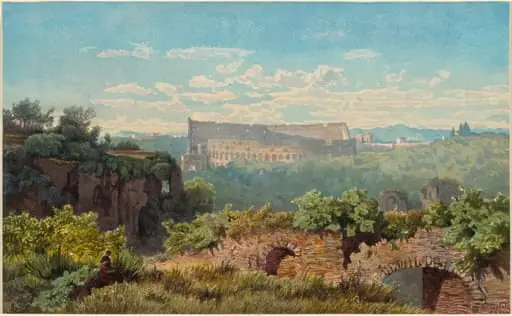
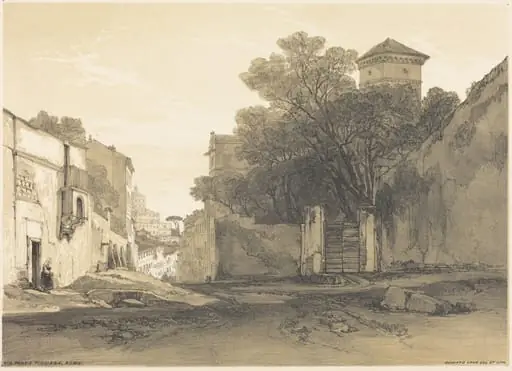
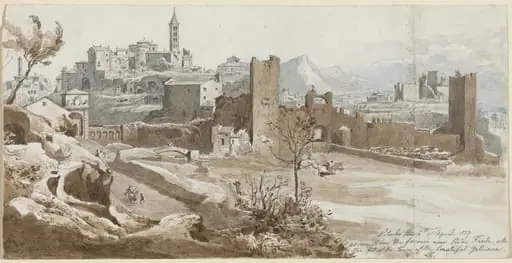
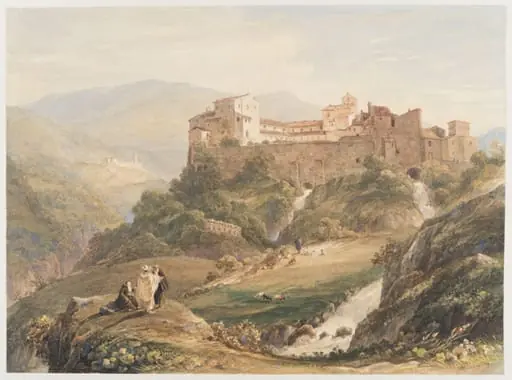
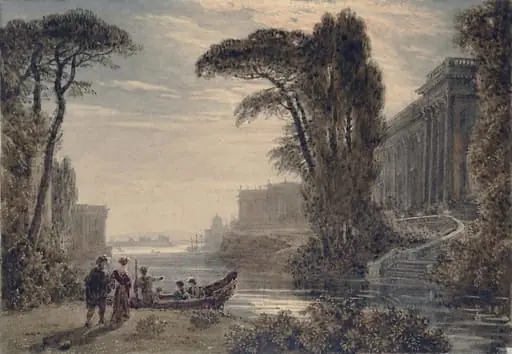
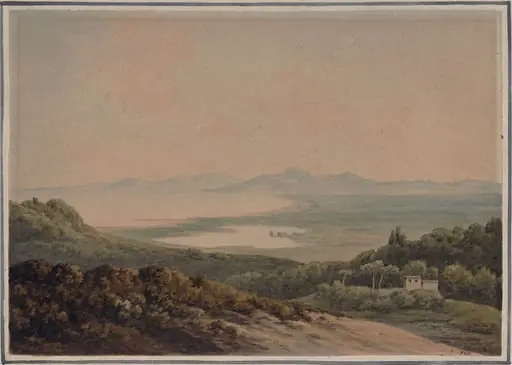
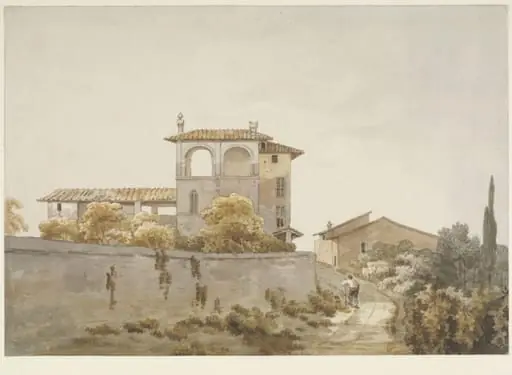
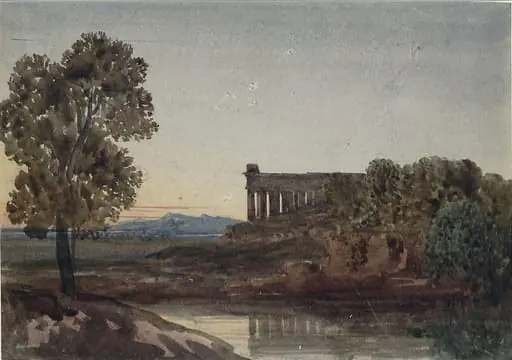
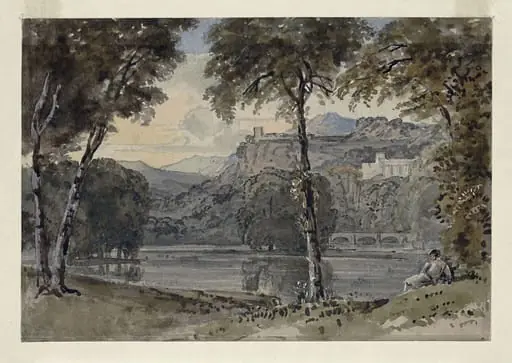
It portrays a solitary oak tree near a stone archway, with steps leading into the landscape and distant views of a town, bridge, and spire.
Created in 1850, this watercolour by Harry Johnson captures a quiet corner of the San Onofrio monastery garden in Rome. The work is signed by the artist and rendered in delicate washes of green, brown, and pale blue. It portrays a solitary oak tree near a stone archway, with steps leading into the landscape and distant views of a town, bridge, and spire. The composition emphasizes stillness and scale, with two tiny figures resting on the grass.
Subject & Meaning
The tree depicted is traditionally associated with Torquato Tasso, the 16th-century poet who reportedly sought refuge at San Onofrio. Johnson’s rendering avoids overt symbolism, instead presenting the oak as a quiet witness to history. Its expansive form contrasts with the modest human figures, suggesting contemplation and the passage of time rather than heroic commemoration.
Technique & Style
Johnson employed transparent watercolour washes to achieve a soft, atmospheric effect. The brushwork is restrained, with subtle gradations of tone defining the hillside, foliage, and distant architecture. Light is rendered gently, as if filtered through afternoon haze, enhancing the sense of calm. The scale of the figures and structures is deliberately minimized to emphasize the landscape’s serenity.
History & Provenance
The watercolour was completed during Johnson’s travels in Italy, likely as part of a series documenting sites linked to literary and religious figures. It remained in private hands until entering a public collection, though its exact provenance before institutional acquisition is not fully documented. Its signature confirms authorship and dates it to the mid-19th century.
Context
In the 1850s, British artists frequently traveled to Italy to sketch sites associated with classical and Renaissance culture. San Onofrio, linked to Tasso’s retreat, was a destination for those drawn to literary pilgrimage. Johnson’s work reflects this trend, focusing on quiet, contemplative landscapes rather than grand monuments, aligning with Romantic-era sensibilities toward solitude and nature.
Legacy
The watercolour contributes to a body of 19th-century topographical art that valued observation over drama. While not widely exhibited, it remains a modest example of how British watercolourists engaged with Italian cultural landscapes. Its preservation in museum collections underscores its role as a record of place, memory, and artistic practice rather than a celebrated work of art.
Artist & collection
Artist
Harry Johnson kept a pocket-sized sketchbook and a flask of ink wherever he went, even on his Sunday walks to the local pub.