Artwork
Sea Pasture
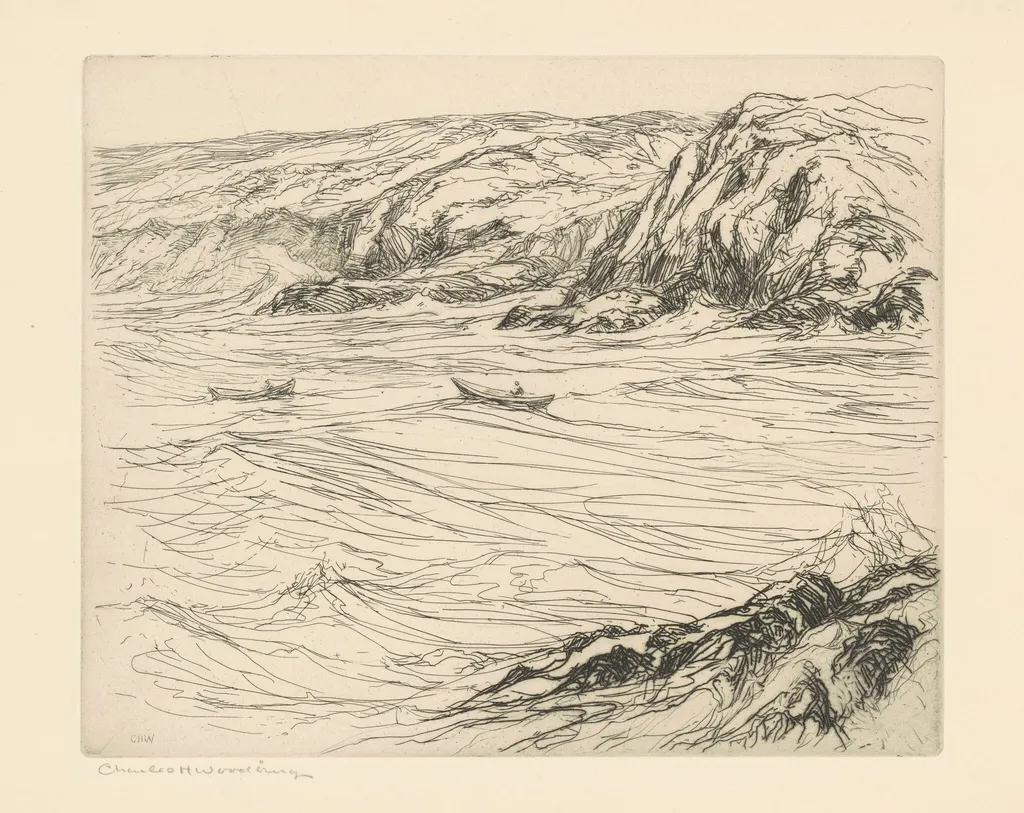
Sea Pasture is an ink print by Charles H. Woodbury. It dates from 1936 and is held in the collection of the National Gallery of Art.
About this work
Overview
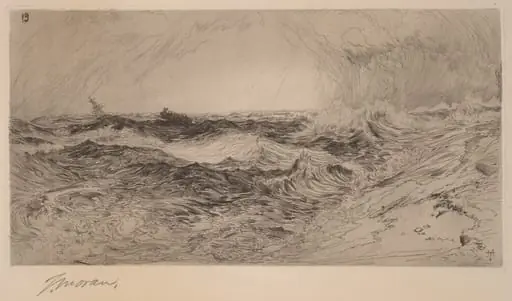
The work presents a minimalist seascape where horizontal undulations suggest both water and vegetation, blurring the boundary between land and sea.
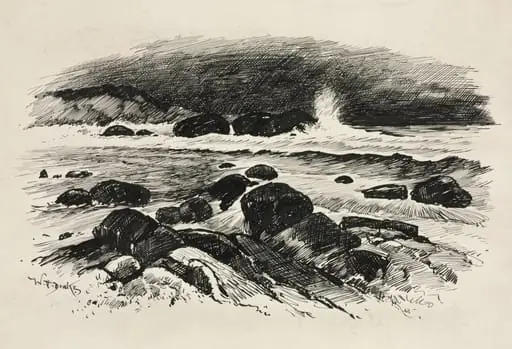
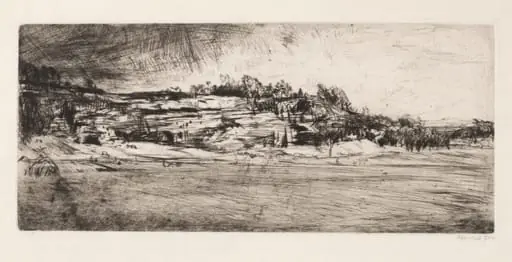
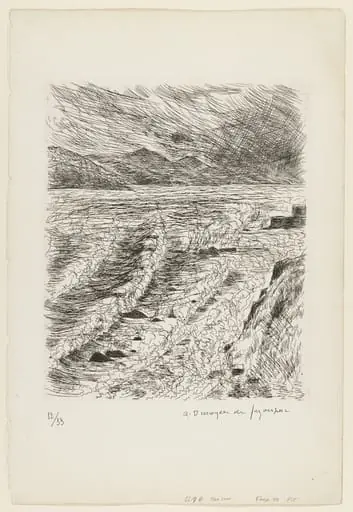
Created in 1936, Sea Pasture is a black-ink etching on laid paper by American artist Charles H. Woodbury. The work presents a minimalist seascape where horizontal undulations suggest both water and vegetation, blurring the boundary between land and sea. The composition is restrained, relying on rhythmic line work rather than detail to evoke a tranquil coastal environment. Its monochromatic palette and delicate texture reflect Woodbury’s interest in the expressive potential of printmaking.
Subject & Meaning
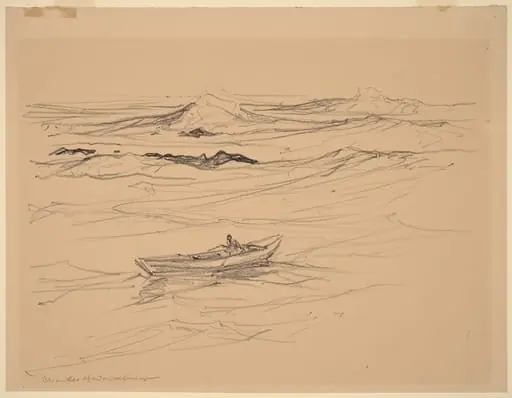
The scene depicts a quiet, unnamed shoreline, with a solitary boat centered on the water. The recurring wavy lines function ambiguously—as ripples, reeds, or low shrubs—inviting the viewer to perceive the landscape as a fluid, interconnected whole. There is no narrative or human presence beyond the vessel, suggesting solitude and the quiet persistence of nature. The ambiguity of forms encourages contemplation over literal interpretation.
Technique & Style
Woodbury employed etching to incise fine lines into a metal plate, which were then inked and pressed onto paper. The resulting marks retain the precision of engraving while appearing spontaneous, as if drawn by hand. The artist used controlled repetition of curved lines to build texture and movement, avoiding shading or tonal gradation. This method emphasizes line as both structure and rhythm, aligning with early 20th-century printmaking’s focus on formal economy.
History & Provenance
Sea Pasture was produced late in Woodbury’s career, during a period when he increasingly turned to intimate, meditative subjects. It was likely printed in a small edition, consistent with his practice of limited-run etchings distributed through art societies and galleries. The work remains in private and institutional collections, primarily in the northeastern United States, though its exact exhibition history is not widely documented.
Context
In the 1930s, American printmakers like Woodbury moved away from grand narratives toward personal, observational subjects. Sea Pasture reflects this shift, echoing the quiet modernism of contemporaries such as Mary Cassatt and James McNeill Whistler. The work also aligns with regional interests in coastal New England landscapes, where Woodbury spent much of his time, capturing subtle natural rhythms rather than dramatic vistas.
Legacy
Sea Pasture exemplifies Woodbury’s contribution to American printmaking through its synthesis of technical discipline and poetic restraint. While not widely reproduced, it has influenced later artists interested in the expressive potential of line and negative space. Its enduring presence in museum collections underscores its role as a quiet but significant example of mid-century American etching.
Artist & collection


![Tahitian Shore [recto], by Paul Gauguin](https://artifactworldgallery.com/img/paul-gauguin--tahitian-shore-recto--d19dfa11db6e6101-w320.webp)
![Landscape [Paesaggio], by Carlo Paolo Agazzi](https://artifactworldgallery.com/img/carlo-paolo-agazzi--landscape-paesaggio--e606f4ada87d2052-w320.webp)