Artwork
Procession at the Foot of Mount Fuji
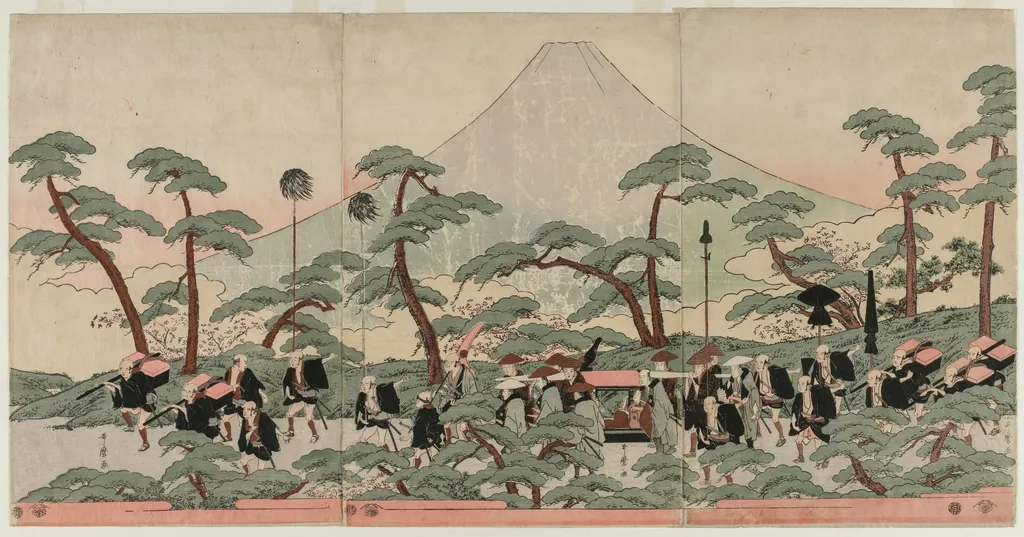
Procession at the Foot of Mount Fuji is a print by the Romanticist artist Kitagawa Utamaro. It dates from 1792 and is held in the collection of the Cleveland Museum of Art.
About this work
Overview
It is currently held in the collection of The Cleveland Museum of Art, where it is preserved as an example of late 18th-century Japanese printmaking.
Procession at the Foot of Mount Fuji is a woodblock print by Kitagawa Utamaro, dated 1792. It depicts a group of travelers moving along a forest path beneath the looming form of Mount Fuji. The work belongs to the ukiyo-e tradition and was produced during the Edo period. It is currently held in the collection of The Cleveland Museum of Art, where it is preserved as an example of late 18th-century Japanese printmaking.
Subject & Meaning
The scene portrays a pilgrimage or seasonal journey, with figures dressed in layered garments and carrying bundles or offerings. Their movement through the trees suggests ritual or devotion, possibly linked to Fuji worship, which was widespread among commoners in Edo-period Japan. The mountain, though distant, dominates the composition, symbolizing spiritual presence rather than mere geography. The procession implies harmony between human activity and the natural world.
Technique & Style
Utamaro employed fine-line woodblock carving and delicate color gradations typical of the ukiyo-e genre. The print uses muted earth tones and soft washes of pink and green to suggest atmosphere rather than detail. Brushwork is subtle, with contours defined by ink outlines and colors applied in flat, layered planes. The composition guides the eye diagonally through the forest, creating rhythm and depth without perspective distortion.
History & Provenance
Created during Utamaro’s peak years as a printmaker, the work was likely part of a series depicting landscapes and travelers. It entered The Cleveland Museum of Art’s collection in the 20th century through established channels of Japanese art acquisition. Its preservation reflects early Western interest in Edo-period prints, though its specific exhibition history prior to museum acquisition remains undocumented.
Context
In late 18th-century Japan, depictions of Mount Fuji and pilgrimages to its base were popular subjects in popular art, reflecting both religious devotion and rising tourism among the merchant class. Utamaro, known primarily for portraits of women, here adapted his style to landscape and narrative scenes, showing his versatility. The print aligns with broader trends in ukiyo-e that celebrated nature and everyday life beyond urban pleasure quarters.
Legacy
While not among Utamaro’s most widely reproduced works, Procession at the Foot of Mount Fuji contributes to understanding his range beyond bijin-ga. It exemplifies how ukiyo-e artists integrated natural scenery into narrative compositions, influencing later Japanese and Western perceptions of Japanese aesthetics. The print remains a quiet testament to the cultural significance of Mount Fuji in Edo-period visual culture.
Artist & collection


 Untitled
 Untitled
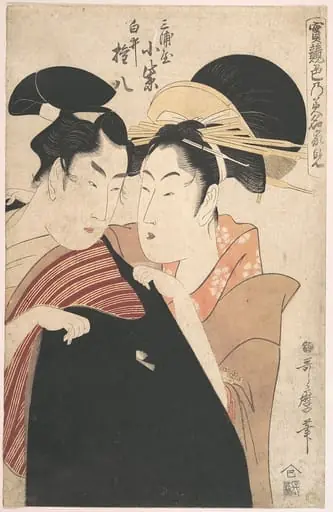 実競色乃美名家見 三浦屋小紫 白井権八|The Lovers Miura-ya Komurasaki and Shirai Gonpachi.
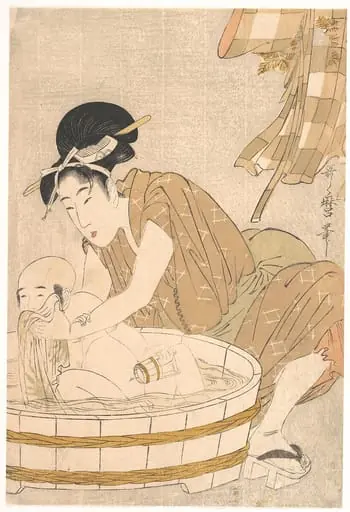 行水|Bathtime (Gyōzui)
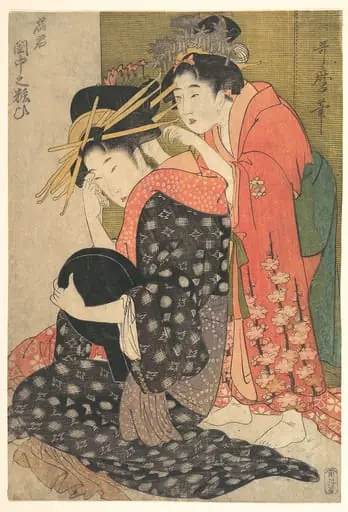 名君 閨中の粧ひ|The Oiran Yoso-oi Seated at Her Toilet
 Untitled
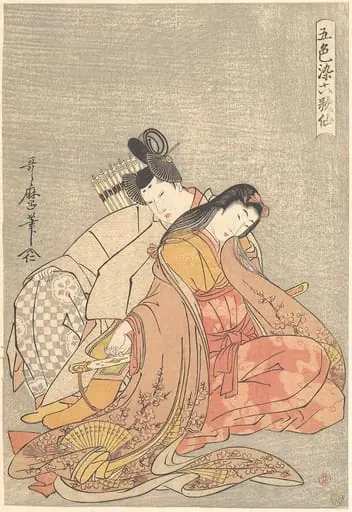 『五色染六歌仙』 在原業平と小野小町|“The Poet Ariwara no Narihira (825–880) and Ono no Komachi,” from the series Five Colors of Love for the Six Poetic Immortals (Goshiki-zome rokkasen)
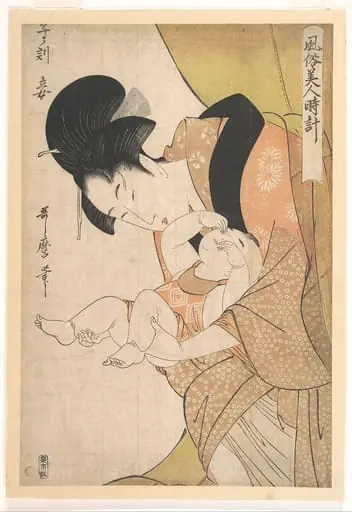 風俗美人時計 子ノ刻 妾|Midnight: Mother and Sleepy Child
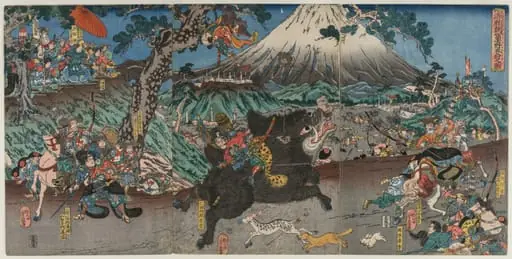 Picture of Minamoto no Yoritomo's Hunt on the Slopes of Mount Fuji
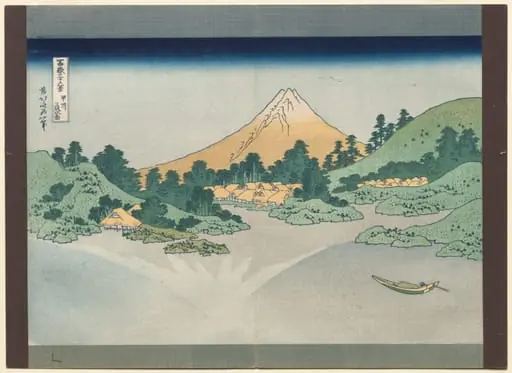 Thirty-Six Views of Mt. Fuji: The Surface of Lake Misaka in Kai Province
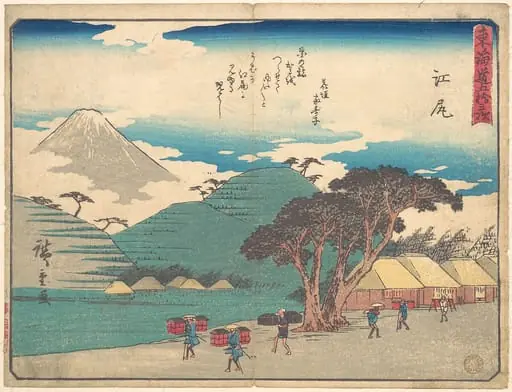 東海道五十三次 江尻|Ejiri
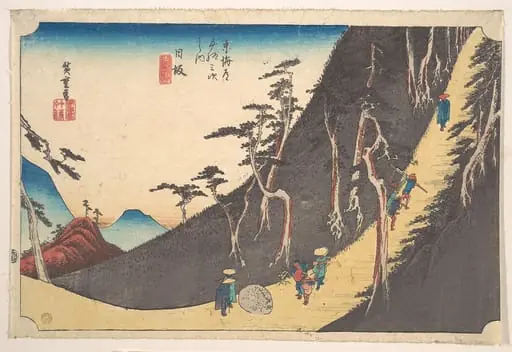 東海道五十三次之内 日坂 佐夜の中山|Nissaka, Sayo Nakayama
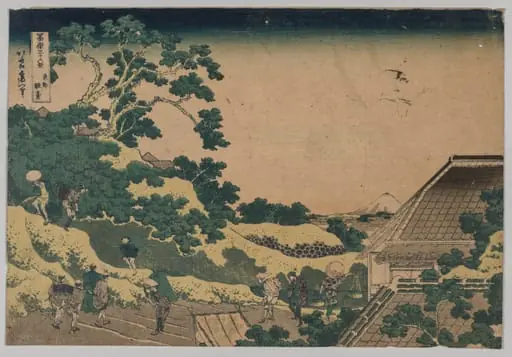 Fuji from Surugadai, in Yedo
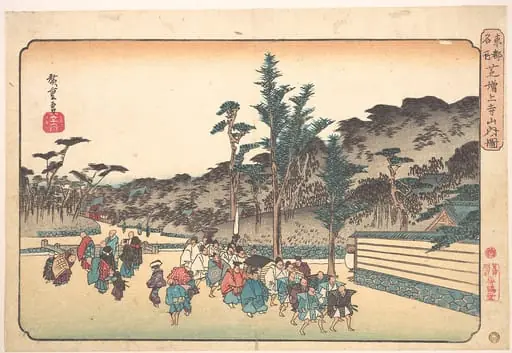 東都名所 芝増上寺山内の図|Shiba Zōjōji Sannai no Zu
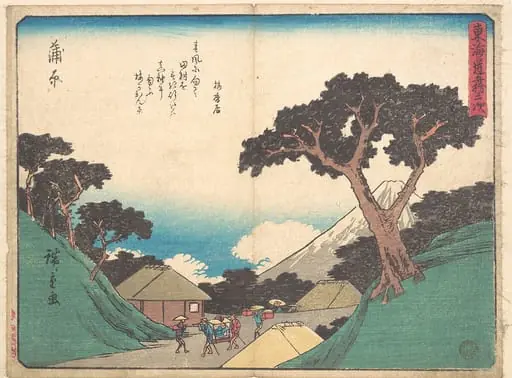 東海道五十三次 蒲原|Kambara
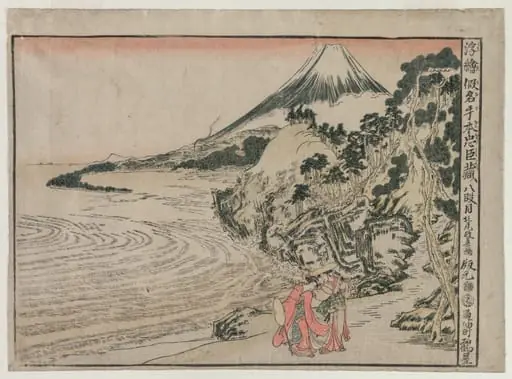 Chushingura: Act VIII (from the series Perspective Pictures for The Treasure House of Loyalty)
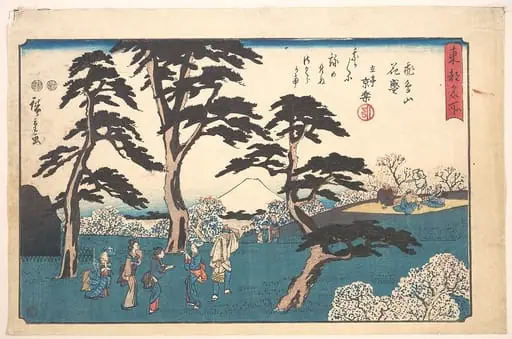 東都名所 飛鳥山花盛|Asukayama Hana Zakari
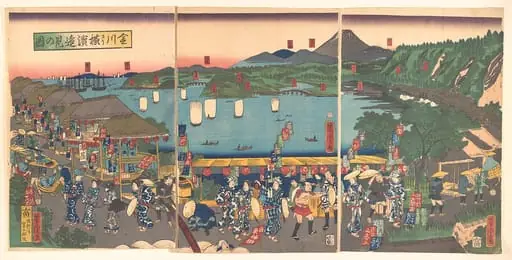 Kanagawa yōri Yokohama...ken no zu|A Distant View of Yokohama from Kanagawa