Artwork
Kanagawa yōri Yokohama...ken no zu|A Distant View of Yokohama from Kanagawa
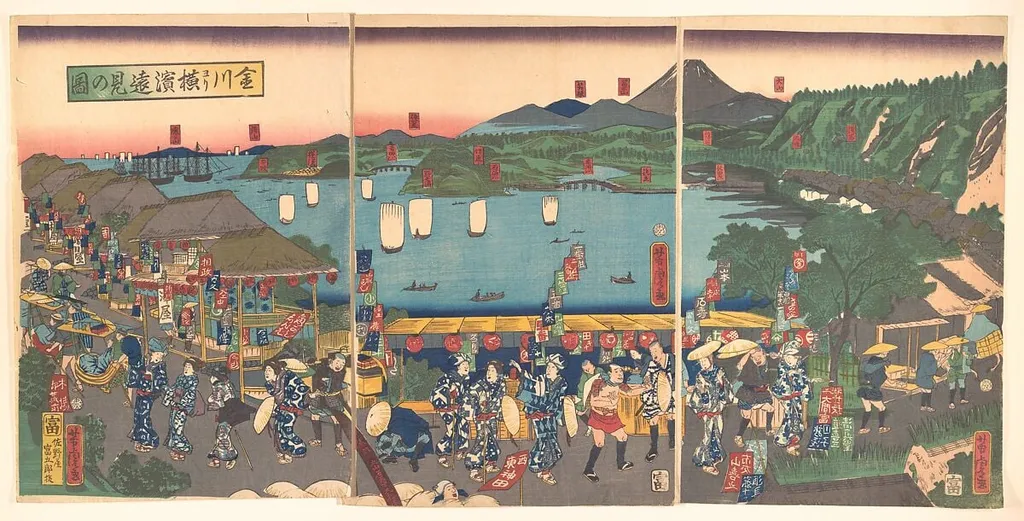
Kanagawa yōri Yokohama...ken no zu|A Distant View of Yokohama from Kanagawa is an ink print by the Impressionist artist Utagawa Yoshitora. It dates from 5 and is held in the collection of the Metropolitan Museum of Art.
About this work
Overview
This triptych by Utagawa Yoshitora depicts a riverside view of Yokohama as seen from Kanagawa, rendered in ink and color on paper.
This triptych by Utagawa Yoshitora depicts a riverside view of Yokohama as seen from Kanagawa, rendered in ink and color on paper. Composed of three horizontal panels, the work captures a bustling waterfront during the mid-19th century. Each section contributes to a continuous panorama, emphasizing movement and daily activity along the shore. The Metropolitan Museum of Art holds the complete set, preserving its original format and condition.
Subject & Meaning
The scene portrays Yokohama’s transformation as a port open to foreign trade, with boats, pedestrians, and structures reflecting new commercial energy. Crowds gather near bridges and docks, suggesting the influx of merchants and laborers. Distant mountains and sparse vegetation frame the human activity, subtly contrasting natural landscape with urban growth. Small details like lanterns and a dog imply lived-in realism rather than idealized spectacle.
Technique & Style
Yoshitora employs fine linework and controlled color application to maintain clarity amid dense detail. Cross-hatching defines architectural textures and water ripples, while flat, saturated hues—predominantly blues and greens—anchor the composition. The triptych format allows spatial continuity without sacrificing individual panel coherence. Tiny elements, from signage to clothing folds, are rendered with precision yet never overwhelm the overall rhythm.
History & Provenance
Created around 1855, the print emerged during Japan’s opening to international commerce after decades of isolation. It was likely produced for local audiences curious about Yokohama’s evolving identity. The work remained in private collections before entering The Metropolitan Museum of Art’s holdings, where it is preserved as a record of early modern Japanese urban life and print culture.
Context
This print coincides with the Treaty Ports era, when Yokohama became a hub for foreign trade and cultural exchange. While Western influences began to appear in architecture and dress, the composition retains traditional Japanese compositional principles. The artist’s focus on ordinary activity, rather than monumental events, reflects the ukiyo-e tradition of documenting everyday scenes amid societal change.
Legacy
The triptych stands as a visual document of Yokohama’s transition from fishing village to international port. Its detailed realism and balanced composition influenced later depictions of urban life in Japanese prints. Though not widely reproduced, it remains a key example of mid-19th-century woodblock printing’s capacity to capture social transformation with nuance and quiet observation.
Artist & collection

 Untitled
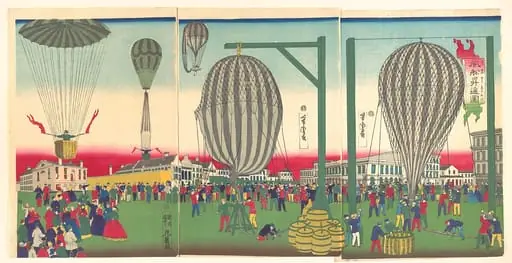 風船昇遥図|Illustration of a Balloon Ascending (Fūsen shōyō no zu)
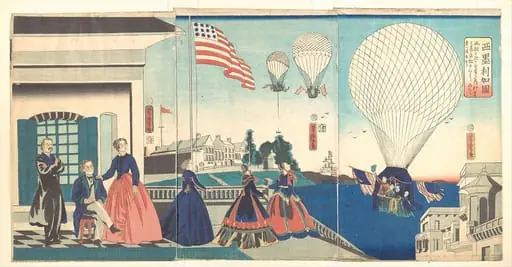 「亜墨利加國」|“America”: Enjoying Hot Air Balloons
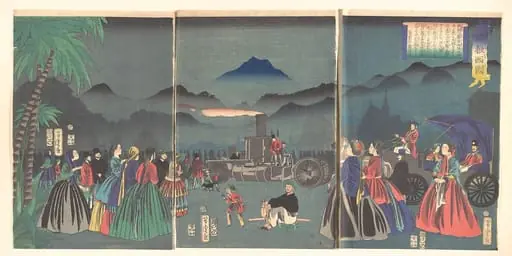 仏蘭西国|France (furansukoku)
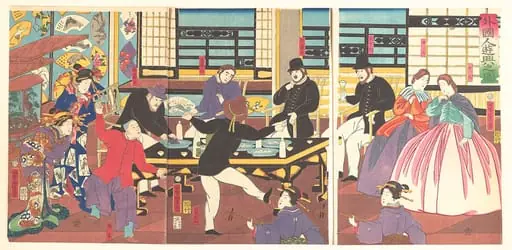 歌川義虎画 『外国人遊興之図』|Foreigners Enjoying a Party (Gaikokujin yūkyō no zu)
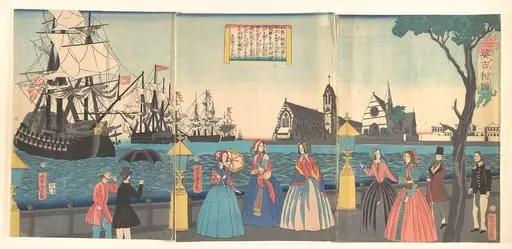 英吉利国|England (Igirisukoku)
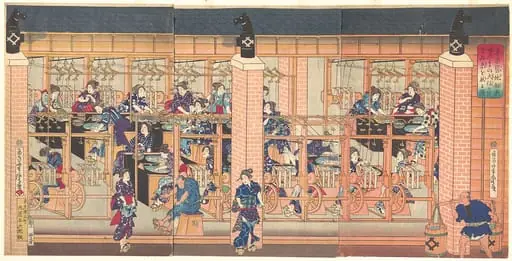 『東京築地舶来ぜんま い大仕かけきぬ糸をとる図』|Imported Silk Reeling Machine at Tsukiji in Tokyo
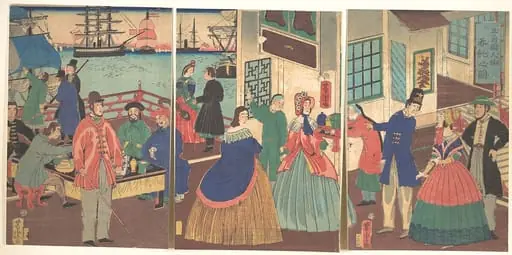 歌川芳虎画 『五箇国人物 呑飥之図』|People of the Five Nations Drinking and Eating (Gokakoku jinbutsu dontaku no zu)
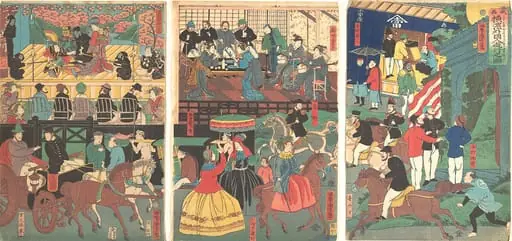 Bushu Yokohama gaikokujin yūkyō no zu|A View of the Amusements of the Foreigners in Yokohama, Bushu
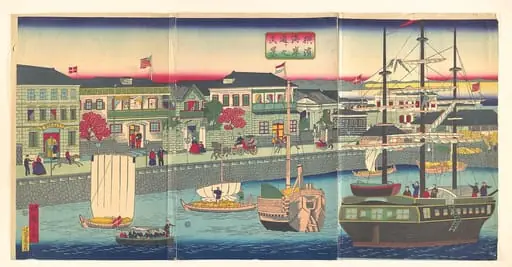 横浜海岸通り之風景|View of the Seafront in Yokohama (Yokohama Kagandori no fūkei)
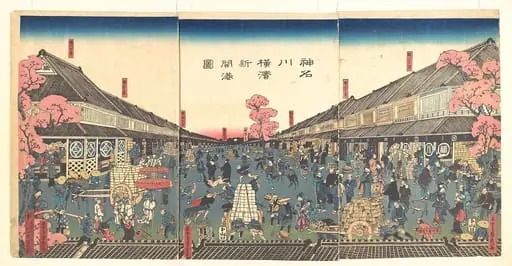 歌川五雲亭貞秀画 『神名川横浜新開港圖』|The Newly Opened Port of Yokohama in Kanagawa Prefecture (Kanagawa Yokohama shinkaikōzu)
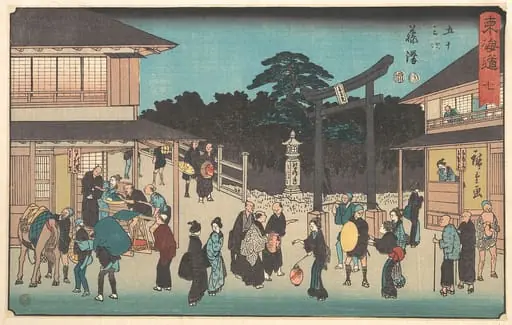 東海道五十三次 藤澤|Fujisawa
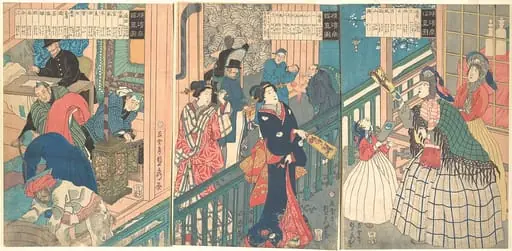 歌川(五雲亭)貞秀画 「横濱商館真圖」|A True View of a Trading House of a Yokohama Merchant
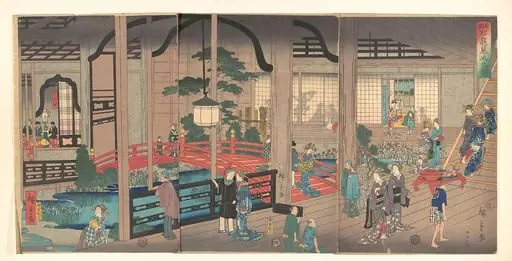 Yokohama Gankirō no zu|View of the Interior of the Gankirō Tea House in Yokohama
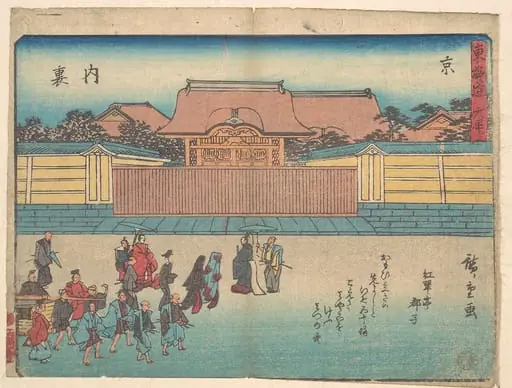 東海道五十三 京 内裏|Kyoto: Dairi
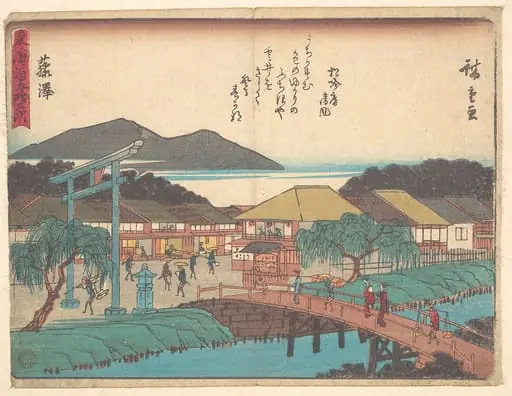 東海道五十三次 藤沢|Fujisawa
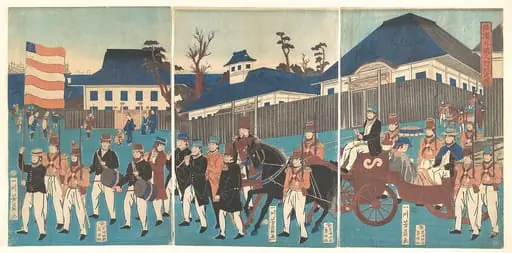 Yokohama Gankirō gaikokujin gyōretsu no zu|Picture of a Procession of Foreigners at Yokohama