Artwork
Full Moon on Kanazawa, Musashi
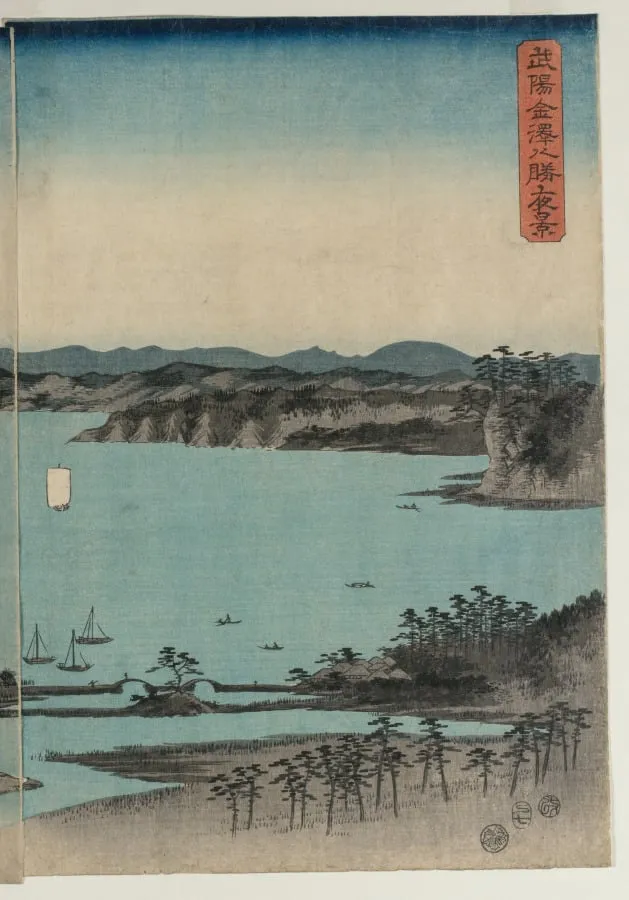
Full Moon on Kanazawa, Musashi is a print by the Impressionist artist Utagawa Hiroshige. It dates from 1857 and is held in the collection of the Cleveland Museum of Art.
About this work
Hiroshige made this print late in life, part of a series about snow, moon, and flowers—simple things that felt special.
A full moon glows over a dark bay, lighting up tiny fishing boats and a curved bridge in the distance. Hills rise on the left, dotted with houses and trees.
Hiroshige made this print late in life, part of a series about snow, moon, and flowers—simple things that felt special. People in his time would have known this spot near Tokyo right away.
Look up more works about *japan, edo period (1615–1868)* to see how artists showed everyday beauty.
Overview
Full Moon on Kanazawa, Musashi is a late-career ukiyo-e print by Hiroshige, depicting a serene autumnal scene under a full moon.
Subject & Meaning
The print illustrates the poetic theme of 'setsugekka' (snow, moon, and flowers), focusing on the moon aspect, evoking a sense of everyday beauty in a familiar landscape.
Technique & Style
Hiroshige employs his characteristic panoramic composition, juxtaposing a dark bay illuminated by the moon with hills, villages, and architectural details like a double-arched bridge.
History & Provenance
Created late in Hiroshige's life, this work is part of a triptych series exploring the setsugekka theme, with a setting recognizable to his Edo Period contemporaries due to its proximity to Tokyo.
Context
Reflective of Edo Period aesthetics, the piece highlights the beauty in mundane scenes, a common theme in ukiyo-e prints of the time, which often celebrated natural beauty and everyday life.
Legacy
This print contributes to Hiroshige's legacy of capturing Japan's landscapes and the fleeting moments of natural beauty, influencing subsequent artistic depictions of everyday Japanese life and nature.
Artist & collection
Artist
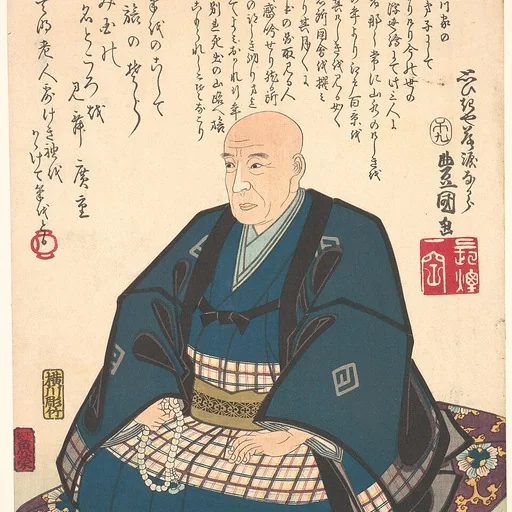
Utagawa Hiroshige (歌川 広重) or Andō Hiroshige (安藤 広重), born Andō Tokutarō (安藤 徳太郎; 1797 – 12 October 1858), was a Japanese ukiyo-e artist, considered the last great master of that tradition.

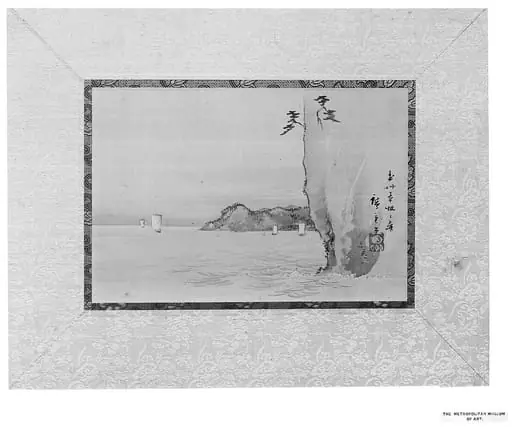
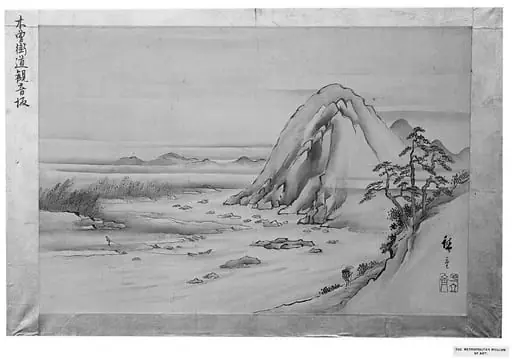
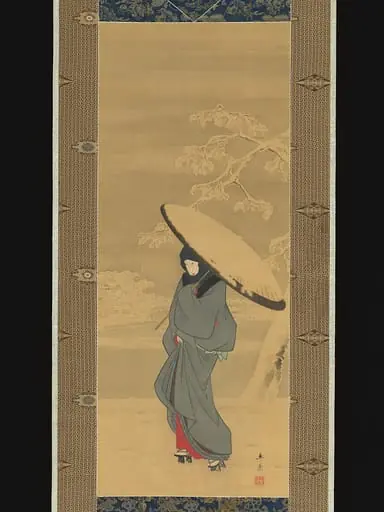
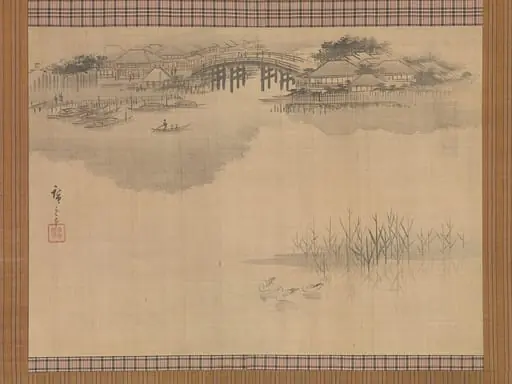
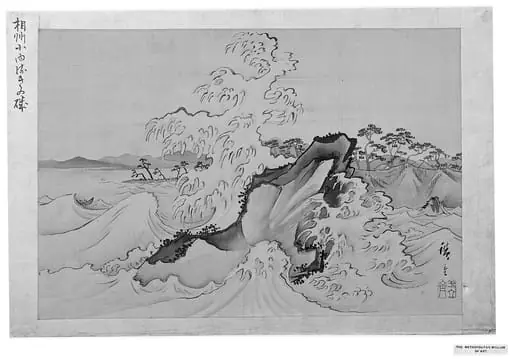
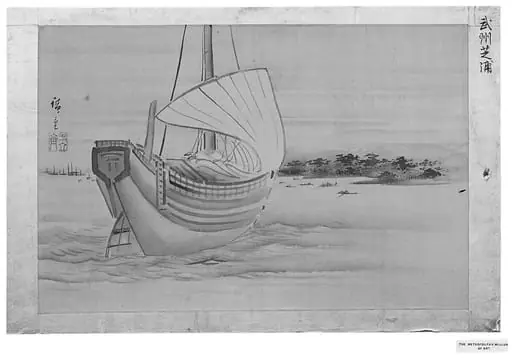
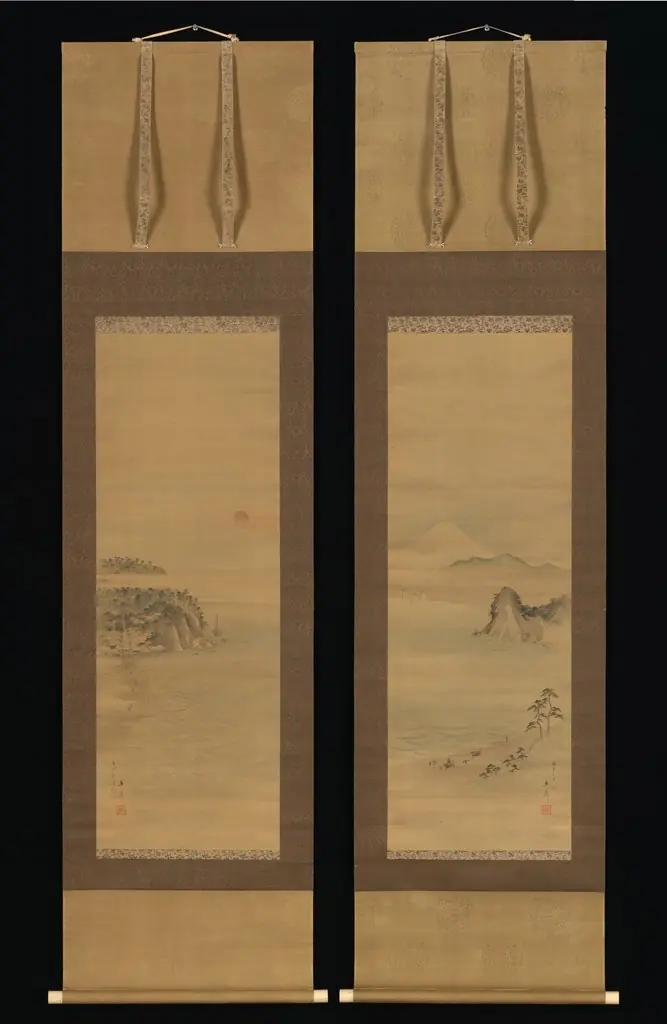
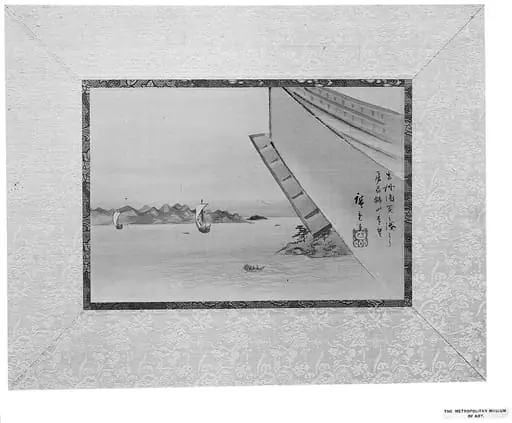
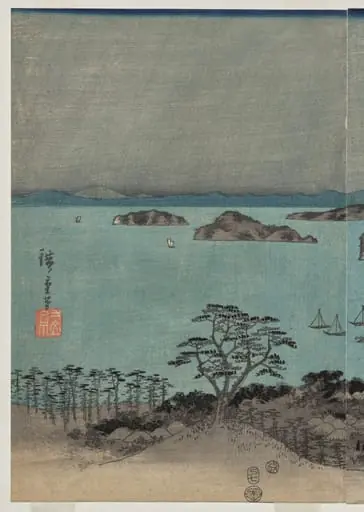 Evening View of the Eight Famous Places near Kanazawa Under Full Moon in Musashi Province
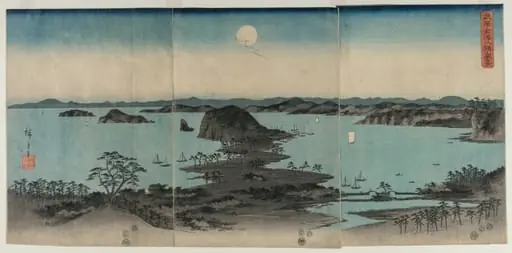 Eight Views of Kanazawa at Night
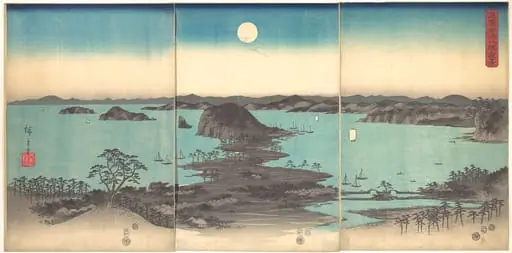 Buyō Kanazawa Hasshō Yakei|雪月花 武陽金沢八勝夜景|Full Moon at Kanazawa, Province of Musashi
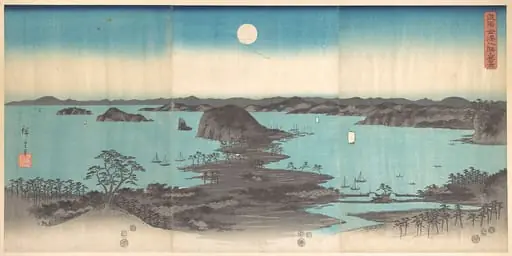 雪月花 武陽金沢八勝夜景|Panorama of the Eight Views of Kanasawa under a Full Moon
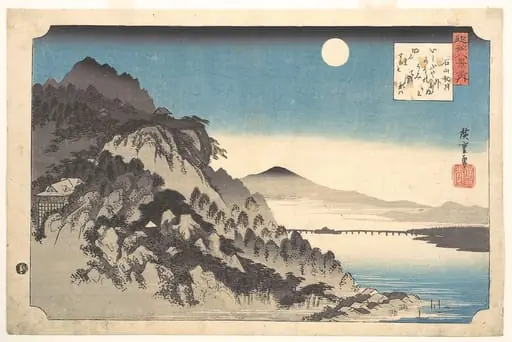 歌川広重画 近江八景之内 石山秋月|Autumn Full Moon at Ishiyama Temple (Ishiyama shūgetsu), from the series Eight Views of Ōmi Province (Ōmi hakkei)
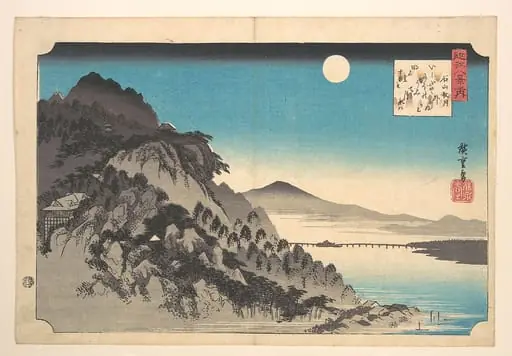 近江八景之内 石山秋月|The Autumn Full Moon at Ishiyama
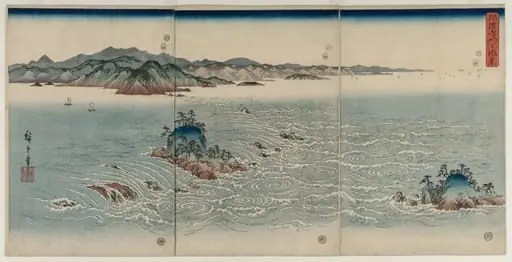 The Whirlpools of Awa
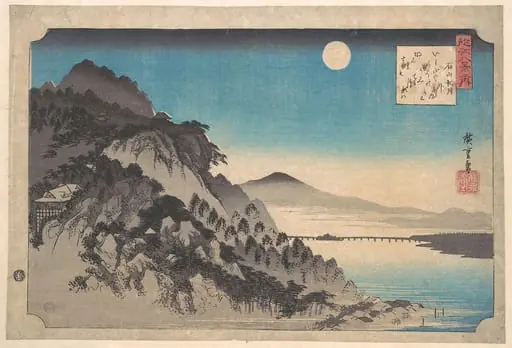 近江八景之内 石山秋月|The Autumn Moon at Ishiyama on Lake Biwa