Artwork
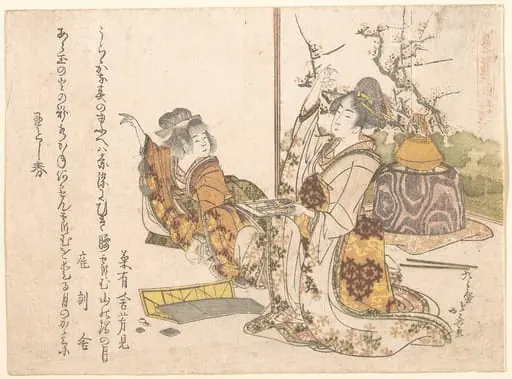
Playing the "Hand Game"
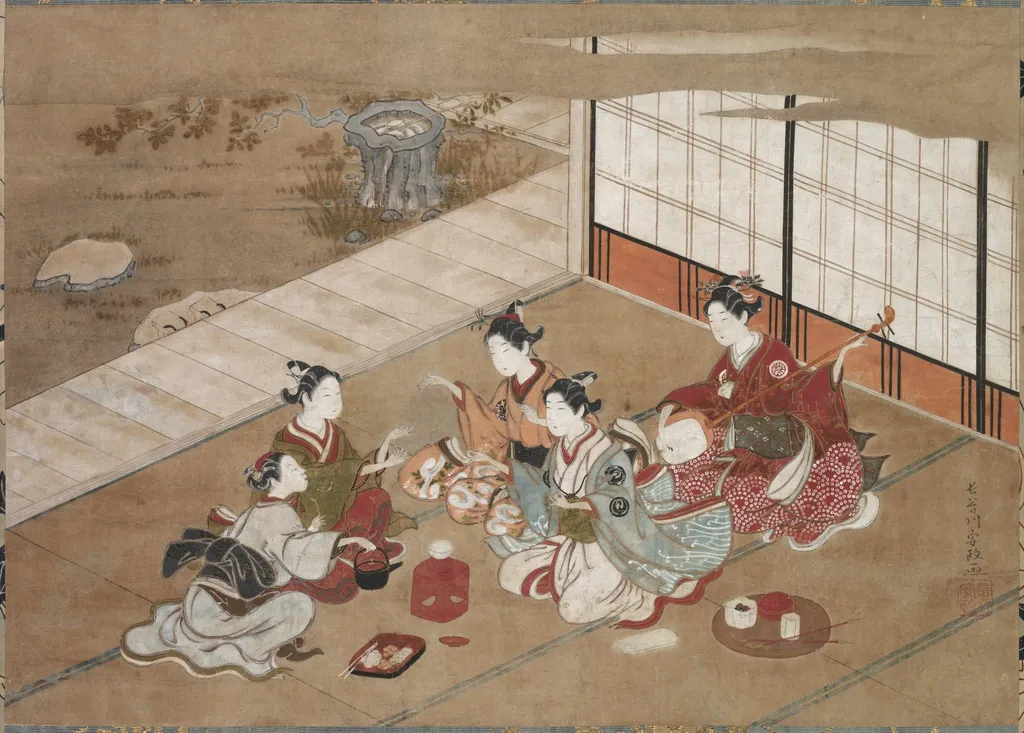
Playing the "Hand Game" is an unspecified painting by the Romanticist artist Hasegawa Yasumasa. It dates from 1760 and is held in the collection of the Cleveland Museum of Art.
About this work
This painting shows three people playing a game with hand gestures.
They are having fun together.
The game is a special variation, with gestures for different characters.
This game was popular in Japan among courtesans in the 18th century.
It's an interesting glimpse into their daily life.
You can learn more about similar artwork at The Cleveland Museum of Art.
Overview
The painting captures a trio engaged in a synchronized hand‑gesture contest, a pastime that required each participant to display a specific sign at the same moment. The composition focuses on the interaction and amusement of the players as they execute the coordinated movements.
Subject & Meaning
The depicted activity is a variant of traditional Japanese hand games, wherein the gestures correspond to symbolic figures such as a fox, a village chief, and a hunter. By portraying this particular form, the work hints at the playful yet coded social exchanges common among its participants.
Technique & Style
Rendered with delicate brushwork and a restrained palette, the artist emphasizes the gestures and facial expressions of the figures. The composition arranges the three subjects in a balanced triangular formation, allowing the viewer to follow the rhythm of the game through subtle visual cues.
History & Provenance
Hand games enjoyed widespread popularity among courtesans in eighteenth‑century Japan, serving both as entertainment and as a means of subtle communication. The painting likely originates from this cultural milieu, offering a rare visual record of the leisure pursuits of that social class.
Context
During the Edo period, such games were part of the broader urban culture of pleasure districts, where nuanced gestures could convey status, wit, or flirtation. The inclusion of both hands in the gestures suggests a more elaborate version of the game, possibly the "fox hand game" known for its layered symbolism.
Own this work as a print
Artist & collection

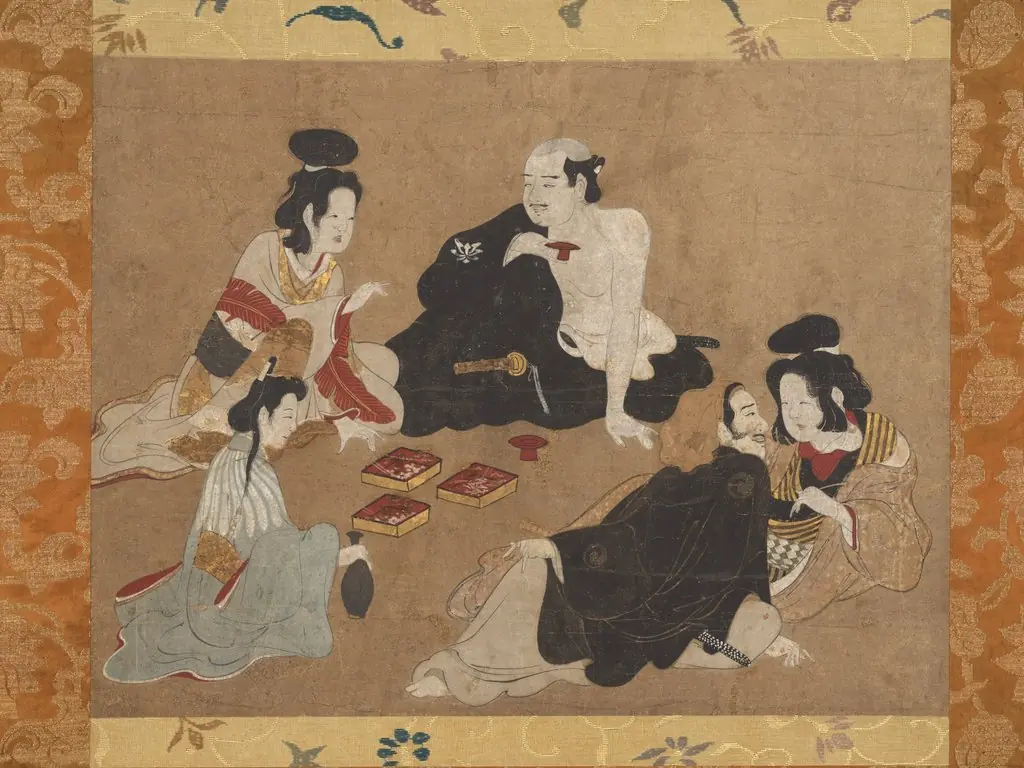 People Partying
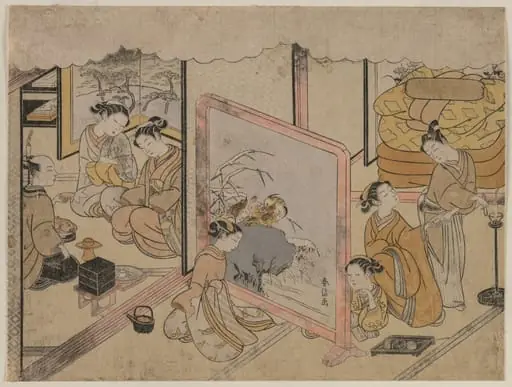 Drinking a Cup of Wine Before Retiring for Bed (From an Untitled Series)
 Spring Dance Scene
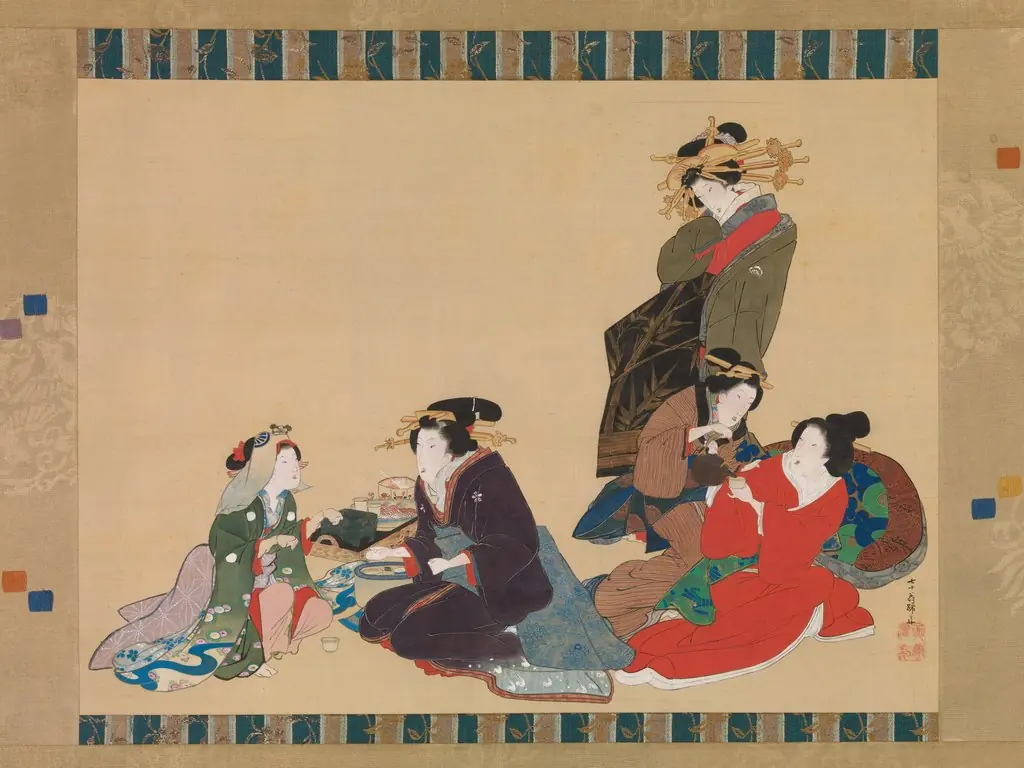 Five Beauties
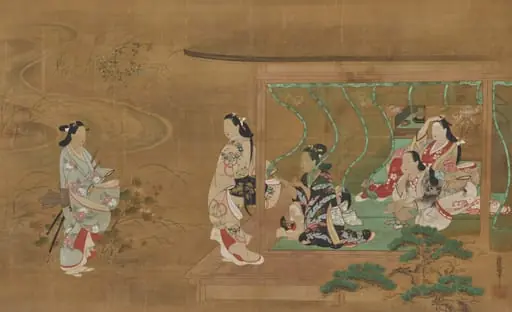 Beauty Receiving a Visitor
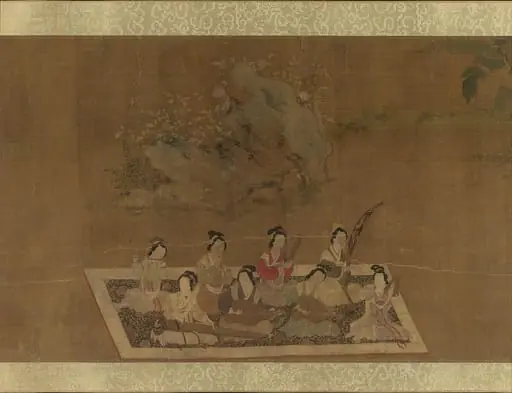 明 佚名 蘇蕙璇璣圖 卷|Lady Su Hui and Her Verse Puzzle
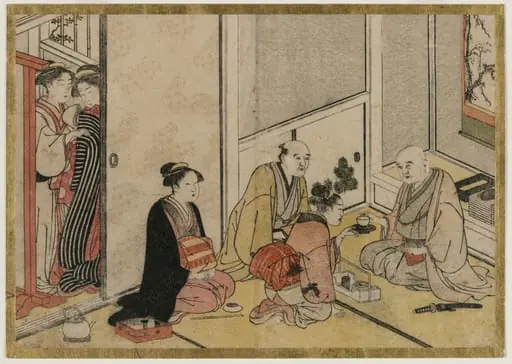 Interior Scene
 Untitled
 Picture of the First Visit to the Pleasure Quarters
 The Fourth Month (from the series Fashionable Monthly Visits to Temples in the Four Seasons)
 Untitled
 Untitled