Artwork
Tufted Auk
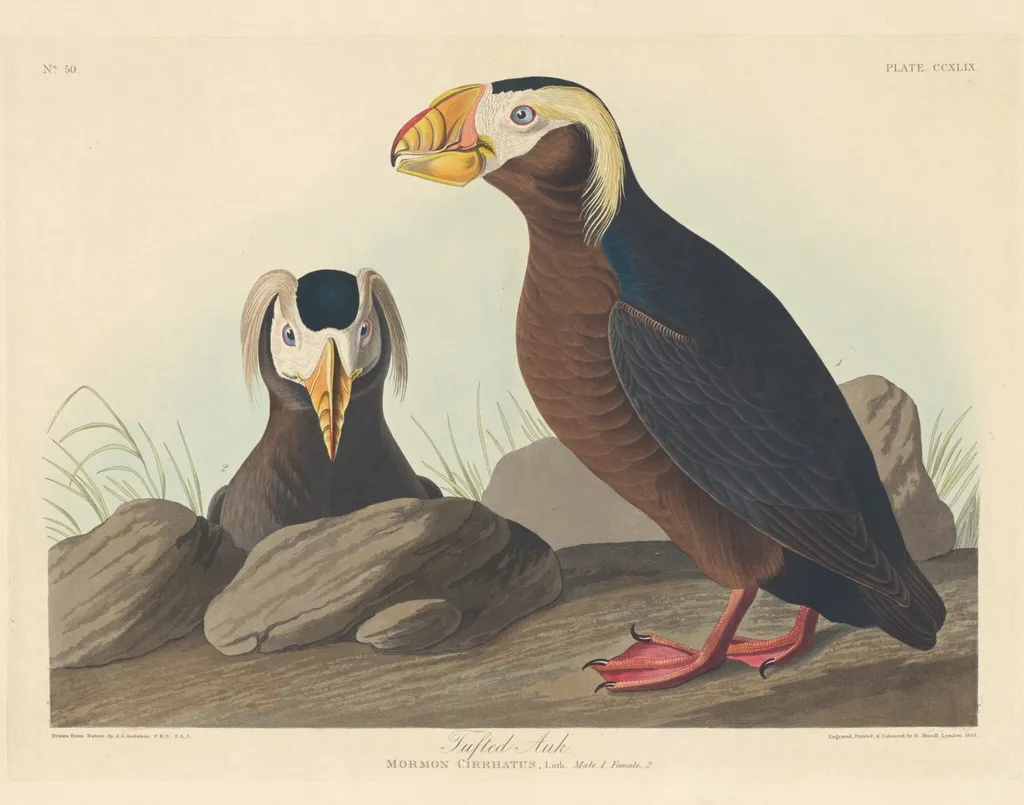
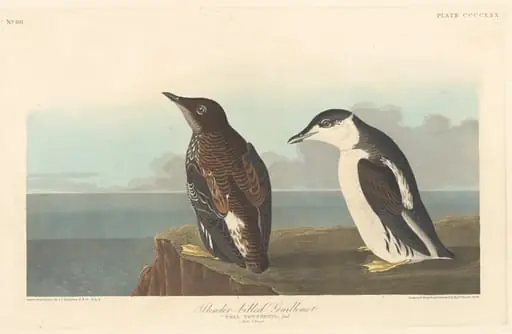
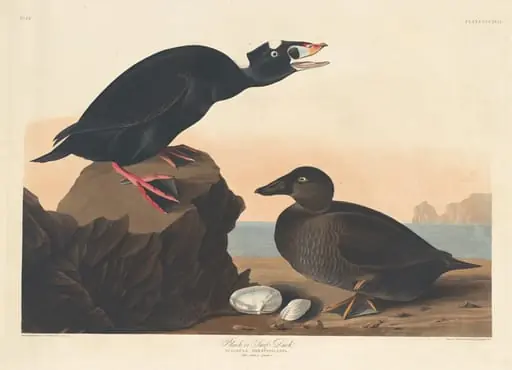
Tufted Auk is an ink print by the Romanticist artist Robert Havell Jr.. It dates from 1835 and is held in the collection of the National Gallery of Art.
About this work
Overview
It belongs to a series of ornithological illustrations produced during the mid-19th century, reflecting the period’s scientific interest in natural history.
Created in 1835 by Robert Havell Jr., this print depicts a tufted auk using hand-colored engraving and aquatint on Whatman wove paper. It belongs to a series of ornithological illustrations produced during the mid-19th century, reflecting the period’s scientific interest in natural history. The Havell family, known for their technical precision in printmaking, contributed significantly to illustrated naturalist publications of the era.
Subject & Meaning
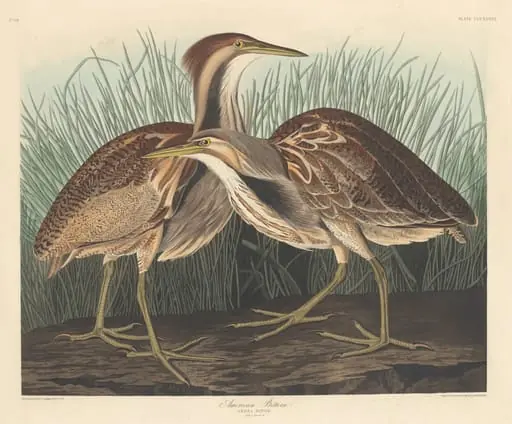
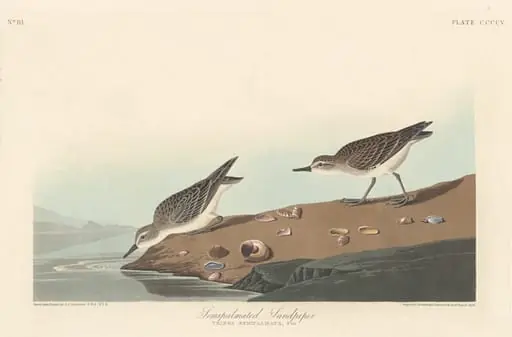
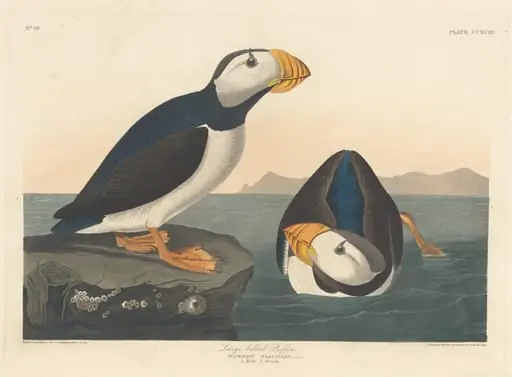
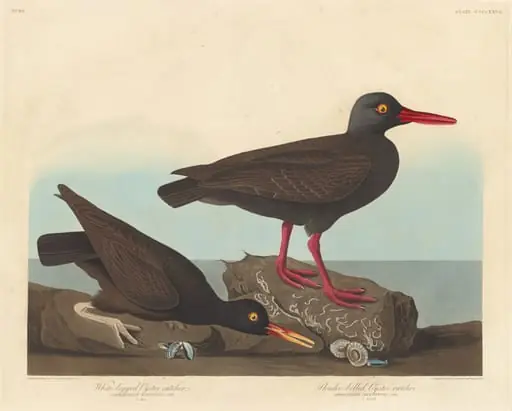
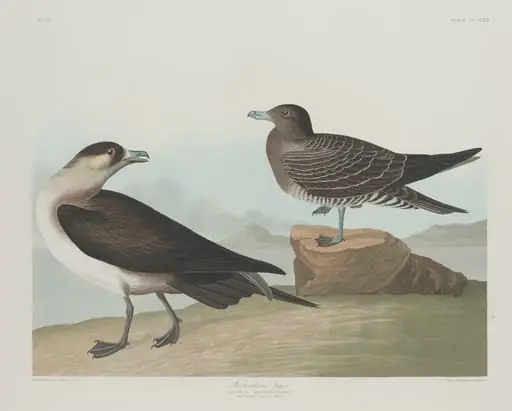
The image portrays two tufted auks, a species of seabird, perched on rocky terrain. The larger bird, distinguished by a prominent crest of feathers, faces left, while the smaller one looks forward. Their brown plumage, pale faces, and brightly colored beaks are rendered with attention to anatomical detail. The composition emphasizes the birds’ natural posture and habitat, aligning with the scientific goal of accurate species documentation rather than symbolic interpretation.
Technique & Style
Havell employed engraving and aquatint to achieve fine tonal gradations and delicate textures, enhanced by meticulous hand-coloring. The use of Whatman wove paper provided a smooth, absorbent surface ideal for layered pigments. Background elements—light blue sky and sparse grasses—are softly rendered, allowing the birds to remain the focal point. The technique reflects a blend of scientific precision and aesthetic refinement characteristic of naturalist prints of the time.
History & Provenance
Robert Havell Jr. was part of a multi-generational family of engravers active in London, known for their work on major natural history publications. His father, Robert Havell the Elder, and nephew Daniel were also involved in printmaking, with the family maintaining connections to both British and Indian artistic traditions. This print likely originated from a commissioned series, possibly linked to ornithological studies published in the 1830s.
Context
Produced during the height of European natural history exploration, the print reflects a broader cultural interest in cataloging global biodiversity. Advances in print technology enabled wider dissemination of detailed biological imagery. While Romanticism influenced the appreciation of nature’s beauty, this work prioritizes accuracy over emotional expression, aligning more closely with Enlightenment-era scientific ideals than with Romantic sentimentality.
Legacy
Havell’s prints, including this one, remain valuable references for ornithologists and historians of science. Their technical quality and fidelity to subject matter have ensured their preservation in institutional collections. Though largely overshadowed by larger artistic movements, these works represent a critical intersection of art, science, and craftsmanship in the early 19th century.
Artist & collection

Artist
The Havell family of Reading, Berkshire, England, included a number of notable engravers, etchers and painters, as well as writers, publishers, educators, and musicians.