Artwork
Black-throated Bunting
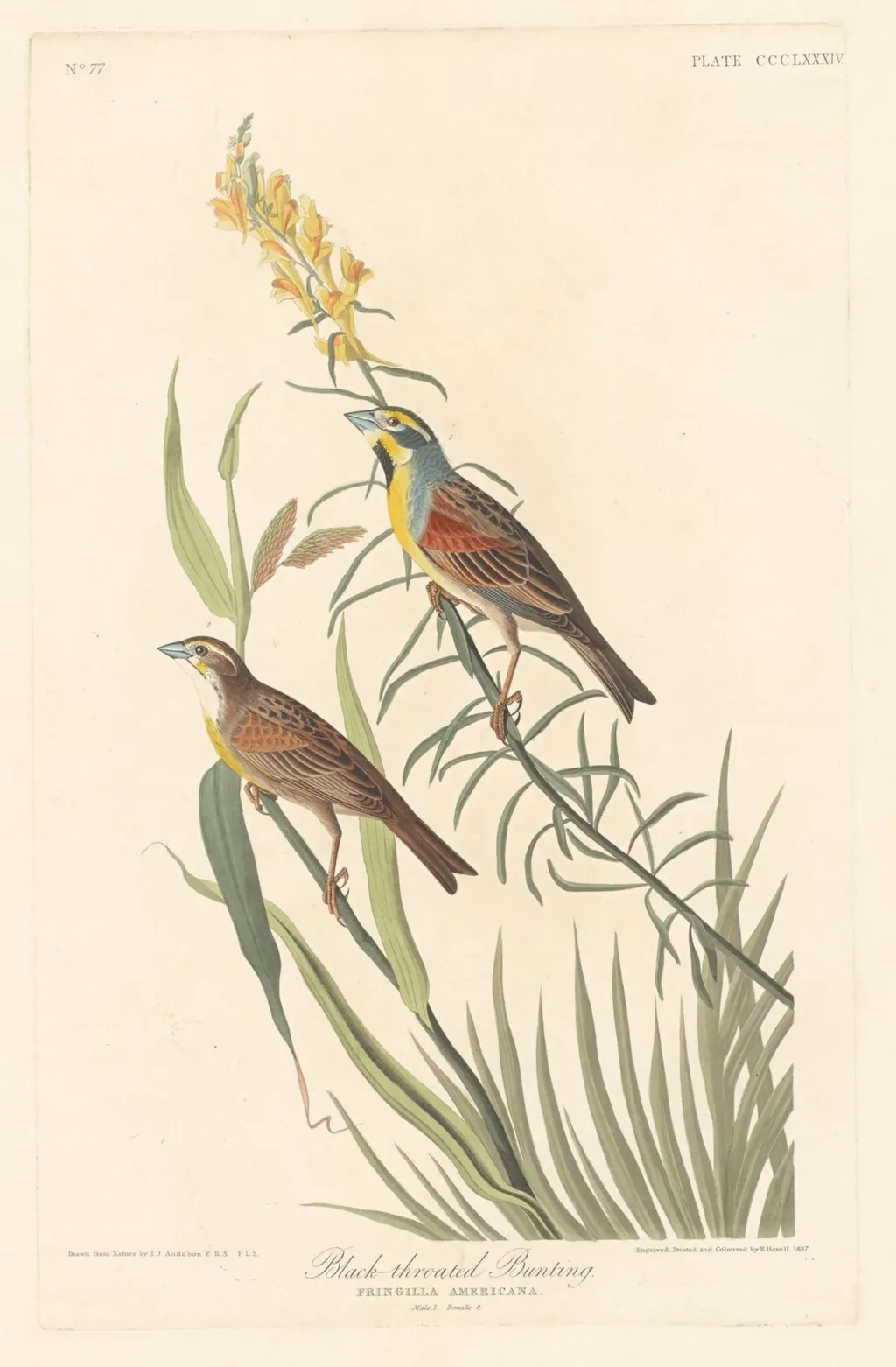
Black-throated Bunting is an ink print by the Romanticist artist Robert Havell Jr.. It dates from 1837 and is held in the collection of the National Gallery of Art.
About this work
Overview
The piece belongs to a series of ornithological illustrations produced during a period of heightened interest in natural history.
Created in 1837, this hand-colored engraving and aquatint on Whatman wove paper is the work of Robert Havell Jr., a member of a prominent English family of printmakers. The piece belongs to a series of ornithological illustrations produced during a period of heightened interest in natural history. Its technical precision and delicate coloring reflect the Havell family’s mastery of reproductive printmaking, particularly in aquatint, a method they helped refine for scientific and artistic documentation.
Subject & Meaning
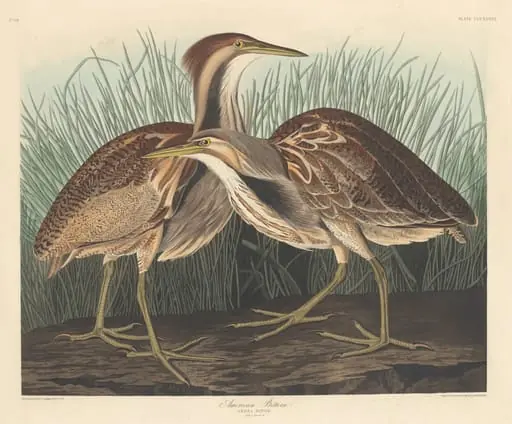
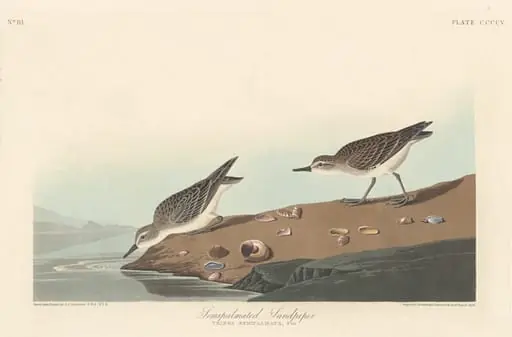
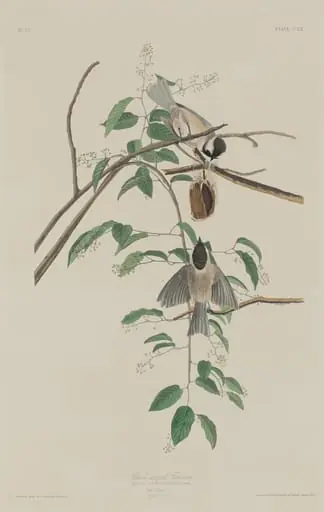
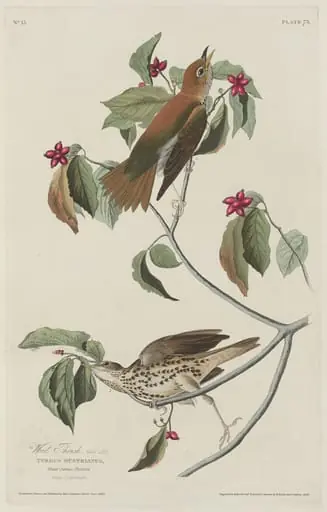
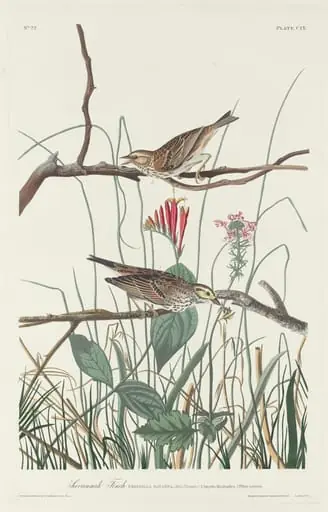
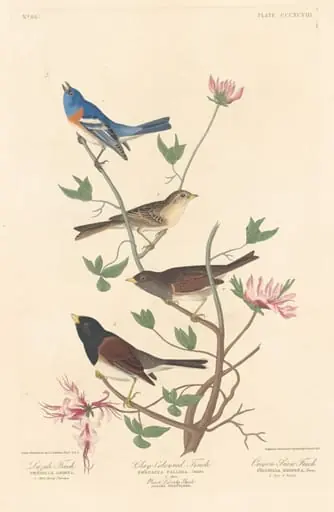
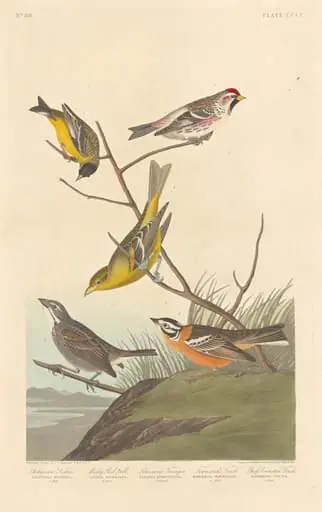
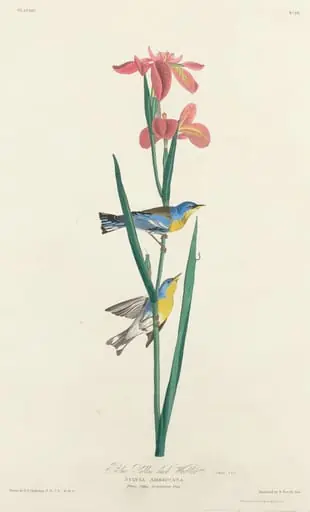
The print portrays a pair of black-throated buntings perched on a slender plant, one facing left, the other right. Their black throats, yellow underparts, and brown backs are rendered with careful observation, emphasizing species-specific traits. The accompanying flora—thin leaves and small yellow blooms—grounds the birds in their natural habitat. The composition avoids theatricality, instead inviting quiet contemplation of avian life through accurate, unembellished depiction.
Technique & Style
Havell employed engraving and aquatint to achieve fine detail and tonal gradation, then applied watercolor by hand to enhance realism. The texture of feathers, the sharpness of beaks, and the subtle shifts in leaf color were achieved through meticulous line work and layered ink tones. The use of Whatman paper, known for its smooth, even surface, allowed for precise color application and preserved the delicacy of the ink lines, aligning with the period’s scientific illustration standards.
History & Provenance
Robert Havell Jr. worked primarily in London, continuing a family tradition of printmaking begun by his father. His contributions were integral to major natural history publications of the early 19th century. While this specific print may not have been individually signed or widely cataloged at the time, it aligns with the broader output of the Havell workshop, which supplied illustrations for scientific texts and private collections across Britain and Europe.
Context
This print emerged during a time when European naturalists were systematically documenting global biodiversity, often through commissioned illustrations. Though the Havells were based in England, their work frequently depicted species from Asia and the Indian subcontinent, reflecting colonial-era scientific exchange. The emphasis on botanical and ornithological accuracy mirrored Enlightenment ideals, even as aesthetic sensibilities leaned toward Romantic naturalism.
Legacy
The Havell family’s prints remain valued for their technical rigor and contribution to natural history illustration. While largely overshadowed by larger publications, individual works like this one preserve the quiet discipline of pre-photographic biological recording. Their influence endures in museum collections and scholarly studies of 19th-century print culture, where precision and observation are still recognized as foundational to visual science.
Artist & collection

Artist
The Havell family of Reading, Berkshire, England, included a number of notable engravers, etchers and painters, as well as writers, publishers, educators, and musicians.