Artwork
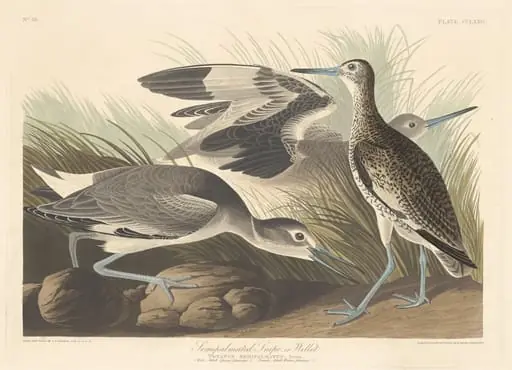
Semi-palmated Sandpiper
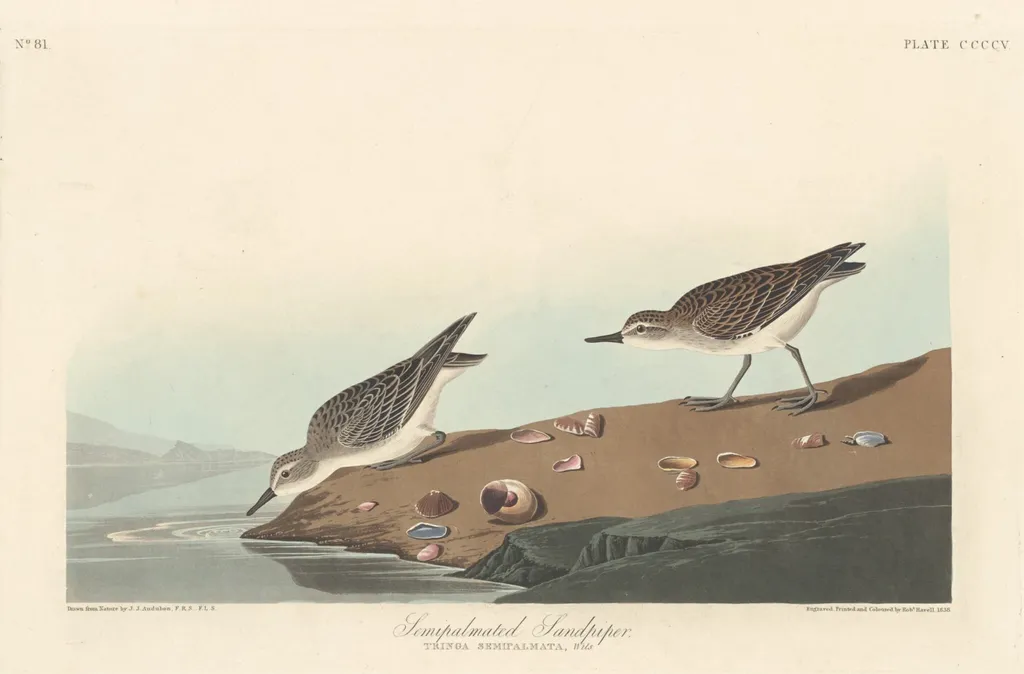
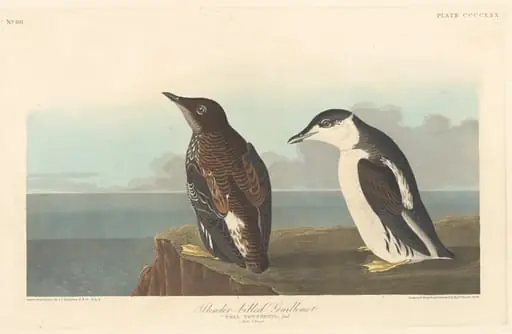
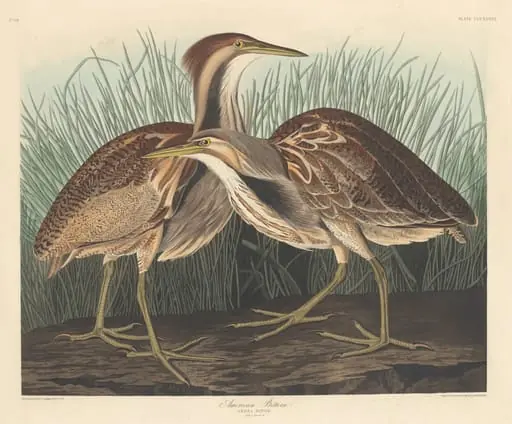
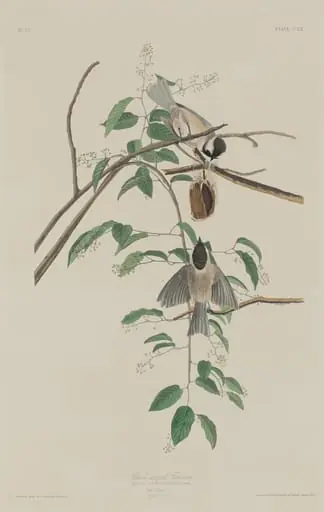
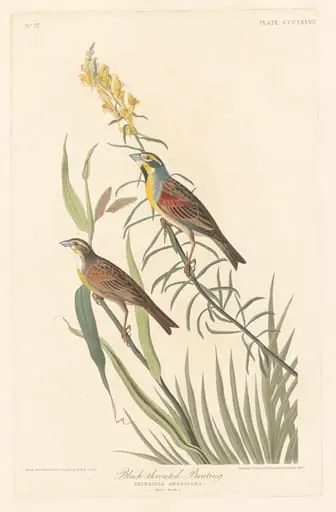
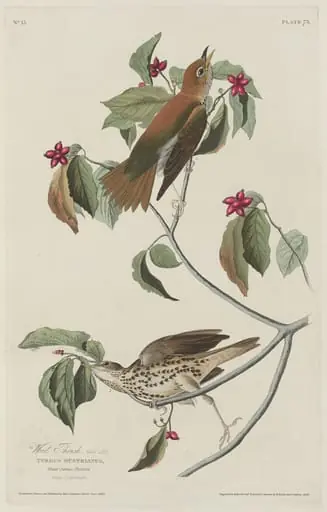
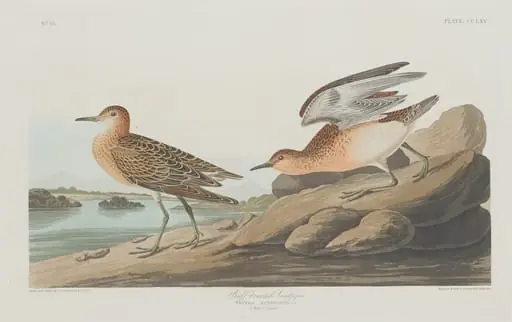
Semi-palmated Sandpiper is an ink print by the Romanticist artist Robert Havell Jr.. It dates from 1838 and is held in the collection of the National Gallery of Art.
About this work
Overview
It belongs to a series documenting North American birds, produced with technical precision and naturalistic observation.
Created in 1838 by Robert Havell Jr., this print is a hand-colored engraving and aquatint on Whatman wove paper. It belongs to a series documenting North American birds, produced with technical precision and naturalistic observation. The Havell family was known for their mastery of aquatint, a method allowing subtle tonal gradations, which they applied to scientific illustration with notable consistency.
Subject & Meaning
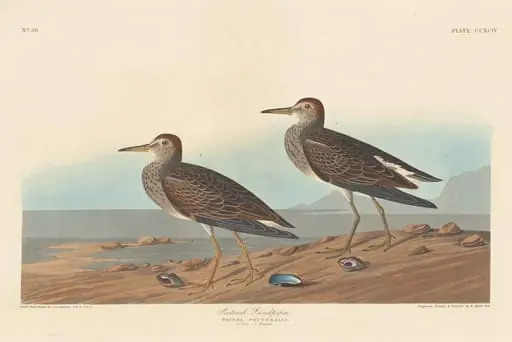
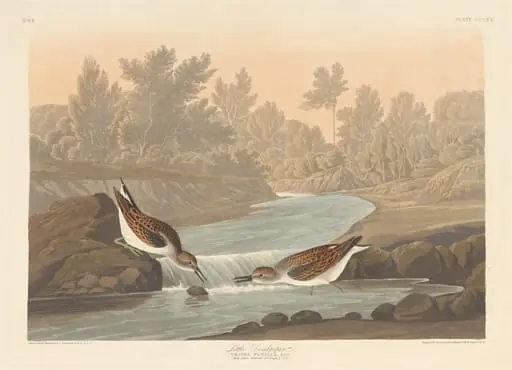
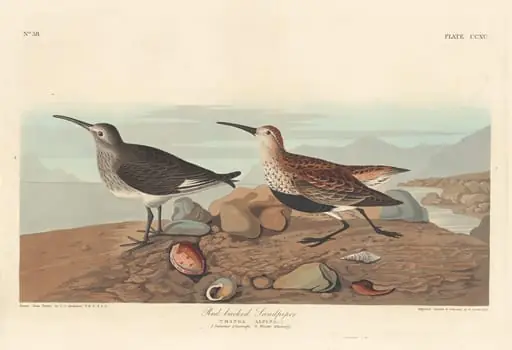
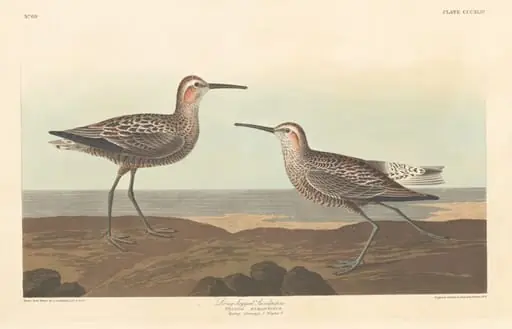
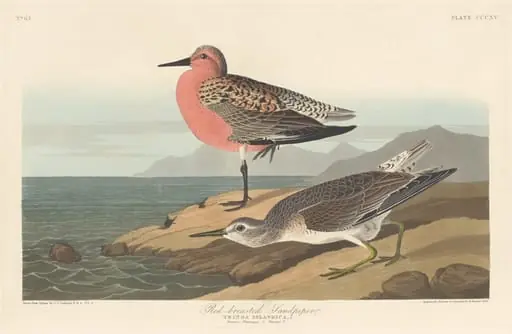
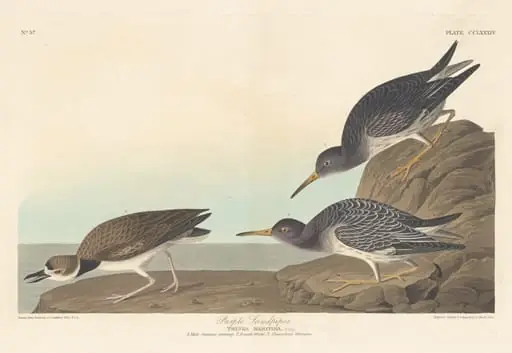
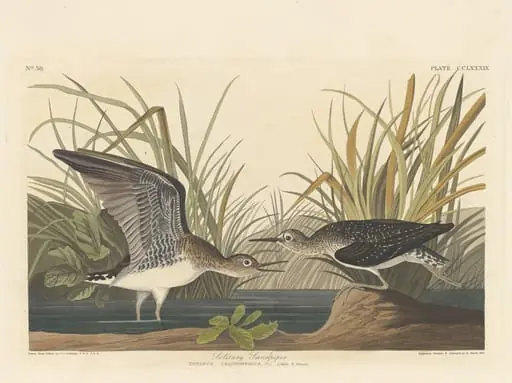
The image portrays two semi-palmated sandpipers on a coastal shore, one actively foraging, the other standing alert. Their speckled plumage and slender legs reflect adaptation to tidal environments. The inclusion of shells, calm water, and distant hills situates the birds within their migratory habitat, emphasizing ecological context over symbolism. The composition invites quiet observation rather than dramatic narrative.
Technique & Style
Havell employed engraving for fine linear detail and aquatint for soft atmospheric tones, particularly in the water and sky. Hand-coloring was applied with restraint, using muted earth tones and pale blues to mimic natural light. The texture of feathers and pebbles is rendered through delicate hatching and stippling, demonstrating a commitment to accuracy over embellishment.
History & Provenance
The print was produced as part of a larger ornithological project, likely linked to John James Audubon’s publications, for which Havell was a principal engraver. The use of high-quality Whatman paper and meticulous hand-coloring suggests it was intended for scholarly or affluent audiences. No record indicates private ownership prior to institutional acquisition in the 20th century.
Context
In the 1830s, American natural history illustration was gaining institutional support, driven by scientific curiosity and westward exploration. Havell’s work aligned with this movement, contributing to a growing visual record of native species. His family’s prior engagement with Indian art influenced their approach to detail and composition, though this print focuses strictly on North American fauna.
Legacy
Havell’s prints remain valued for their technical fidelity and contribution to early American ornithology. While not widely exhibited today, they serve as reference points for historians of science and printmaking. The semi-palmated sandpiper image exemplifies how artistic skill was harnessed to document biodiversity before photography became accessible.
Artist & collection

Artist
The Havell family of Reading, Berkshire, England, included a number of notable engravers, etchers and painters, as well as writers, publishers, educators, and musicians.