Artwork
Roseate Spoonbill
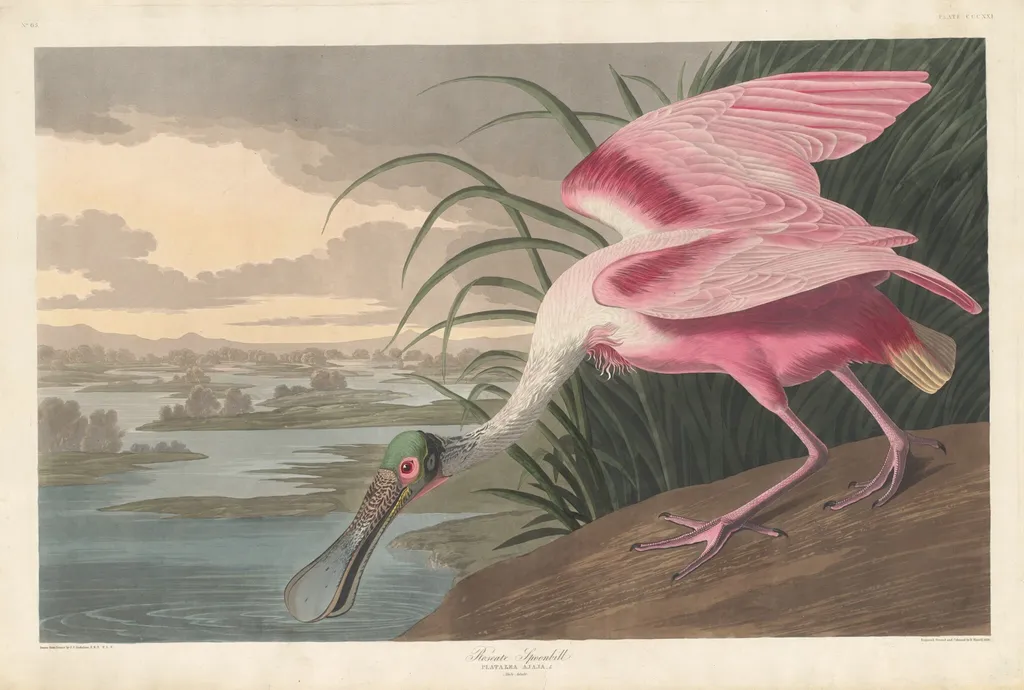
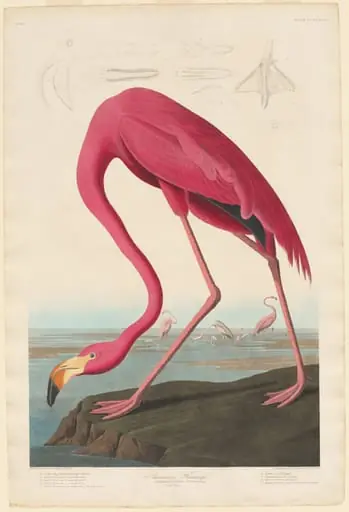
Roseate Spoonbill is an ink print by the Romanticist artist Robert Havell Jr.. It dates from 1836 and is held in the collection of the National Gallery of Art.
About this work
Its feathers range from soft pink to deep rose, while the water reflects those colors.
You see a pink bird with a flat spoon-shaped beak standing in shallow water. Its feathers range from soft pink to deep rose, while the water reflects those colors. A few green plants dot the background near its feet.
This isn’t just a bird picture—it’s a detailed study from 1836. Robert Havell Jr. colored it by hand after an engraving. That means every feather got its own tiny line or dot. Back then, colored prints were rare and expensive.
Check out Havell, Jr., Robert if you like accurate bird art.
Overview
Robert Havell Jr. produced a hand‑colored print of a Roseate Spoonbill in 1836. Executed on Whatman wove paper, the image combines an engraved line drawing with aquatint tones that are subsequently painted by hand. The composition shows the bird standing in shallow water, its plumage rendered in a range of pinks and roses, with faint green vegetation at its feet.
Subject & Meaning
The work portrays a Roseate Spoonbill, a wading bird distinguished by its broad, flattened bill and vivid pink coloration. By isolating the bird in a quiet watery setting, the image emphasizes the species’ delicate form and natural habitat, serving as a scientific illustration as well as a decorative study of avian anatomy.
Technique & Style
Havell employed a dual process: an initial engraving outlines the bird’s structure, while aquatint creates tonal washes that suggest volume and water surface. After printing, each feather was individually tinted with watercolor, a labor‑intensive method that made such colored prints uncommon and costly in the early nineteenth century.
History & Provenance
The Havell family maintained a long‑standing involvement in engraving and aquatint, particularly in works related to Indian natural history. This 1836 print reflects that tradition, linking British printmaking practices with the era’s growing interest in documenting exotic fauna for scientific and aesthetic audiences.
Artist & collection

Artist
The Havell family of Reading, Berkshire, England, included a number of notable engravers, etchers and painters, as well as writers, publishers, educators, and musicians.