Artwork
Albert van der Helle
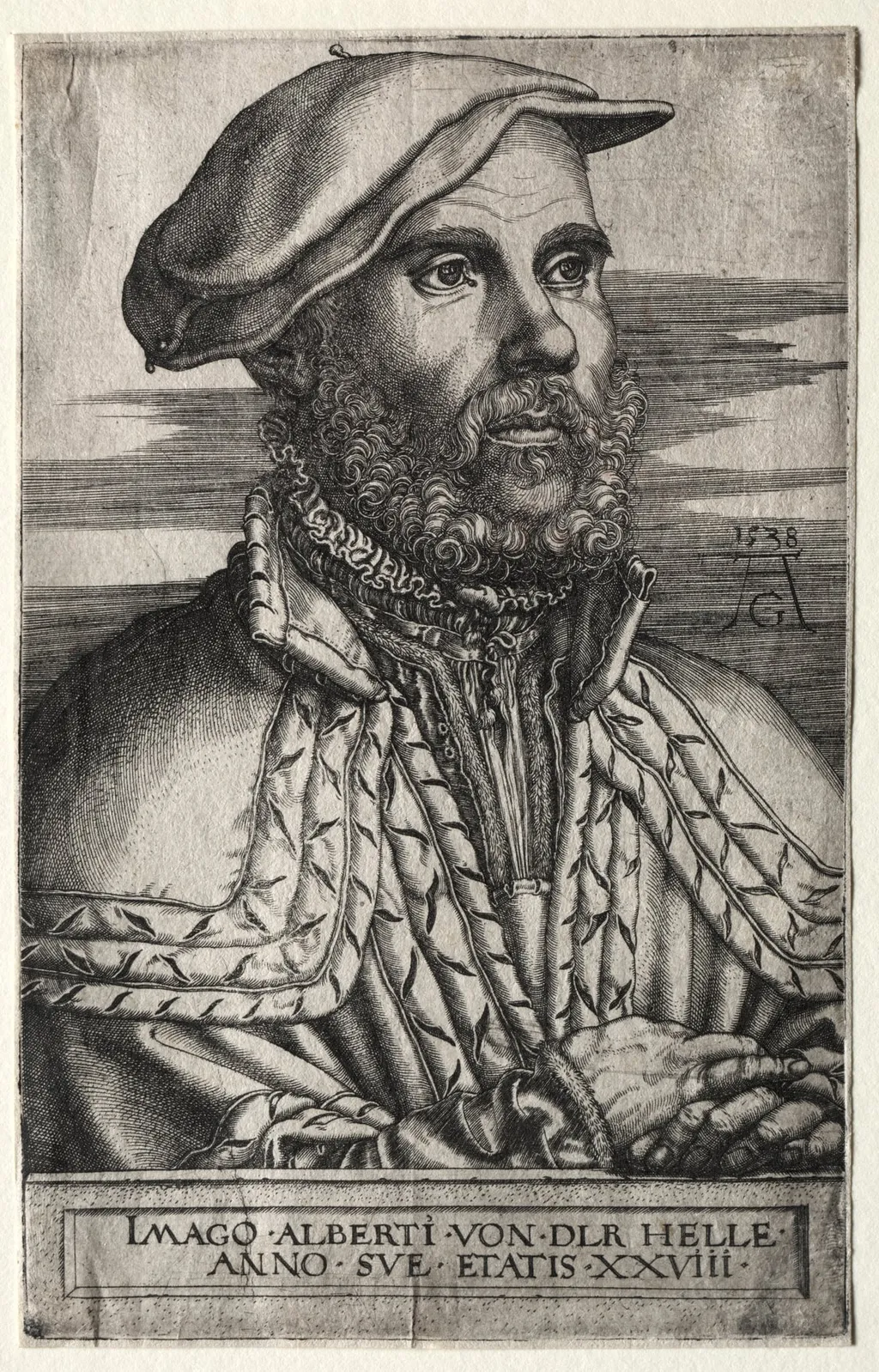
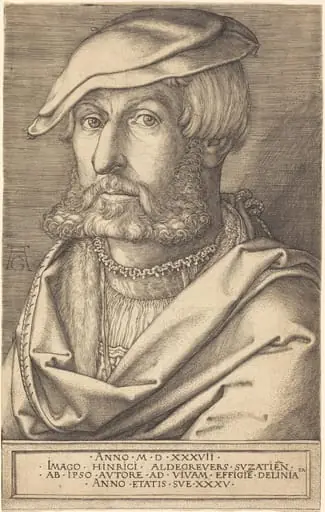
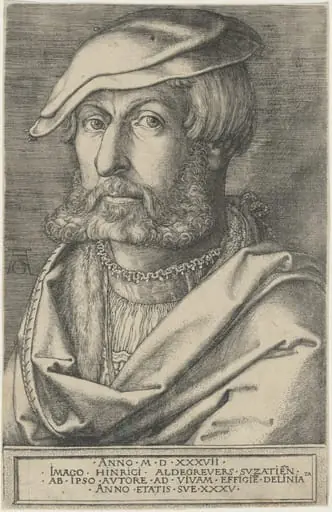
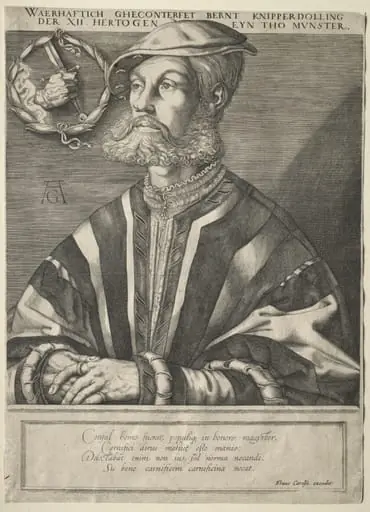
Albert van der Helle is a print by the Renaissance artist Heinrich Aldegrever. It dates from 1538 and is held in the collection of the Cleveland Museum of Art.
About this work
Overview
This print, dated 1538, is the work of Heinrich Aldegrever, a German artist known for his engravings.
This print, dated 1538, is the work of Heinrich Aldegrever, a German artist known for his engravings. It depicts Albert van der Helle, a figure likely of civic or professional standing, rendered in fine line work characteristic of Northern Renaissance printmaking. The piece resides in the collection of The Cleveland Museum of Art, where it serves as a representative example of mid-16th-century portraiture from the Lower Rhine region.
Subject & Meaning
The sitter, Albert van der Helle, is portrayed with quiet dignity: his beard and mustache, high-collared shirt, and modest hat suggest urban respectability. His clasped hands convey composure, a common convention in portraits of the era signaling restraint and moral steadiness. The absence of overt symbols or heraldry implies a focus on personal character rather than social status, aligning with humanist ideals of individual presence.
Technique & Style
Aldegrever employed fine-line engraving to achieve precise detail in the texture of fabric, hair, and skin. The controlled hatching and crosshatching model form with subtle gradations, while the composition remains tightly framed, emphasizing the sitter’s face and hands. The style reflects the influence of Albrecht Dürer, with an emphasis on clarity and anatomical accuracy, typical of German Renaissance printmakers.
History & Provenance
The print entered the Cleveland Museum of Art’s collection as part of its broader acquisition of Northern Renaissance graphics. Its early history prior to the 20th century is not fully documented, but its preservation in good condition suggests careful ownership. It has been consistently attributed to Aldegrever since its inclusion in scholarly catalogs of his engraved works.
Context
Created during the height of the Protestant Reformation, such portraits often served as personal or civic records in regions where religious imagery was declining. Aldegrever, active in Soest, produced numerous engravings for secular patrons, reflecting a shift from ecclesiastical to individualized representation. This work aligns with a broader trend of documenting non-noble figures with the same care once reserved for royalty or saints.
Legacy
Aldegrever’s prints, including this one, contributed to the dissemination of Renaissance portraiture beyond painting. His technical precision influenced later engravers in Germany and the Netherlands. While not widely known today, his works remain important for understanding how individual identity was visually constructed in early modern Europe through the accessible medium of print.
Artist & collection

Artist
Heinrich Aldegrever or Aldegraf was a German painter and engraver. He was one of the "Little Masters", the group of German artists making small old master prints in the generation after Albrecht Dürer.