Artwork
The Deities: Demogorgon in the Cave of Eternity
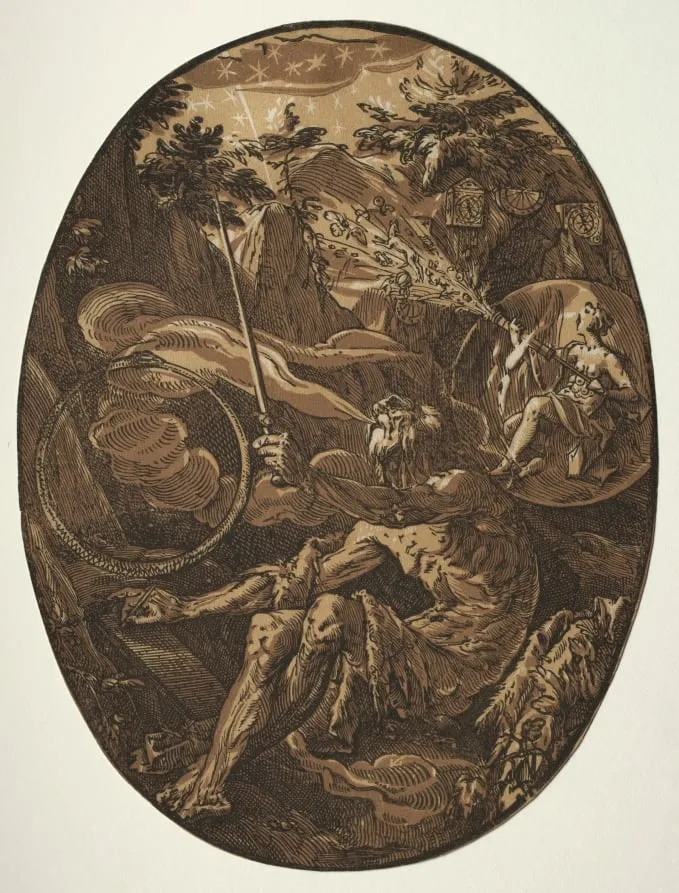
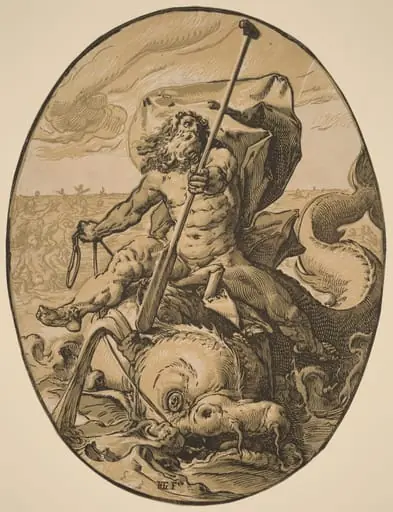
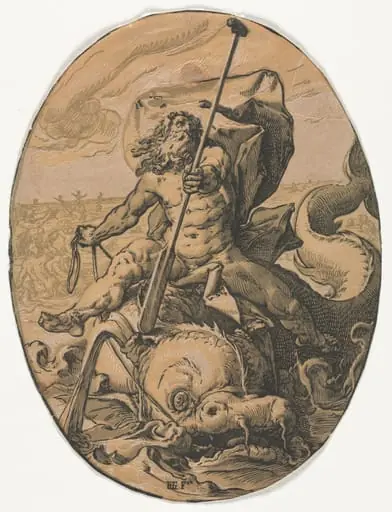
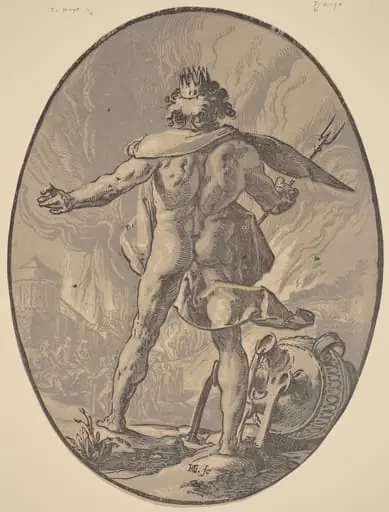
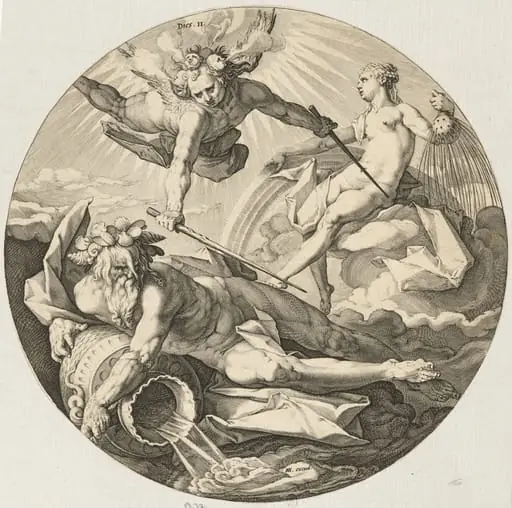
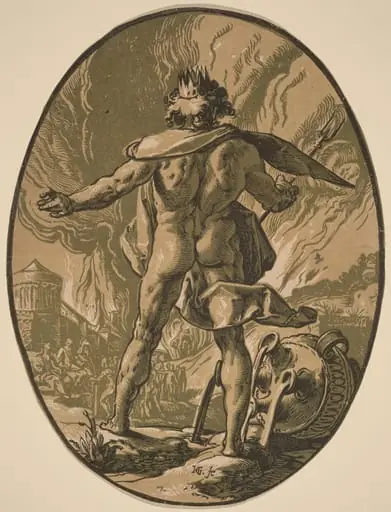
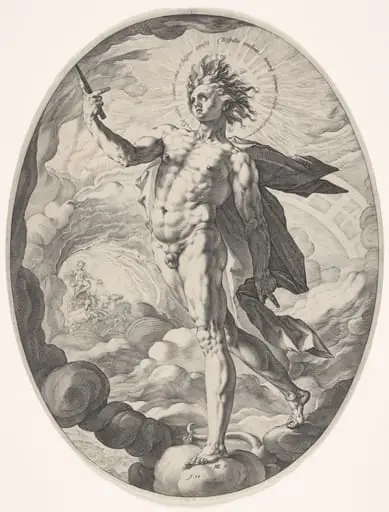
The Deities: Demogorgon in the Cave of Eternity is a print by the Renaissance artist Hendrik Goltzius. It dates from 1589 and is held in the collection of the Cleveland Museum of Art.
About this work
Overview
The print gained wide circulation and was reissued well into the 1800s, reflecting enduring interest in esoteric symbolism during the late Renaissance.
Created by Hendrick Goltzius around 1590, this etching depicts Demogorgon, a mythic figure from ancient cosmologies, seated within a cavernous, otherworldly space. The print gained wide circulation and was reissued well into the 1800s, reflecting enduring interest in esoteric symbolism during the late Renaissance. Goltzius rendered the figure with precise line work and dramatic tonal contrasts, aligning the image with contemporary intellectual currents that valued hidden knowledge over superstition.
Subject & Meaning
Demogorgon, traditionally feared as a primordial force of chaos, is reimagined here not as a monster but as a contemplative architect of existence. The figure’s aged, muscular form and direct gaze suggest authority rather than menace. Surrounded by arcane symbols and hybrid creatures, he embodies the Renaissance ideal of the magician as a seeker of cosmic order—aligned with alchemical and philosophical traditions rather than demonic lore.
Technique & Style
Goltzius employed fine, controlled etching lines to model the figure’s anatomy and the cave’s textured surfaces, using chiaroscuro to heighten spatial depth and mystery. The glowing symbols and ethereal light sources contrast sharply with the surrounding darkness, guiding the viewer’s eye toward the central figure. The precision of the engraving reflects Goltzius’s mastery of the medium and his interest in translating complex metaphysical ideas into visual form.
History & Provenance
The print was widely distributed across Europe in the late 16th and 17th centuries, appearing in collections of occult imagery and natural philosophy. Its repeated reprints into the 19th century indicate sustained fascination with mythic symbolism and the figure of the wise magician. Unlike popular witchcraft imagery, this work avoided sensationalism, instead appealing to scholarly audiences interested in ancient cosmologies and Hermetic thought.
Context
In the late Renaissance, male practitioners of magic were often distinguished from female witches in cultural narratives, framed as philosophers or scientists exploring nature’s hidden laws. Demogorgon’s portrayal reflects this shift: he is not a devil but a primordial intellect, echoing figures from Neoplatonism and alchemical texts. Goltzius’s image taps into a broader intellectual climate that sought to reconcile myth with emerging scientific inquiry.
Legacy
The print contributed to the visual vocabulary of esotericism in early modern Europe, influencing later depictions of occult figures in art and literature. Its enduring appeal lies in its balance of mythic gravity and technical refinement. Rather than reinforcing fear, it invited contemplation of cosmic order—a legacy that resonated beyond its immediate time, shaping how magic was imagined in scholarly circles for centuries.
Artist & collection
Artist
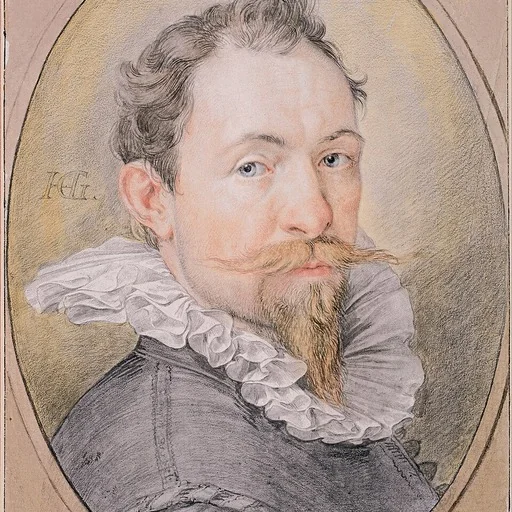
Hendrick Goltzius (German: , Dutch: ; né Goltz; January or February 1558 – 1 January 1617) was a German-born Dutch printmaker, draftsman, and painter.