Artwork
Jupiter and Mercury at the House of Philemon and Baucis
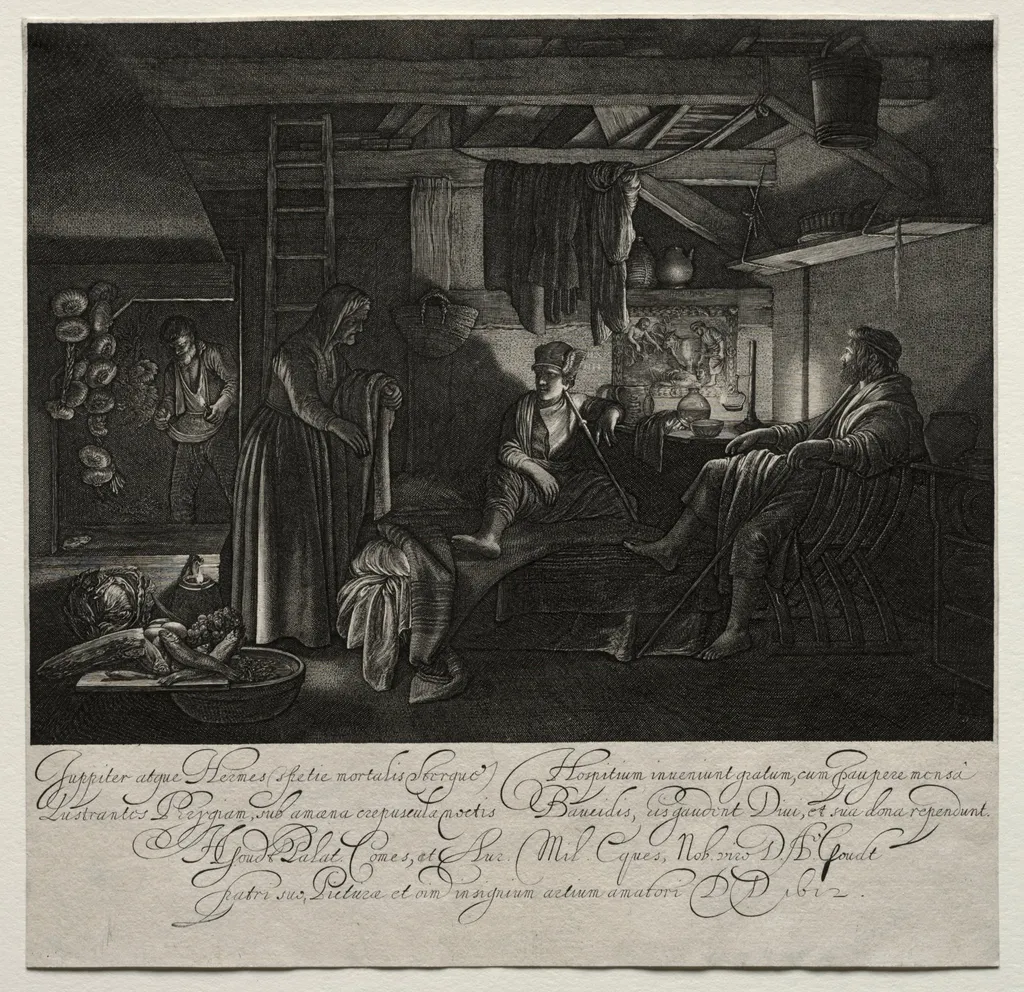
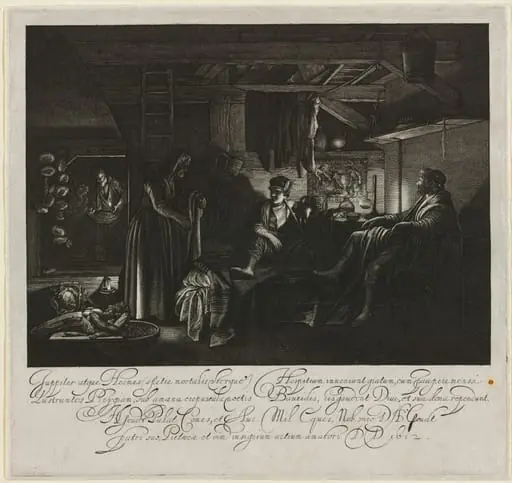
Jupiter and Mercury at the House of Philemon and Baucis is a print by the Baroque artist Hendrik Goudt. It dates from 1613 and is held in the collection of the Cleveland Museum of Art.
About this work
Overview
Executed in etching and engraving, the work captures a moment of divine revelation within an intimate domestic setting.
Created in 1613 by Hendrik Goudt, this black-and-white print depicts a scene from Ovid’s Metamorphoses, illustrating the visit of Jupiter and Mercury to the humble home of Philemon and Baucis. Executed in etching and engraving, the work captures a moment of divine revelation within an intimate domestic setting. The Cleveland Museum of Art holds the only known impression of this rare print, which stands as a significant example of early 17th-century Northern European printmaking.
Subject & Meaning
The scene portrays the myth in which Jupiter and Mercury, disguised as travelers, are welcomed by the elderly couple Philemon and Baucis, while their wealthier neighbors refuse them hospitality. The two gods stand near the doorway, one bearing a staff, while the couple offers food and shelter. The child’s gesture and the attentive posture of the figures underscore the virtue of humility and generosity, central themes of the myth, which ultimately leads to divine reward.
Technique & Style
Goudt employed fine linear engraving and subtle etching to render intricate textures—woven baskets, hanging cookware, and draped curtains—creating a sense of tactile realism. The composition uses directional light from the left to model forms and deepen spatial recession. Delicate cross-hatching defines shadows, while the contrast between the warmly lit interior and the dimmer exterior enhances the narrative focus on the domestic scene.
History & Provenance
This print was produced in Utrecht around 1613, during Goudt’s active period as a printmaker influenced by Caravaggisti and Dutch genre traditions. It was likely made for a limited audience of collectors and scholars familiar with classical literature. The Cleveland Museum of Art acquired the sole known impression in the 20th century, preserving a rare artifact of early Baroque print culture that had previously passed through private European collections.
Context
Goudt’s print reflects the broader European interest in classical mythology during the early 1600s, particularly among Northern artists who adapted biblical and mythological narratives into domestic settings. The emphasis on humble virtue aligns with Protestant moral values of the time, while the detailed interior echoes contemporary Dutch genre scenes. The work bridges mythological storytelling with everyday observation, characteristic of Utrecht’s artistic milieu.
Legacy
Though not widely reproduced, Goudt’s print influenced later artists interested in combining classical themes with intimate interiors. Its meticulous detail and emotional restraint set it apart from more theatrical interpretations of the myth. As a singular surviving impression, it remains a key reference for understanding how Northern European printmakers translated narrative mythology into quiet, human-scale moments.
Artist & collection

 Le savetier
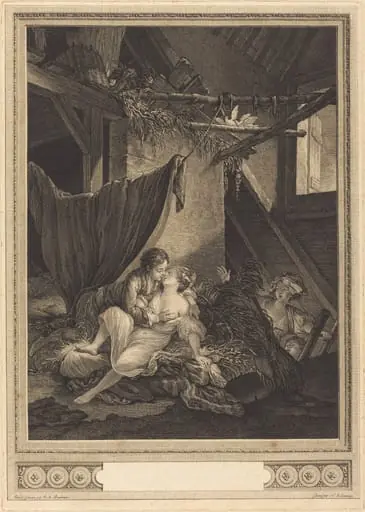 Les Soins tardifs
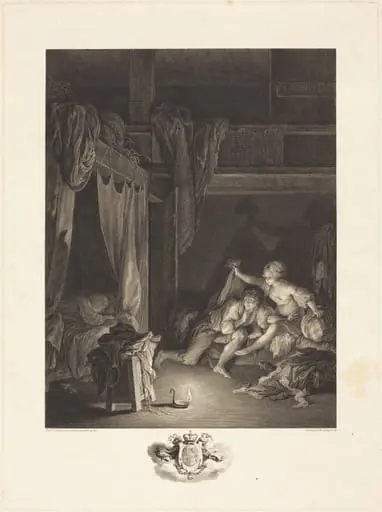 La Sentinelle en défaut
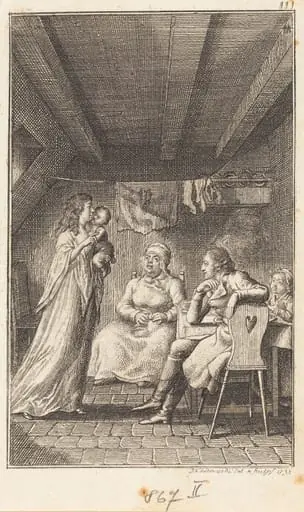 The Voyage to Paris
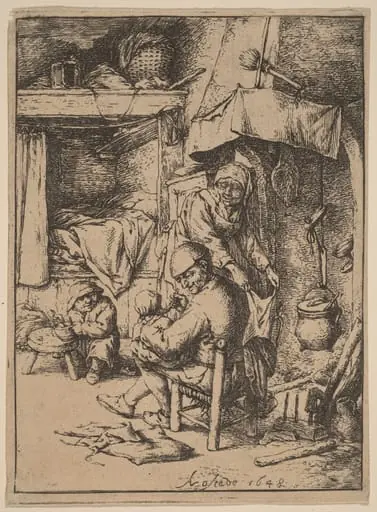 Peasant Family in an Interior wtih the Father Feeding a Child
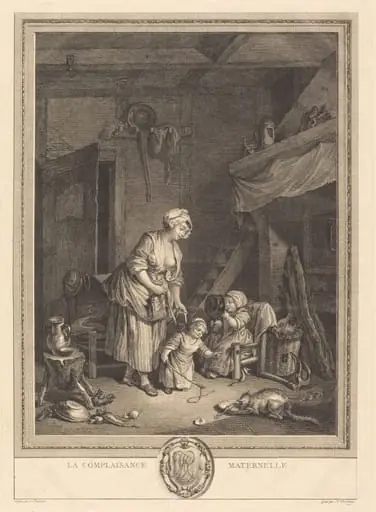 La Complaisance maternelle
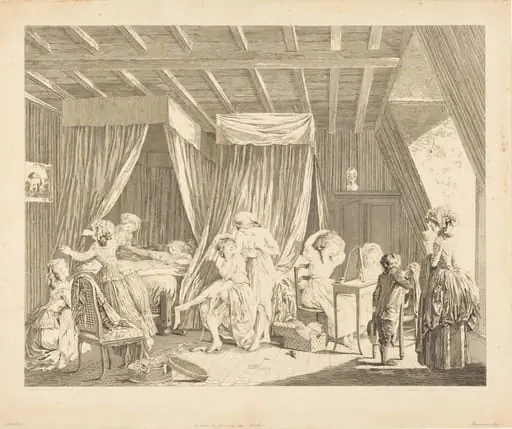 Le lever des ouvrieres en modes
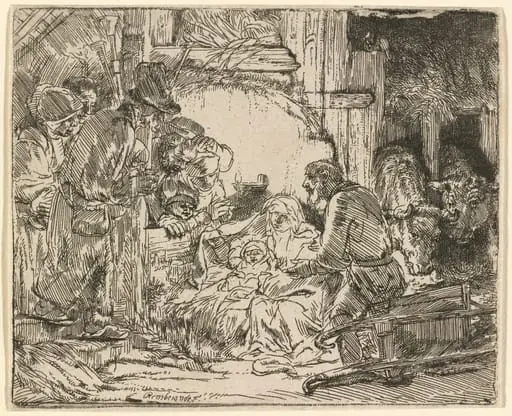 The Adoration of the Shepherds: with the Lamp
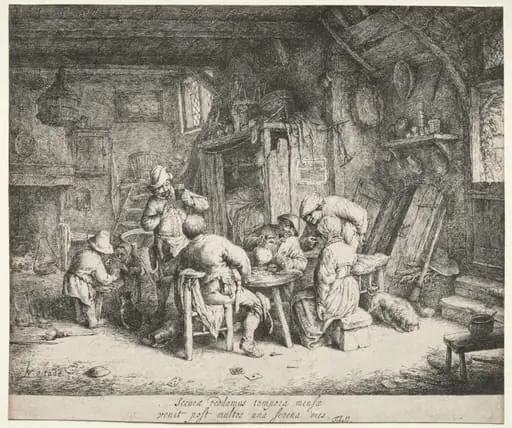 The Breakfast
 La Félicité villageoise
 The Fortune Teller
 Jupiter and Mercury in the House of Philemon and Baucis