Artwork
The Princess of Orange Visiting the Work-shop of Bartholomeus van der Helst
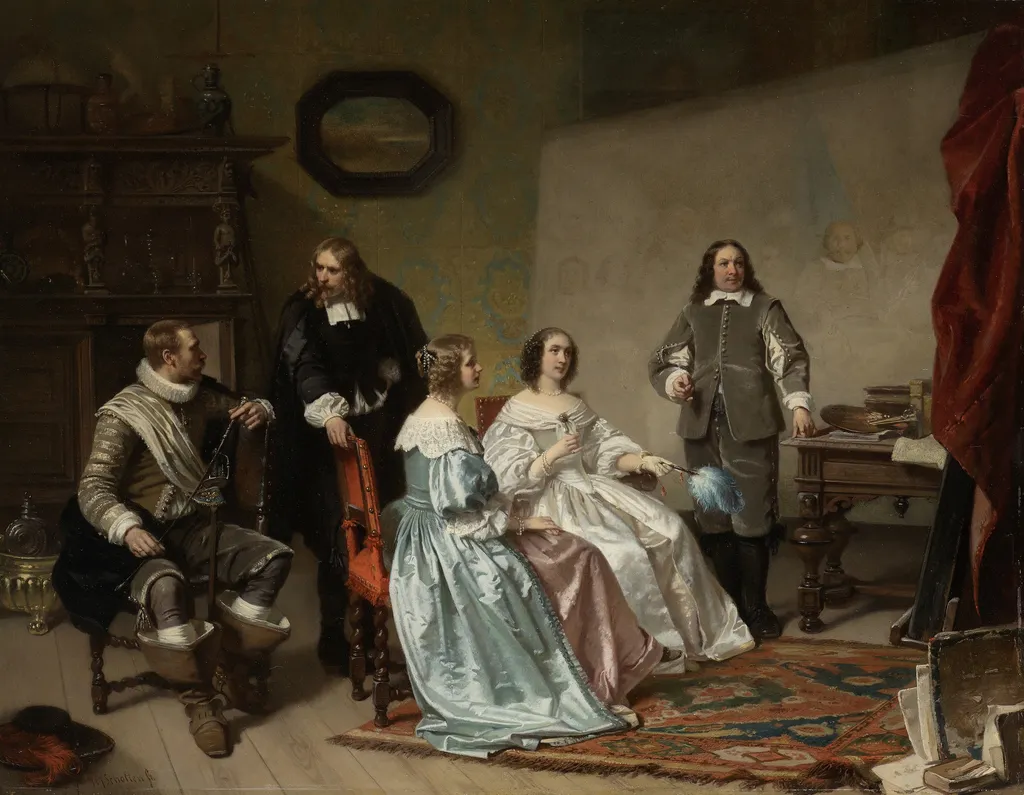
The Princess of Orange Visiting the Work-shop of Bartholomeus van der Helst is an oil painting by Hendrik Jacobus Scholten. It dates from 1850 and is held in the collection of the Rijksmuseum.
About this work
Overview
It portrays the Princess of Orange in the studio of Bartholomeus van der Helst, blending historical reference with contemporary genre painting.
Painted around 1850 by Hendrik Jacobus Scholten, this oil-on-canvas work depicts a fictionalized moment from the 17th century, reimagined through a 19th-century lens. It portrays the Princess of Orange in the studio of Bartholomeus van der Helst, blending historical reference with contemporary genre painting. The piece resides in the Rijksmuseum’s collection and reflects Scholten’s interest in reconstructing past social rituals with attention to detail and atmosphere.
Subject & Meaning
The scene presents a noblewoman and her companion observing artists at work, suggesting a moment of cultural patronage. The princess’s presence elevates the studio from a mere workspace to a site of aristocratic engagement. The men—likely painters or assistants—attend to her with quiet deference, while the violin case and books imply a refined, intellectual environment. The composition emphasizes observation and quiet exchange rather than action.
Technique & Style
Scholten employs soft, diffused lighting to model forms and draw focus to the figures’ faces and gestures. Subtle chiaroscuro enhances the three-dimensionality of the figures without dramatic contrast, aligning with 19th-century historical painting conventions. Textures of silk, wood, and fur are rendered with precision, and the interior is carefully arranged to suggest both domestic comfort and artistic order.
History & Provenance
Created in the mid-19th century, the painting was produced during a period when Dutch artists frequently revisited Golden Age themes to evoke national identity. Scholten, trained in Amsterdam, drew from historical records and contemporary taste to construct this imagined encounter. It entered the Rijksmuseum’s collection in the late 19th or early 20th century, where it remains as part of its broader survey of Dutch genre painting.
Context
In the 1850s, Dutch artists often revived 17th-century subjects to reinforce cultural continuity amid industrialization. Van der Helst, a real portraitist of the Dutch elite, was a natural figure to invoke. Scholten’s choice to depict a princess in a studio—rather than a formal portrait—reflects a growing interest in the private lives of nobility and the dignity of artistic labor during the Romantic era.
Legacy
Though not widely exhibited today, the painting exemplifies how 19th-century Dutch painters engaged with historical memory through carefully constructed scenes. It preserves a vision of artistic patronage that blends fact and fiction, offering insight into how later generations perceived the relationship between art, power, and domestic space in the Dutch Golden Age.
Own this work as a print
Artist & collection
Artist
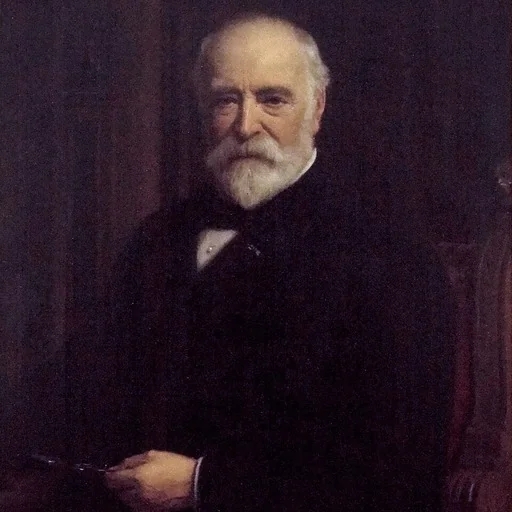
Hendrik Jacobus Scholten (11 July 1824, Amsterdam – 29 May 1907, Heemstede), was a 19th-century painter from the Netherlands.

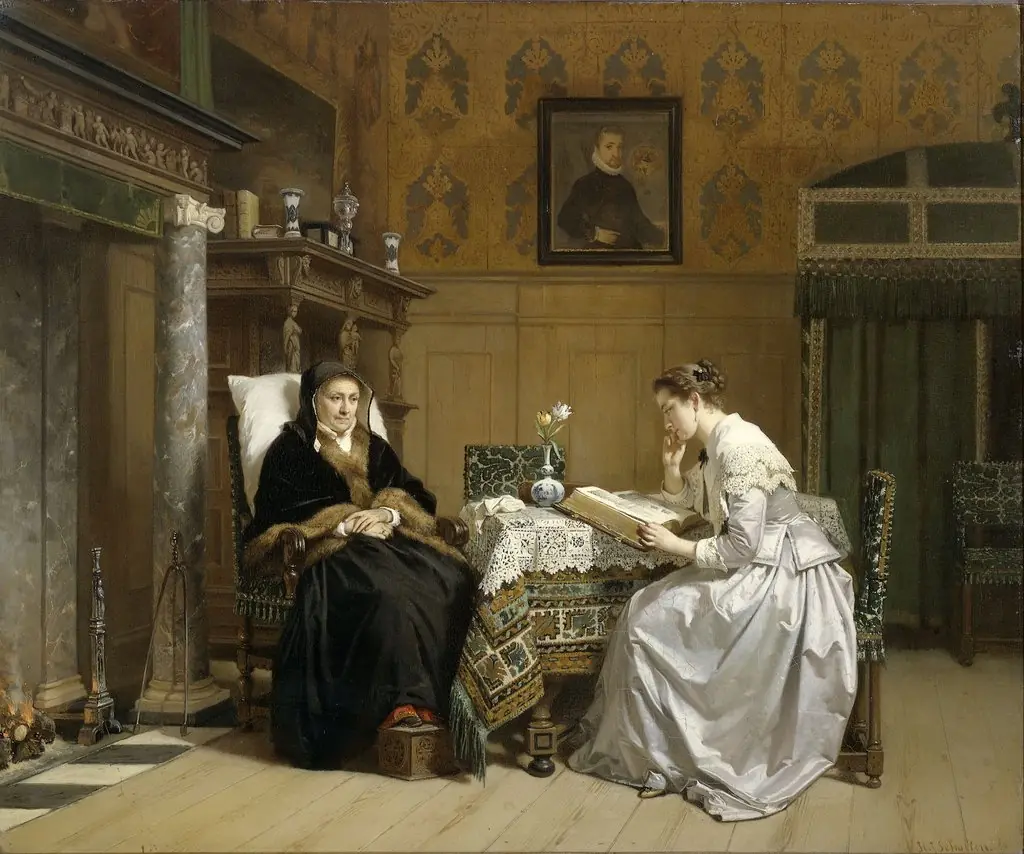
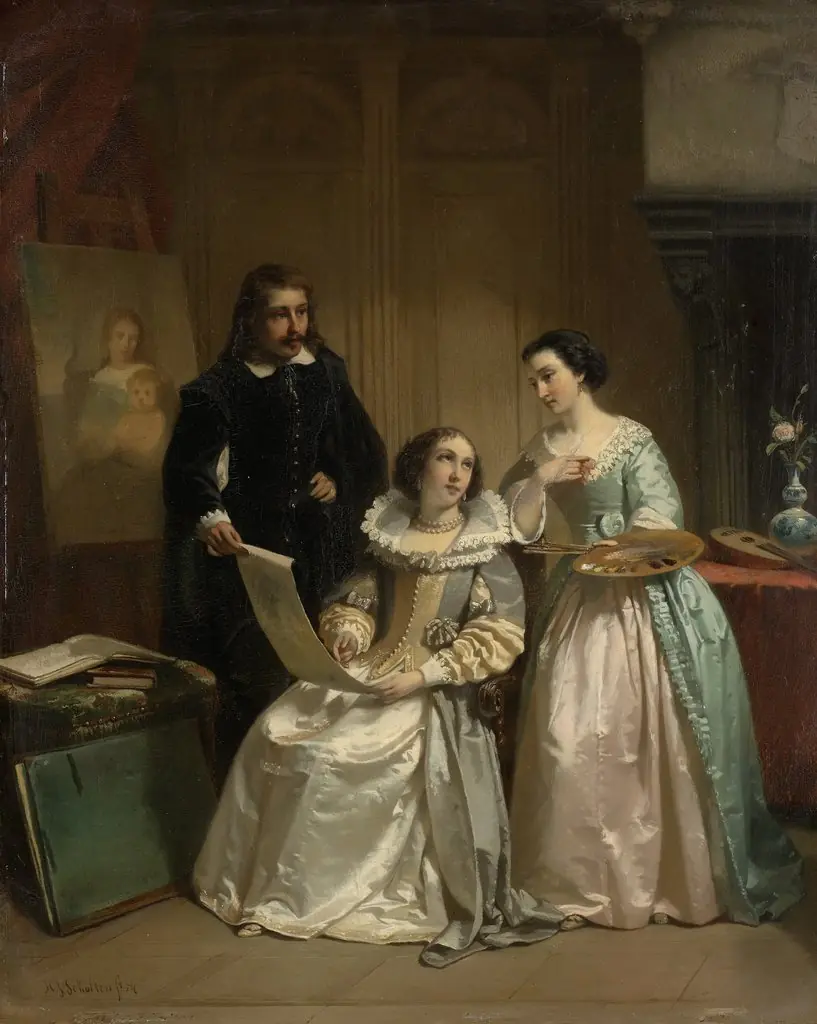
 A Collaboration (Molière and Corneille
 The Archdukes Albert and Isabella Visit the Printer Plantin
 Family Portrait
 Sale of jewels
 The Merry Company
 An Elegant Company
 The New Song
 The calling of Matthew
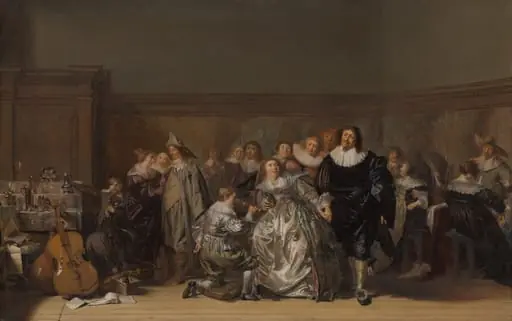 An Elegant Company
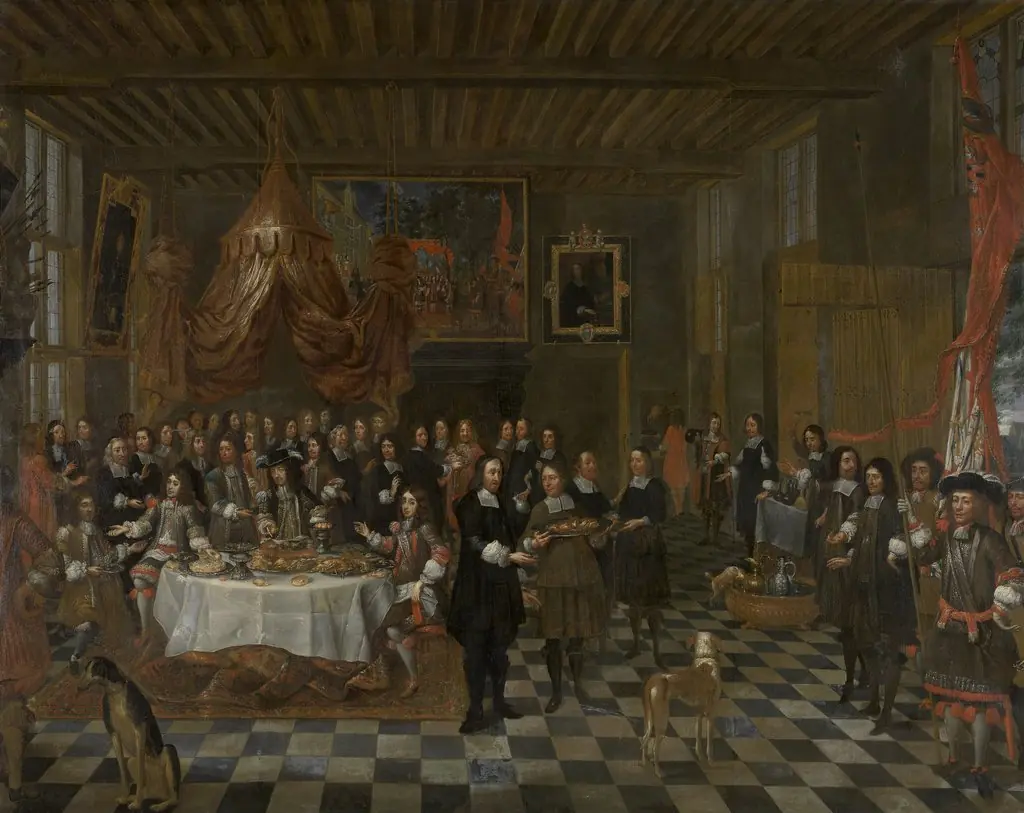 The Reception of Charles II and his Brothers in the Guild of Saint Barbara in Bruges
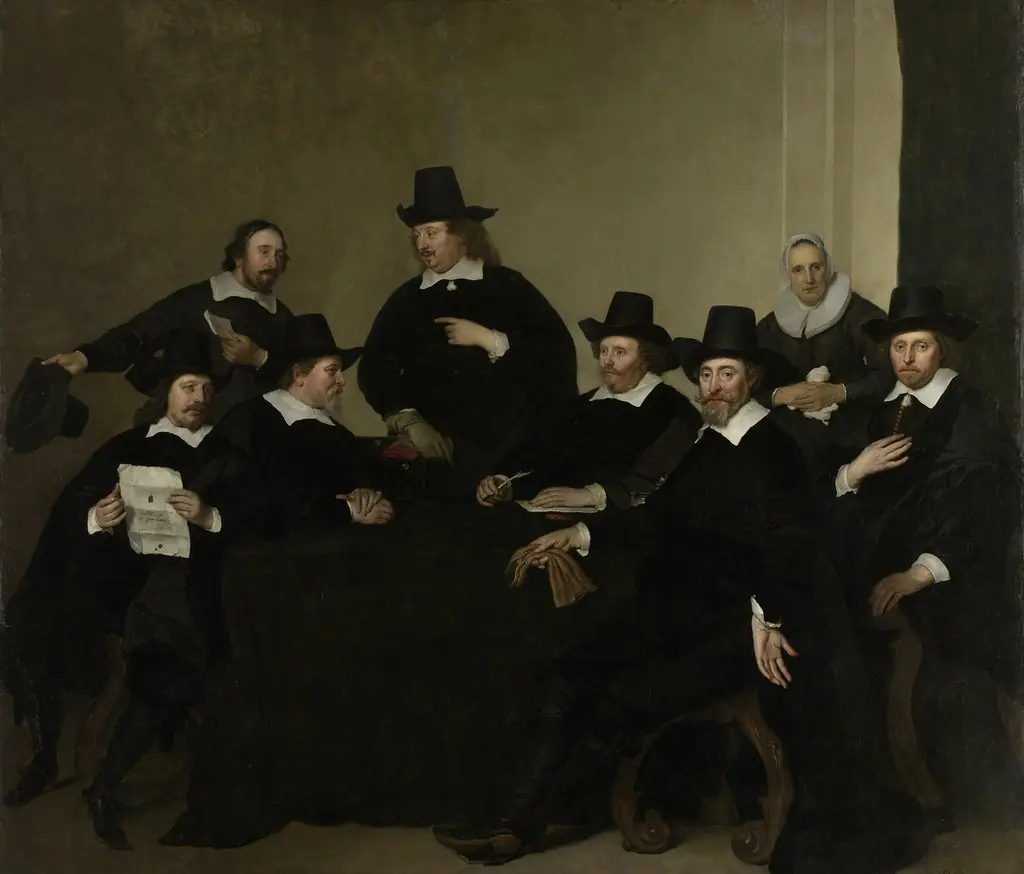 The regents of the Nieuwe Zijds institute for the outdoor relief of the poor, Amsterdam, ca 1650
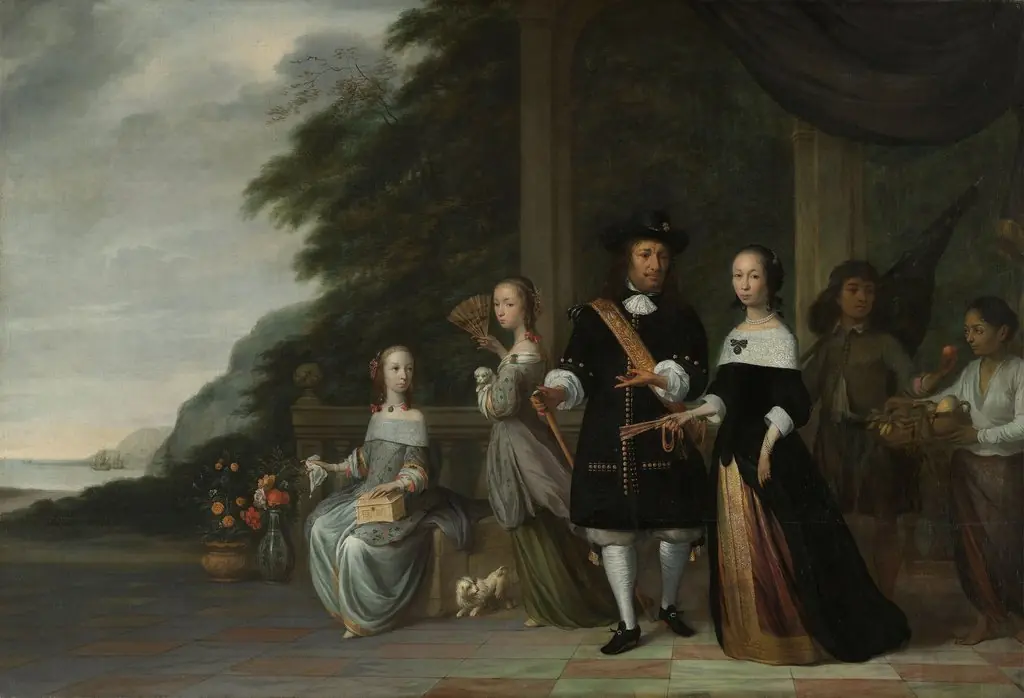 Pieter Cnoll, Cornelia van Nijenrode, their Daughters and Two Enslaved Servants