Artwork
Portrait de Lorette au turban
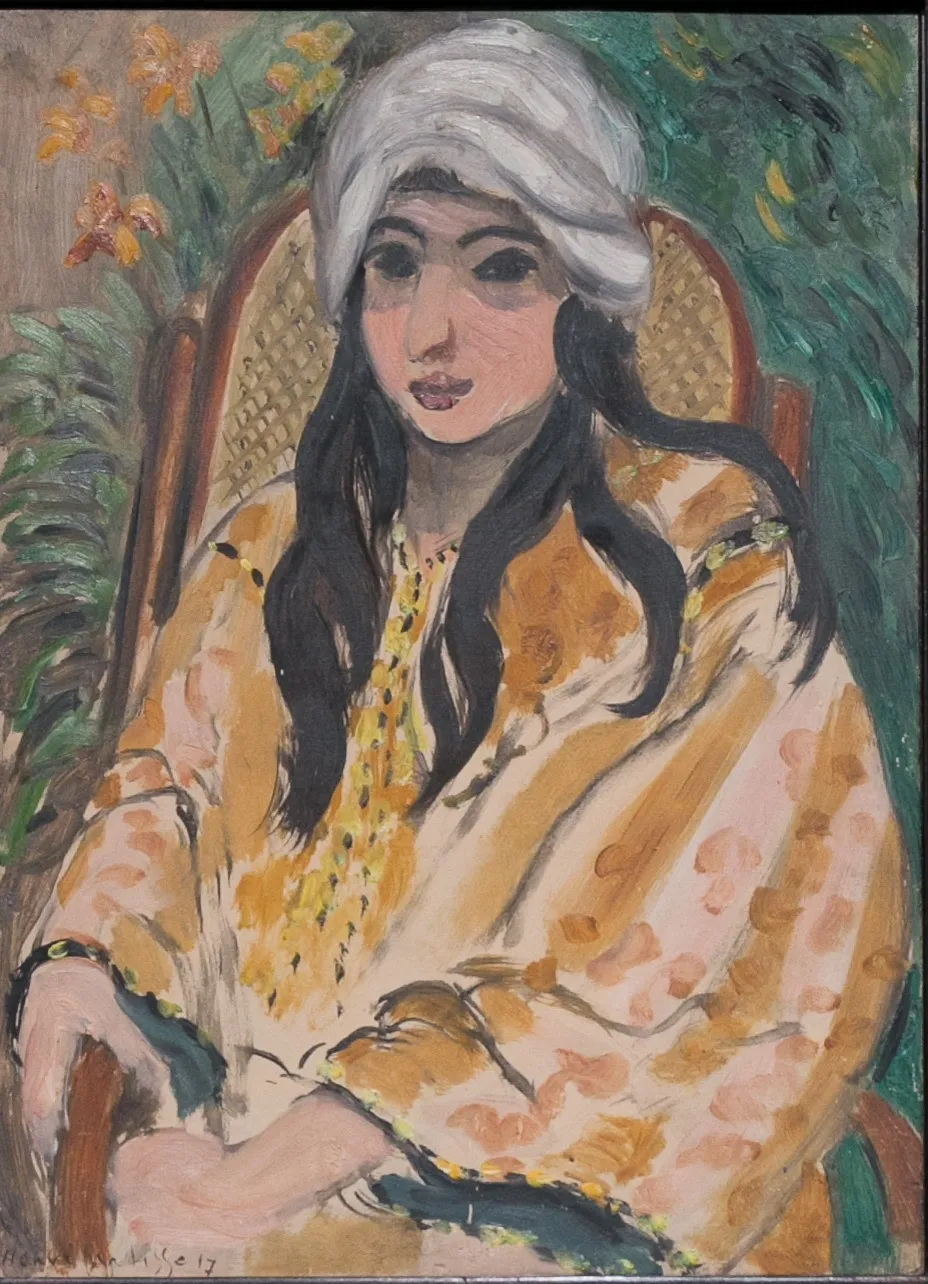
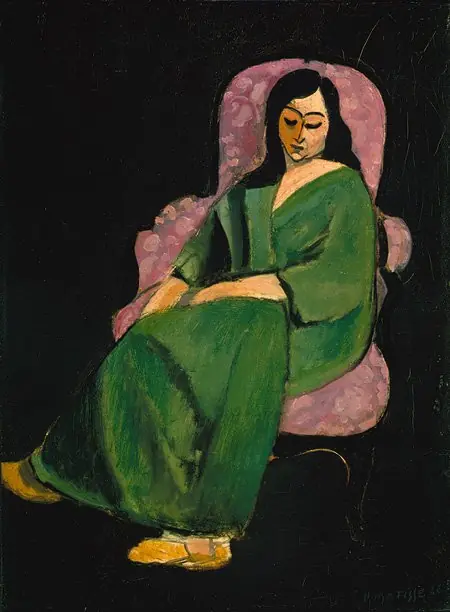
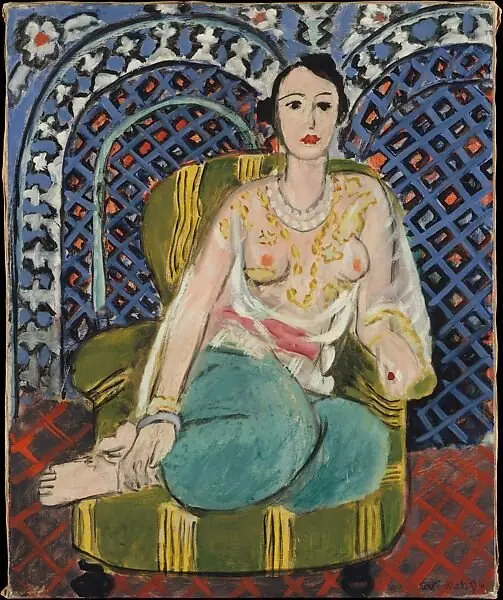
Portrait de Lorette au turban is an oil painting by the Post-Impressionist artist Henri Matisse. It dates from 1917 and is held in the collection of the Montreal Museum of Fine Arts.
About this work
Overview
Created in 1917, this oil painting by Henri Matisse portrays a seated woman rendered in a post‑Impressionist idiom. The work belongs to the collection of the Montreal Museum of Fine Arts and exemplifies Matisse’s mature period, when his compositional choices emphasized flat color areas and simplified forms.
Subject & Meaning
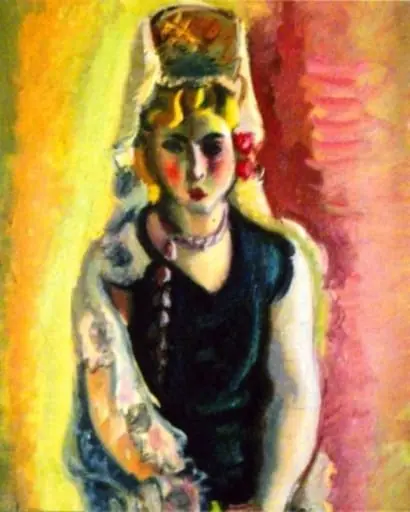
The sitter, identified as Lorette, occupies a chair with a woven back, her gaze directed straight ahead. She wears a white headpiece and a yellow robe patterned with orange spots, while dark hair falls loosely. The surrounding foliage—green leaves and orange blossoms—frames her, contributing to an atmosphere of quiet contemplation.
Technique & Style
Matisse employs soft, fluid brushwork to model the face, achieving a gentle transition of tone across the skin. The palette is restrained yet vivid, juxtaposing the warm yellows and oranges of the garment against cooler greens in the background. The composition balances decorative pattern with simplified anatomical rendering, characteristic of his post‑Impressionist approach.
History & Provenance
After its completion, the painting entered private ownership before being acquired by the Montreal Museum of Fine Arts, where it remains on view. Its provenance reflects the early‑20th‑century interest in Matisse’s work among collectors and institutions seeking representative examples of his portraiture.
Context
The portrait was produced during World War I, a period when Matisse turned toward more intimate subjects and a calmer visual language. This shift aligns with his broader exploration of decorative motifs and a reduced, harmonious color scheme that would inform his later cut‑out works.
Artist & collection
Artist
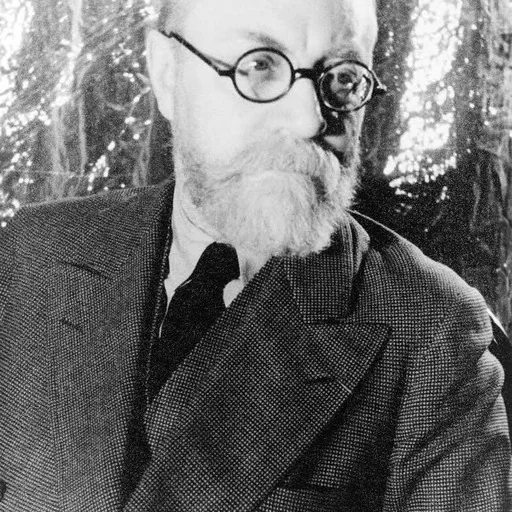
Henri Émile Benoît Matisse (French: ; 31 December 1869 – 3 November 1954) was a French visual artist, known for both his use of colour and his fluid and original draughtsmanship.