Artwork
Aspects of Nature: The Cliff
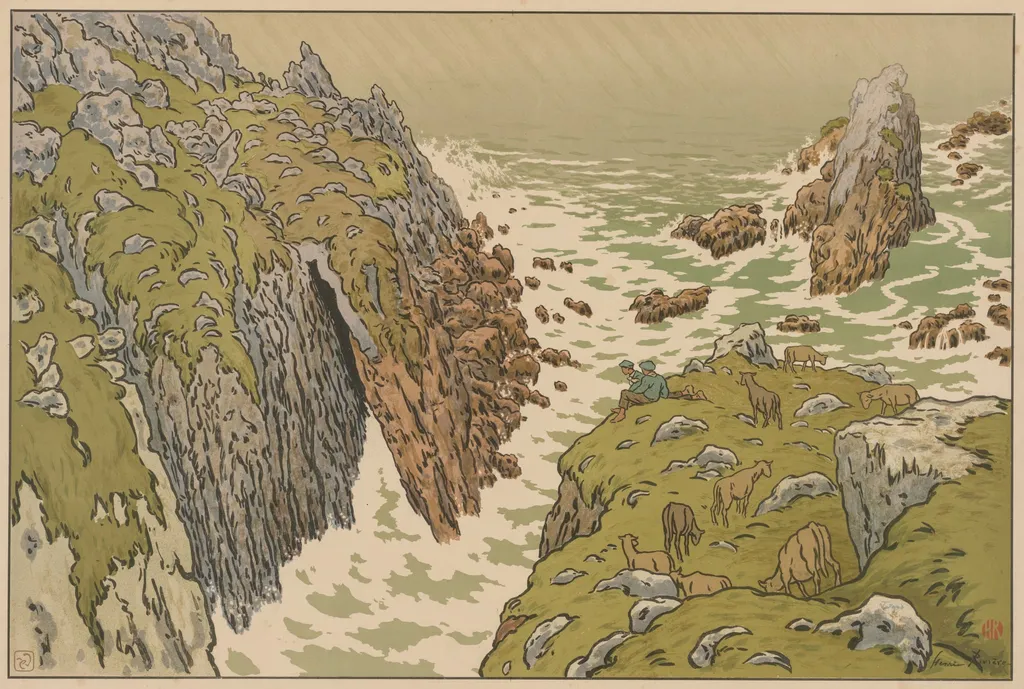
Aspects of Nature: The Cliff is a print by the Impressionist artist Henri Rivière. It dates from 1897 and is held in the collection of the Cleveland Museum of Art.
About this work
Gray rocks rise under a cloudy sky.
A few pine trees lean into the wind.
Heather glows purple at their feet.
This is one of sixteen lithographs from Rivière’s *Aspects of Nature*.
He made them while living in Brittany, where the sea sounds like a constant hum.
He called the spot “the end of the world.”
Look up Henri Rivière (French, 1864–1951).
Overview
This lithograph is part of a series of sixteen works by Henri Rivière titled Aspects of Nature, created during his time at a summer residence in Brittany.
This lithograph is part of a series of sixteen works by Henri Rivière titled Aspects of Nature, created during his time at a summer residence in Brittany. The print captures a dramatic coastal cliff scene, rendered in large format with vivid color. Rivière designed these prints to be affordable and widely distributed, aiming to bring artistic imagery into everyday spaces such as homes and public buildings, challenging the notion that fine art was reserved for elite collections.
Subject & Meaning
The image shows two children and a flock of sheep standing at the edge of a rugged cliff, overlooking a churning sea. The composition reflects Rivière’s personal experience of solitude and natural grandeur at his Brittany home, which he described as feeling like 'the end of the world.' The quiet presence of the figures contrasts with the wild environment, suggesting a fragile human harmony with nature’s enduring rhythms, underscored by the constant sounds of wind, sea, and birds.
Technique & Style
Rivière employed lithography to achieve rich, layered color and broad tonal ranges, unusual for prints of the time. He used large stone plates and hand-pulled impressions to produce vivid, mural-sized images with subtle gradations of hue—purple heather, gray rock, and stormy sky. His technique emphasized atmospheric effect over detail, aligning with Symbolist sensibilities while maintaining a direct, observational quality rooted in the landscape’s physical presence.
History & Provenance
Created between 1895 and 1900, the series was produced during Rivière’s residency in Brittany, where he sought inspiration from the region’s wild coastline. The prints were published in substantial editions and sold at modest prices, a deliberate move to democratize art. They were widely displayed in French homes, schools, and commercial interiors, contributing to a broader cultural shift in how printed art was valued and consumed in late 19th-century France.
Context
Rivière’s work emerged during a period of renewed interest in printmaking as a fine art medium, alongside contemporaries like Toulouse-Lautrec and Mucha. Unlike commercial posters, his prints were not advertisements but contemplative landscapes meant to evoke mood. His emphasis on scale and accessibility aligned with broader social movements advocating for art’s role in public life, positioning prints as tools for aesthetic education and emotional resonance beyond the gallery.
Legacy
Rivière’s mural prints helped redefine lithography’s potential in fine art, influencing later generations of printmakers who valued expressive color and public accessibility. Though less known today than his contemporaries, his series remains a significant example of how artistic innovation can bridge the gap between elite aesthetics and everyday experience. The Aspects of Nature series continues to be studied for its role in expanding the social function of printmaking in modern France.
Artist & collection
Artist
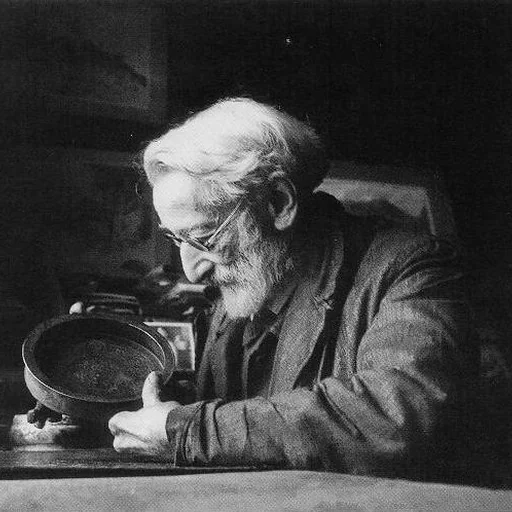
Henri Rivière (March 11, 1864 – August 24, 1951) was a French artist and designer best known for his creation of a form of shadow play at the Chat Noir cabaret, and for his post-Impressionist illustrations of Breton landscapes and the…

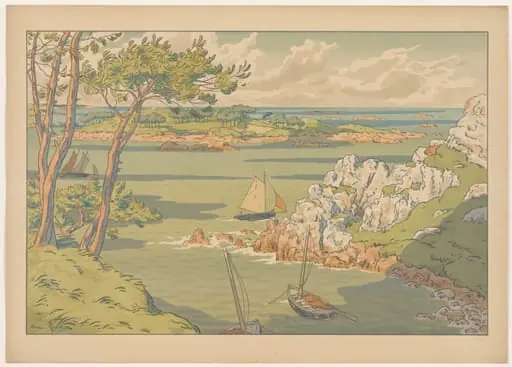 Aspects of Nature: The Island
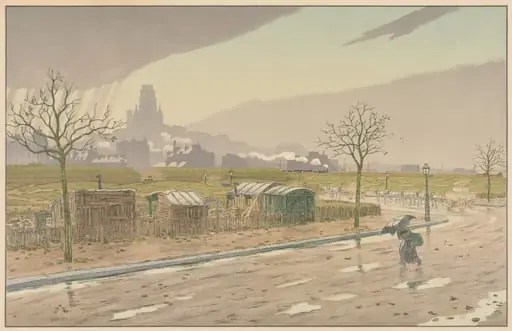 Parisian Landscapes: The Fortifications
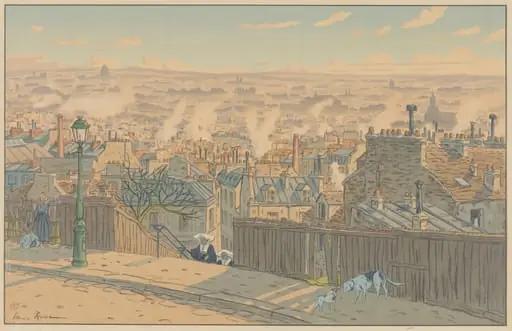 Parisian Landscapes: Paris seen from Montmartre
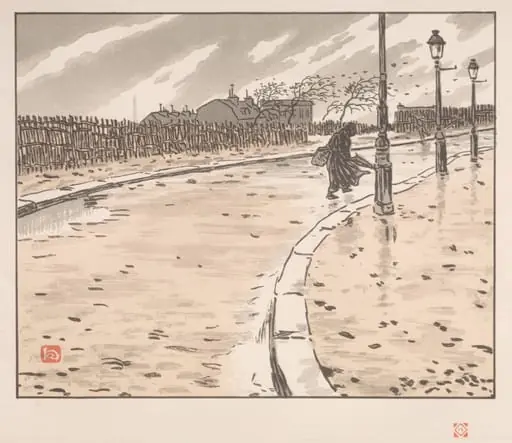 Thirty-Six Views of the Eiffel Tower: From Lamarck Street
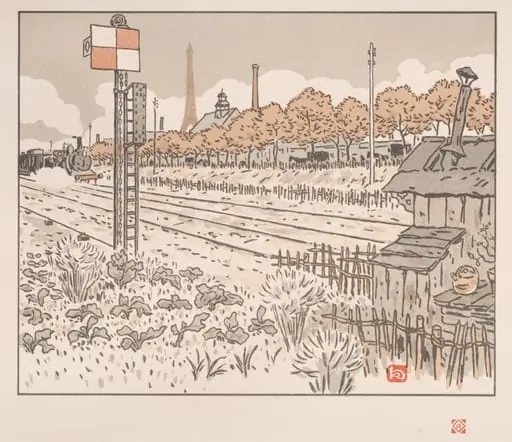 Thirty-Six Views of the Eiffel Tower: From the Quai de Javel (Switchman's Shanty)
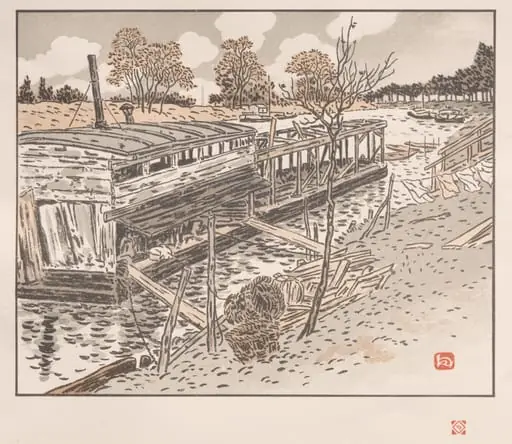 From Bas-Meudon, Old Lavoir
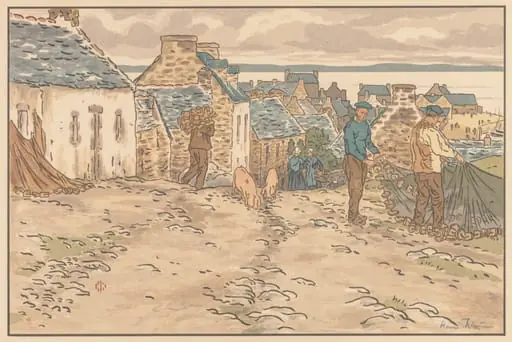 The Beautiful Countryside in Brittany: Street in Tréboul
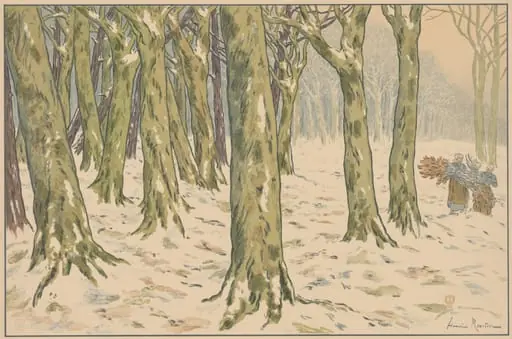 The Woods, Winter
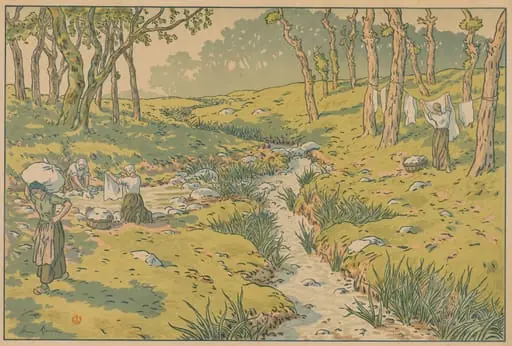 Aspects of Nature: The Stream
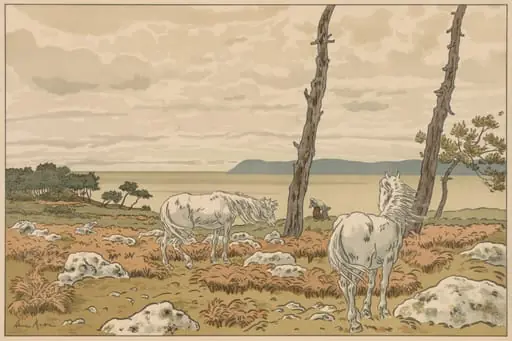 Aspects of Nature: The Bay
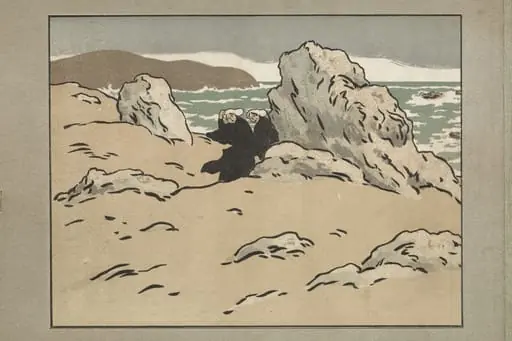 The Wandering Jew: Back Cover
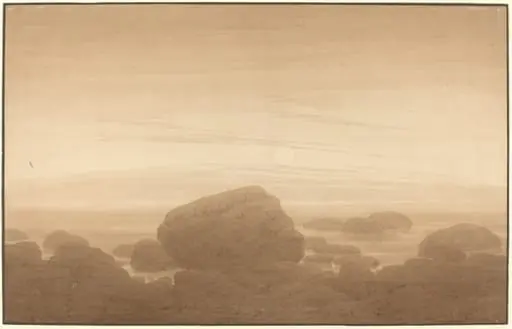 Moonrise on an Empty Shore
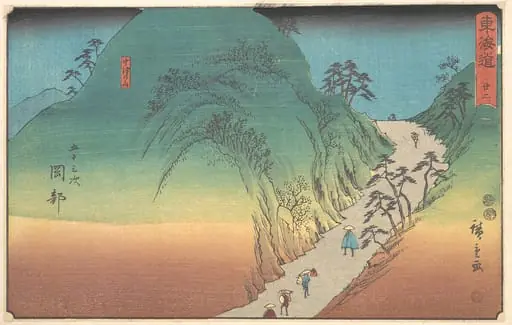 東海道五十三次 岡部 宇津の山|Okabe
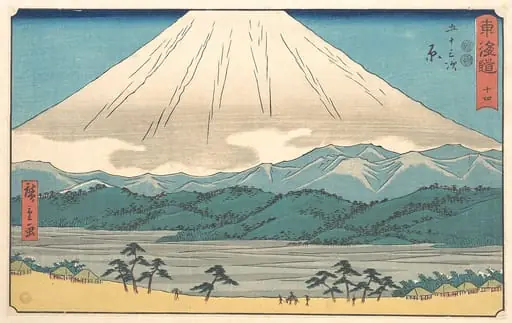 歌川広重画 東海道 十四 五十三次 原|Hara, Number 14, from the series Fifty-Three Stations of the Tōkaidō Road (Tōkaidō gojūsan tsugi), also known as the Clerical Script Tōkaidō (Reisho Tōkaidō)
 Untitled
 The Wandering Jew: Cover