Artwork
The Wandering Jew: Back Cover
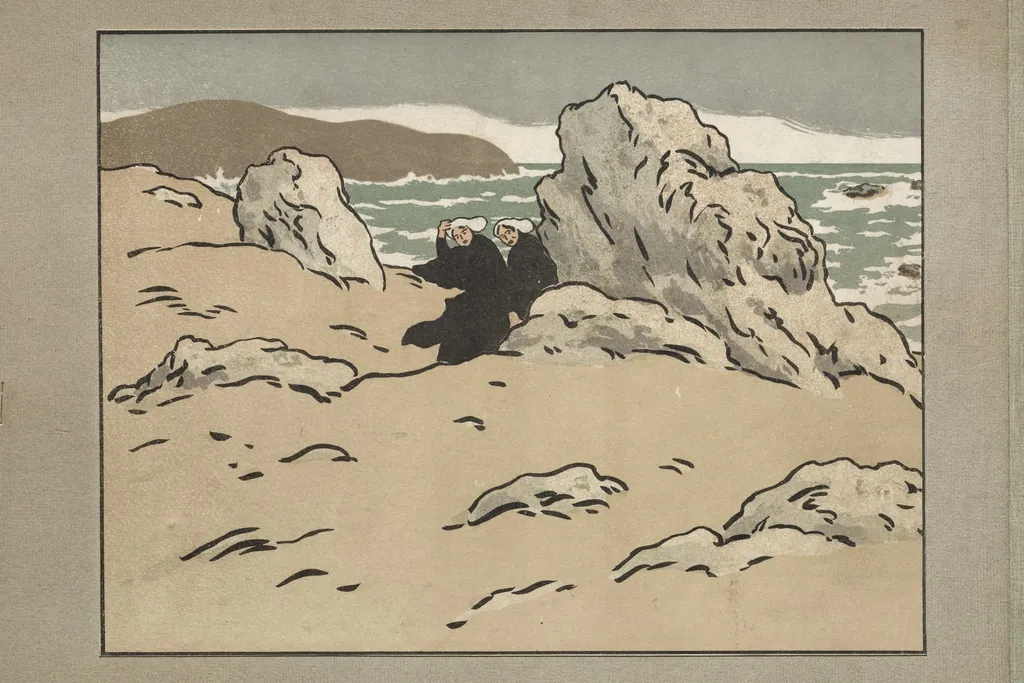
The Wandering Jew: Back Cover is a work on paper by the Impressionist artist Henri Rivière. It dates from 1896 and is held in the collection of the Cleveland Museum of Art.
About this work
Overview
Created in 1896 by French artist Henri Rivière, this back cover illustration belongs to a portfolio centered on the legend of the Wandering Jew.
Created in 1896 by French artist Henri Rivière, this back cover illustration belongs to a portfolio centered on the legend of the Wandering Jew. Rivière, known for his graphic work and involvement with the Chat Noir cabaret, combined narrative suggestion with atmospheric design. The image avoids literal storytelling, instead evoking isolation and movement through minimal forms and textured landscapes.
Subject & Meaning
Two indistinct silhouettes traverse a barren shore, their identities left ambiguous. The figure of the Wandering Jew—a mythic eternal traveler—is implied rather than depicted with detail. Rivière’s choice to obscure facial features and reduce the figures to dark shapes emphasizes their symbolic role: not as individuals, but as embodiments of exile and endless motion across an indifferent landscape.
Technique & Style
Rivière employed bold, simplified forms and textured tonal contrasts to convey the roughness of the beach and the turbulence of the sea. The lithographic technique allowed for sharp edges and layered shadows, enhancing the sense of depth without relying on perspective. His style merges graphic economy with poetic suggestion, prioritizing mood over realism, a hallmark of his post-Impressionist approach to illustration.
History & Provenance
This work was produced as part of a limited portfolio published in 1896, likely intended for collectors or patrons of avant-garde print culture. Rivière’s association with the Chat Noir placed him within Paris’s vibrant artistic circles, where illustrated portfolios were valued as both art and ephemera. The piece survives as a rare example of his non-theatrical graphic output from this period.
Context
In the 1890s, French artists increasingly turned to folklore and myth as vehicles for exploring modern anxieties. Rivière’s treatment of the Wandering Jew aligns with broader Symbolist tendencies—favoring ambiguity and emotional resonance over narrative clarity. His work reflects a shift from academic illustration toward more personal, atmospheric expression in printed media.
Legacy
Rivière’s illustration contributed to the redefinition of graphic art as a medium for poetic inquiry rather than mere decoration. Though less known than his shadow theater designs, this piece exemplifies his ability to distill complex themes into restrained visual language. It influenced later illustrators seeking to merge narrative depth with formal simplicity in print.
Artist & collection
Artist
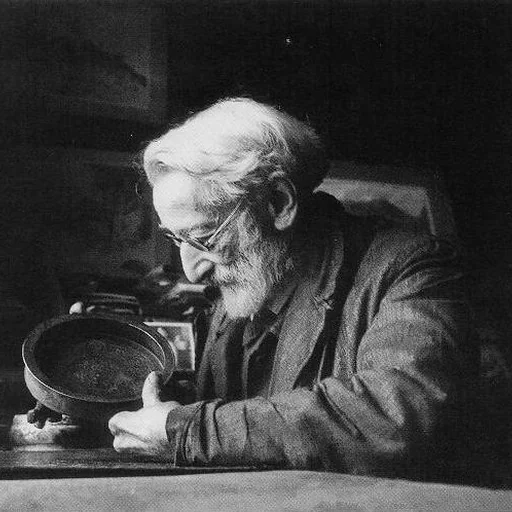
Henri Rivière (March 11, 1864 – August 24, 1951) was a French artist and designer best known for his creation of a form of shadow play at the Chat Noir cabaret, and for his post-Impressionist illustrations of Breton landscapes and the…

 Aspects of Nature: The Island
 Parisian Landscapes: The Fortifications
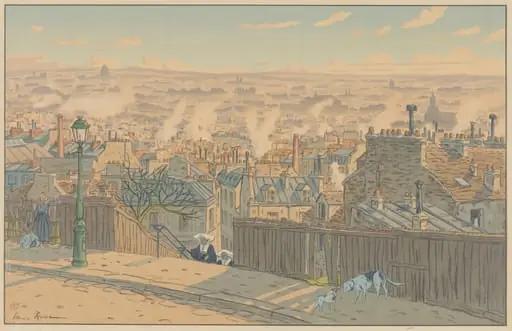 Parisian Landscapes: Paris seen from Montmartre
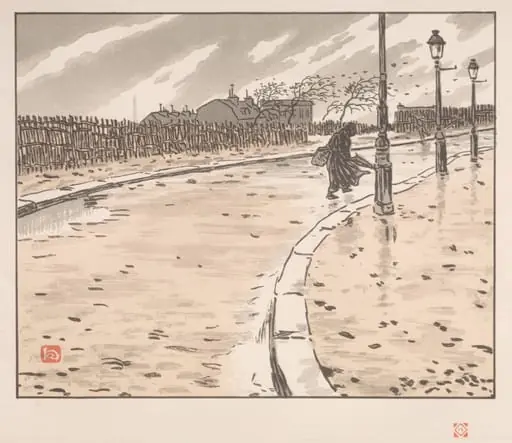 Thirty-Six Views of the Eiffel Tower: From Lamarck Street
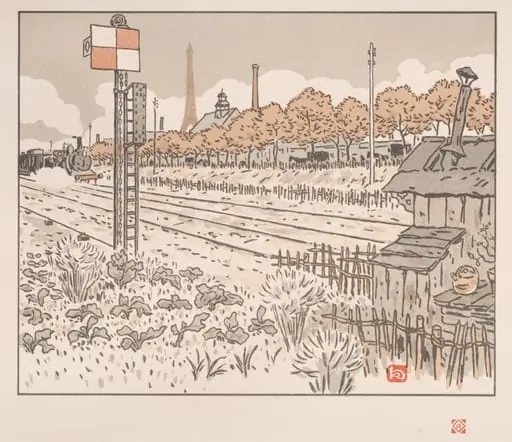 Thirty-Six Views of the Eiffel Tower: From the Quai de Javel (Switchman's Shanty)
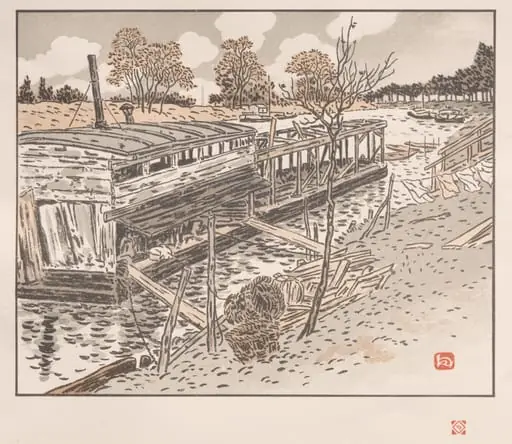 From Bas-Meudon, Old Lavoir
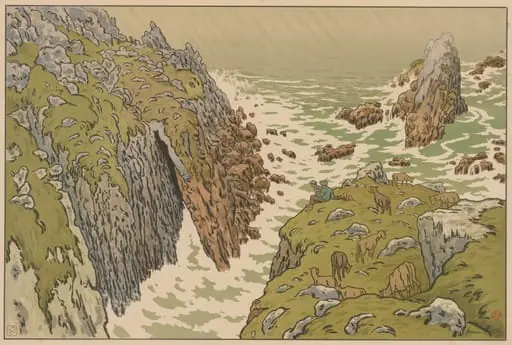 Aspects of Nature: The Cliff
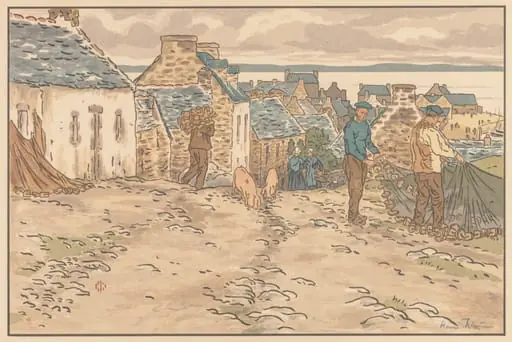 The Beautiful Countryside in Brittany: Street in Tréboul
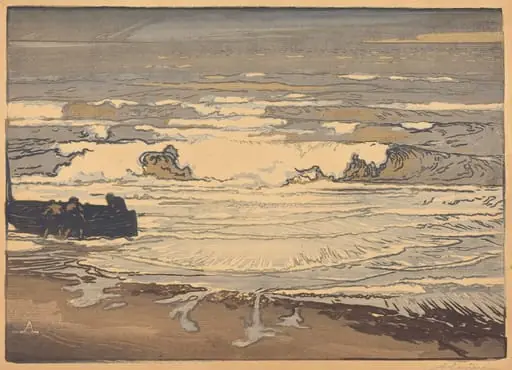 Unfurled Waves, Flood of September 1901 (Les lames deferlent,maree de Septembre 1901)
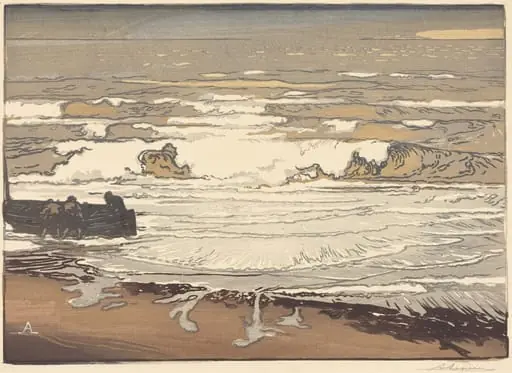 Unfurled Waves, Flood of September, 1901 (Les Vagues deferlent)
 Moonrise
 Untitled
 東海道五十三次 由井|Yui
 Cliff on a Seashore
 The Sea at Camaret, The Red Rocks
 Chushingura: Act VIII (from the series Perspective Pictures for The Treasure House of Loyalty)