Artwork
The Beautiful Countryside in Brittany: Street in Tréboul
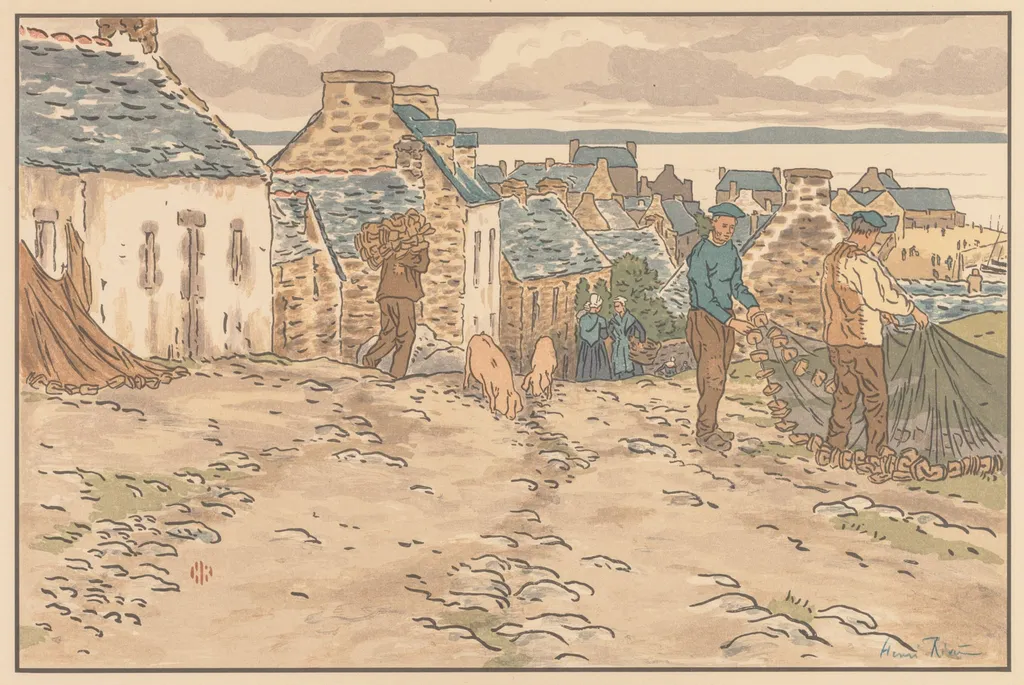
The Beautiful Countryside in Brittany: Street in Tréboul is a print by the Impressionist artist Henri Rivière. It dates from 1898 and is held in the collection of the Cleveland Museum of Art.
About this work
Overview
Henri Rivière’s 1898 work titled *The Beautiful Countryside in Brittany: Street in Tréboul* presents a quiet urban tableau from the Breton village of Tréboul. The composition captures a modest street lined with stone façades and slate roofs, populated by pedestrians engaged in ordinary activities.
Subject & Meaning
The scene focuses on everyday life in a small town, emphasizing the routine movements of locals as they traverse the street and gather near a central building. The muted palette of grays and browns reinforces a sense of calm and the unremarkable yet enduring character of rural French life.
Technique & Style
Rivière employs a realistic approach, rendering architectural details and figures with careful observation. The restrained colour scheme and subtle tonal variations convey atmospheric depth without the bright, fleeting brushwork typical of high Impressionism, aligning the piece with his post‑Impressionist sensibilities.
History & Provenance
Created in 1898, the print reflects Rivière’s broader interest in Breton landscapes during a period when he was also active in Parisian cabaret design, notably the shadow theatre at the Chat Noir. The work remains documented as part of his output that bridges fine art and decorative practice.
Context
At the turn of the twentieth century, many French artists turned to regional subjects, seeking authenticity beyond urban Paris. Rivière’s depiction of Tréboul fits within this trend, offering a visual record of provincial architecture and daily routines that contrasted with the rapidly modernizing capital.
Artist & collection
Artist
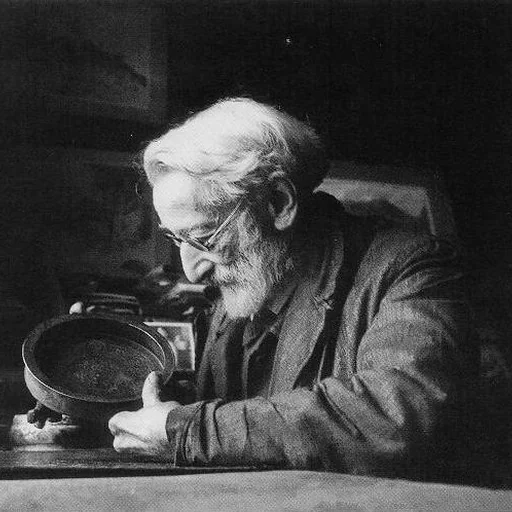
Henri Rivière (March 11, 1864 – August 24, 1951) was a French artist and designer best known for his creation of a form of shadow play at the Chat Noir cabaret, and for his post-Impressionist illustrations of Breton landscapes and the…

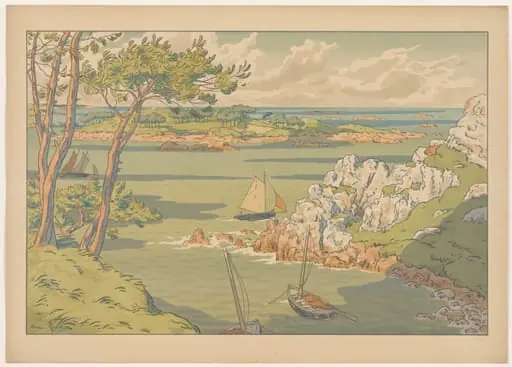 Aspects of Nature: The Island
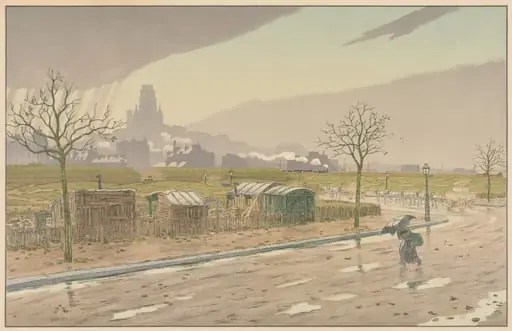 Parisian Landscapes: The Fortifications
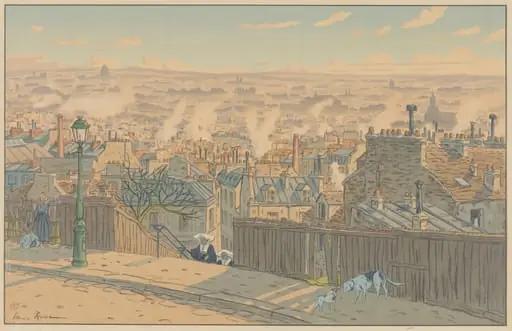 Parisian Landscapes: Paris seen from Montmartre
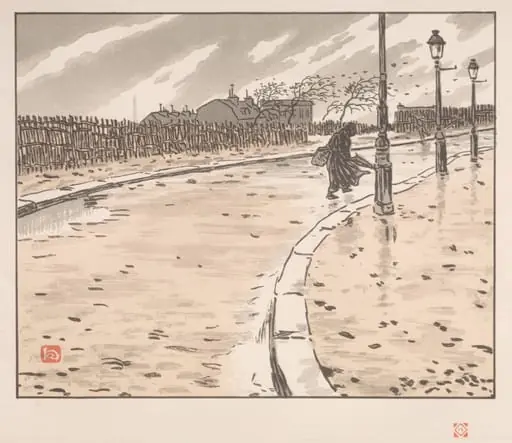 Thirty-Six Views of the Eiffel Tower: From Lamarck Street
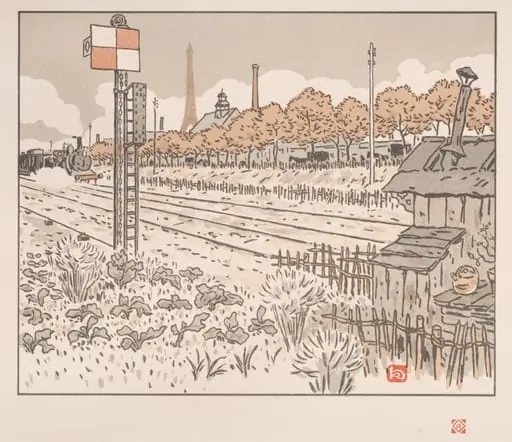 Thirty-Six Views of the Eiffel Tower: From the Quai de Javel (Switchman's Shanty)
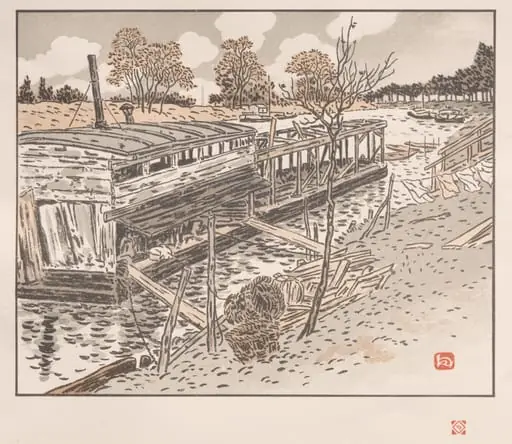 From Bas-Meudon, Old Lavoir
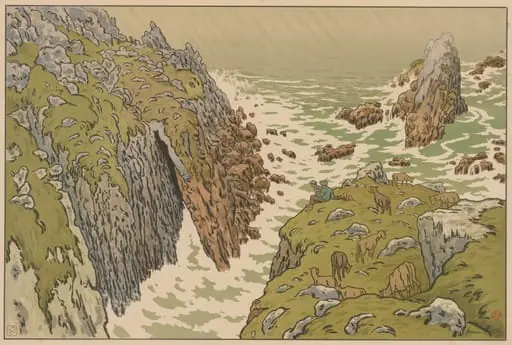 Aspects of Nature: The Cliff
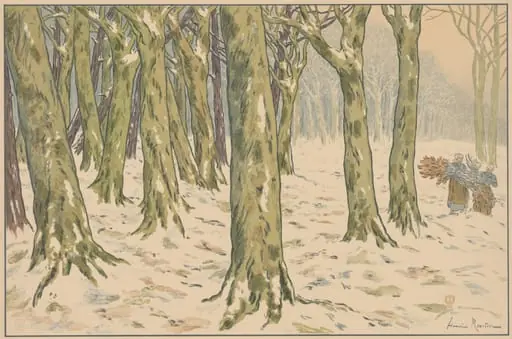 The Woods, Winter
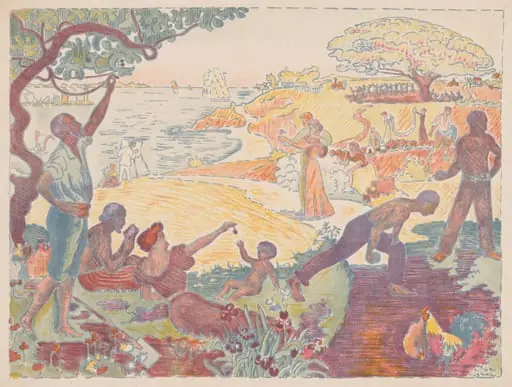 Harmonious Times
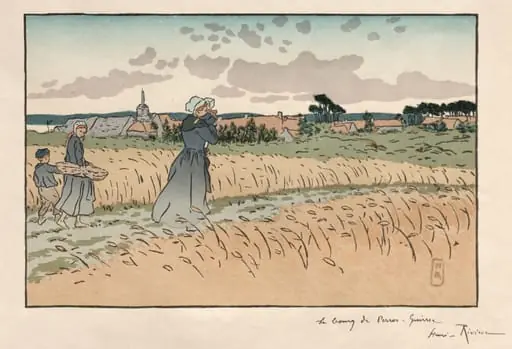 Parisian Landscapes: The Borough of Perros-Guirec
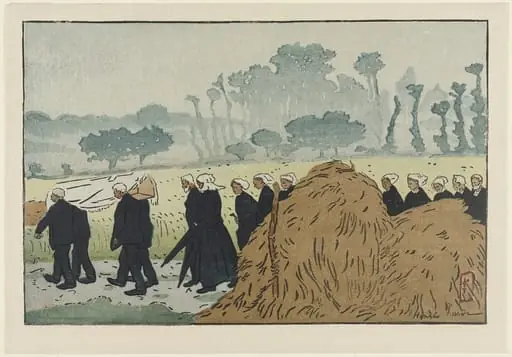 Untitled
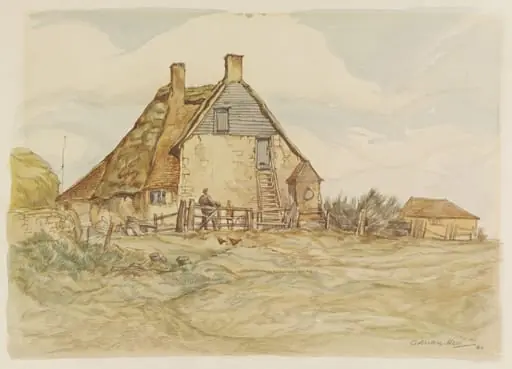 Old Cottage at Winchelsea
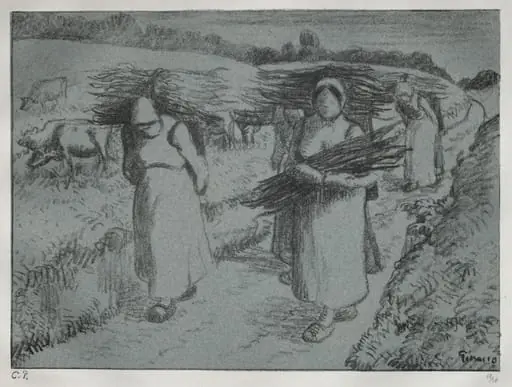 Peasants Carrying Fagots
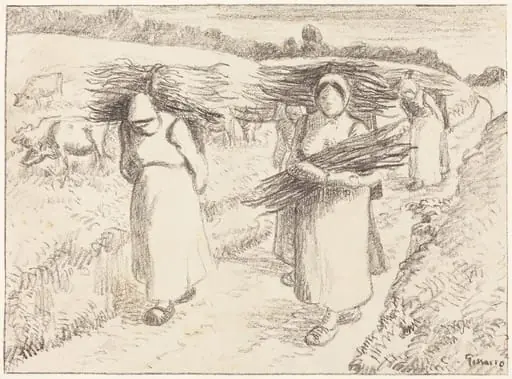 Peasants Carrying Sticks (Paysannes portant des fagots)
 Woman Filling a Water Jug (Femme vidant un seau)
 Aspects of Nature: The Bay
 Bondehuse
 The Cooper (Le tonnelier)
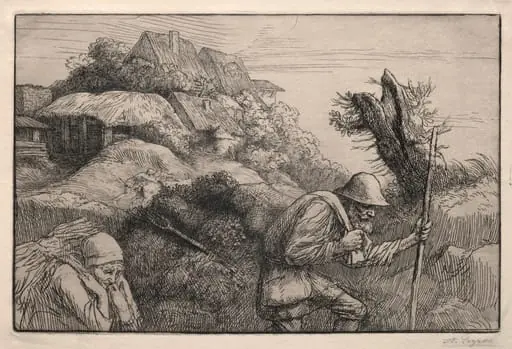 Return from the Woods
 Întoarcerea de la câmp