Artwork
Thirty-Six Views of the Eiffel Tower: From the Quai de Javel (Switchman's Shanty)
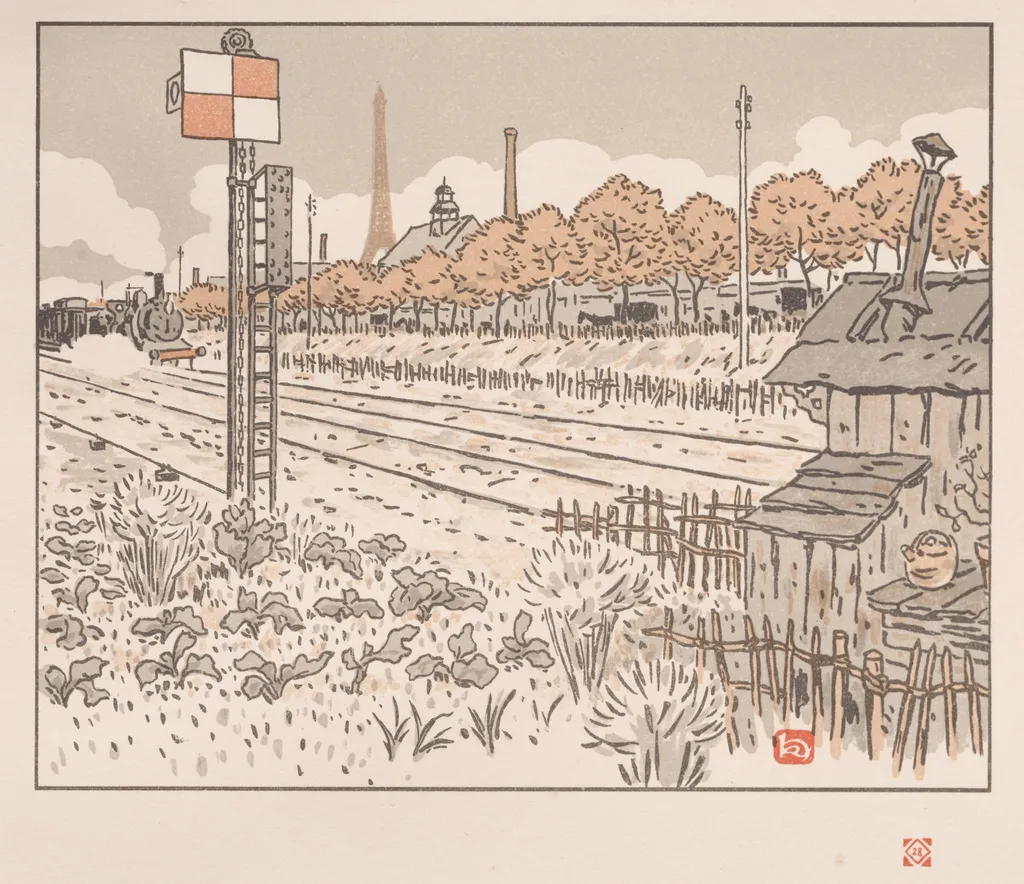
Thirty-Six Views of the Eiffel Tower: From the Quai de Javel (Switchman's Shanty) is a print by Henri Rivière. It dates from 1902 and is held in the collection of the Cleveland Museum of Art. This print depicts a serene industrial landscape along the Quai de Javel, with the Eiffel Tower visible in the distance.
About this work
The man lived and worked in this tiny shack, guiding trains by hand and growing food in his free time.
A small wooden hut sits beside train tracks, with the Eiffel Tower rising in the distance. A switchman stands near a red-and-white flag, and green vegetables grow on the riverbank. The sky is soft with pale clouds.
The man lived and worked in this tiny shack, guiding trains by hand and growing food in his free time. He used the flag to signal which track was open to train conductors. Telegraph poles line the far side of the rails, part of the system he operated when on duty. This quiet scene shows industrial life and daily routine side by side.
You can see more like this from the subject: france, early 20th century.
Overview
This print depicts a serene industrial landscape along the Quai de Javel, with the Eiffel Tower visible in the distance. A switchman's wooden hut sits beside railway tracks, highlighting the intersection of human labor and urban infrastructure.
Subject & Meaning
The scene focuses on a switchman's daily life, juxtaposing his industrial responsibilities—managing train tracks and signals—with personal activities like vegetable gardening. This contrast illustrates the coexistence of labor and leisure in early 20th-century France.
Technique & Style
The artwork features soft, pale clouds and a muted color palette, emphasizing a sense of calm. The composition balances the prominence of the Eiffel Tower with the intimacy of the switchman's shack and surroundings, reflecting a nuanced blend of grandeur and everyday life.
History & Provenance
Part of the 'Thirty-Six Views of the Eiffel Tower' series, this print is characteristic of early 20th-century French artistic explorations of modernity and urban life. Specific provenance details are not provided.
Context
Created in the context of France's early 20th-century industrial and artistic evolution, the piece reflects the era's fascination with the Eiffel Tower as a symbol of modernity, set against the quiet, routine aspects of working life.
Legacy
As part of a broader series, this print contributes to a historical and artistic record of the Eiffel Tower's impact on French life and aesthetics in the early 20th century, offering a glimpse into the daily lives of industrial workers.
Artist & collection
Artist
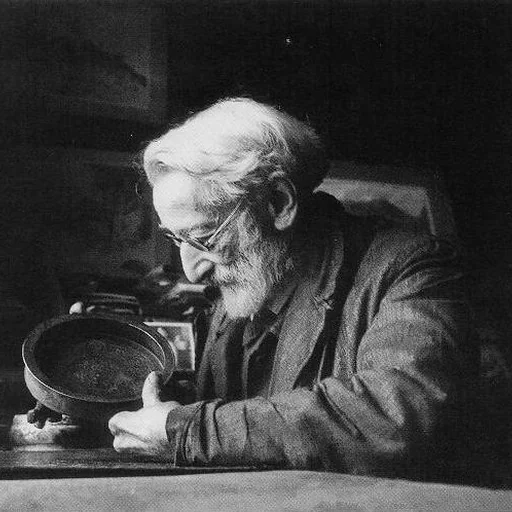
Henri Rivière (March 11, 1864 – August 24, 1951) was a French artist and designer best known for his creation of a form of shadow play at the Chat Noir cabaret, and for his post-Impressionist illustrations of Breton landscapes and the…

 Aspects of Nature: The Island
 Parisian Landscapes: The Fortifications
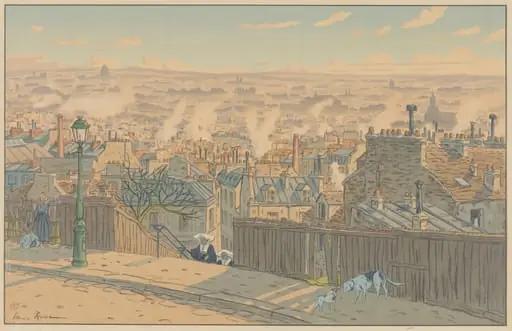 Parisian Landscapes: Paris seen from Montmartre
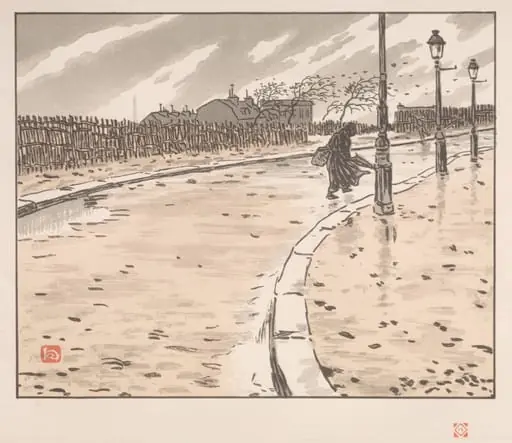 Thirty-Six Views of the Eiffel Tower: From Lamarck Street
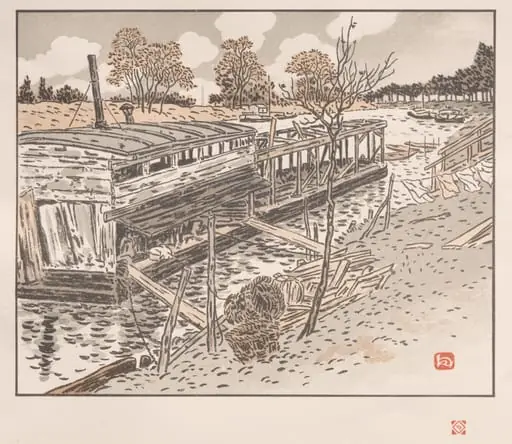 From Bas-Meudon, Old Lavoir
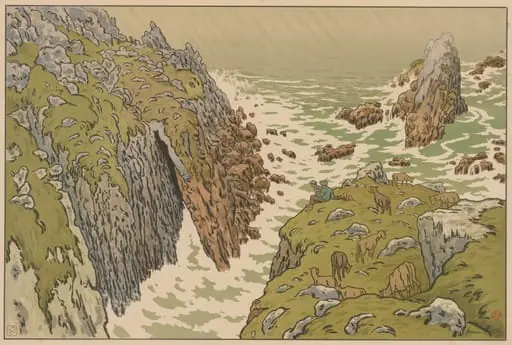 Aspects of Nature: The Cliff
 The Beautiful Countryside in Brittany: Street in Tréboul
 The Woods, Winter
 Thirty-Six Views of the Eiffel Tower: From Behind Frémiet's Elk (Trocadero)
 東海道五十三次之内 吉原|Yoshiwara
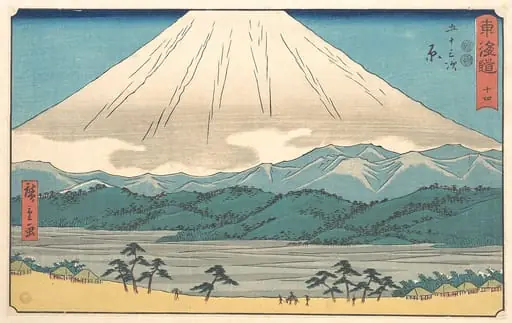 歌川広重画 東海道 十四 五十三次 原|Hara, Number 14, from the series Fifty-Three Stations of the Tōkaidō Road (Tōkaidō gojūsan tsugi), also known as the Clerical Script Tōkaidō (Reisho Tōkaidō)
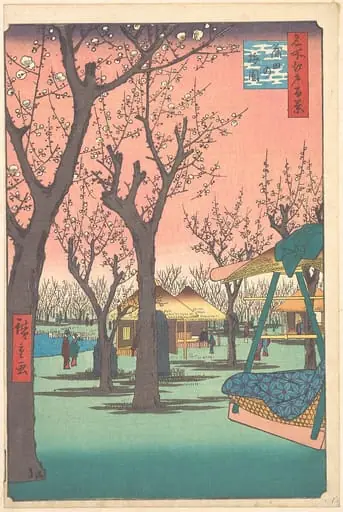 Kamata no Baien|名所江戸百景 蒲田の梅園|Plum Garden at Kamata
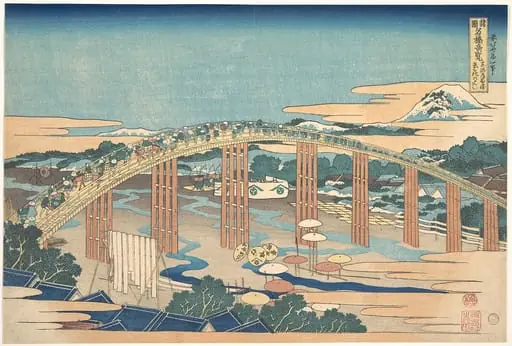 諸國名橋奇覧 東海道岡崎矢はぎのはし|Yahagi Bridge at Okazaki on the Tōkaidō (Tōkaidō Okazaki Yahagi no hashi), from the series Remarkable Views of Bridges in Various Provinces (Shokoku meikyō kiran)
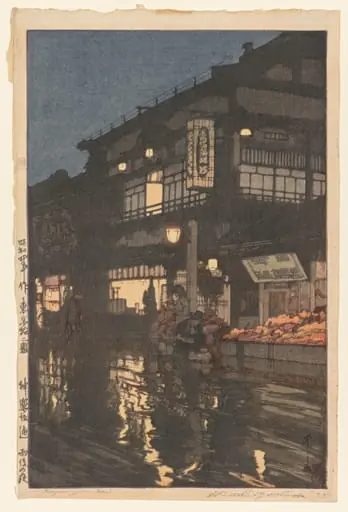 Kagurazaka Street after a Night Rain