Artwork
Catherine Kuttinger, Callot's Wife
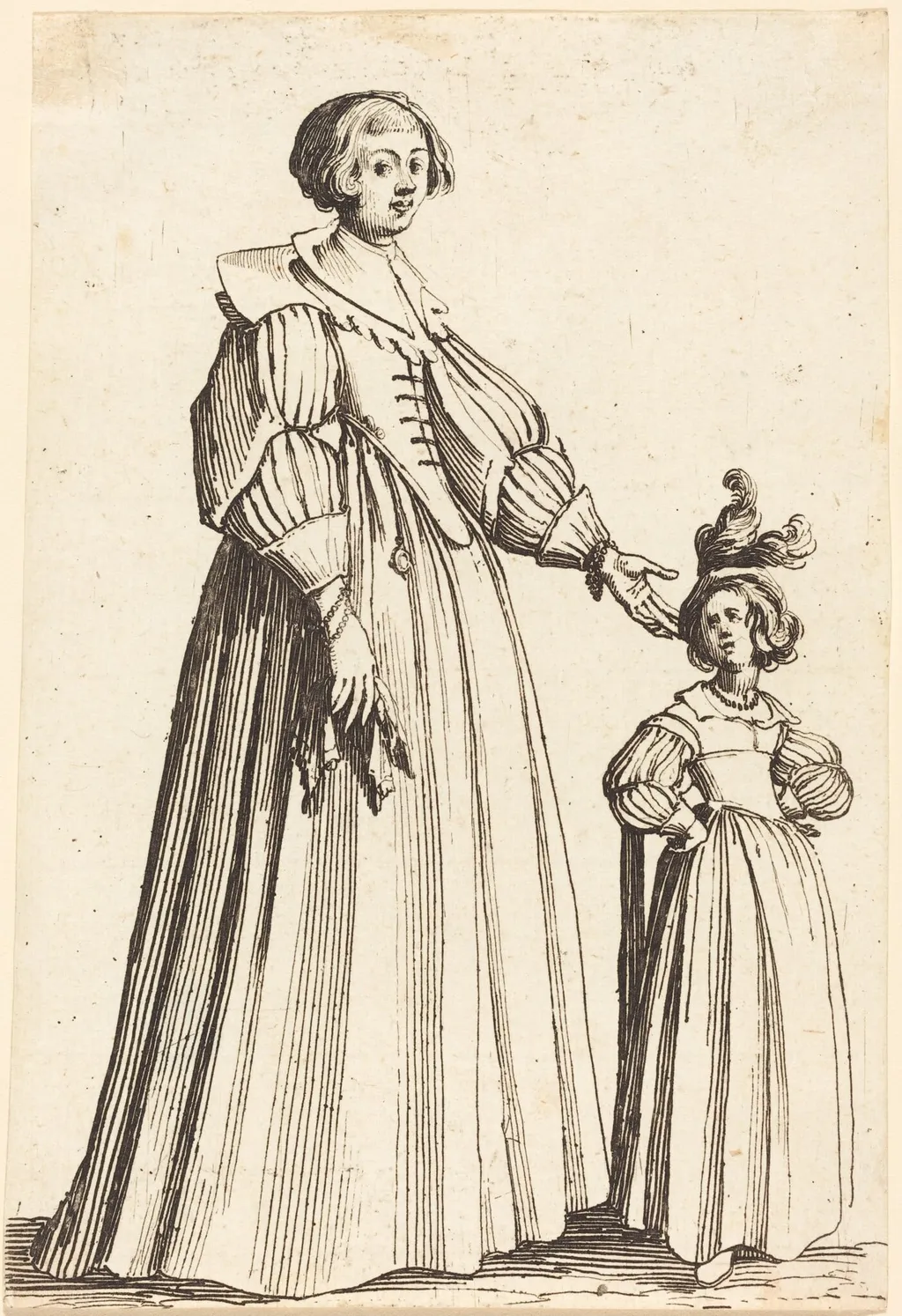
Catherine Kuttinger, Callot's Wife is an ink print by the Renaissance artist Israel Henriet. It dates from 1626 and is held in the collection of the National Gallery of Art.
About this work
Overview
Though sometimes misattributed to Jacques Callot, the work is a portrait of Catherine Kuttinger, Callot’s wife, and her companion.
Created in 1626 by Israel Henriet, this etching depicts two women standing side by side. Though sometimes misattributed to Jacques Callot, the work is a portrait of Catherine Kuttinger, Callot’s wife, and her companion. The composition is intimate and unidealized, capturing the figures in a quiet, everyday moment. The medium—etching—allowed for fine, expressive lines that define form through inked grooves on a metal plate, a technique widely used in early 17th-century printmaking.
Subject & Meaning
The two figures are presented without narrative drama, suggesting a domestic or familial context. The taller woman, identified as Catherine Kuttinger, wears an elaborate gown with a high collar and puffed sleeves, while the shorter companion is dressed more plainly, her wig and bundled fabric hinting at service or labor. Their proximity and matching posture imply a relationship of familiarity, possibly mistress and attendant, rendered without overt hierarchy or sentiment.
Technique & Style
Henriet employed the etching process, using acid to bite lines into a metal plate coated with wax. The resulting inked grooves produce the dense, fluid linework characteristic of the image. The style is loose and observational, with minimal shading and a focus on contour and texture. This sketch-like quality reflects the immediacy of the medium and the artist’s interest in capturing subtle details of dress and posture rather than formal grandeur.
History & Provenance
The print was made in 1626 during Henriet’s time in Nancy, where he worked alongside Jacques Callot. It likely originated as a personal study or portrait commission, possibly intended for private circulation. No early public records of its ownership exist, but it has been preserved in collections focused on Northern European printmaking, reflecting its value as a document of domestic life in early modern France.
Context
In early 17th-century France, etching was increasingly used for portraiture and genre scenes, moving beyond its earlier role in religious or military imagery. Henriet’s work aligns with a growing interest in depicting ordinary individuals with psychological nuance. The depiction of two women in domestic attire reflects broader cultural shifts toward recording personal and social relationships, particularly among the urban middle and upper classes.
Legacy
Though not widely exhibited, the etching remains a significant example of Henriet’s contribution to French printmaking. It offers insight into the visual culture of Callot’s circle and the quiet dignity afforded to women in domestic settings. Its preservation in institutional collections underscores its role as a historical record of costume, social structure, and the evolving possibilities of the etched line.
Artist & collection

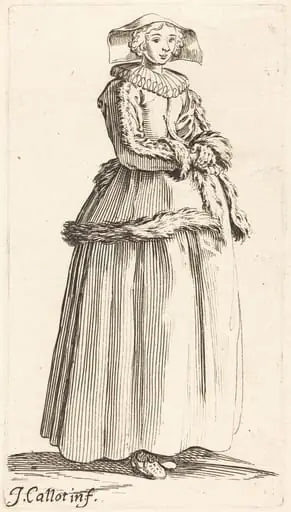 Young Woman with Hands Folded, Facing Right
![The Siege of La Rochelle [plate 16 of 16; set comprises 1952.8.97-112], by Israel Henriet](https://artifactworldgallery.com/img/israel-henriet--the-siege-of-la-rochelle-plate-16-of-16-set-comprises-1952-8--259b2c0fcc4c8988-w320.webp) The Siege of La Rochelle [plate 16 of 16; set comprises 1952.8.97-112]
The Siege of La Rochelle [plate 16 of 16; set comprises 1952.8.97-112]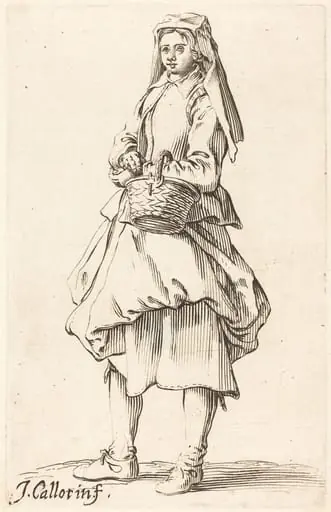 Peasant Woman with Basket, Facing Left
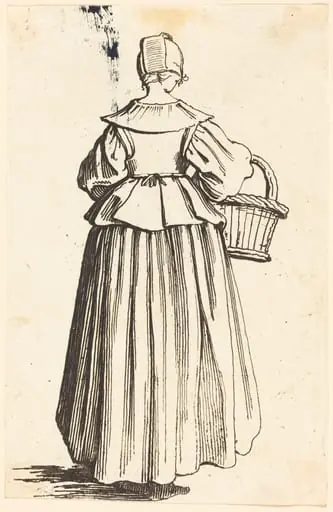 Peasant Woman with Basket, Seen from Behind
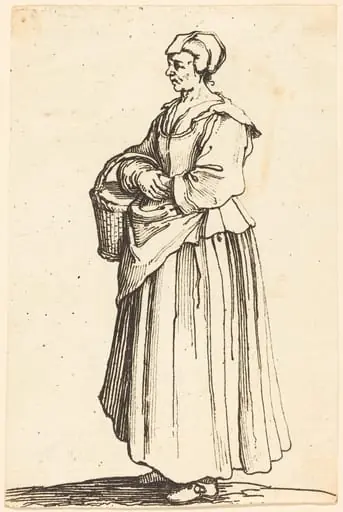 Peasant Woman with Basket, in Profile, Facing Left
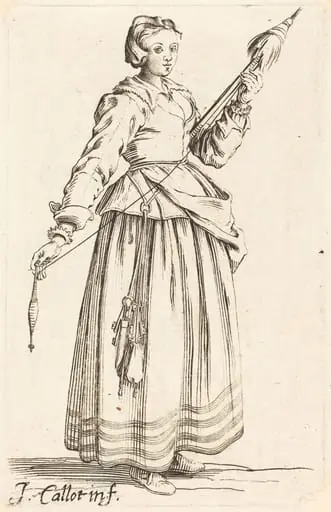 Young Woman with Distaff, Facing Right
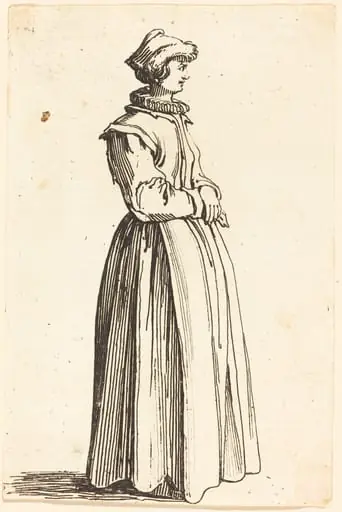 Young Woman, in Profile, Facing Right
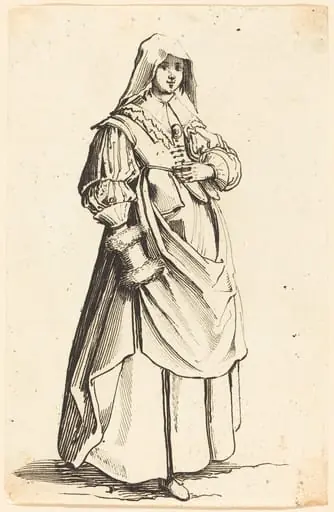 Bourgeoise with Muff, Facing Right