Artwork
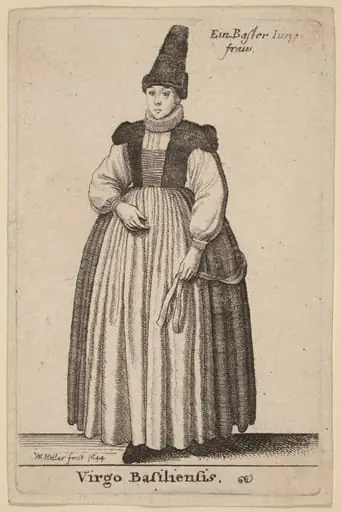
Mulier Basiliensis
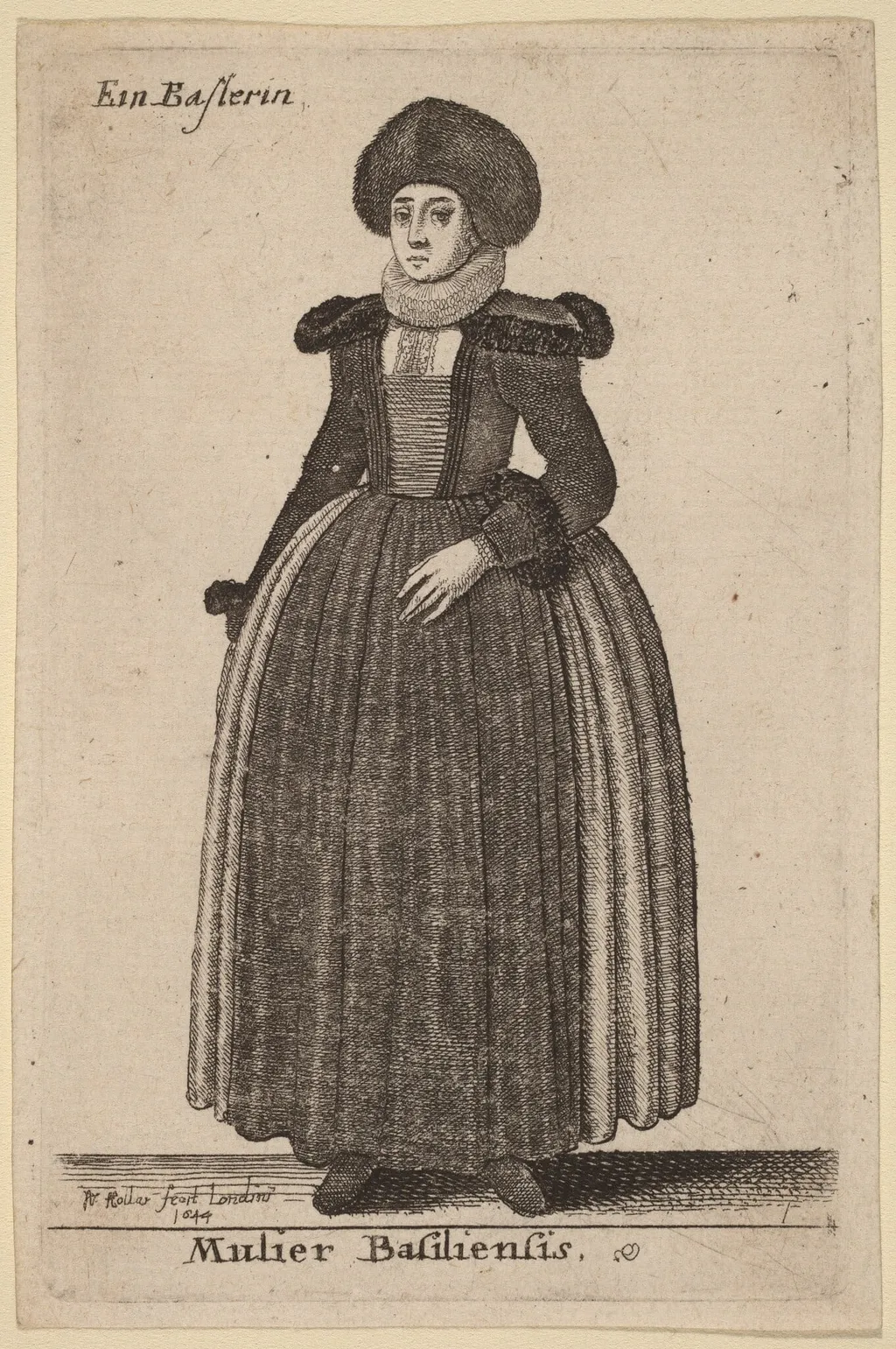
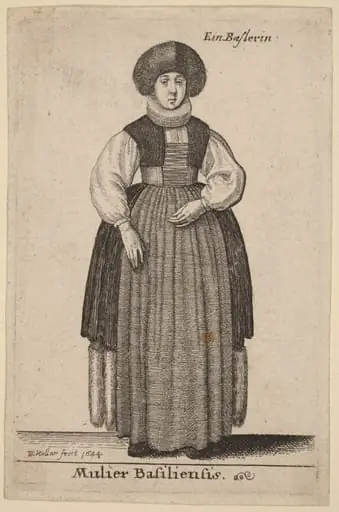
Mulier Basiliensis is an ink print by the Baroque artist Wenceslaus Hollar. It dates from 1644 and is held in the collection of the National Gallery of Art.
About this work
Overview
Created in 1644 by Wenceslaus Hollar, *Mulier Basiliensis* is an etching depicting a woman dressed in regional attire from Basel. Hollar, a Czech artist active in England, produced this work as part of a broader interest in documenting everyday people and their clothing. The print reflects his technical precision and his engagement with cultural observation through the medium of printmaking.
Subject & Meaning
The figure is portrayed standing frontally, hands at her sides, wearing a dark outer garment with a lighter underskirt, a head covering, and a neck scarf.
The figure is portrayed standing frontally, hands at her sides, wearing a dark outer garment with a lighter underskirt, a head covering, and a neck scarf. Her attire is specific to Basel, suggesting an ethnographic intent. Rather than idealizing the subject, Hollar presents her with quiet dignity, emphasizing local identity over narrative drama, aligning with 17th-century European efforts to record regional customs.
Technique & Style
Hollar employed fine, controlled etching lines to render texture in fabric, hair, and the faint suggestion of a background. The contrast between light and dark areas enhances the three-dimensionality of the figure, while the delicate cross-hatching conveys the weight and fold of clothing. The composition is restrained, focusing attention on the subject’s form and costume without extraneous detail.
History & Provenance
The etching was made during Hollar’s time in England, where he worked for patrons interested in topographical and cultural documentation. Though the original commission or owner is unrecorded, the work entered broader collections as part of Hollar’s extensive output on costume and architecture. It survives in multiple institutional holdings, reflecting its value as a record of early modern dress.
Context
In mid-17th-century Europe, prints like this served as visual archives of regional identities, especially as travel and trade increased awareness of cultural diversity. Hollar’s work fits within a tradition of costume books and ethnographic imagery, where artists and publishers sought to catalog the appearances of people across the continent, often for scholarly or aristocratic audiences.
Legacy
Hollar’s etchings, including *Mulier Basiliensis*, remain important references for historians studying early modern dress and material culture. His methodical approach to capturing detail influenced later generations of printmakers and contributed to the development of documentary art. The work endures not as a portrait of an individual, but as a precise record of a time and place.
Artist & collection
Artist
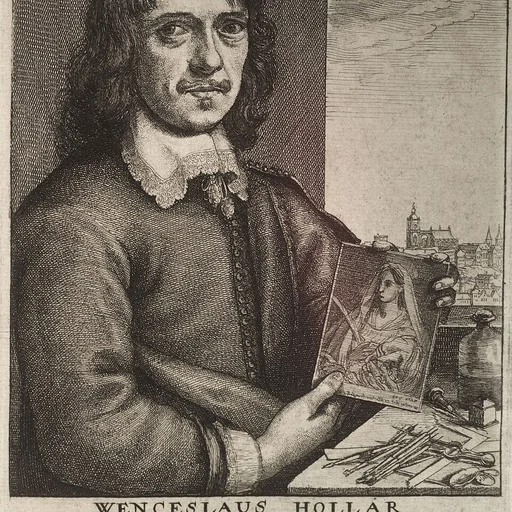
Wenceslaus Hollar (Czech: Václav Hollar (Czech pronunciation: ), German: Wenzel Hollar; 23 July 1607 – 25 March 1677) was a Czech engraver, etcher and painter.