Artwork
Mulier Pragensis
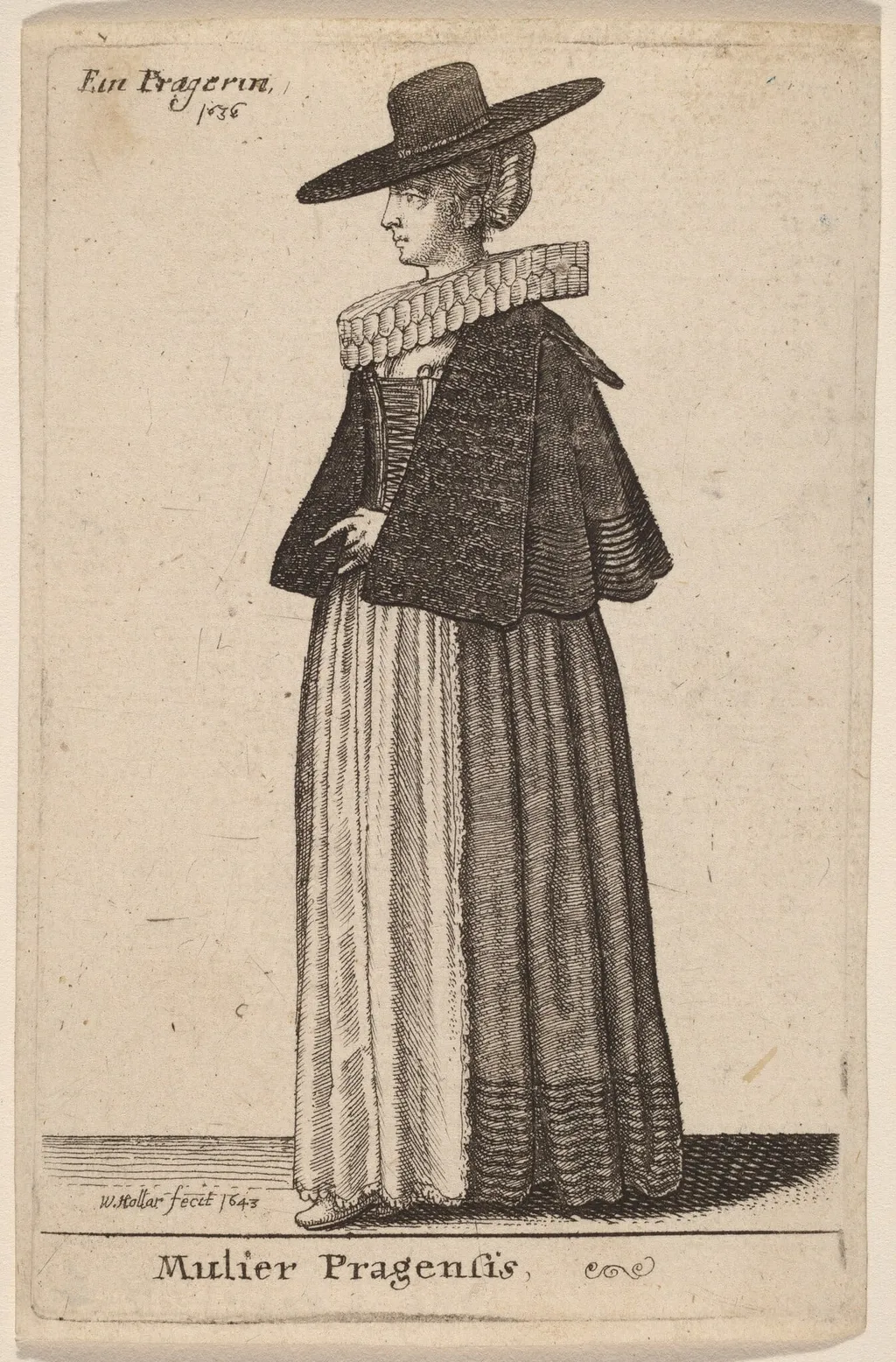
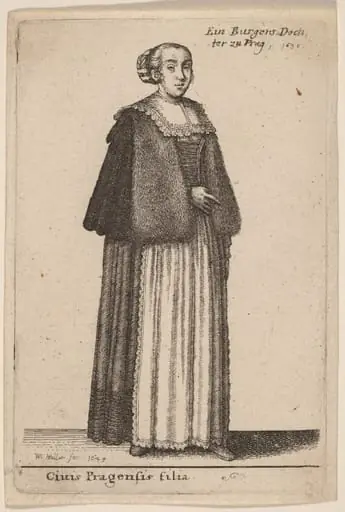
Mulier Pragensis is an ink print by the Baroque artist Wenceslaus Hollar. It dates from 1643 and is held in the collection of the National Gallery of Art.
About this work
Overview
The piece is part of a broader series of character studies, capturing everyday figures with quiet precision rather than idealized forms.
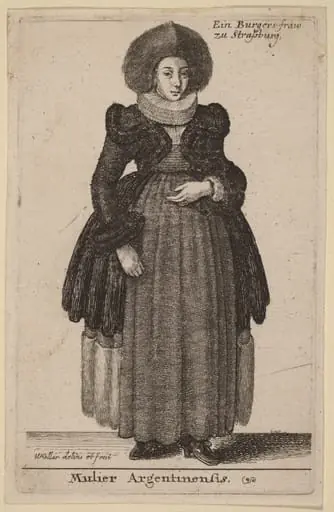
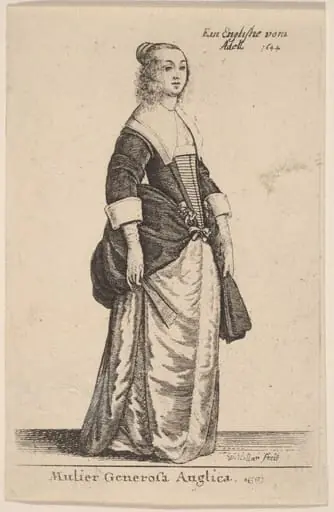
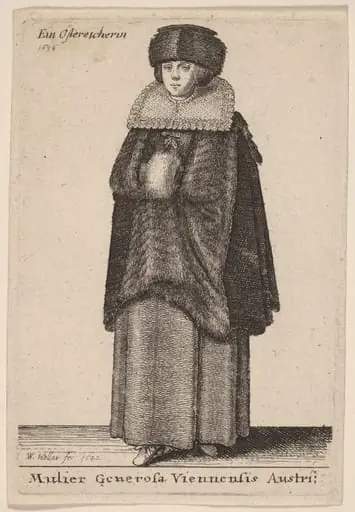
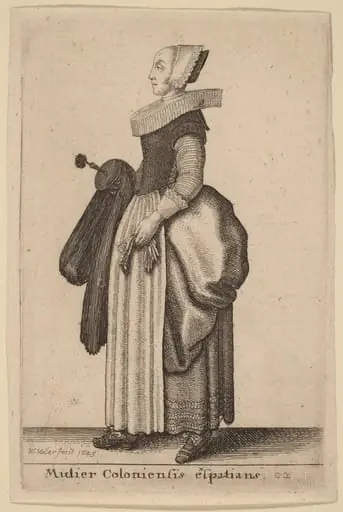
Created in 1643 by Wenceslaus Hollar, *Mulier Pragensis* is a black-and-white etching depicting a woman in profile. Hollar, born in Prague and later based in London, produced this work during his prolific period of observational printmaking. The piece is part of a broader series of character studies, capturing everyday figures with quiet precision rather than idealized forms. Its simple composition and minimal background emphasize the subject’s attire and posture.
Subject & Meaning
The figure is identified by the Latin title as a woman from Prague, suggesting a regional or cultural reference. Her attire — a wide-brimmed hat, ruffled collar, and striped sleeves — reflects early 17th-century Central European dress, possibly indicating urban modesty or local fashion. Her hands are gently clasped at the waist, conveying stillness and dignity. The work does not narrate a story but instead presents a solitary, anonymous individual with respectful attention to detail.
Technique & Style
Hollar employed fine, controlled lines typical of etching to render texture and form. The dress’s stripes, the hat’s brim, and the ruffles of the collar are defined by delicate hatching and cross-contour strokes. The background remains unadorned, focusing attention on the figure. His technique prioritizes clarity and accuracy over dramatic contrast, aligning with his broader practice of documenting people, places, and objects with documentary precision.
History & Provenance
Hollar produced this etching during his years in England, following his departure from Prague amid the Thirty Years’ War. Though the work’s early ownership is undocumented, it belongs to a known body of prints circulated among collectors and scholars in 17th-century Europe. Hollar signed his name in the lower corner, a common practice for him, affirming authorship and aiding in the attribution of his prolific output.
Context
In the mid-17th century, etchings like this served as both artistic expression and ethnographic record. Hollar’s interest in regional dress and character studies paralleled broader European trends in cataloging social types. While not commissioned, such images were valued for their observational fidelity, offering glimpses into the lives of ordinary people during a time of political and religious upheaval across the continent.
Legacy
Hollar’s prints, including *Mulier Pragensis*, contributed to the development of printmaking as a medium for social documentation. His method influenced later artists interested in portraiture and costume studies. Though not widely exhibited today, the work remains a representative example of his commitment to recording the visual world with quiet rigor, preserving details that might otherwise have been lost to time.
Artist & collection
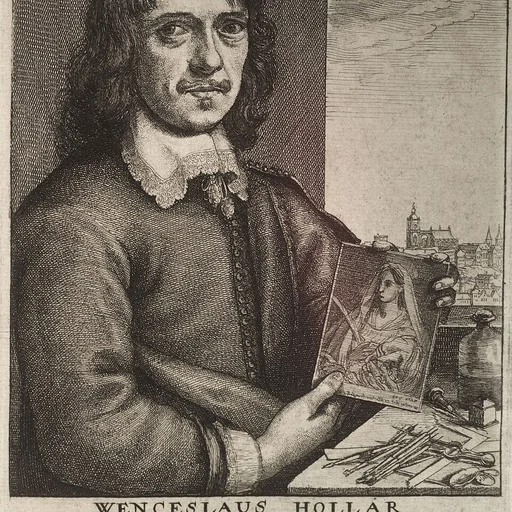
Artist
Wenceslaus Hollar (Czech: Václav Hollar (Czech pronunciation: ), German: Wenzel Hollar; 23 July 1607 – 25 March 1677) was a Czech engraver, etcher and painter.