Artwork
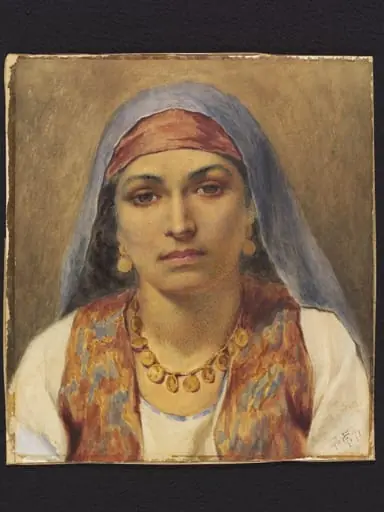
Head of an Egyptian Girl, probably a Bedouin
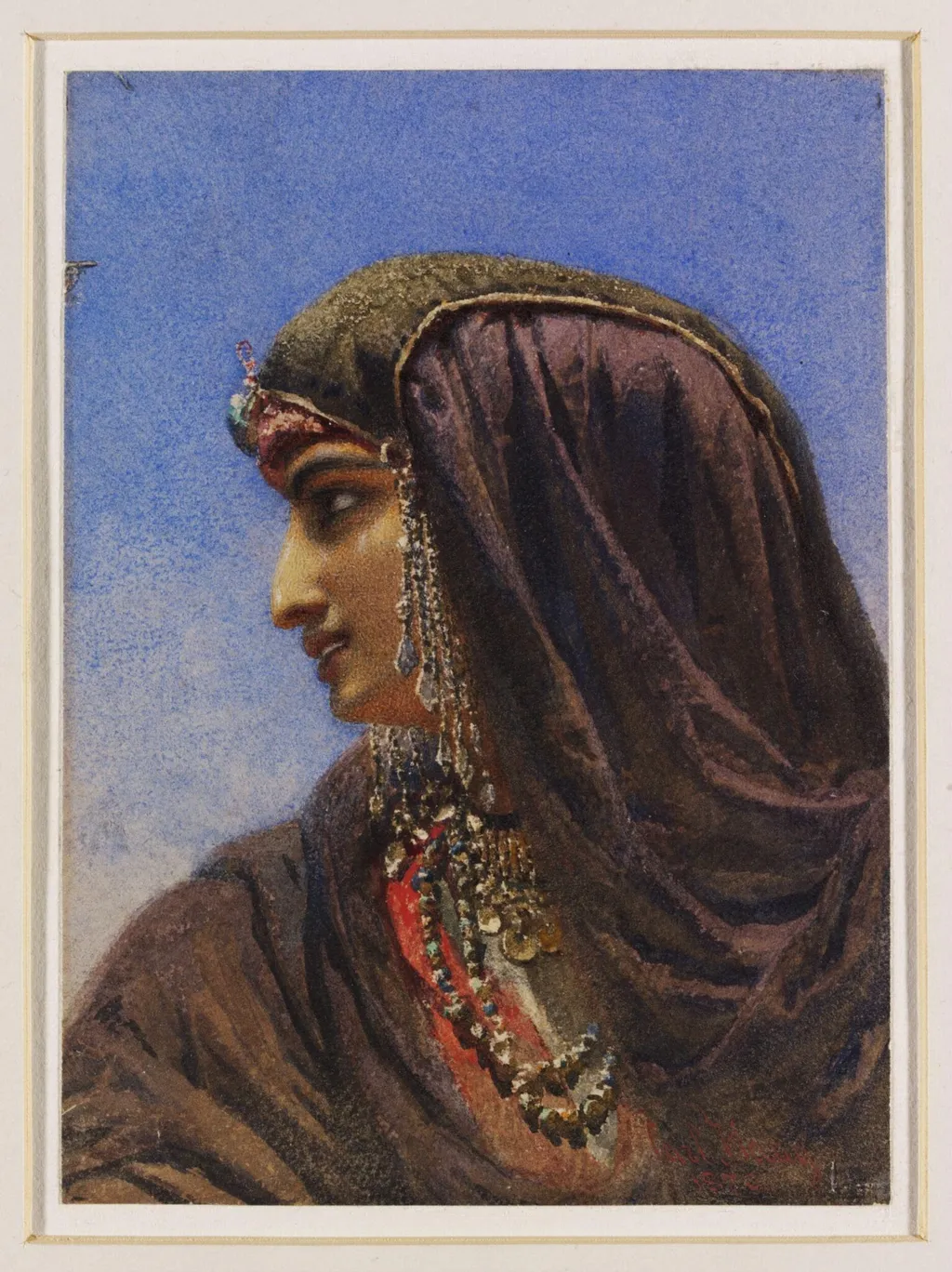
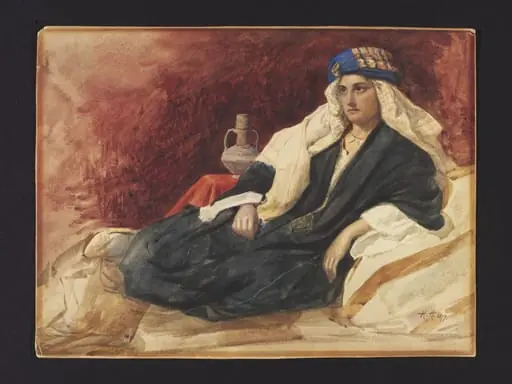
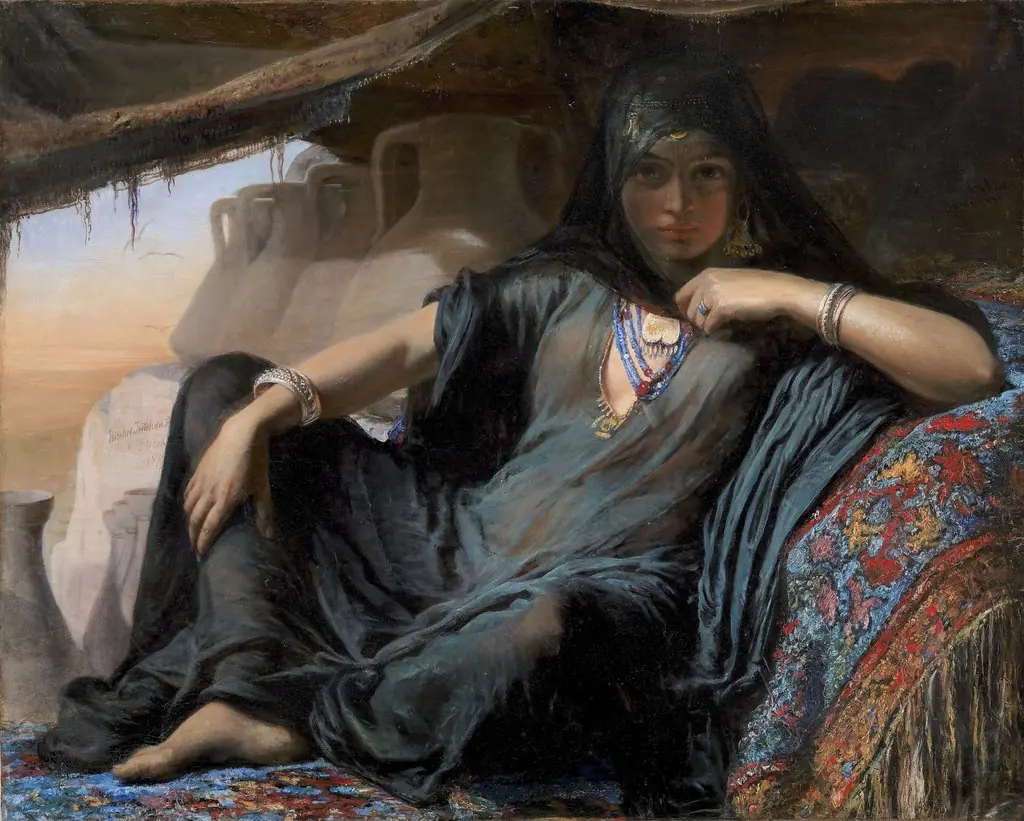
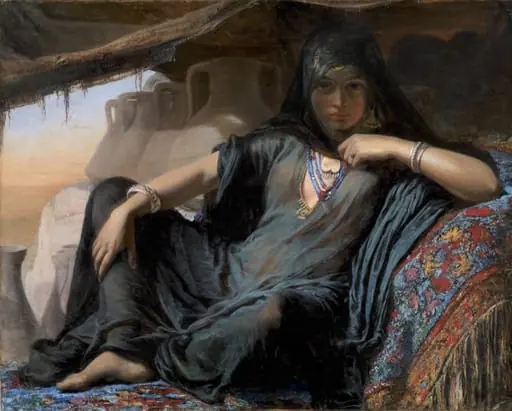
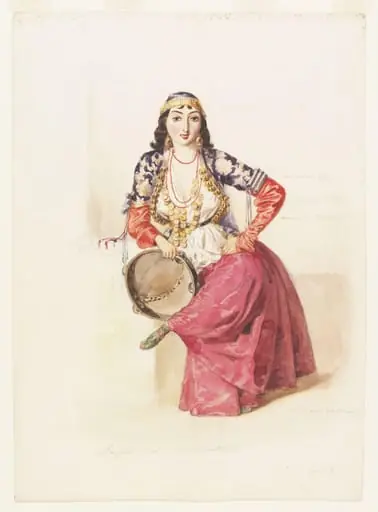
Head of an Egyptian Girl, probably a Bedouin is a watercolor work on paper by the Impressionist artist Carl Haag. It dates from 1870 and is held in the collection of the Victoria and Albert Museum.
About this work
Overview
The work stems from his travels in Egypt during the mid-19th century, capturing a moment of quiet observation rather than staged exoticism.
Carl Haag’s watercolour depicts a young girl, likely of Bedouin origin, rendered in delicate washes with restrained tonality. The work stems from his travels in Egypt during the mid-19th century, capturing a moment of quiet observation rather than staged exoticism. Its intimate scale and muted palette reflect the artist’s interest in everyday presence over dramatic narrative, aligning with the observational ethos of Victorian watercolour practice.
Subject & Meaning
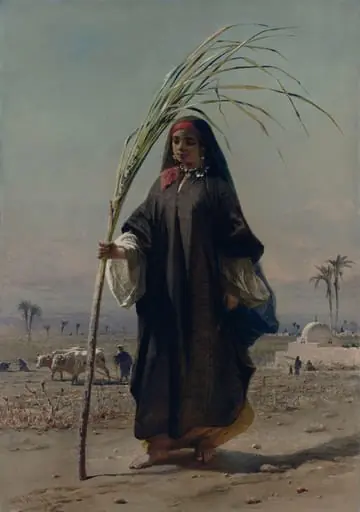
The figure is a young girl wearing a dark headscarf and a necklace of gold and red beads with suspended coins, suggesting regional adornment. Her gaze is averted, her posture unposed, conveying a sense of natural stillness. Haag avoids idealization; the subject is presented without narrative context, emphasizing dignity in ordinary life. The work invites contemplation of individual identity within a cultural landscape often misrepresented in Western art of the period.
Technique & Style
Haag employs transparent watercolour to build subtle gradations of tone, focusing on texture over detail. The folds of the headscarf are suggested with soft, dry brushwork, while the metallic glint of coin pendants is hinted through minimal highlights. The background fades into a pale blue sky, unobtrusive yet atmospheric. This restrained technique reflects the Victorian watercolour tradition’s emphasis on precision, light, and atmospheric harmony without overt embellishment.
History & Provenance
The watercolour was likely shown at the Royal Watercolour Society in 1870 and later at Goupil Galleries in 1885, indicating its reception within British art circles. It entered private collections before appearing at Sotheby’s in 1971. Its current location is the Victoria and Albert Museum, where it remains part of a broader collection of 19th-century Orientalist works, preserved as a record of cross-cultural artistic engagement rather than colonial spectacle.
Context
Created during a period of heightened European interest in North African and Middle Eastern cultures, Haag’s work diverges from theatrical Orientalism. Unlike many contemporaries who staged exotic scenes, he focused on quiet, unmediated encounters. His travels near Cairo and Suez placed him among nomadic communities, offering access to subjects rarely depicted with such restraint. The piece reflects a shift toward ethnographic observation in art, influenced by emerging anthropological curiosity.
Legacy
Though not widely known today, the watercolour contributes to a quieter strand of 19th-century Orientalist art—one that prioritizes subtlety over spectacle. Its preservation in the Victoria and Albert Museum underscores its value as a document of visual anthropology and technical mastery. Haag’s approach, emphasizing texture and quiet presence, offers a counterpoint to more sensationalized depictions of the region, influencing later generations seeking authenticity in cross-cultural representation.
Artist & collection
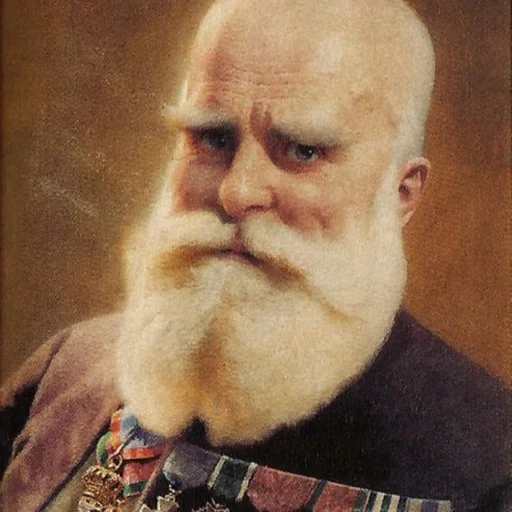
Artist
Carl Haag was a Bavarian-born painter who became a naturalized British subject and was court painter to the duke of Saxe-Coburg and Gotha.