Artwork
François Viète
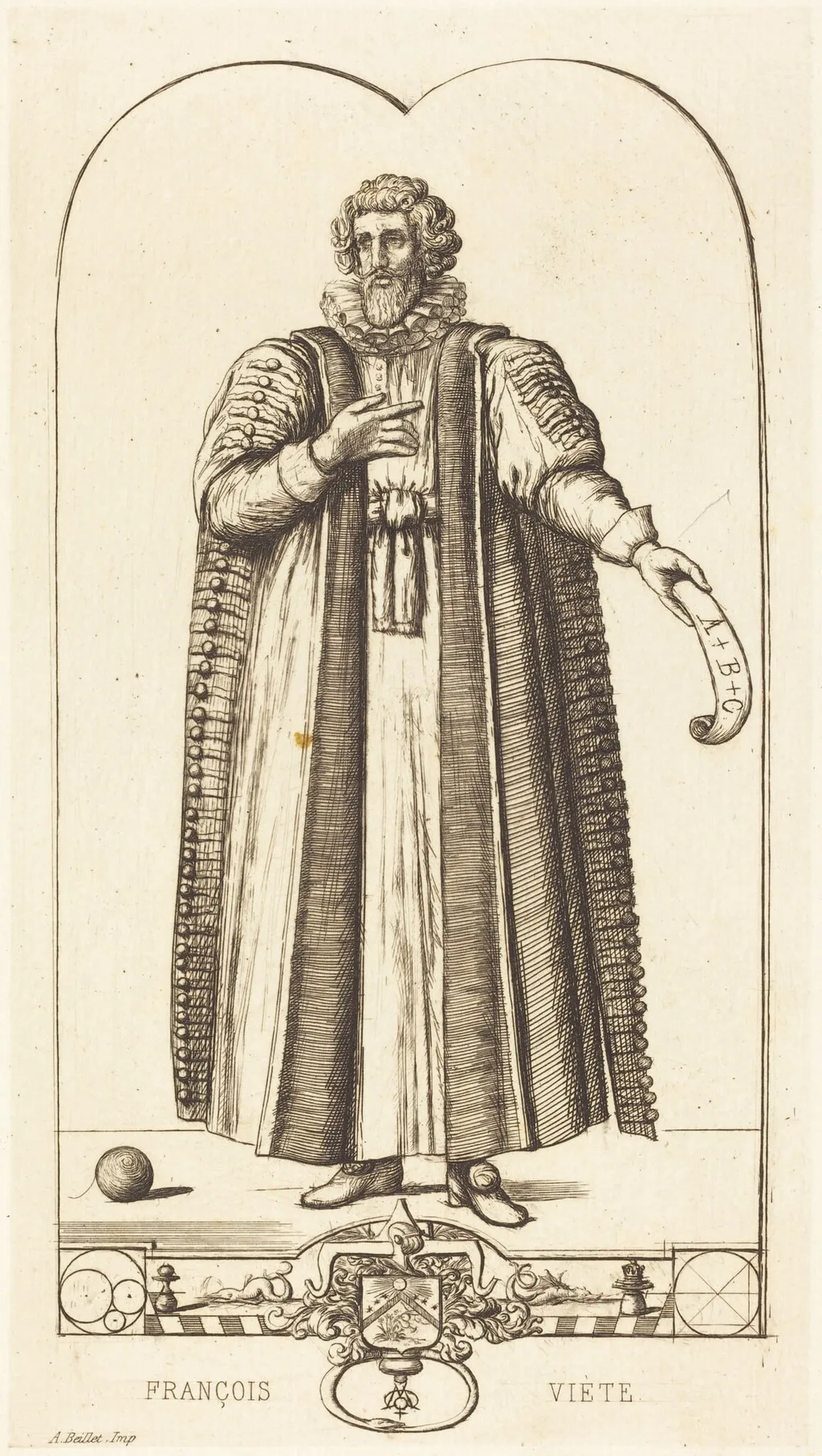
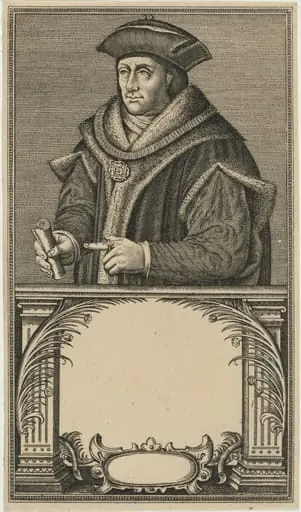
François Viète is an ink print by the Impressionist artist Charles Meryon. It dates from 1861 and is held in the collection of the National Gallery of Art.
About this work
Overview
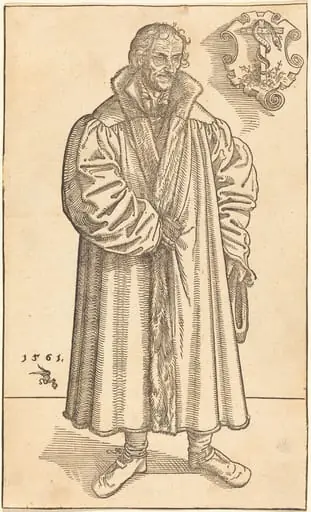
Created in 1861, this etching on laid paper portrays the French mathematician François Viète. The figure is rendered in a formal pose, clothed in a long robe, a draped cloak, and a pronounced ruff, holding a scroll in his right hand while his left hand rests on his chest. The composition rests on an elaborately carved pedestal, emphasizing the subject’s scholarly stature.
Subject & Meaning
The work presents Viète as a dignified intellectual, his attire and the scroll symbolizing his contributions to algebra and the early modern scientific revolution. The raised left hand suggests a gesture of affirmation or declaration, reinforcing the portrayal of the mathematician as a figure of authority and enlightenment within the French intellectual tradition.
Technique & Style
Meryon’s preference for monochrome media, shaped by his colour‑blindness, results in a composition that balances intricate detail with atmospheric depth.
Executed entirely in etching, the image relies on fine line work and tonal variation characteristic of Charles Meryon’s practice. The use of laid paper provides a subtle texture that enhances the delicate rendering of the ruff, hair, and ornamental base. Meryon’s preference for monochrome media, shaped by his colour‑blindness, results in a composition that balances intricate detail with atmospheric depth.
History & Provenance
The print was produced by Charles Meryon, a leading French etcher of the nineteenth century whose reputation remains strongest in Francophone scholarship. Though Meryon’s oeuvre is largely associated with urban scenes of Paris, this portrait demonstrates his broader range. The work entered museum collections through early acquisitions that documented the artist’s output during his productive period in the 1860s.
Context
Viète (1540–1603) is celebrated for formalising algebraic notation, a milestone that influenced subsequent scientific thought. Meryon’s decision to depict him aligns with a nineteenth‑century revival of interest in historic figures who shaped modern knowledge. The portrait thus reflects both a personal admiration by the artist and a broader cultural effort to commemorate foundational scholars during a period of rapid industrial and intellectual change.
Artist & collection
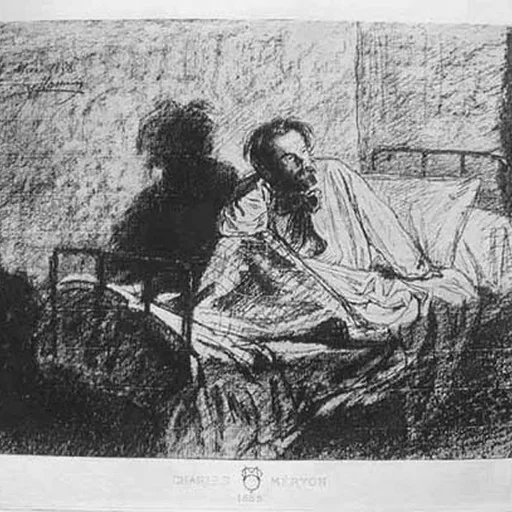
Artist
Charles Meryon (sometimes Méryon, 23 November 1821 – 14 February 1868) was a French artist who worked almost entirely in etching, as he had colour blindness.