Artwork
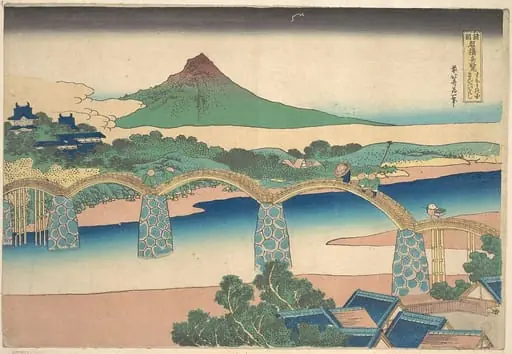
Distant View of Mount Akiha, Kakegawa
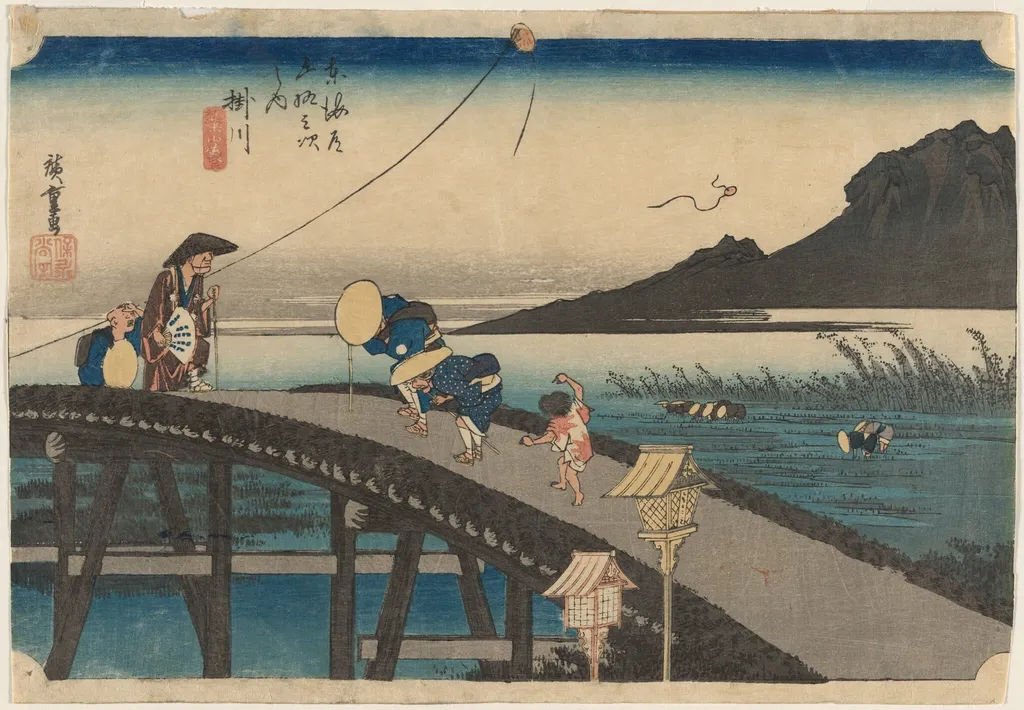
Distant View of Mount Akiha, Kakegawa is an ink print by the Romanticist artist Andō Hiroshige. It dates from 1834 and is held in the collection of the National Gallery of Art.
About this work
Overview
Distant View of Mount Akiha, Kakegawa is a color woodcut print created by Andō Hiroshige in 1834, currently part of the collection at the National Gallery of Art in Washington.
Subject & Meaning
The print depicts a serene cityscape featuring a bridge over calm water, populated by figures engaged in daily activities: walking, fishing, and a child at play. The distant presence of Mount Akiha and lanterns near the bridge add depth and context to the scene, capturing the balance between tranquility and quiet bustle of everyday life.
Technique & Style
Hiroshige employed bold, vibrant colors and simplified forms to compose the scene, characteristic of his woodcut style. The use of flat, two-dimensional elements juxtaposed with the suggested depth of the landscape and figures showcases his mastery of the medium in conveying both simplicity and complexity.
History & Provenance
Created in 1834, the print is now housed at the National Gallery of Art in Washington, D.C., as part of its collection.
Context
This work is part of Hiroshige's broader oeuvre focusing on landscapes and urban scenes, reflecting the aesthetic and daily life interests of Edo-period Japan. The emphasis on a natural backdrop (Mount Akiha) and human activity aligns with the traditional Japanese appreciation for harmony between nature and human presence.
Legacy
While specific legacy details of this exact piece are not highlighted, as a Hiroshige work, it contributes to the broader influence of Japanese woodcuts on Western art movements, particularly Impressionism and Art Nouveau, through their introduction to Europe in the late 19th century.
Own this work as a print
Artist & collection

![Cherry Blossoms in Full Bloom Along the Sumida River [Sumida-gawa hana-zakari], by Andō Hiroshige](https://artifactworldgallery.com/img/ando-hiroshige--cherry-blossoms-in-full-bloom-along-the-sumida-river-sumida--c06e3457a18e2f1e-w320.webp)
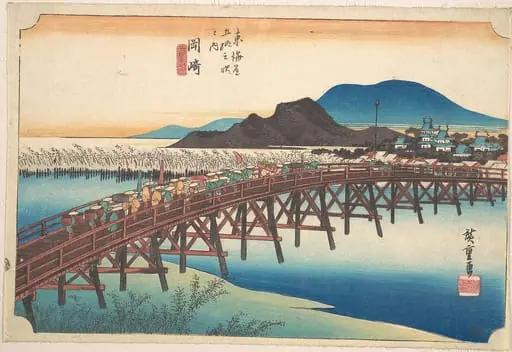 東海道五十三次之内 岡崎 矢矧の橋|Okazaki, Tenshin no Hashi
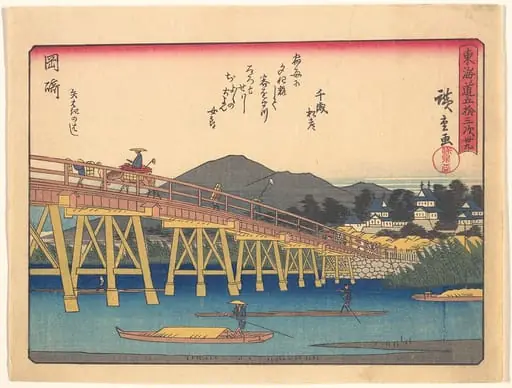 東海道五十三次 岡崎|Okazaki, from the series The Fifty-three Stations of the Tōkaidō Road
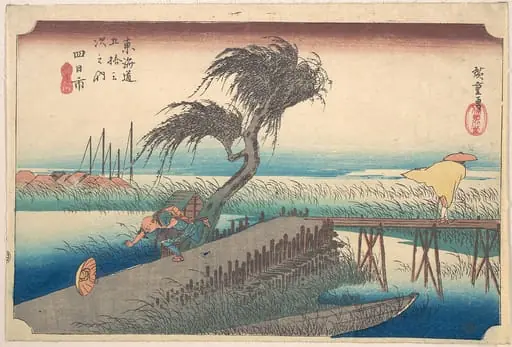 東海道五十三次之内 四日市 三重川|Yokkaichi, Sanchokawa
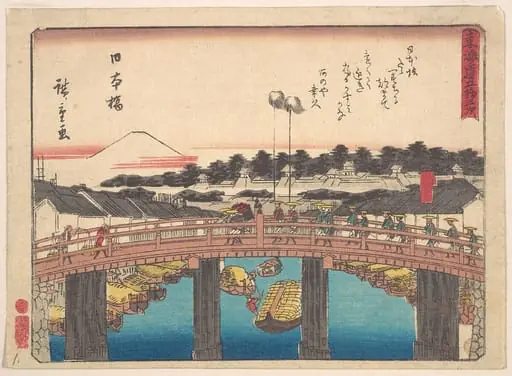 東海道五十三次 日本橋|Nihon Bashi
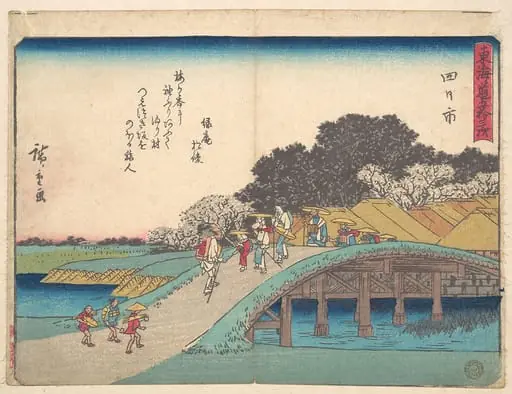 東海道五十三次 四日市|Yokkaichi
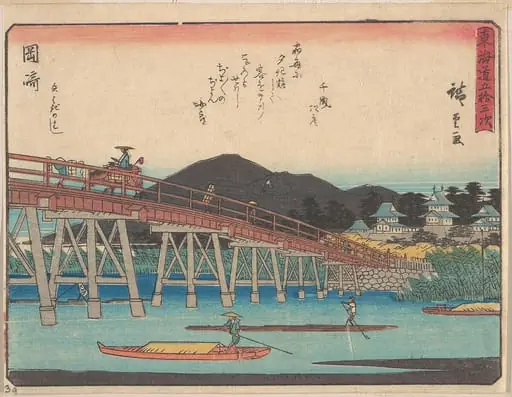 東海道五十三次 岡崎|Okazaki
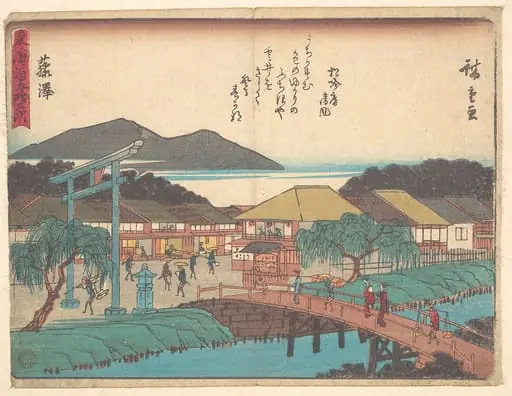 東海道五十三次 藤沢|Fujisawa
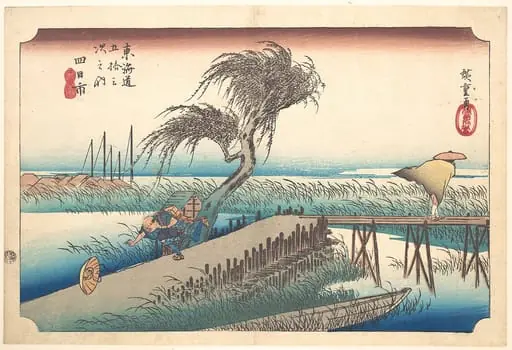 東海道五十三次之内 四日市 三重川|Mie River at Yokkaichi
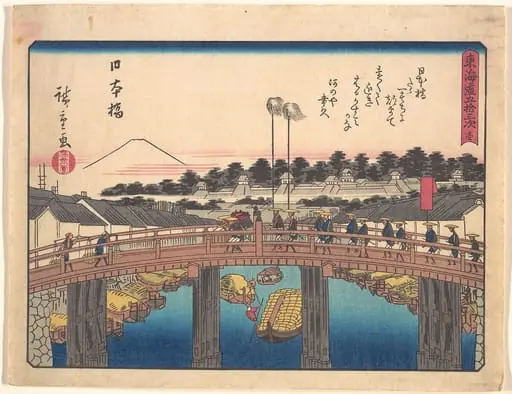 Untitled
 諸國名橋奇覧 すほうの国きんたいはし|Kintai Bridge in Suō Province (Suō no kuni Kintaibashi), from the series Remarkable Views of Bridges in Various Provinces (Shokoku meikyō kiran)