Artwork
東海道五十三次 藤沢|Fujisawa
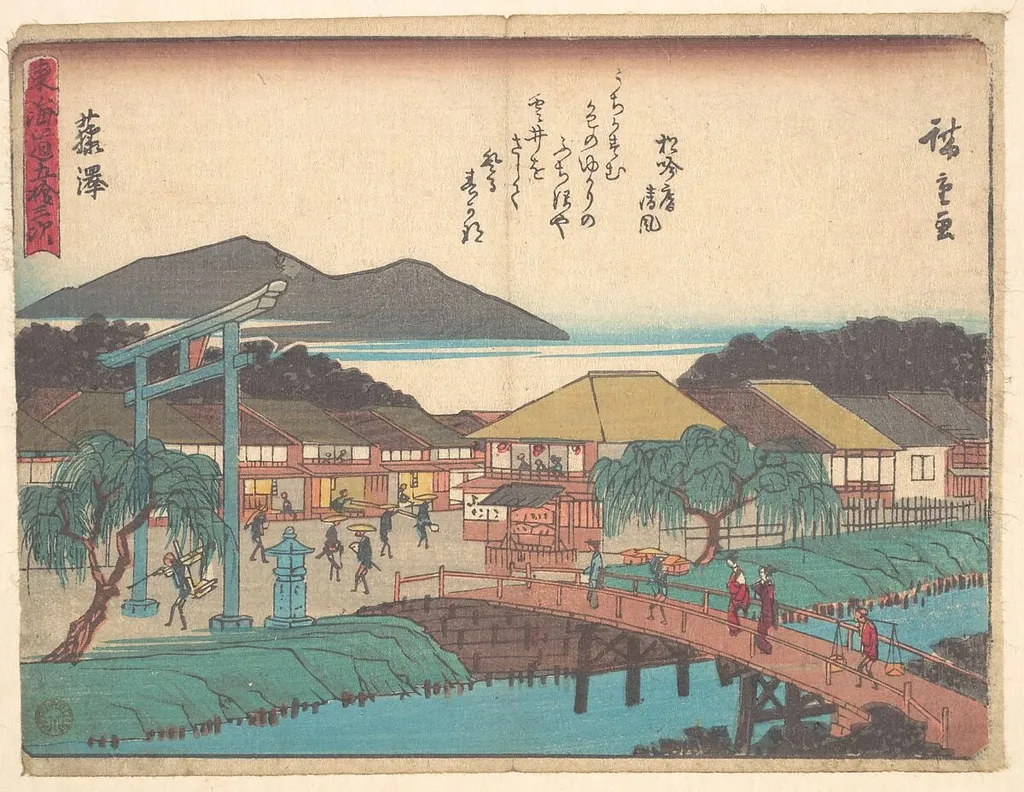
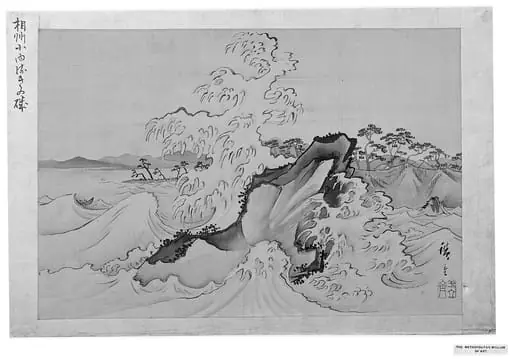
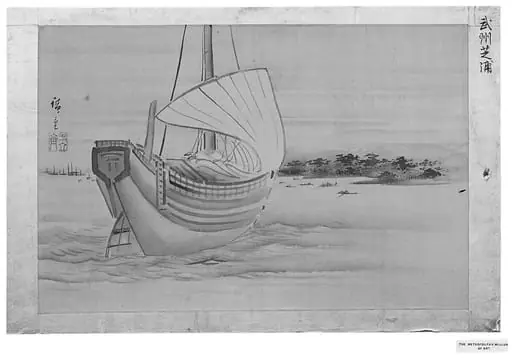
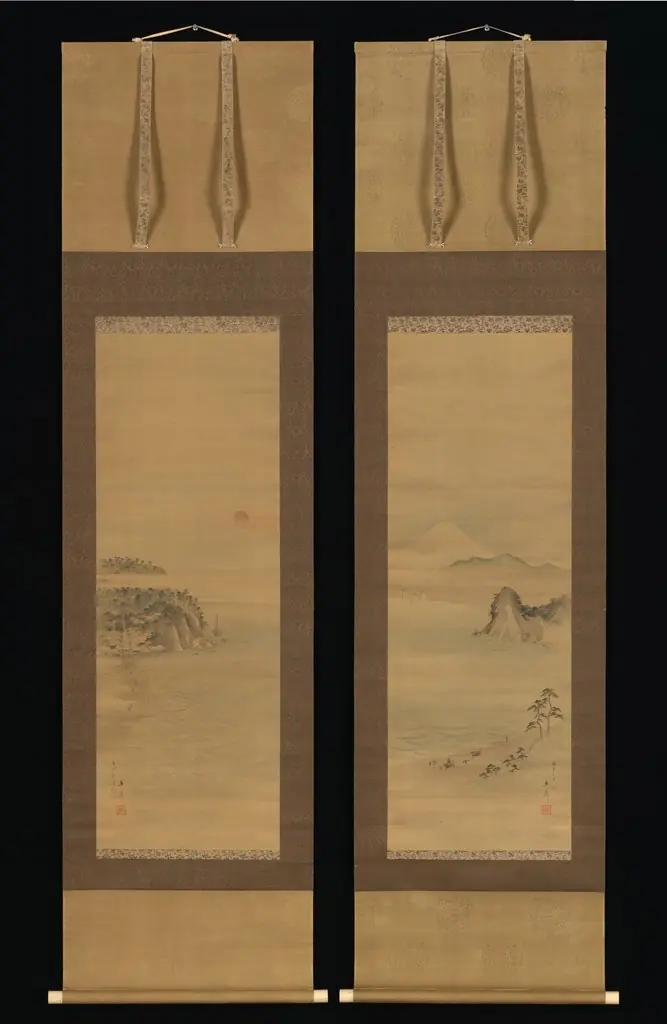
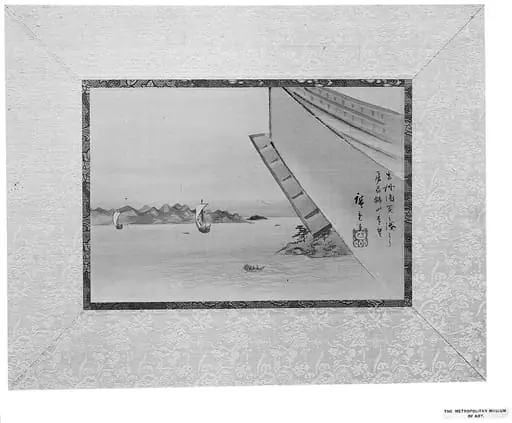
東海道五十三次 藤沢|Fujisawa is an ink print by the Romanticist artist Utagawa Hiroshige. It dates from 1838 and is held in the collection of the Metropolitan Museum of Art.
About this work
Overview
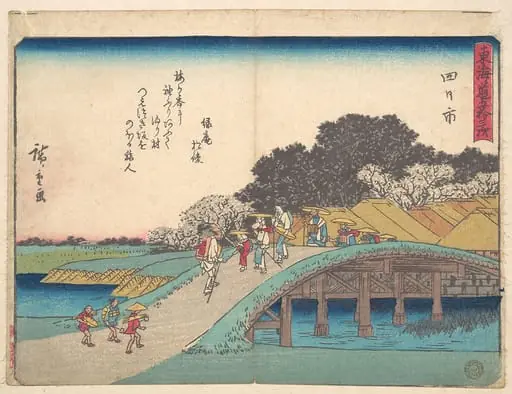
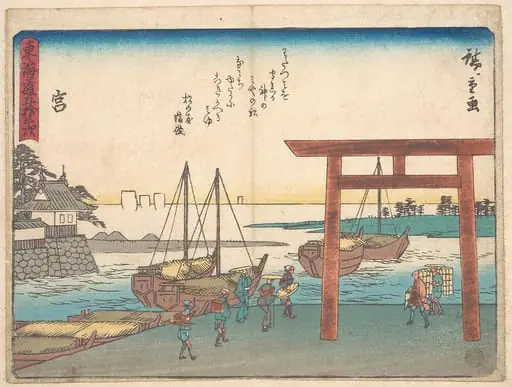
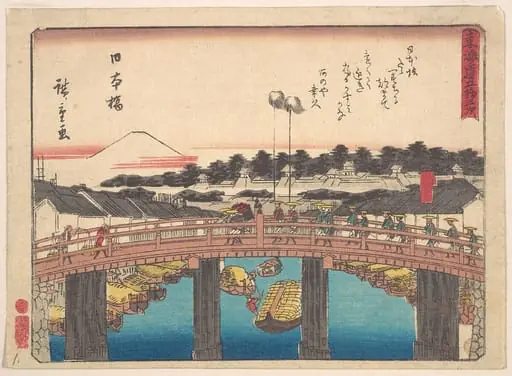
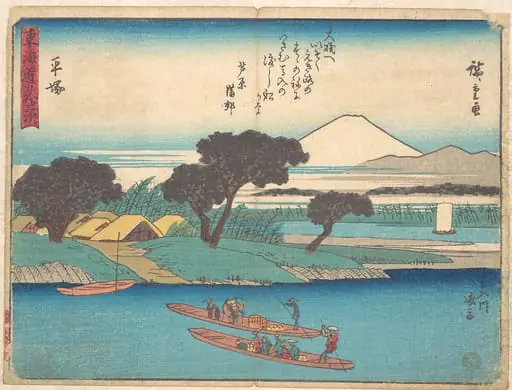
Utagawa Hiroshige's *Fujisawa* (circa 1838) is a woodblock print from *The Fifty-three Stations of the Tōkaidō* series, depicting a station along the historic Edo-Kyoto coastal road.
Subject & Meaning
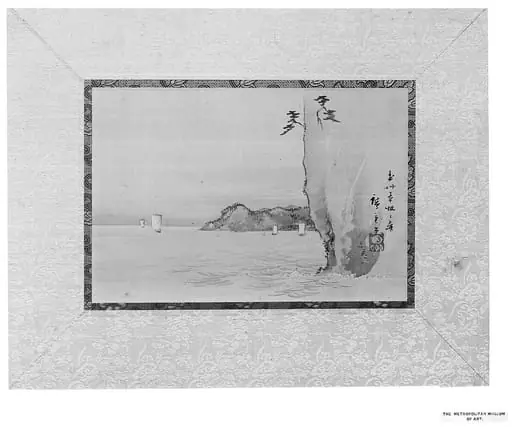
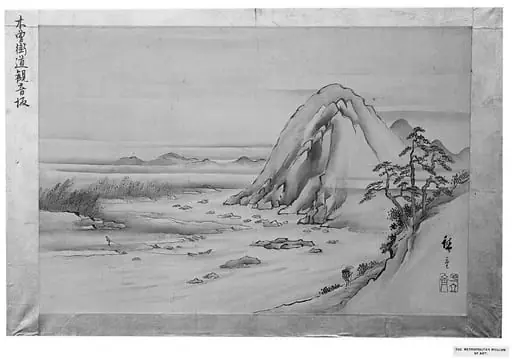
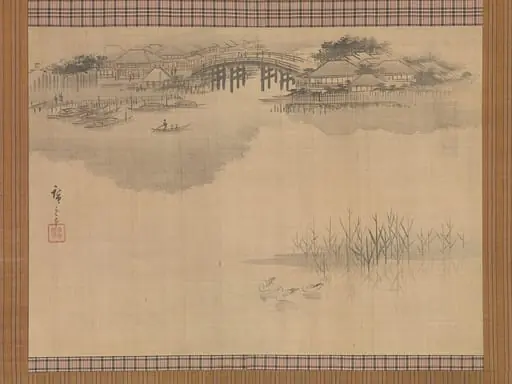
The print captures a bustling riverside scene at Fujisawa, showing daily activities such as walking, fishing, and crossing a prominent red bridge, set against a backdrop of sloped-roof buildings, a wooden gate, and distant soft mountains under a pale sky.
Technique & Style
Characterized by Hiroshige's innovative use of flat colors and simple shapes to convey depth, the composition features elements that appear to float, such as the bridge and buildings, over the water, reflecting his departure from traditional ukiyo-e conventions.
History & Provenance
Created during the Edo period, *Fujisawa* is part of Hiroshige's renowned landscape series, distinguishing him as a leading ukiyo-e artist known for emphasizing natural and travel themes over urban entertainments.
Context
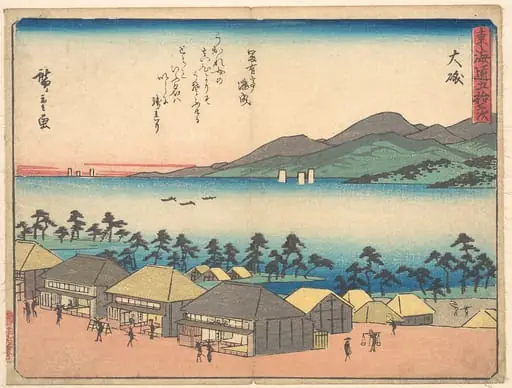
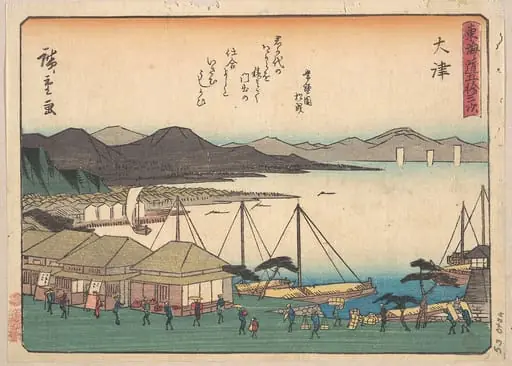
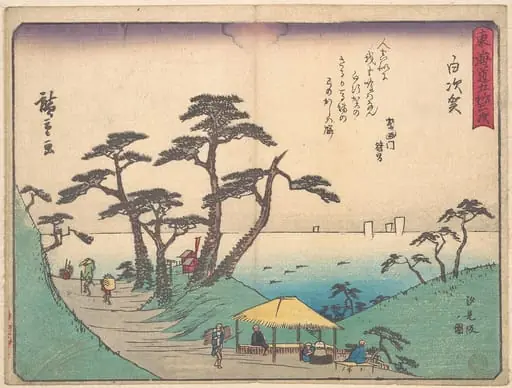
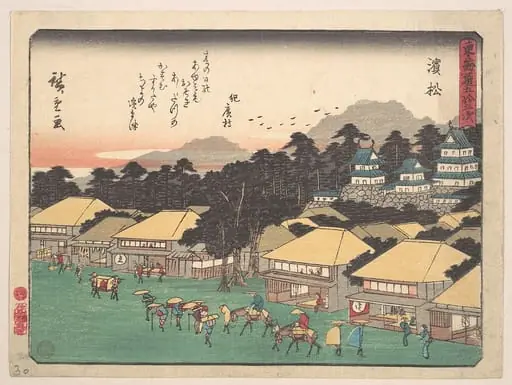
As part of *The Fifty-three Stations of the Tōkaidō*, *Fujisawa* contributes to a broader documentation of Japan's historic Tōkaidō road, showcasing Hiroshige's ability to capture atmospheric scenes of nature and human activity.
Legacy
*Fujisawa*, through its unique visual approach, contributes to Hiroshige's legacy as an innovator in ukiyo-e, influencing subsequent artistic movements with its harmonious blend of natural scenery and everyday life.
Artist & collection
Artist
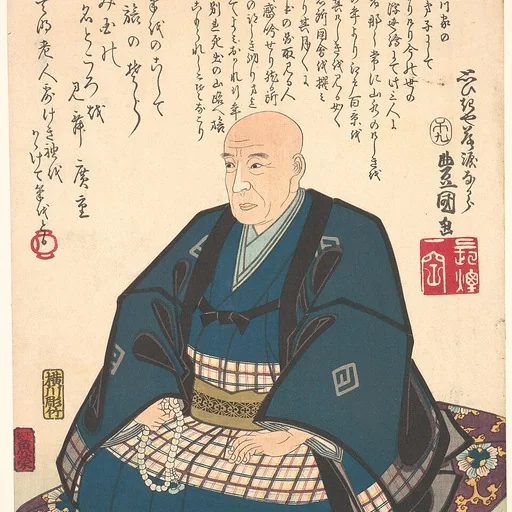
Utagawa Hiroshige (歌川 広重) or Andō Hiroshige (安藤 広重), born Andō Tokutarō (安藤 徳太郎; 1797 – 12 October 1858), was a Japanese ukiyo-e artist, considered the last great master of that tradition.