Artwork
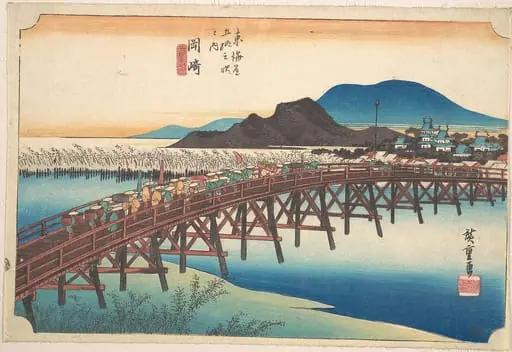
東海道五十三次 岡崎|Okazaki
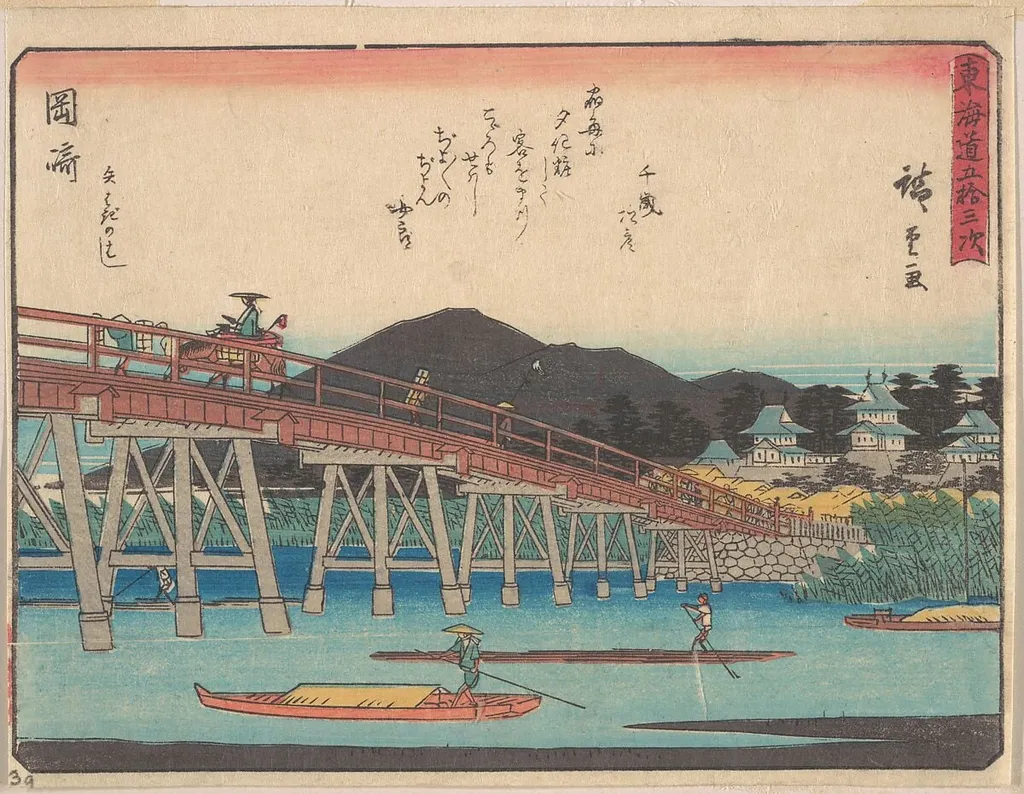
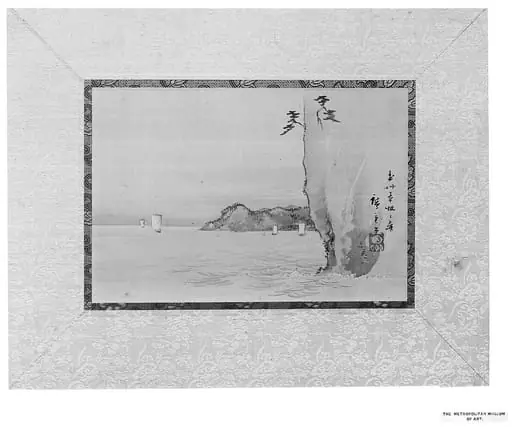
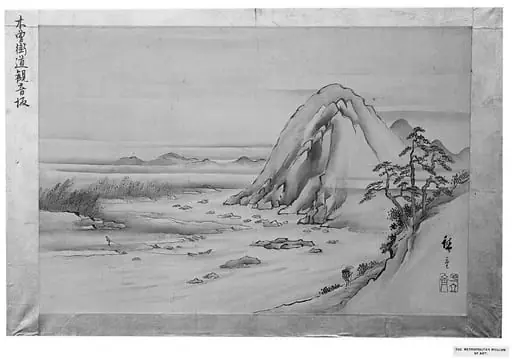
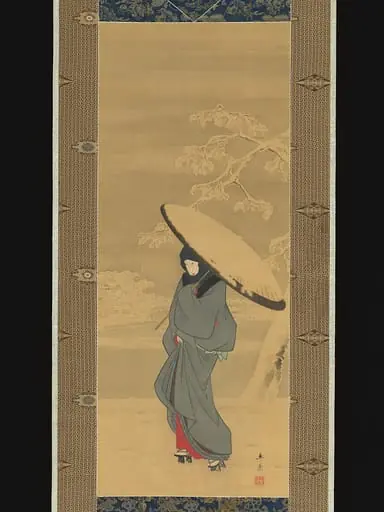
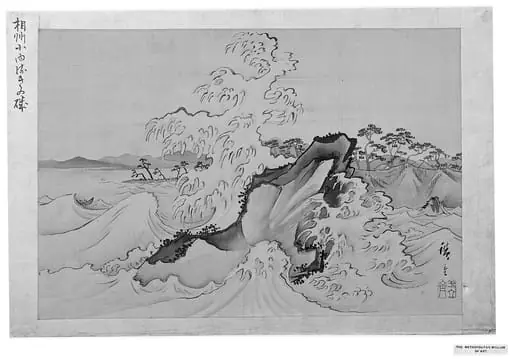
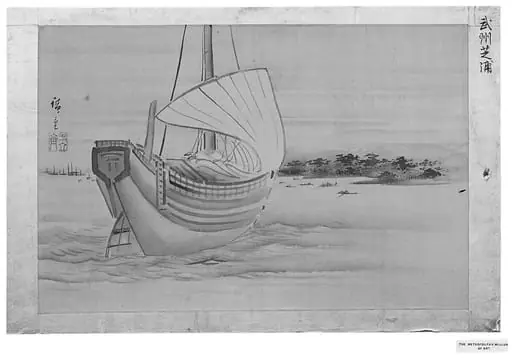
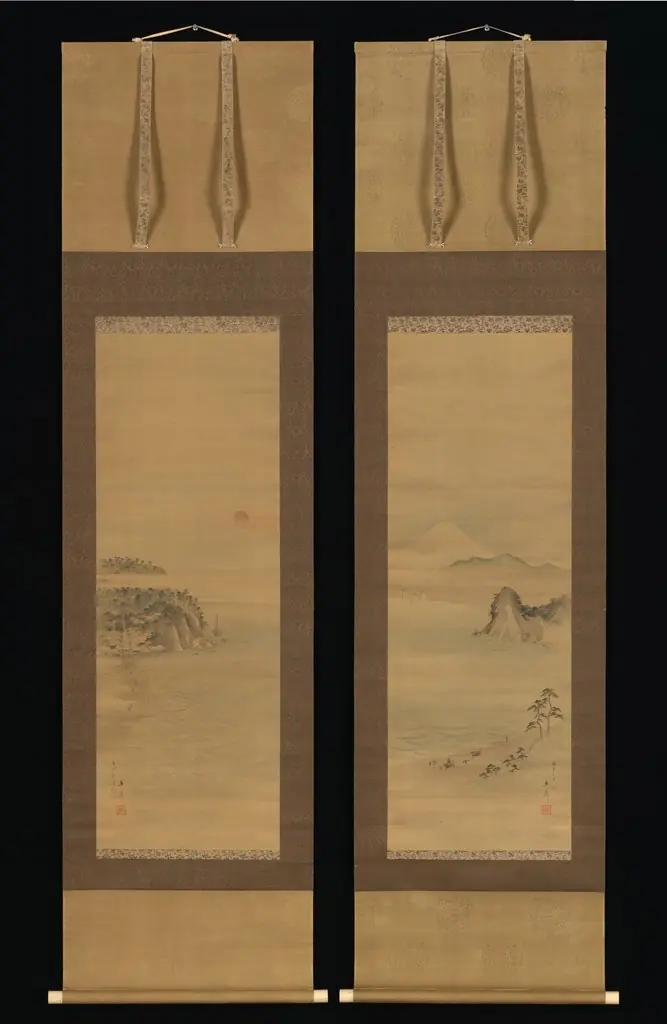
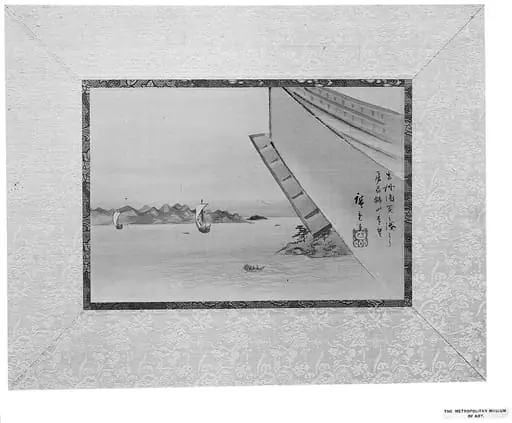
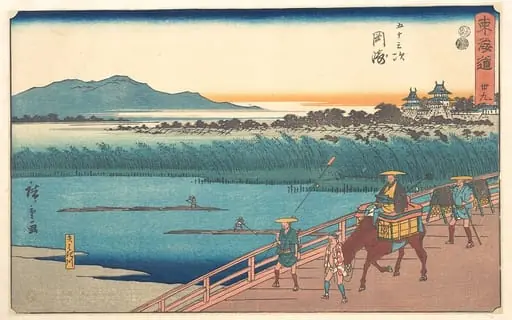
東海道五十三次 岡崎|Okazaki is an ink print by the Romanticist artist Utagawa Hiroshige. It dates from 1838 and is held in the collection of the Metropolitan Museum of Art.
About this work
Overview
Utagawa Hiroshige's *Okazaki* is a woodblock print from his *Fifty-three Stations of the Tōkaidō* series, created circa 1838 during Japan's late Edo period. Characteristic of Hiroshige's style, the work prioritizes natural landscapes over urban themes, capturing a serene scene along the Tōkaidō route connecting Edo and Kyoto.
Subject & Meaning
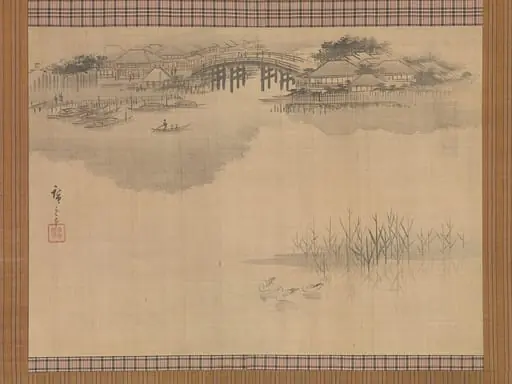
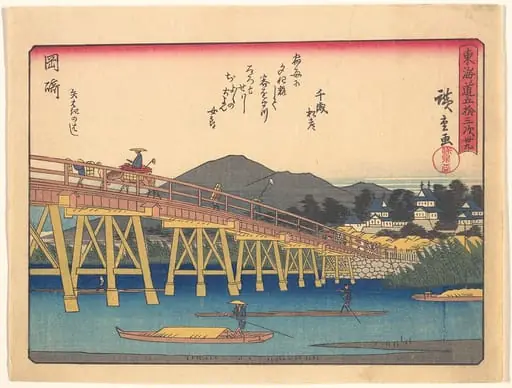
The print depicts Okazaki, showcasing a long red bridge over calm water, with a small boat, distant mountain, and buildings. The composition subtly integrates human figures, emphasizing the harmony between natural and man-made elements, reflecting Hiroshige's ability to imbue everyday scenes with poetic depth.
Technique & Style
The simple, clean shapes and flat, colorful aesthetic make the scene immediately accessible, in line with the ukiyo-e tradition of clarity.
Executed in ink and color on paper, *Okazaki* exhibits Hiroshige's distinctive use of vivid, yet restrained, colors and delicate detail. The simple, clean shapes and flat, colorful aesthetic make the scene immediately accessible, in line with the ukiyo-e tradition of clarity. Notable is the detailed rendering of the bridge's wooden posts and the contrast between the vibrant bridge and the serene landscape.
History & Provenance
Created around 1838 for *The Fifty-three Stations of the Tōkaidō* series, *Okazaki* is part of Hiroshige's renowned contribution to ukiyo-e. The series' popularity helped establish Hiroshige as a leading artist of his time, known for transforming the genre with his focus on natural beauty.
Context
Part of a broader cultural phenomenon, *Okazaki* and its series capitalized on the interest in the Tōkaidō route, a major travel artery between Edo (Tokyo) and Kyoto. The work reflects the late Edo period's appreciation for travelogues and scenic views, catering to both travelers and armchair explorers.
Legacy
*Okazaki*, through its series, contributed significantly to Hiroshige's legacy as a pioneer in emphasizing landscape in ukiyo-e. The work's influence can be seen in later Japanese art and beyond, inspiring Western artists with its unique blend of simplicity and depth, particularly in the Impressionist movement's appreciation for light and color.
Artist & collection
Artist
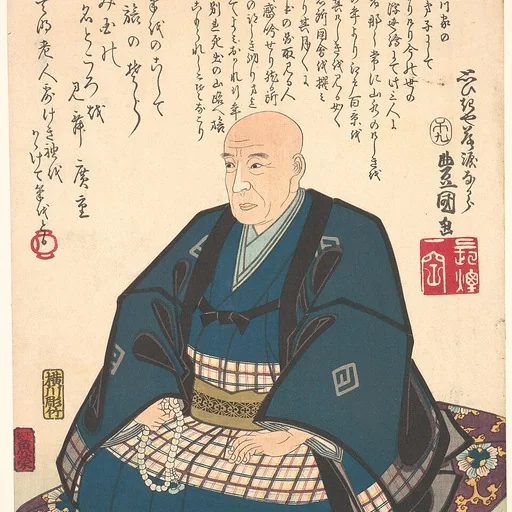
Utagawa Hiroshige (歌川 広重) or Andō Hiroshige (安藤 広重), born Andō Tokutarō (安藤 徳太郎; 1797 – 12 October 1858), was a Japanese ukiyo-e artist, considered the last great master of that tradition.