Artwork
Plate 31: Marbled Electric Ray with Other Skates or Rays, Shells, and a Mollusk in Its Shell
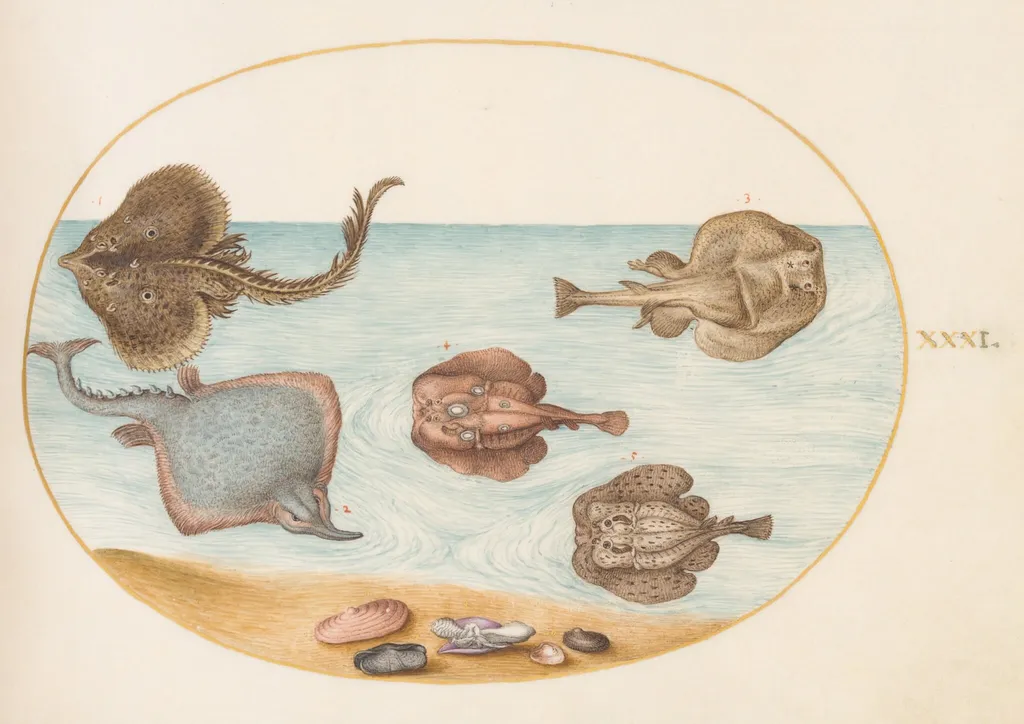
Plate 31: Marbled Electric Ray with Other Skates or Rays, Shells, and a Mollusk in Its Shell is a gouache drawing by the Renaissance artist Joris Hoefnagel. It dates from 1594 and is held in the collection of the National Gallery of Art.
About this work
Overview
Created around 1594 by Joris Hoefnagel, this watercolor and gold-painted parchment drawing depicts a marine scene with a marbled electric ray, several skates, shells, and a mollusk within its casing. As one of the final practitioners of manuscript illumination, Hoefnagel blended scientific observation with decorative technique, producing works that bridged natural history and artistic tradition in late Renaissance Europe.
Subject & Meaning
The central figure is a marbled electric ray, distinguished by its flattened body, spiky dorsal fins, and elongated tail.
The central figure is a marbled electric ray, distinguished by its flattened body, spiky dorsal fins, and elongated tail. Surrounding it are other ray species, some curled as if drifting, and a variety of shells arranged as if on a seabed. The inclusion of the mollusk inside its shell suggests an interest in biological structure and habitat. The scene conveys a quiet, observed ecosystem rather than a fantastical vision, emphasizing accuracy over symbolism.
Technique & Style
Hoefnagel applied watercolor with meticulous precision on parchment, enhancing contours and highlights with gold paint to suggest sheen and texture. The rendering of scales, fin membranes, and shell surfaces demonstrates close study of anatomy and surface detail. The use of gold, traditionally reserved for religious manuscripts, elevates the natural specimens to objects of contemplative value, merging scientific documentation with ornamental elegance.
History & Provenance
This plate was part of a larger series documenting natural specimens, likely commissioned for a private collector or scholarly circle. Hoefnagel’s work during this period was closely tied to the Habsburg court, where his illustrations contributed to emerging cabinets of curiosities. The survival of this parchment sheet reflects its value as both artistic and scientific artifact, preserved through centuries of collecting.
Context
In late 16th-century Europe, the study of natural history was shifting from medieval allegory toward empirical observation. Hoefnagel’s illustrations aligned with this transition, capturing marine life with a clarity that supported emerging biological classification. His work influenced later naturalists and artists who sought to depict the natural world without mythological embellishment.
Legacy
Hoefnagel’s detailed renderings helped establish a visual language for natural history illustration in northern Europe. His integration of precise observation with decorative elements paved the way for the development of still-life painting and scientific illustration. Though not widely known today, his plates remain important references in the history of how nature was visually recorded before the advent of photography.
Artist & collection

Artist
Joris Hoefnagel or Georg Hoefnagel (1542 – 24 July 1601) was a Flemish painter, printmaker, miniaturist, draftsman and merchant.

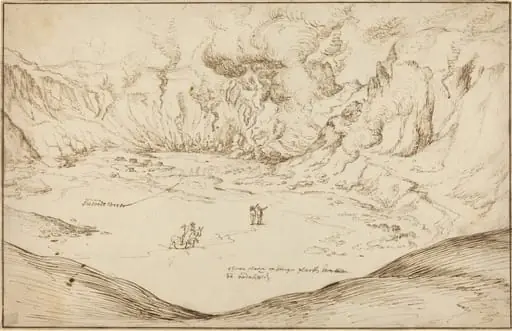 Forum Vulcani: The Hot Springs at Pozzuoli
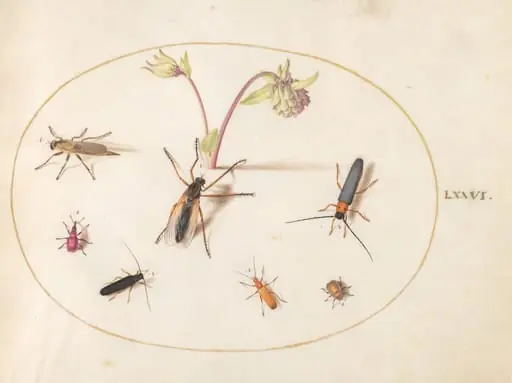 Plate 76: Insects with a Pink and Cream Columbine
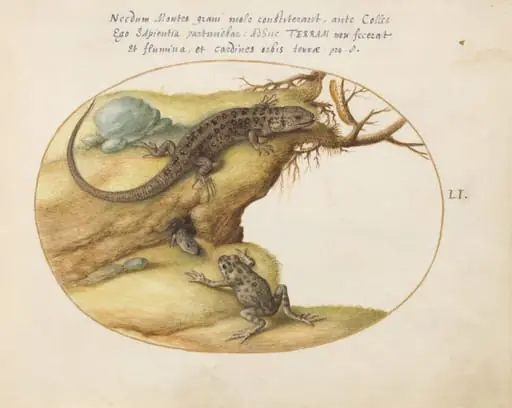 Plate 51: Two Sand Lizards, a Common Parsley Frog(?), and a Caterpillar
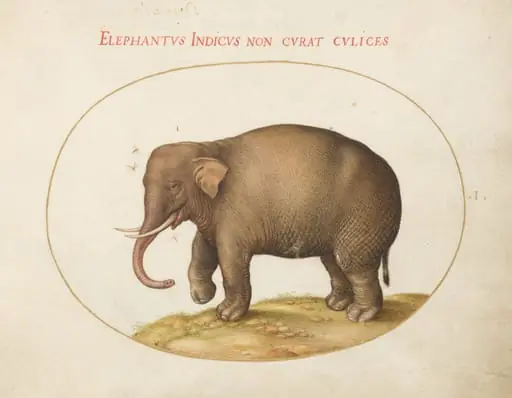 Plate 1: Elephant with Insects
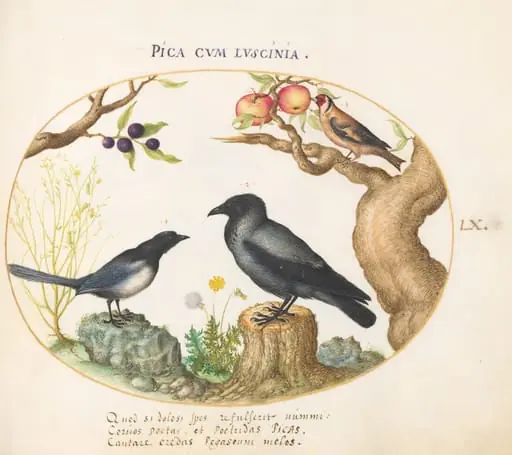 Plate 60: Magpie, Crow, and Goldfinch
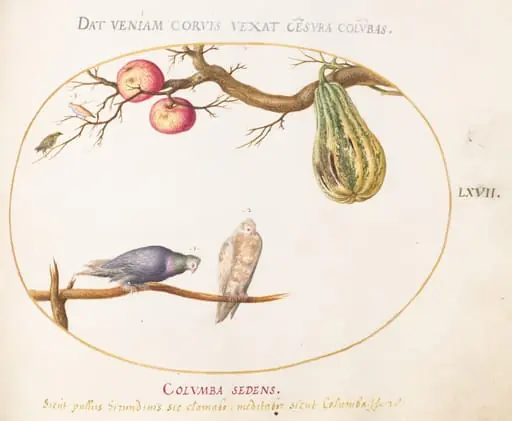 Plate 67: Two Doves beneath a Gourd and Apples
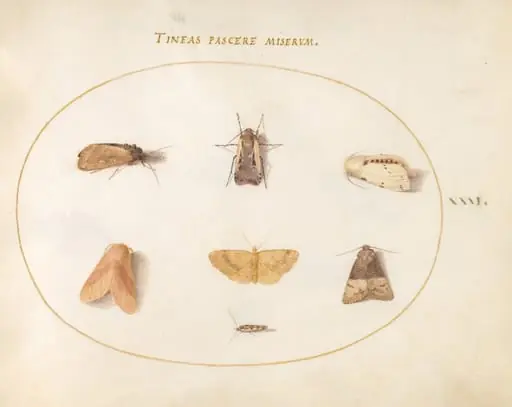 Plate 31: Seven Moths
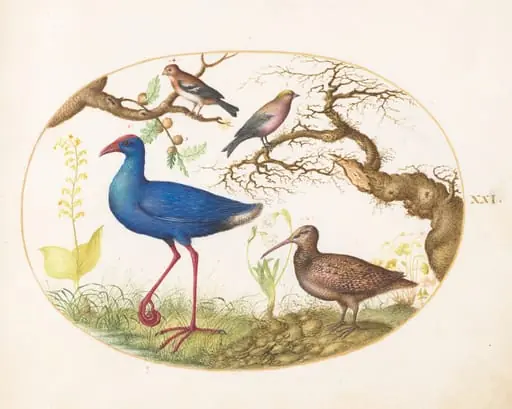 Plate 21: Swamp Hen and Woodcock with a Streaked Rosefinch, a Finch, and Oak Galls
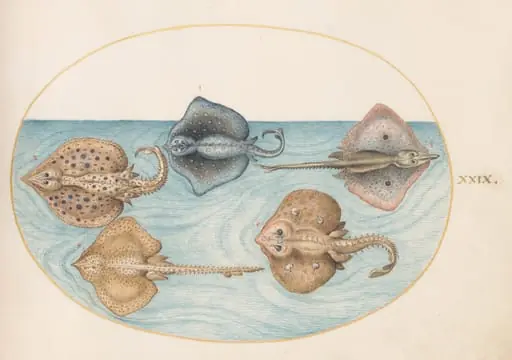 Plate 29: Homelyn Ray and Four Other Rays or Skates
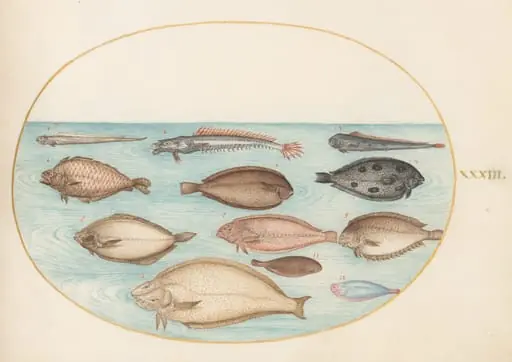 Plate 33: Sole and Other Flatfish with Bandfish(?)
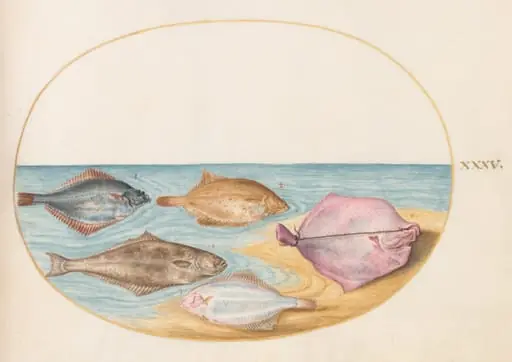 Plate 35: The Undersides of Turbot(?) and Other Flat Fish
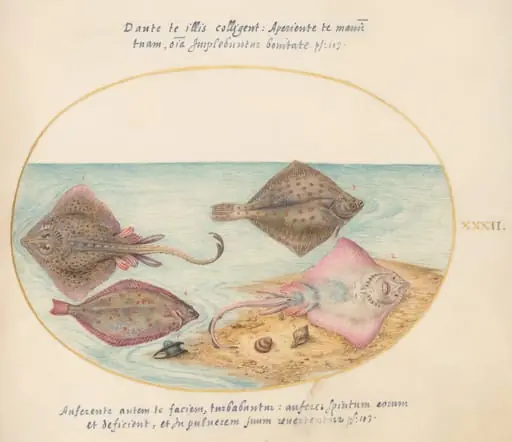 Plate 32: Skates with an Egg Case and Two Flat Fish
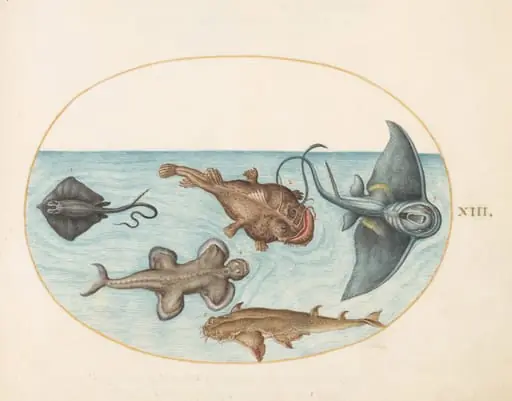 Plate 13: Two Stingrays, an Anglerfish, a Monkfish(?) and an Angel Shark
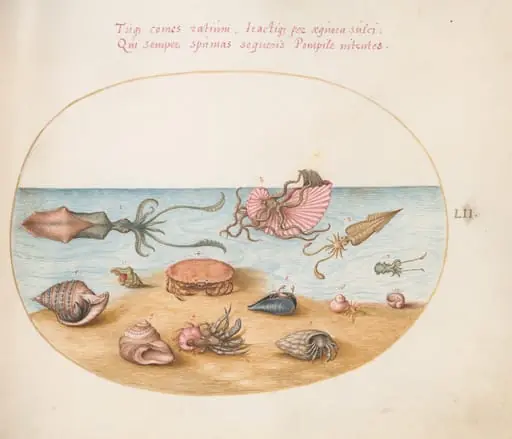 Plate 52: An Argonaut, Squid, Hermit Crabs, Shells, and a Crab
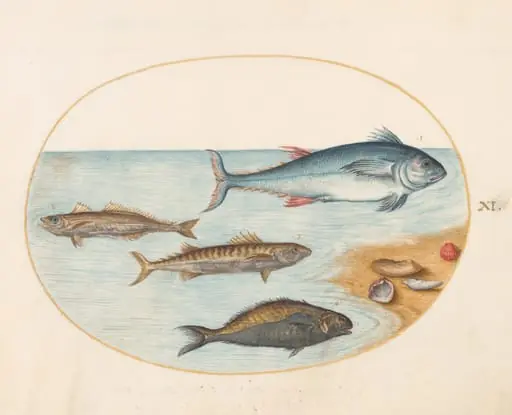 Plate 11: Four Fish and Shells
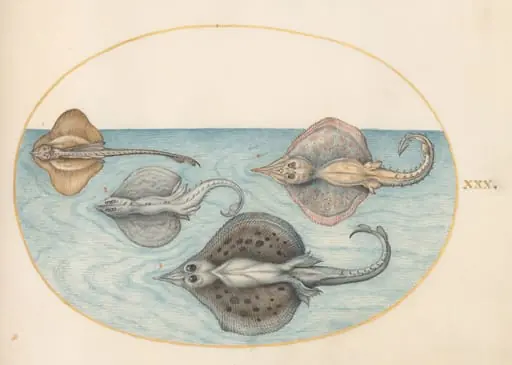 Plate 30: Four Rays
 Plate 51: Murex Mollusks, Shells, Hermit Crabs, a Slug, Insects, and Other Sea Life
 Plate 53: Sea Cucumbers, Coral, Octopus, Starfish, Squid, and Other Sea Creatures
 Plate 17: A Cod, Weever Fish, Eels, and Other Fish