Artwork
Plate 32: Skates with an Egg Case and Two Flat Fish
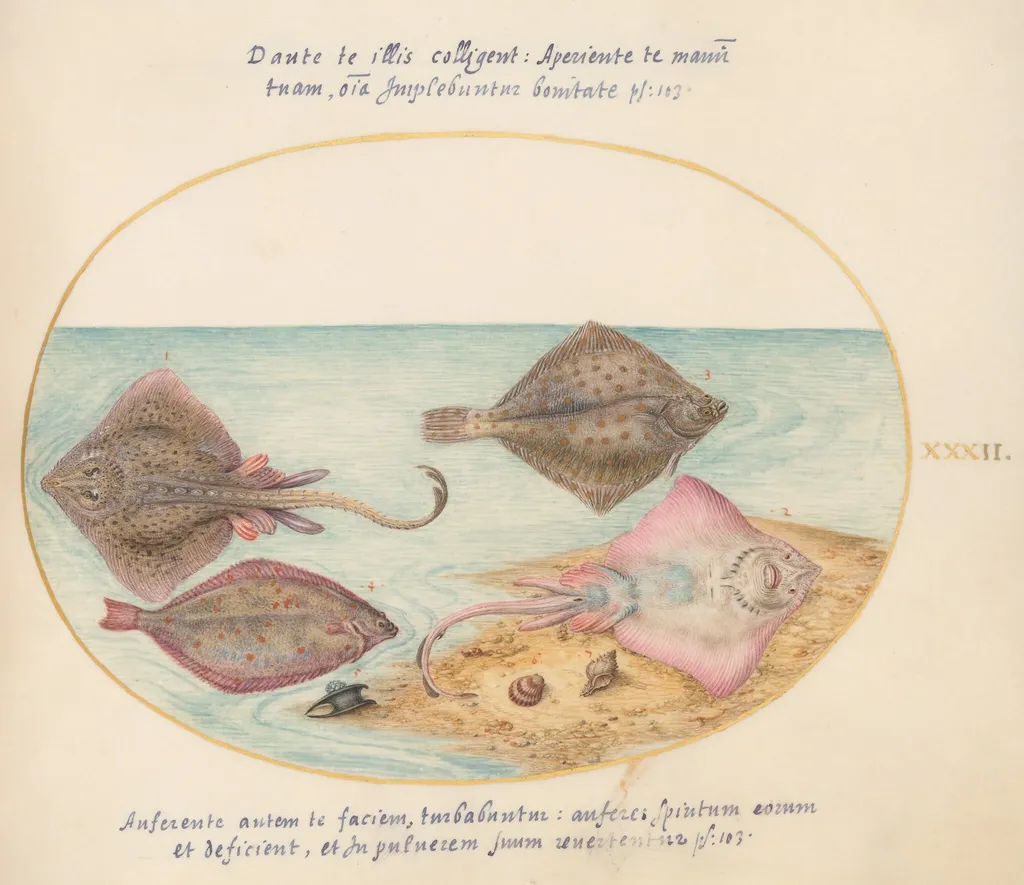
Plate 32: Skates with an Egg Case and Two Flat Fish is a gouache drawing by the Renaissance artist Joris Hoefnagel. It dates from 1594 and is held in the collection of the National Gallery of Art.
About this work
Overview
Created around 1594 by Joris Hoefnagel, this watercolor and gold-painted drawing on parchment depicts marine life with meticulous attention to detail.
Created around 1594 by Joris Hoefnagel, this watercolor and gold-painted drawing on parchment depicts marine life with meticulous attention to detail. As one of the final practitioners of manuscript illumination, Hoefnagel applied his refined technique to natural subjects, blending scientific observation with decorative elegance. The work belongs to a series documenting aquatic species, reflecting the late Renaissance interest in cataloging the natural world through art.
Subject & Meaning
The plate portrays four flatfish, an egg case, and scattered shells on a seabed rendered in soft blue and textured sand. The fish are shown in varied postures—gliding, resting, and hovering—suggesting natural behavior rather than staged arrangement. The inclusion of the egg case, a reproductive structure, implies an interest in biological function. Gold borders elevate the scene beyond mere documentation, hinting at the value placed on natural specimens in elite collections.
Technique & Style
Hoefnagel used layered watercolor glazes to build subtle tonal variations on the fish’s bodies, capturing the iridescence of their skin. Fine brushwork defines scales, fins, and gill structures with precision. Gold paint outlines the composition’s edge, a holdover from medieval illumination traditions. The parchment support allowed for delicate handling, enabling both scientific accuracy and ornamental flourish in a single medium.
History & Provenance
This piece was likely part of a larger manuscript commissioned by a noble patron interested in natural history. Hoefnagel’s work circulated among European collectors and scholars, influencing later naturalists. Though the full manuscript’s original context is lost, surviving fragments confirm its role in bridging medieval illumination practices with early modern scientific illustration.
Context
In late 16th-century Europe, interest in marine biology grew alongside exploration and the rise of curiosity cabinets. Hoefnagel’s drawings responded to this trend, offering visual records of species rarely seen by land-dwellers. His approach merged the decorative conventions of manuscript art with emerging empirical methods, positioning natural history illustration as a distinct field between art and science.
Legacy
Hoefnagel’s precise renderings of marine life helped shape the visual language of biological illustration in northern Europe. His use of color and detail influenced later naturalists and artists who sought to depict organisms with both accuracy and aesthetic care. Though manuscript illumination declined, his work preserved a transitional moment in the history of scientific imagery.
Artist & collection

Artist
Joris Hoefnagel or Georg Hoefnagel (1542 – 24 July 1601) was a Flemish painter, printmaker, miniaturist, draftsman and merchant.

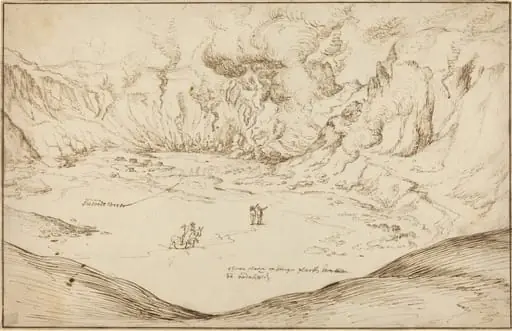 Forum Vulcani: The Hot Springs at Pozzuoli
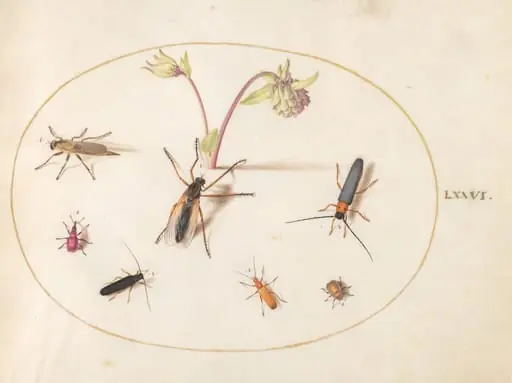 Plate 76: Insects with a Pink and Cream Columbine
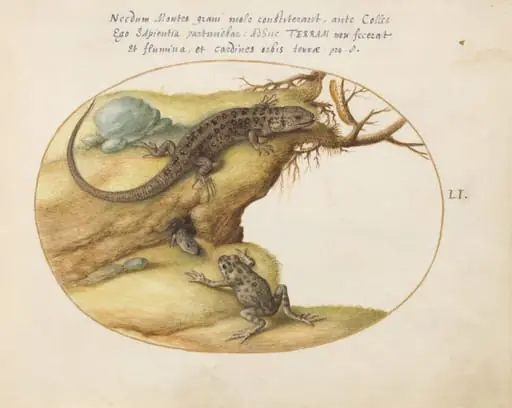 Plate 51: Two Sand Lizards, a Common Parsley Frog(?), and a Caterpillar
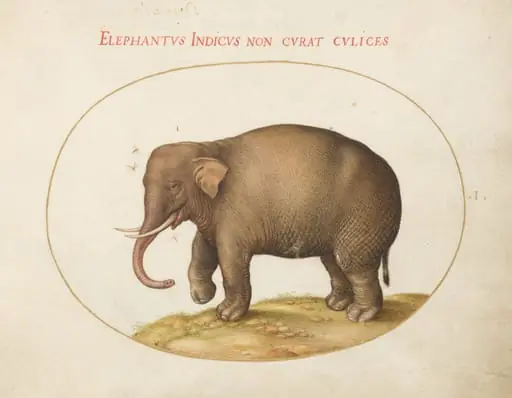 Plate 1: Elephant with Insects
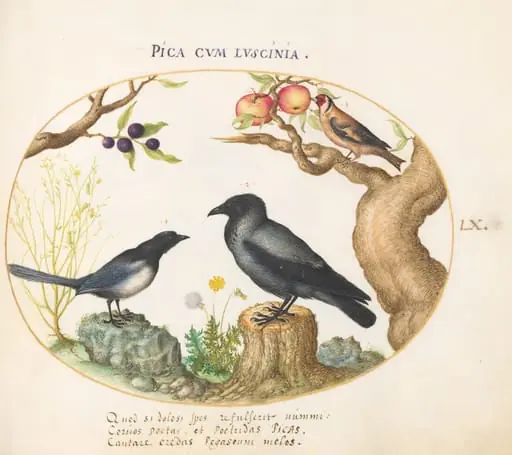 Plate 60: Magpie, Crow, and Goldfinch
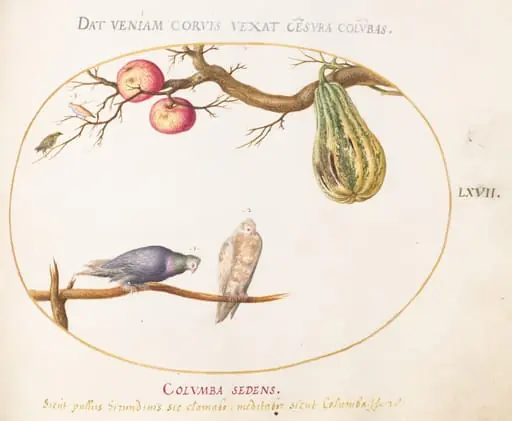 Plate 67: Two Doves beneath a Gourd and Apples
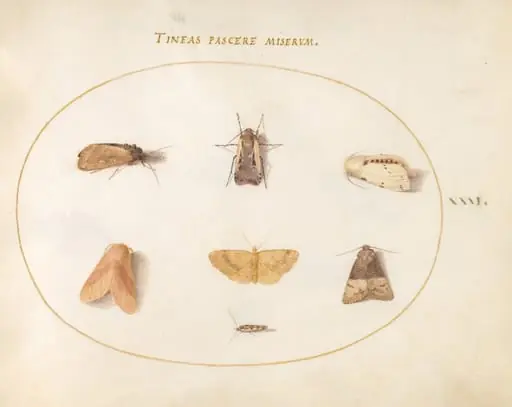 Plate 31: Seven Moths
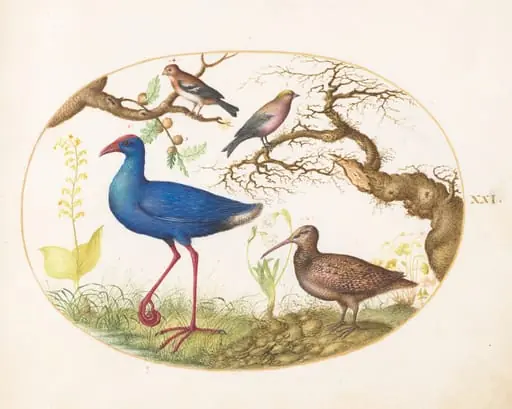 Plate 21: Swamp Hen and Woodcock with a Streaked Rosefinch, a Finch, and Oak Galls
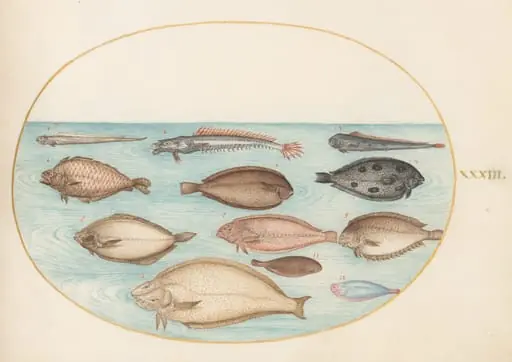 Plate 33: Sole and Other Flatfish with Bandfish(?)
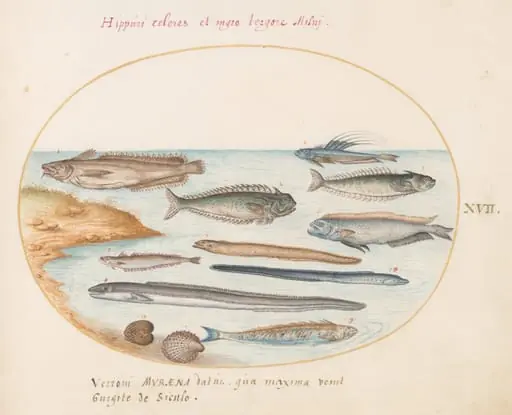 Plate 17: A Cod, Weever Fish, Eels, and Other Fish
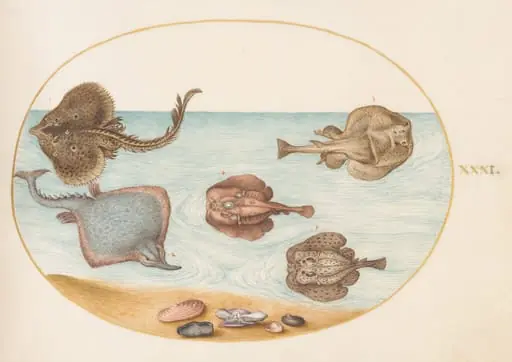 Plate 31: Marbled Electric Ray with Other Skates or Rays, Shells, and a Mollusk in Its Shell
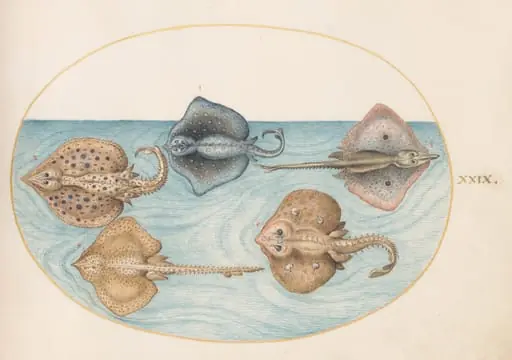 Plate 29: Homelyn Ray and Four Other Rays or Skates
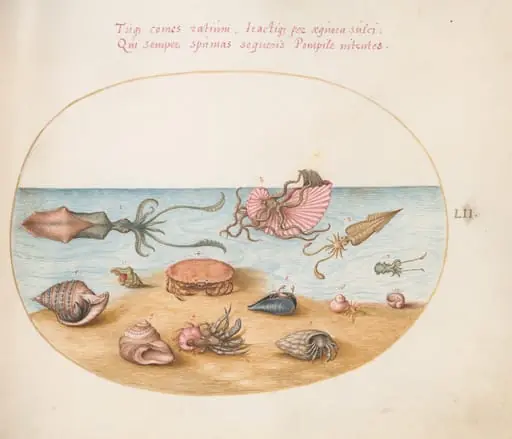 Plate 52: An Argonaut, Squid, Hermit Crabs, Shells, and a Crab
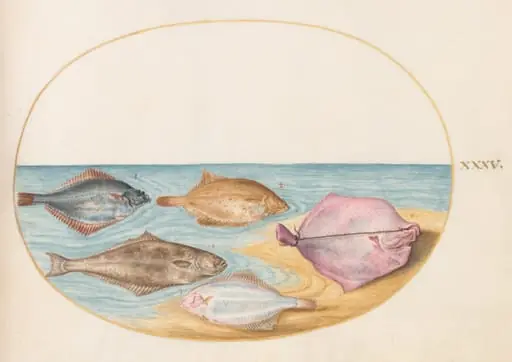 Plate 35: The Undersides of Turbot(?) and Other Flat Fish
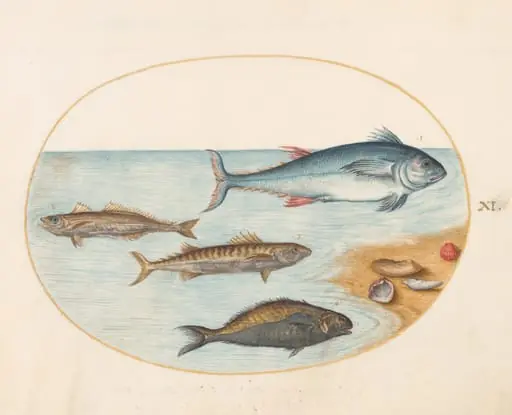 Plate 11: Four Fish and Shells
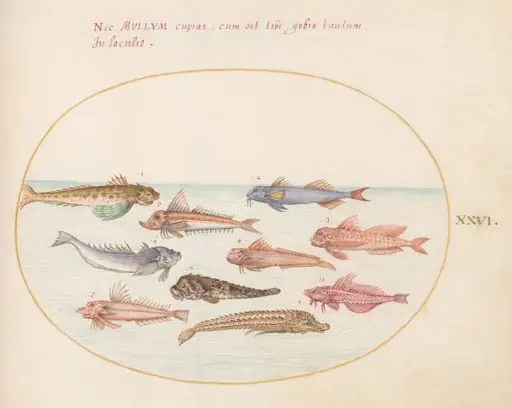 Plate 26: Gurnards, Dragonets, and Other Fish
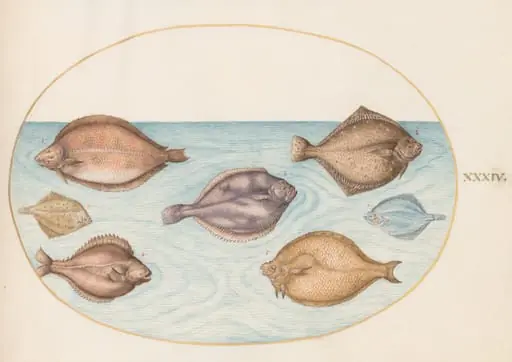 Plate 34: Seven Flatfish
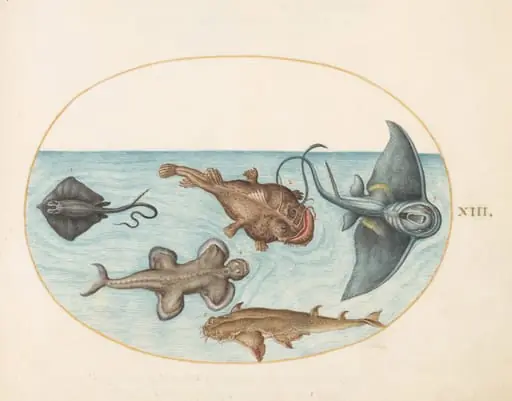 Plate 13: Two Stingrays, an Anglerfish, a Monkfish(?) and an Angel Shark
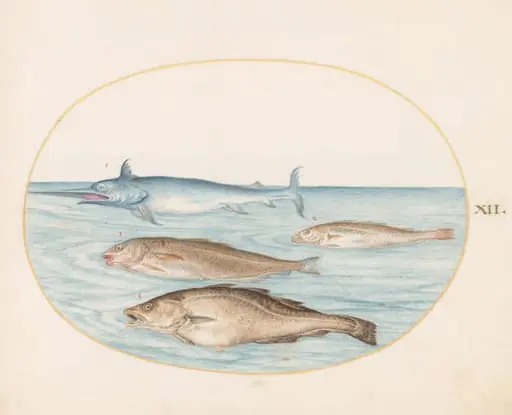 Plate 12: A Swordfish and Three Other Fish