Artwork
Plate 70: A Roach Surrounded by Insects
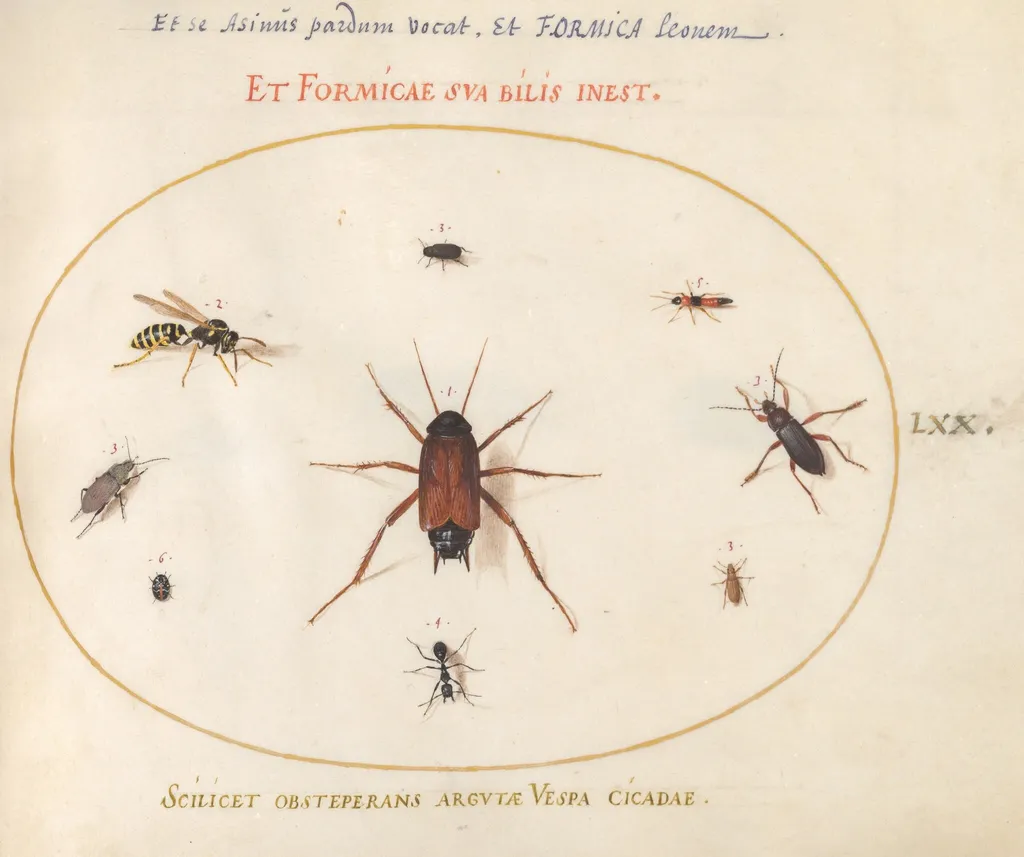
Plate 70: A Roach Surrounded by Insects is a gouache drawing by the Renaissance artist Joris Hoefnagel. It dates from 1594 and is held in the collection of the National Gallery of Art.
About this work
Overview
It exemplifies the transition from medieval manuscript illumination to empirical natural study.
Created around 1594 by Joris Hoefnagel, this watercolor and gold-painted work on parchment is one of seventy plates from the *Archetypa studiaque patris Georgii Hoefnagel*. It exemplifies the transition from medieval manuscript illumination to empirical natural study. The use of delicate pigments and metallic accents highlights the artist’s technical precision and his commitment to capturing minute biological forms with clarity and care.
Subject & Meaning
The central subject is a cockroach, rendered with anatomical accuracy and surrounded by smaller insects, each identified by form and posture. Rather than symbolic or decorative intent, the composition serves as a scientific record, emphasizing observation over allegory. The arrangement invites comparison among species, reflecting a growing 16th-century interest in classifying the natural world through visual means.
Technique & Style
Hoefnagel employed fine-tipped brushes to apply watercolor with layered transparency, allowing subtle gradations of color and texture. Gold paint was used selectively to accentuate exoskeletons and antennae, enhancing luminosity without overwhelming detail. The parchment surface, smooth and absorbent, enabled crisp lines and fine stippling, supporting the intricate rendering of each insect’s anatomy with near-microscopic fidelity.
History & Provenance
The plate originated in Hoefnagel’s personal collection of natural studies, later compiled into the *Archetypa* series, likely intended for private scholarly circulation. It passed through several European collections before entering institutional holdings. Its survival as part of a complete set is rare, as many such folios were dispersed or lost during the upheavals of the early modern period.
Context
In late 16th-century Europe, natural history illustration was evolving alongside scientific inquiry. Hoefnagel’s work aligned with figures like Ulisse Aldrovandi and Conrad Gesner, who sought to document biodiversity. His fusion of artistic tradition with empirical observation helped shape the visual language of early entomology, bridging the gap between artisanal craft and emerging scientific methodology.
Legacy
Hoefnagel’s detailed insect studies influenced later naturalists and illustrators, contributing to the standardization of biological depiction in printed encyclopedias. While not widely known outside specialist circles, his plates remain important references for historians of science and art, demonstrating how precision in drawing could serve both aesthetic and epistemological goals in the pre-microscopic era.
Artist & collection

Artist
Joris Hoefnagel or Georg Hoefnagel (1542 – 24 July 1601) was a Flemish painter, printmaker, miniaturist, draftsman and merchant.

 Forum Vulcani: The Hot Springs at Pozzuoli
 Plate 76: Insects with a Pink and Cream Columbine
 Plate 51: Two Sand Lizards, a Common Parsley Frog(?), and a Caterpillar
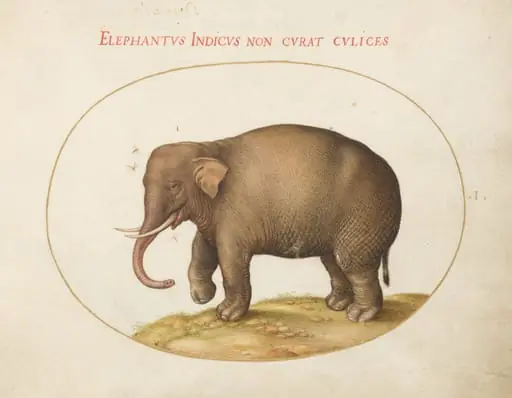 Plate 1: Elephant with Insects
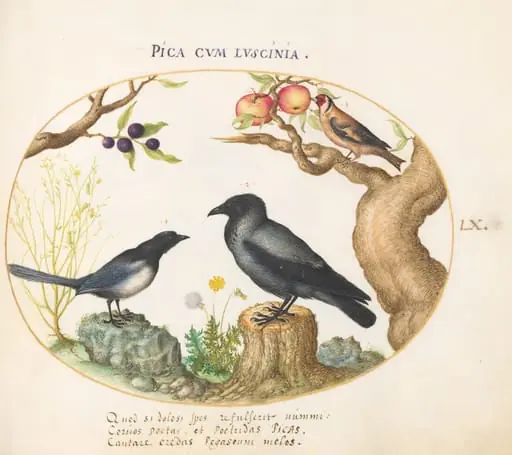 Plate 60: Magpie, Crow, and Goldfinch
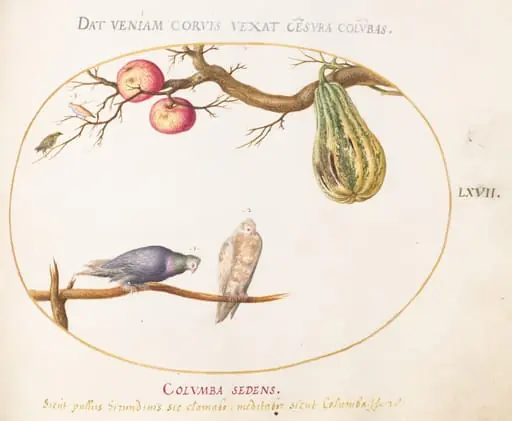 Plate 67: Two Doves beneath a Gourd and Apples
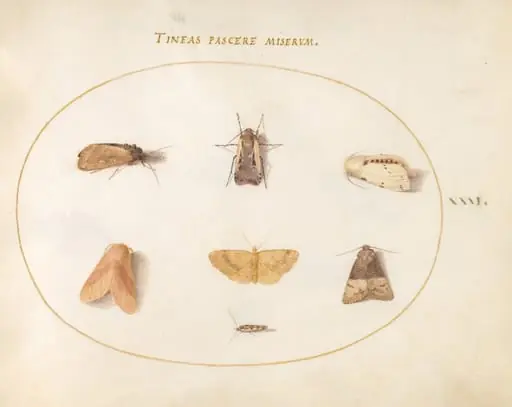 Plate 31: Seven Moths
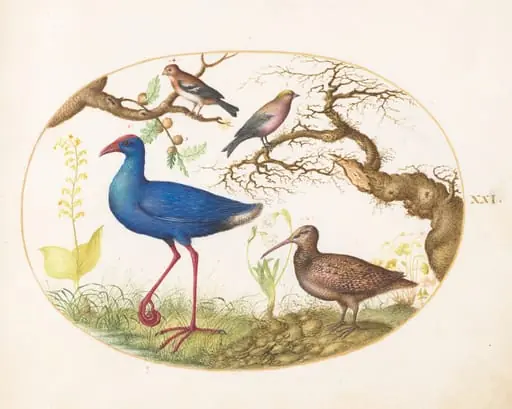 Plate 21: Swamp Hen and Woodcock with a Streaked Rosefinch, a Finch, and Oak Galls
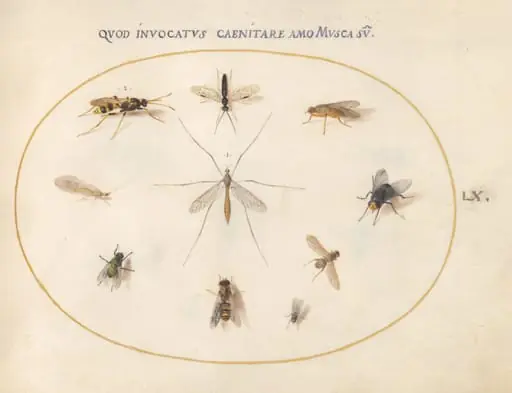 Plate 60: Flies and Other Insects
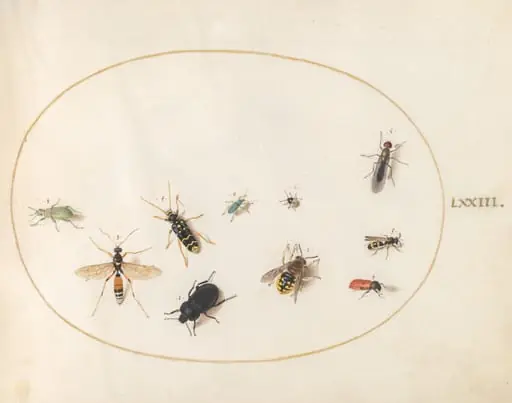 Plate 73: Ten Insects
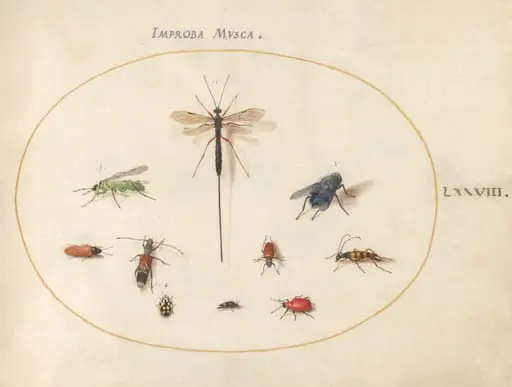 Plate 78: Ten Insects, Including a Blue Fly
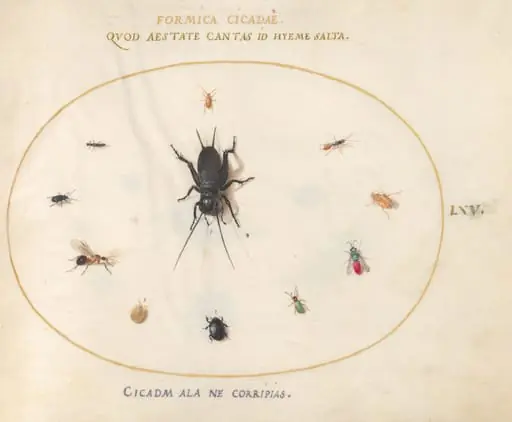 Plate 65: A Cricket Surrounded by Insects, Including a Ruby-Tailed Wasp
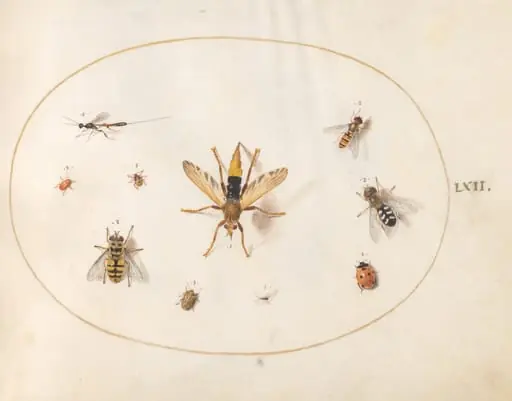 Plate 62: Ten Insects
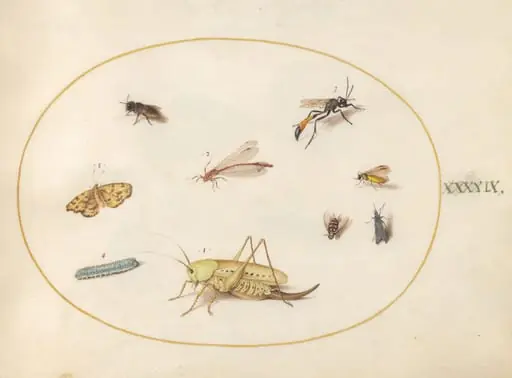 Plate 49: A Grasshopper, a Caterpillar, a Butterfly, a Moth, and Other Insects
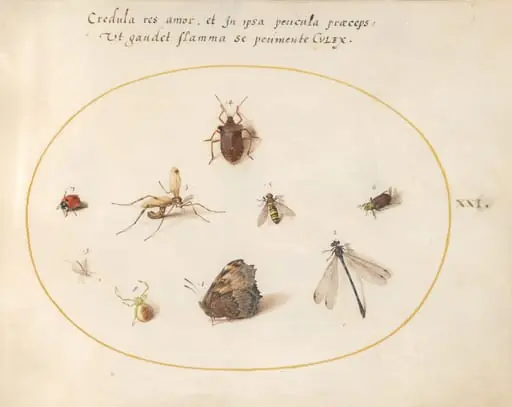 Plate 21: A Butterfly with a Dragonfly, a Ladybug, and Five other Insects
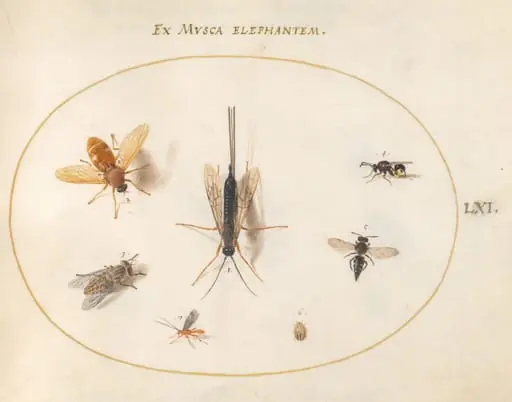 Plate 61: Seven Insects, Including Flies
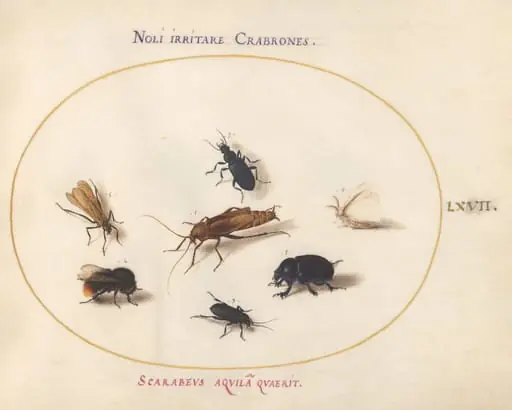 Plate 67: Seven Insects, Including a White Butterfly and a Bee
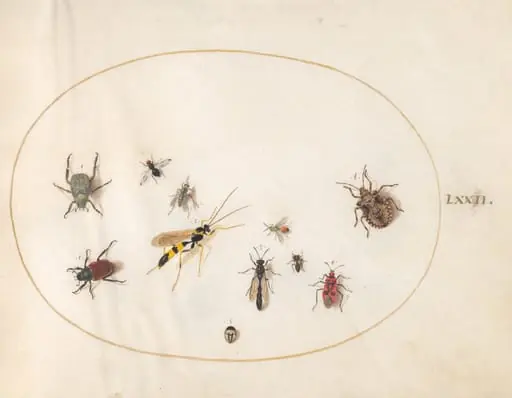 Plate 72: Shield Bug, Cinnamon Bug, Wasp, and Other Insects
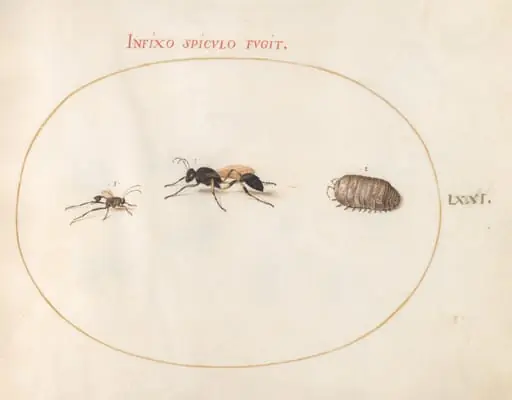 Plate 71: Two Wasps and a Pill Bug