Artwork
Plate 71: Two Wasps and a Pill Bug
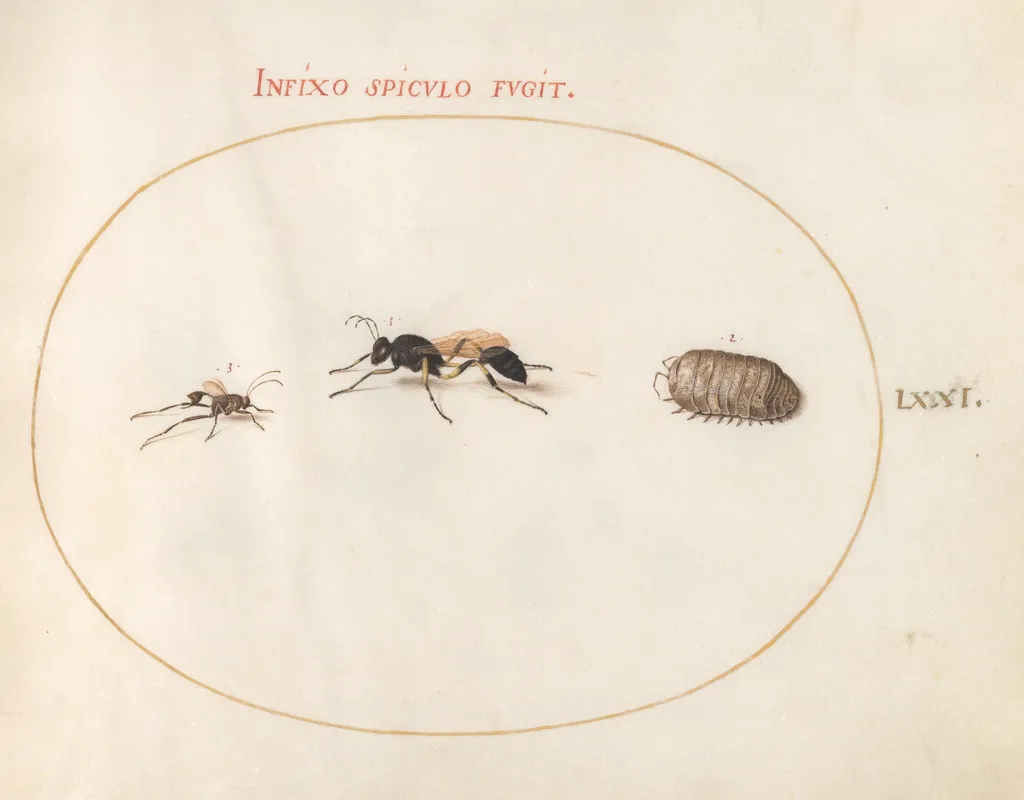
Plate 71: Two Wasps and a Pill Bug is a gouache drawing by the Renaissance artist Joris Hoefnagel. It dates from 1594 and is held in the collection of the National Gallery of Art.
About this work
Overview
Created circa 1594 by the Flemish artist Joris Hoefnagel, this small-scale work portrays two wasps alongside a pill bug. Executed in watercolor with touches of gold on a parchment support, the image measures only a few inches yet demonstrates a meticulous observation of insect anatomy.
Subject & Meaning
The composition focuses on three terrestrial arthropods, rendered with lifelike accuracy. By isolating the wasps and the pill bug against a neutral background, Hoefnagel emphasizes their structural details, suggesting an interest in cataloguing nature rather than allegorical interpretation.
Technique & Style
Watercolor washes provide subtle tonal gradations, while fine gold highlights accentuate the glossy exoskeletons. The delicate brushwork captures the texture of wings and segmented bodies, reflecting a hybrid of medieval illumination precision and emerging Renaissance naturalism.
History & Provenance
The piece belongs to Hoefnagel’s series of illustrated plates intended for scientific and decorative manuscripts. As one of the later examples of illuminated parchment, it marks a transitional moment when artists began to move from codex decoration toward independent natural history illustration.
Context
During the late sixteenth century, northern Europe saw a growing fascination with flora and fauna, driven by exploration and the rise of empirical study. Hoefnagel’s work exemplifies this trend, merging his background in topographical drawing with a nascent desire to document the natural world in a systematic fashion.
Artist & collection

Artist
Joris Hoefnagel or Georg Hoefnagel (1542 – 24 July 1601) was a Flemish painter, printmaker, miniaturist, draftsman and merchant.

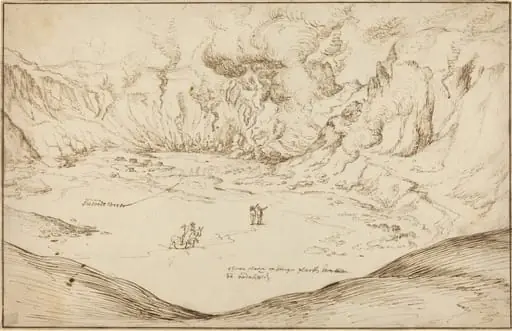 Forum Vulcani: The Hot Springs at Pozzuoli
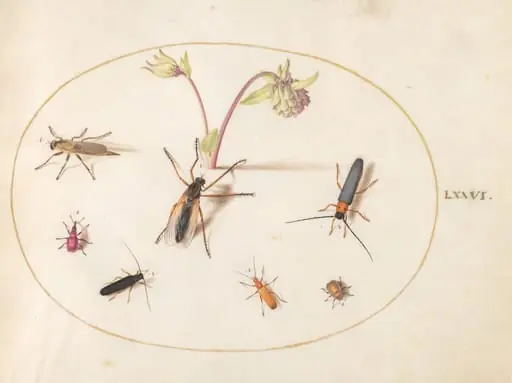 Plate 76: Insects with a Pink and Cream Columbine
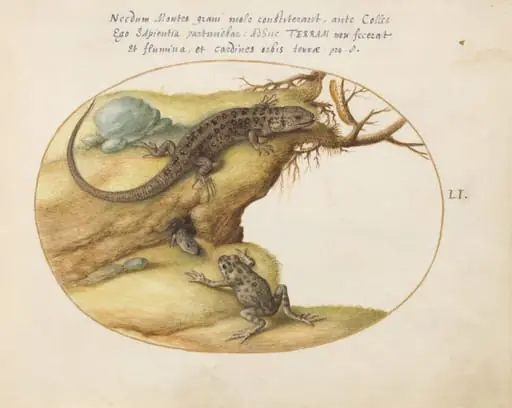 Plate 51: Two Sand Lizards, a Common Parsley Frog(?), and a Caterpillar
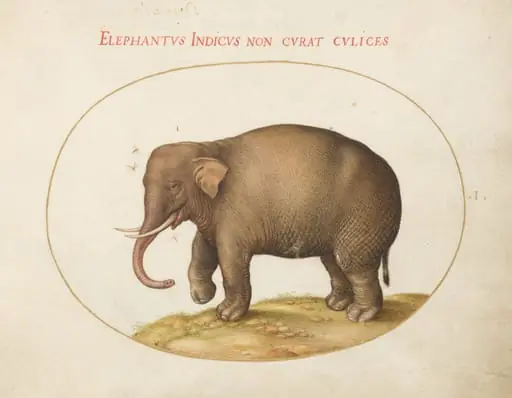 Plate 1: Elephant with Insects
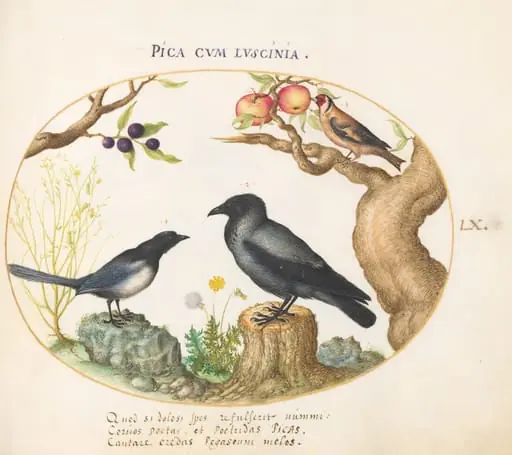 Plate 60: Magpie, Crow, and Goldfinch
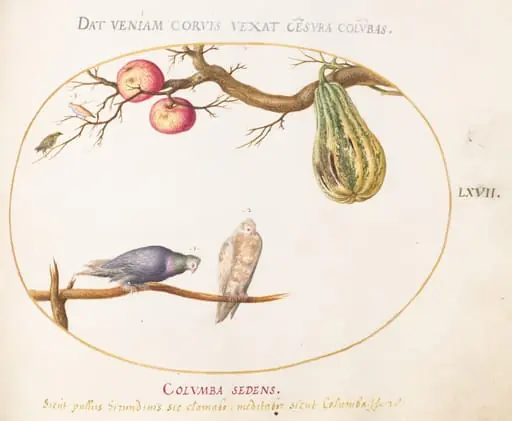 Plate 67: Two Doves beneath a Gourd and Apples
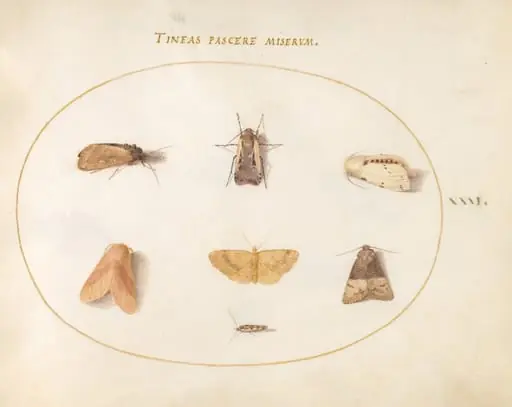 Plate 31: Seven Moths
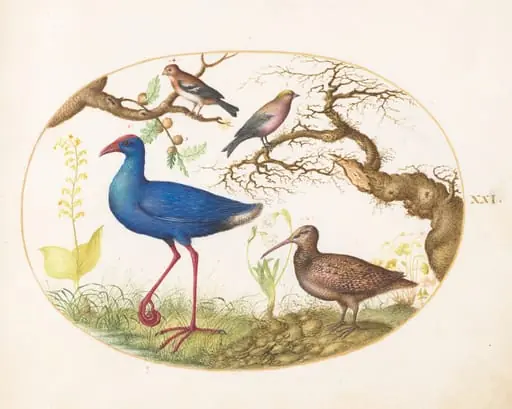 Plate 21: Swamp Hen and Woodcock with a Streaked Rosefinch, a Finch, and Oak Galls
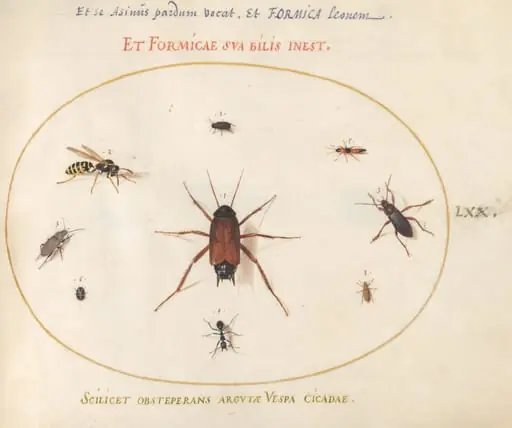 Plate 70: A Roach Surrounded by Insects
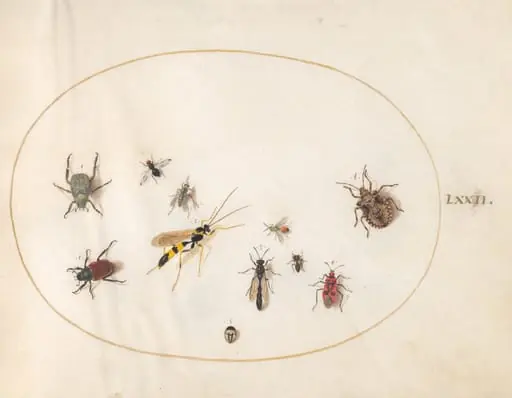 Plate 72: Shield Bug, Cinnamon Bug, Wasp, and Other Insects
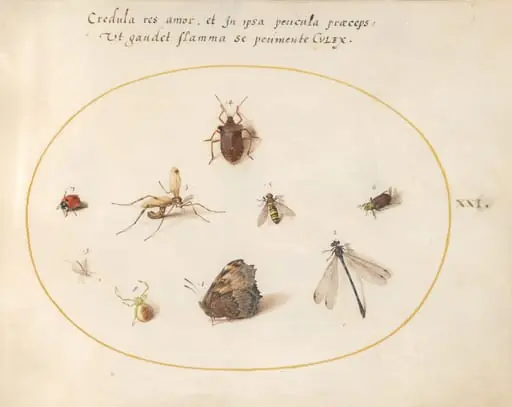 Plate 21: A Butterfly with a Dragonfly, a Ladybug, and Five other Insects
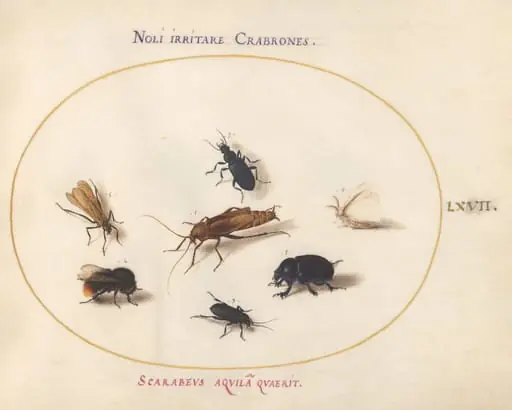 Plate 67: Seven Insects, Including a White Butterfly and a Bee
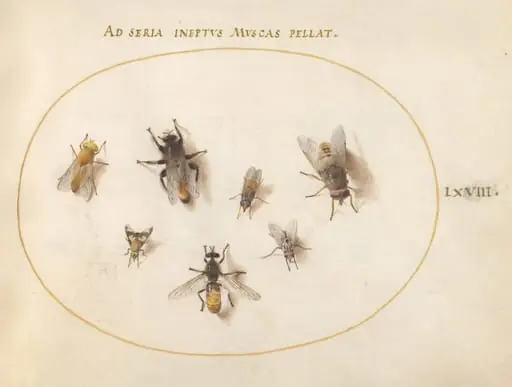 Plate 68: Seven Bees and Flies
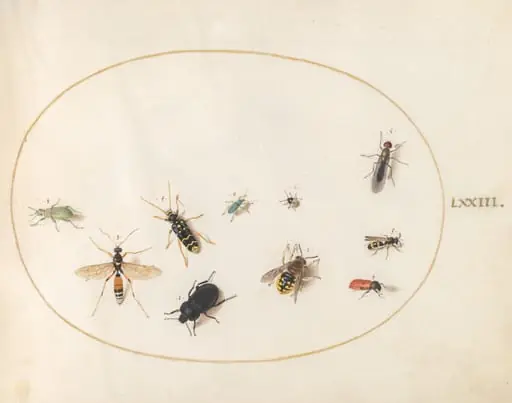 Plate 73: Ten Insects
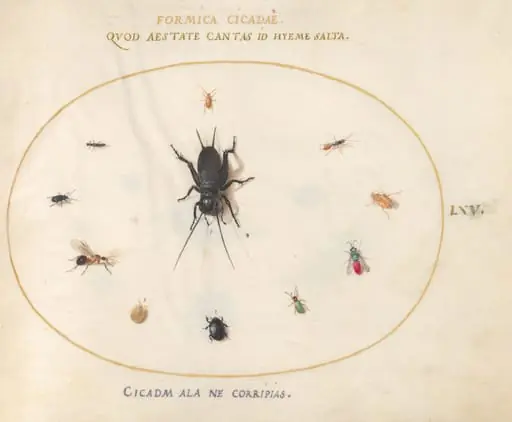 Plate 65: A Cricket Surrounded by Insects, Including a Ruby-Tailed Wasp
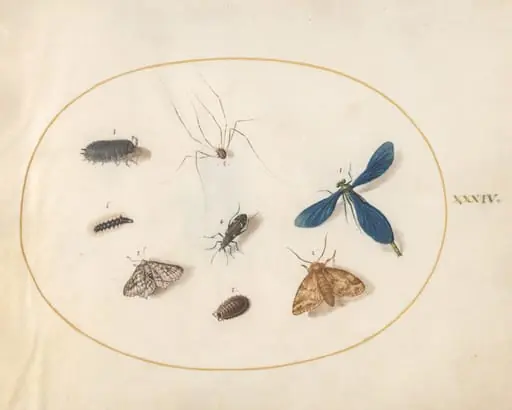 Plate 34: Two Moths with a Spider, a Caterpillar, a Damselfly, and Other Insects
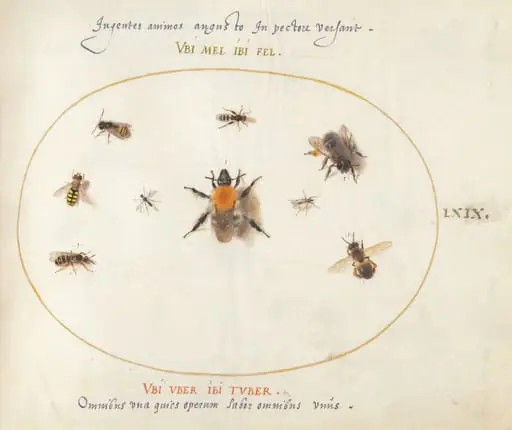 Plate 69: Nine Bees and Other Insects
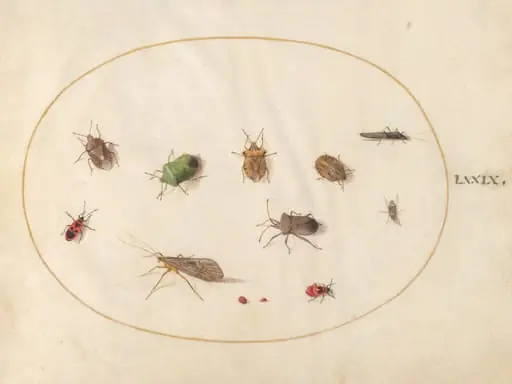 Plate 79: Twelve Insects, Including Shield Bugs
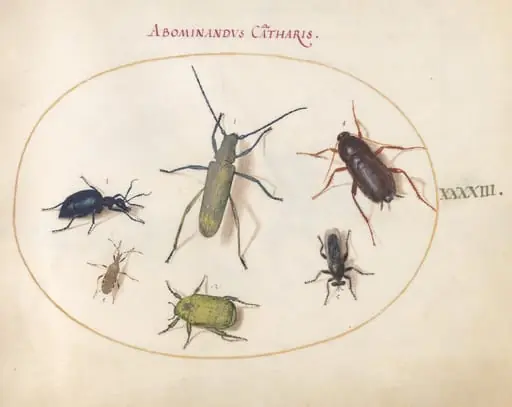 Plate 43: Musk Beetle, Oil Beetle, Tansy Beetle(?), Cockroach, Leaf-Footed Bug, and Other Insects
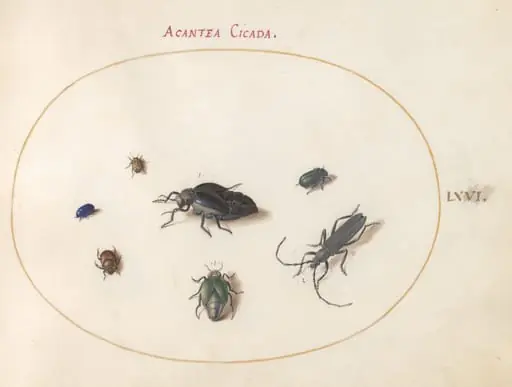 Plate 66: Two Oil Beetles, a Longhorn Beetle, and Four Other Insects