Artwork
Title Page
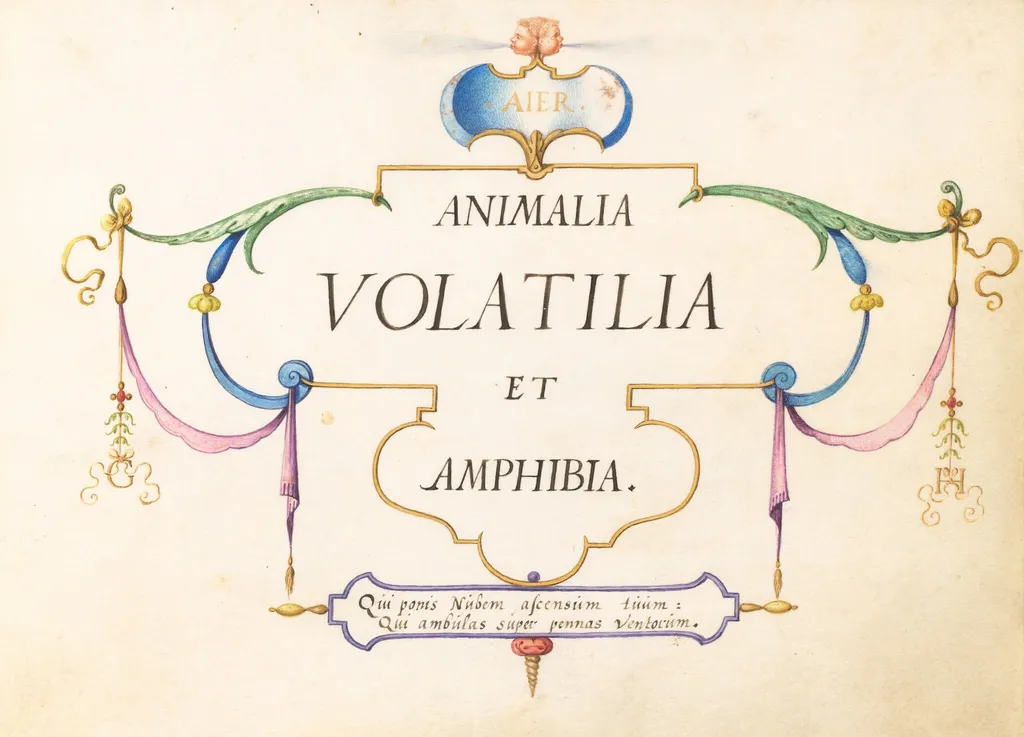
Title Page is a gouache drawing by the Renaissance artist Joris Hoefnagel. It dates from 1594 and is held in the collection of the National Gallery of Art.
About this work
Overview
Created around 1594 by Joris Hoefnagel, this title page is a hand-painted illumination on parchment, executed in watercolor and gold leaf.
Created around 1594 by Joris Hoefnagel, this title page is a hand-painted illumination on parchment, executed in watercolor and gold leaf. It serves as the opening of a manuscript section devoted to flying and aquatic creatures. The work exemplifies the late tradition of manuscript illumination, blending scientific observation with ornamental design, and stands as a bridge between medieval book arts and early modern natural history illustration.
Subject & Meaning
The inscription 'Animalia Volatilia et Amphibia' identifies the subject as birds and amphibians—creatures of air and water. Surrounding the text are symbolic elements: a blue disc labeled 'AIR' with a floral motif, and delicate suspended ornaments. These details suggest a cosmological framework, aligning the natural world with elemental forces. The page functions as both a catalog marker and a visual allegory of nature’s diversity and order.
Technique & Style
Hoefnagel applied watercolor with precision on thin animal skin, using fine brushes to render intricate patterns and minute flora. Gold leaf highlights the lettering and borders, adding luminosity and texture. The composition is densely layered with swirling ribbons in muted greens, pinks, and blues, creating rhythm without clutter. His style merges the precision of scientific illustration with the elegance of courtly decoration, characteristic of late Renaissance manuscript art.
History & Provenance
This page likely belonged to a larger, now-dispersed manuscript commissioned during Hoefnagel’s time at the Habsburg court. As a court artist, he produced illuminated works for imperial patrons, combining naturalist studies with decorative arts. Though the full manuscript’s fate is uncertain, surviving fragments confirm Hoefnagel’s role in preserving manuscript traditions into the late 16th century, even as print culture rose.
Context
In the late 1500s, northern Europe saw growing interest in classifying nature, fueled by exploration and emerging natural science. Hoefnagel’s work responded to this shift, translating empirical observation into visually rich formats. While printed herbals gained popularity, illuminated manuscripts retained prestige among elites. His pages represent a transitional moment—where art still served as a vehicle for scientific knowledge before photography and mass printing.
Legacy
Hoefnagel’s detailed renderings of flora and fauna influenced later natural history illustrators and still-life painters in the Low Countries. His integration of scientific accuracy with decorative form helped shape the visual language of early modern biology. Though manuscript illumination declined, his approach to observing and presenting nature left a lasting imprint on the visual culture of natural science in Europe.
Artist & collection

Artist
Joris Hoefnagel or Georg Hoefnagel (1542 – 24 July 1601) was a Flemish painter, printmaker, miniaturist, draftsman and merchant.

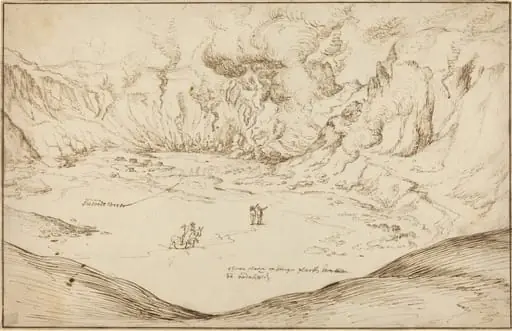 Forum Vulcani: The Hot Springs at Pozzuoli
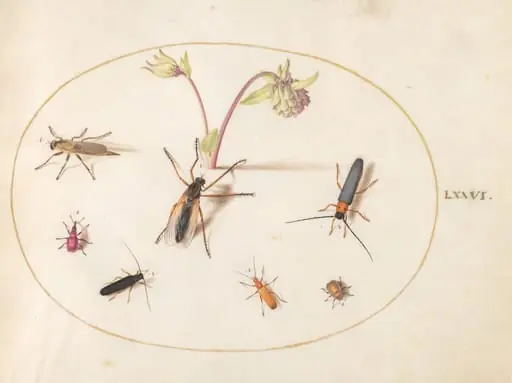 Plate 76: Insects with a Pink and Cream Columbine
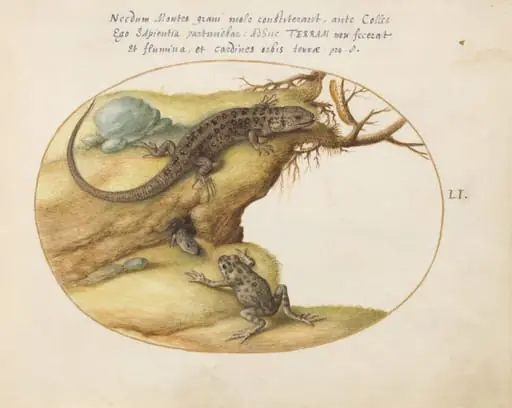 Plate 51: Two Sand Lizards, a Common Parsley Frog(?), and a Caterpillar
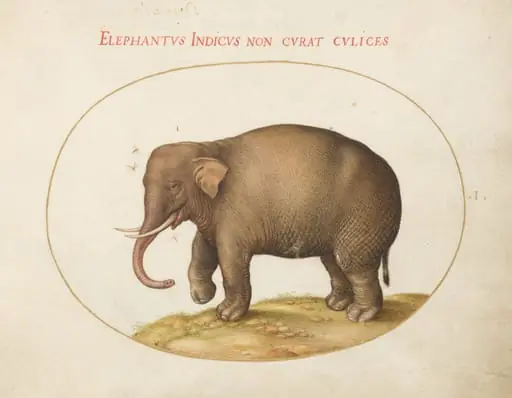 Plate 1: Elephant with Insects
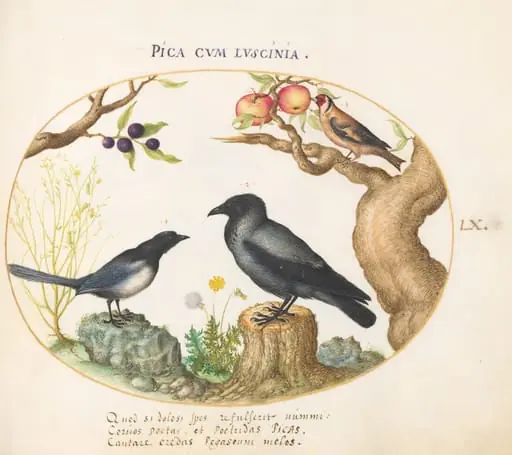 Plate 60: Magpie, Crow, and Goldfinch
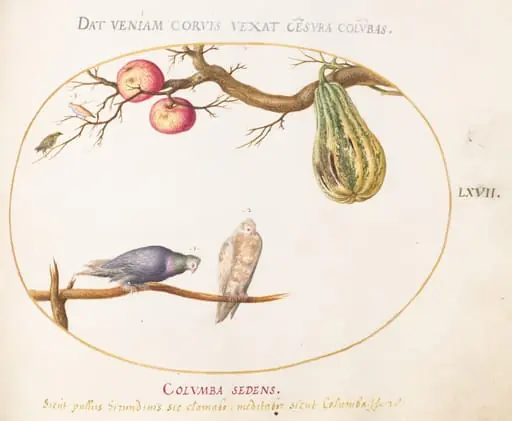 Plate 67: Two Doves beneath a Gourd and Apples
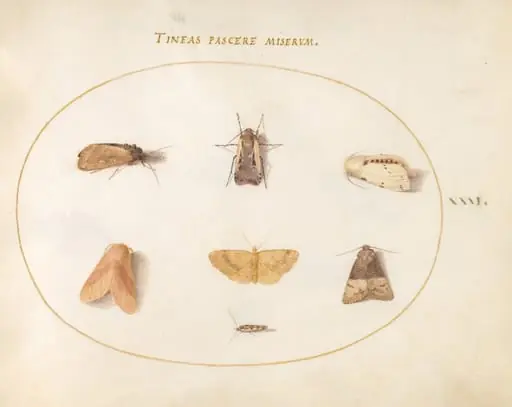 Plate 31: Seven Moths
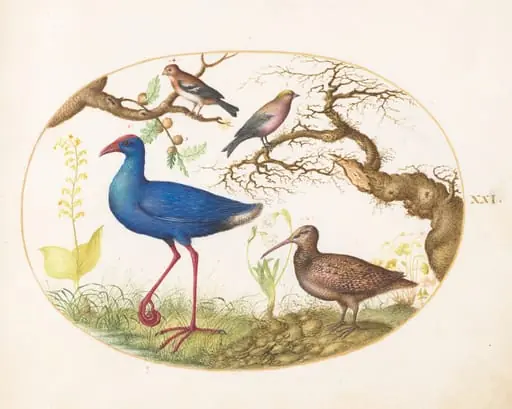 Plate 21: Swamp Hen and Woodcock with a Streaked Rosefinch, a Finch, and Oak Galls
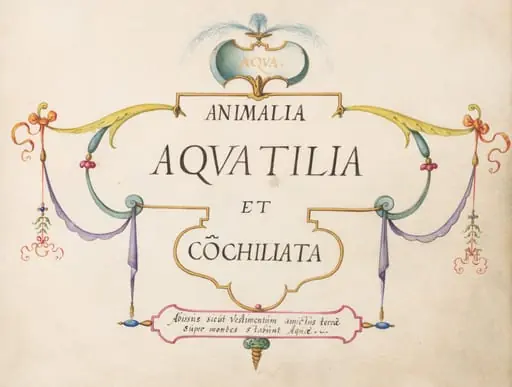 Title Page
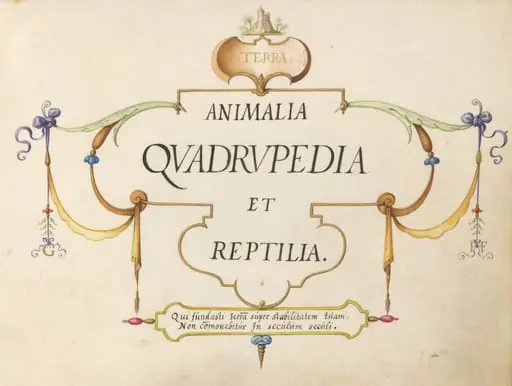 Title Page
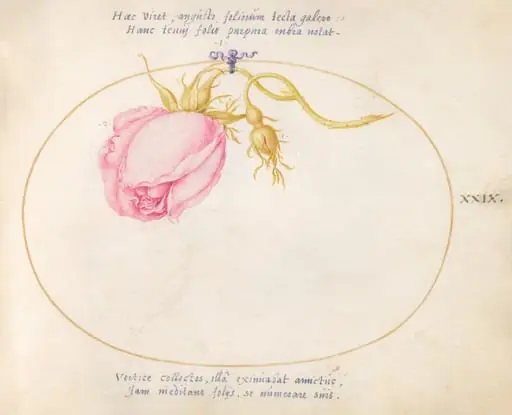 Plate 29: Pink Rose and Rosebud
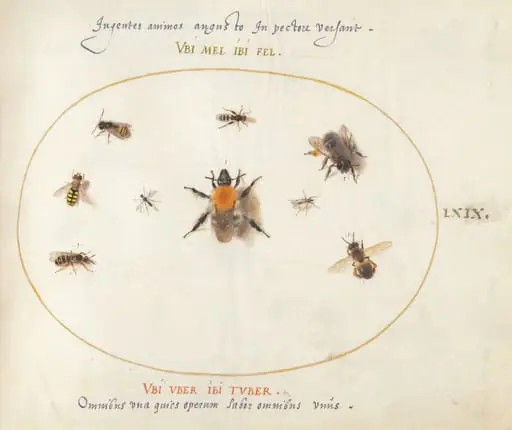 Plate 69: Nine Bees and Other Insects
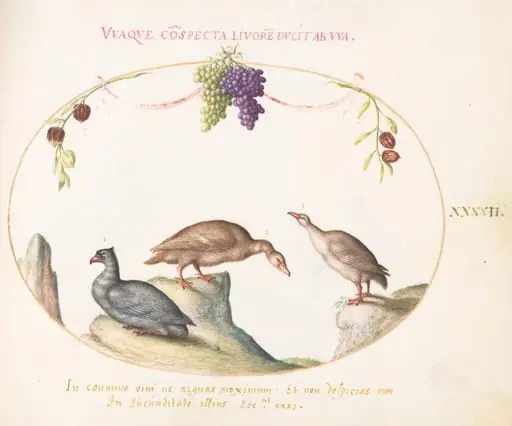 Plate 42: Two Gray Geese with a Third Bird and Hanging Grapes
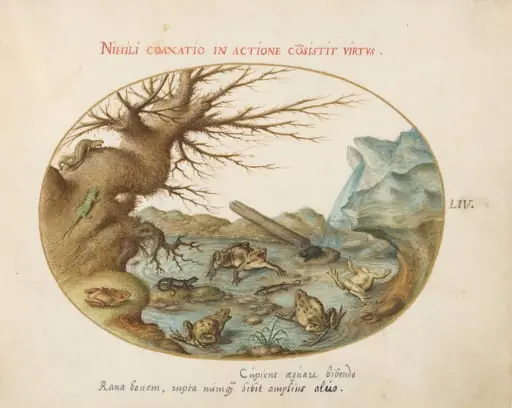 Plate 54: Frogs, Lizards, and Salamanders(?) in a Landscape
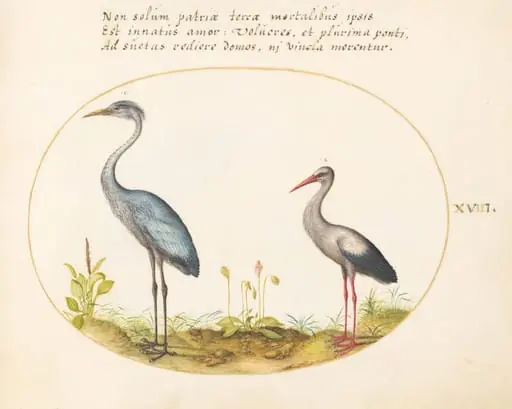 Plate 18: Heron and Stork
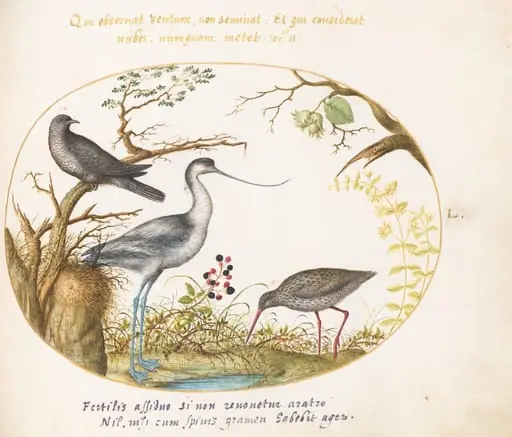 Plate 50: An Avocet with Two Other Birds
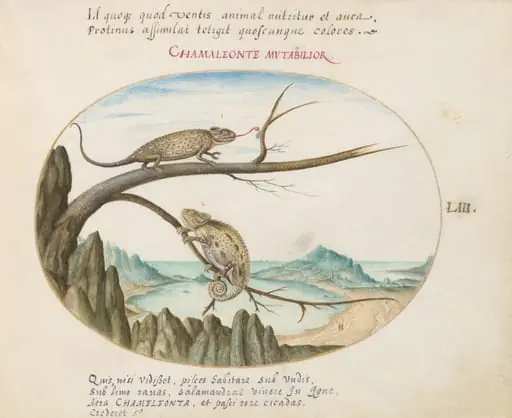 Plate 53: Two Common or Mediterranean Chameleons above San Sebastián, Spain
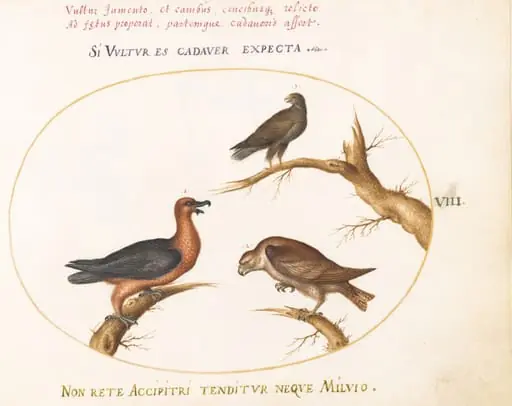 Plate 8: Bearded Vulture with Two Birds of Prey
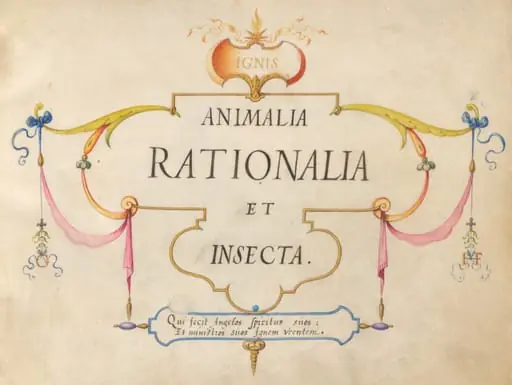 Title Page