Artwork
The Industrious 'Prentice a Favorite, and entrusted by his Master
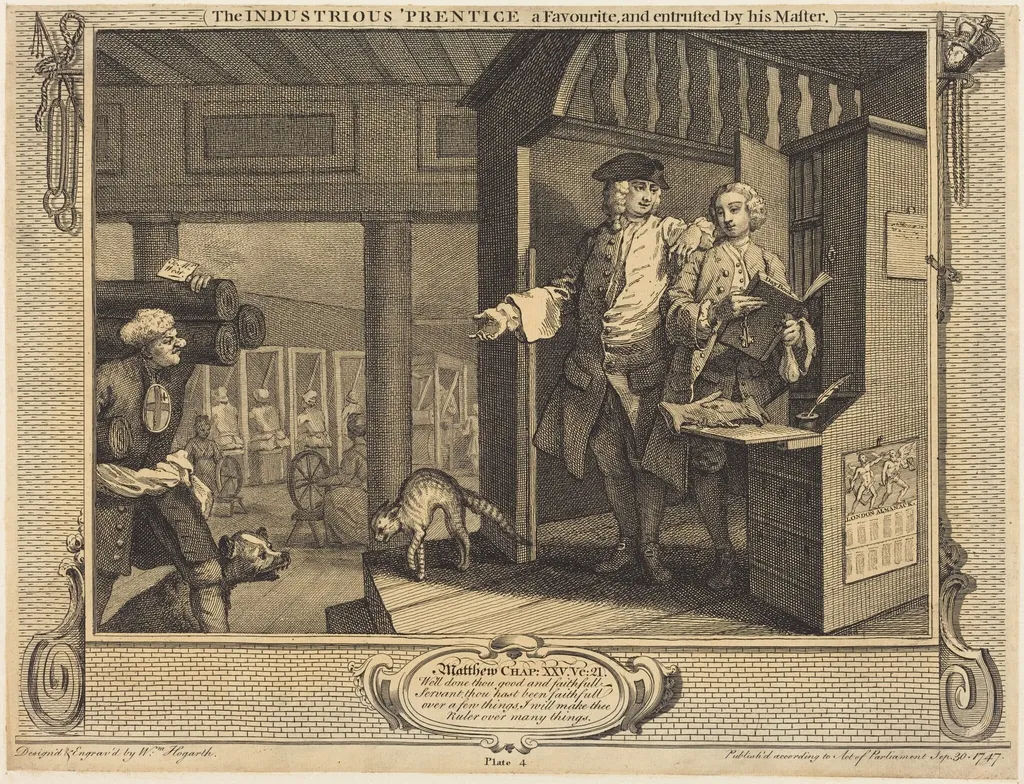
The Industrious 'Prentice a Favorite, and entrusted by his Master is an ink print by the Baroque artist William Hogarth. It dates from 1747 and is held in the collection of the National Gallery of Art.
About this work
Overview
Created in 1747, this print by William Hogarth combines etching and engraving techniques to portray a bustling workshop interior.
Created in 1747, this print by William Hogarth combines etching and engraving techniques to portray a bustling workshop interior. At its centre stands a young apprentice, dressed in period attire, poised at a workbench with tools in hand. The composition includes shelves laden with mechanical objects, a dog at the apprentice’s feet, and a figure consulting papers, all rendered in the artist’s characteristic line work.
Subject & Meaning
The image illustrates the theme of industriousness, emphasizing the apprentice’s favored status under his master’s guidance. By highlighting the array of gears, clocks, and a peculiar contraption, Hogarth underscores the value of skill and diligent learning within the trade, aligning with his broader moral narratives that celebrate virtue through labor.
Technique & Style
Hogward employed a hybrid of etching—where acid bites lines into a copper plate—and engraving, which involves manually incising finer details with a burin. This combination yields both the soft tonal areas typical of etching and the crisp, precise lines of engraving, characteristic of Hogarth’s narrative prints that blend realism with satirical observation.
History & Provenance
Born in London in 1697, Hogarth rose from his own apprenticeship to become a prominent engraver and painter noted for series such as *A Harlot’s Progress* and *A Rake’s Progress*. The workshop scene belongs to his series of moral tales, produced during a prolific period when he was establishing a reputation for socially engaged storytelling through print.
Context
The print reflects mid‑18th‑century concerns about trade, education, and moral instruction, themes recurrent in Hogarth’s oeuvre. Its visual language contributed to the development of political and social satire in British art, giving rise to the term “Hogarthian” to describe works that combine narrative detail with moral commentary.
Artist & collection
Artist
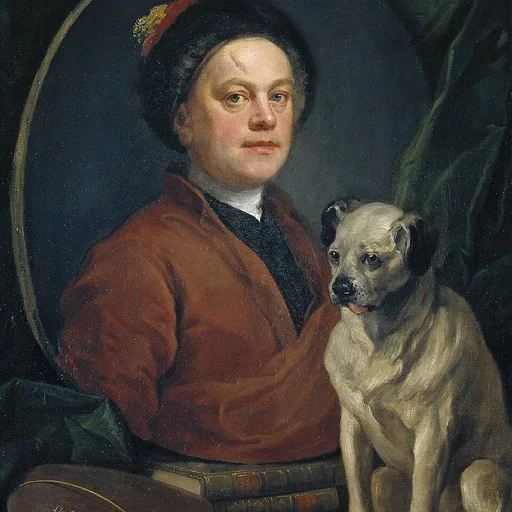
William Hogarth (; 10 November 1697 – 26 October 1764) was an English painter, engraver, satirist, cartoonist and writer.

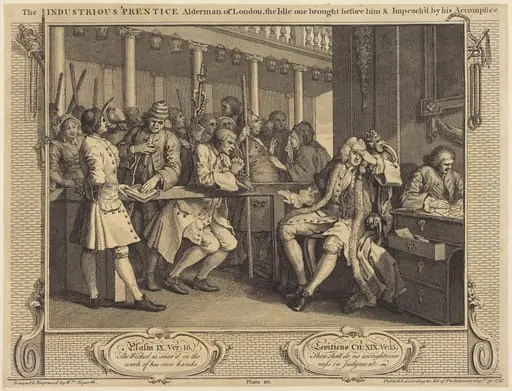 The Industrious 'Prentice Alderman of London,the Idle one brought before him & impea ch'd by his Accomplice
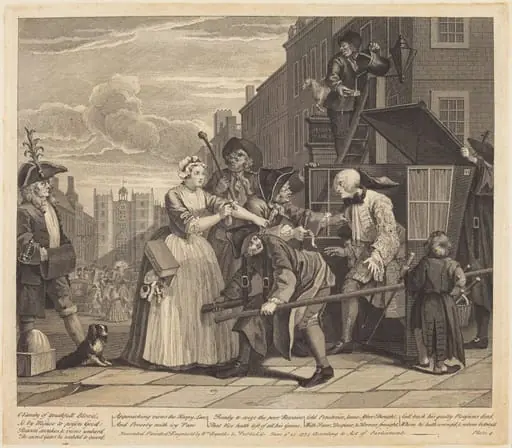 A Rake's Progress: pl.4
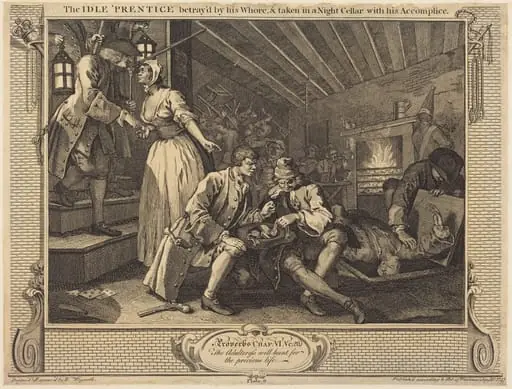 The Idle 'Prentice betray'd by his Whore, & taken in a Night Cellar with his Accomplice
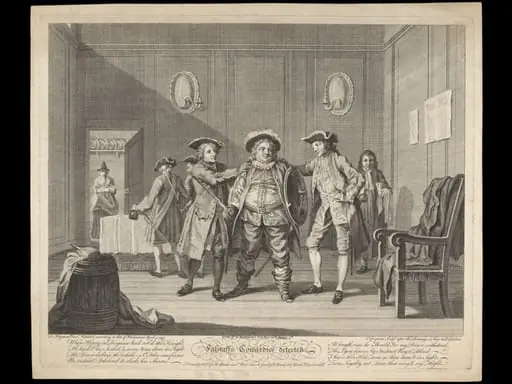 H Beard Print Collection
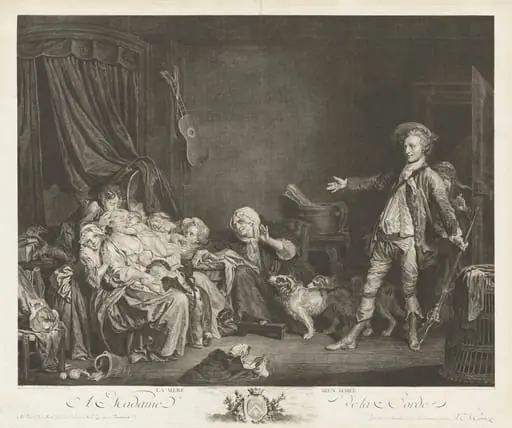 La mére bienaimée (The Well-Loved Mother)
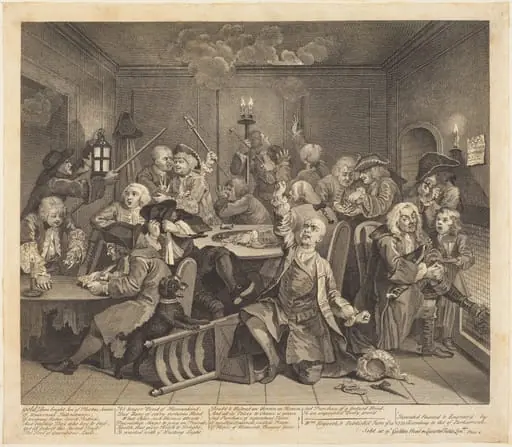 A Rake's Progress: pl.6
 The Laughing Audience
 Beer Street