Artwork
The Idle 'Prentice at Play in the Church Yard, during Divine Service
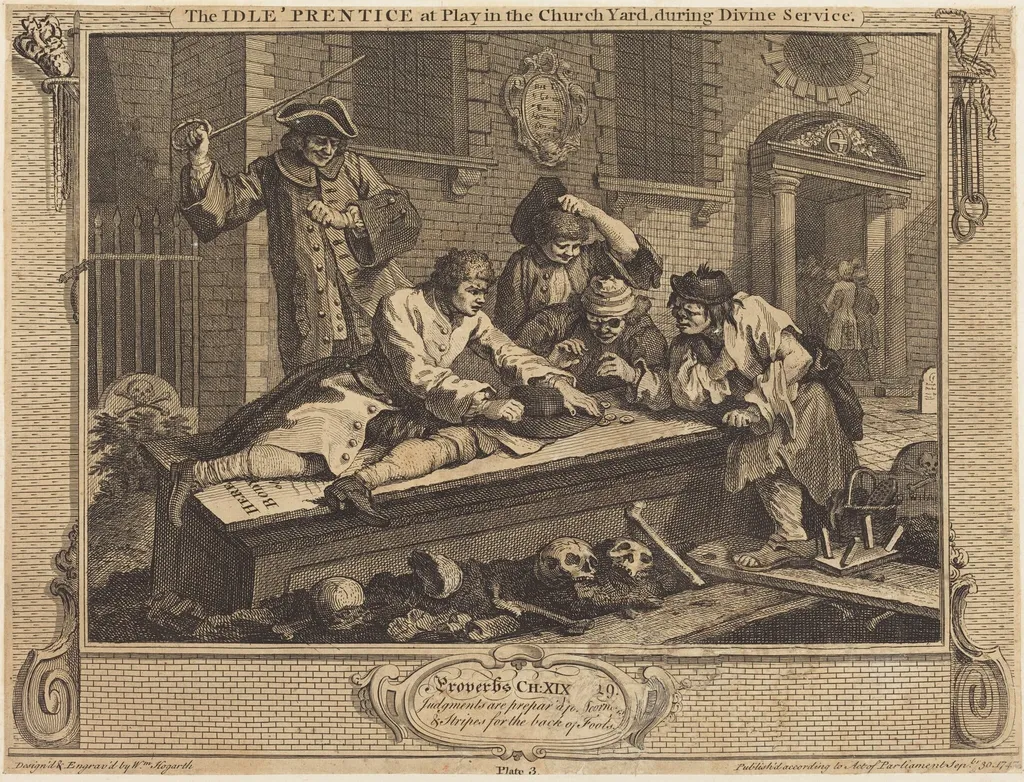
The Idle 'Prentice at Play in the Church Yard, during Divine Service is an ink print by the Baroque artist William Hogarth. It dates from 1747 and is held in the collection of the National Gallery of Art.
About this work
Overview
Created in 1747, William Hogarth’s print *The Idle 'Prentice at Play in the Church Yard, during Divine Service* combines etching and engraving to form a single black‑and‑white image. It belongs to a larger group of works in which the artist lampoons moral laxity and social folly. The scene is set inside a church, where a group of apprentices is shown neglecting worship in favor of idle amusement.
Subject & Meaning
Around a cluttered table lie scattered books, a hat and other objects, while several figures slump or sleep, suggesting a collective dereliction of duty.
The composition centers on a young apprentice who, rather than attending the service, engages in mischief amid the sanctuary. Around a cluttered table lie scattered books, a hat and other objects, while several figures slump or sleep, suggesting a collective dereliction of duty. A lone figure outside the doorway, broom in hand, watches the disorder, underscoring the critique of laziness and disrespect for religious obligations.
Technique & Style
Hogarth employed a combination of etching and engraving, allowing fine line work alongside deeper, bolder strokes. The contrast between sharply rendered details—such as the texture of the stone pillars—and softer, more atmospheric areas creates a sense of controlled chaos. The print’s monochrome palette emphasizes the starkness of the scene and reinforces the satirical tone through visual exaggeration.
History & Provenance
The work emerged during Hogarth’s prolific middle period, when he was establishing a reputation for social commentary through narrative prints. It was issued as part of a series that mocked various vices, aligning with his broader projects like *A Harlot’s Progress* and *Marriage A‑la‑Mode*. Original impressions were likely sold as individual prints, circulating among the growing market for affordable, morally instructive art in eighteenth‑century England.
Context
Hogarth’s background as the son of a modest London family informed his focus on the everyday behaviors of the lower and middle classes. By portraying apprentices—figures representative of the city’s labor force—he highlighted a specific social concern: the neglect of religious and civic responsibilities among the working youth. The church setting amplifies the moral contrast between sacred space and profane behavior.
Artist & collection
Artist
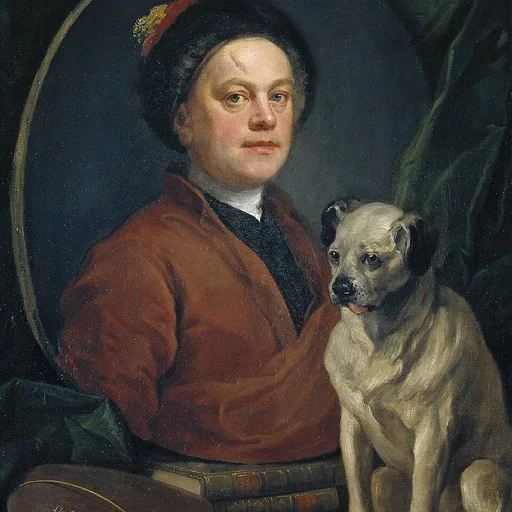
William Hogarth (; 10 November 1697 – 26 October 1764) was an English painter, engraver, satirist, cartoonist and writer.

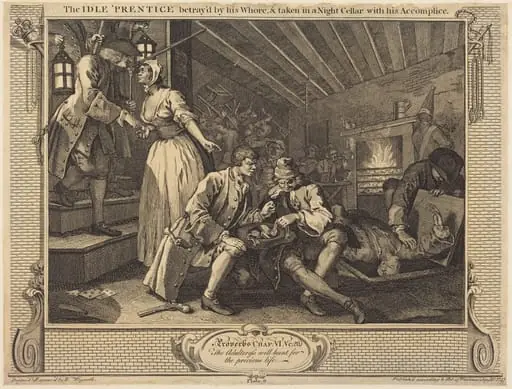 The Idle 'Prentice betray'd by his Whore, & taken in a Night Cellar with his Accomplice
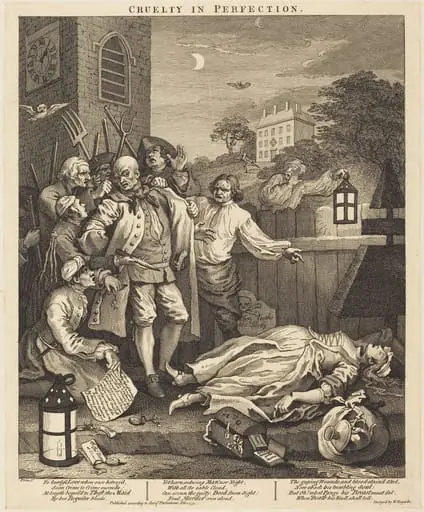 Cruelty in Perfection
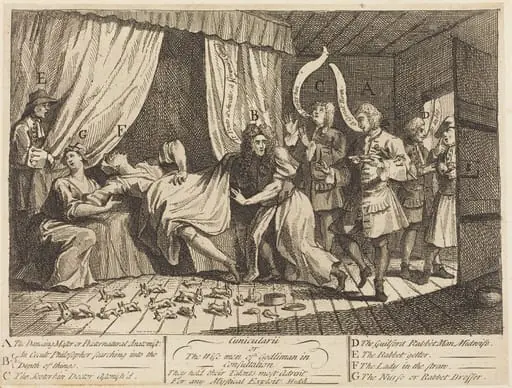 Cunicularii, or The Wise Men of Godliman in Consultation
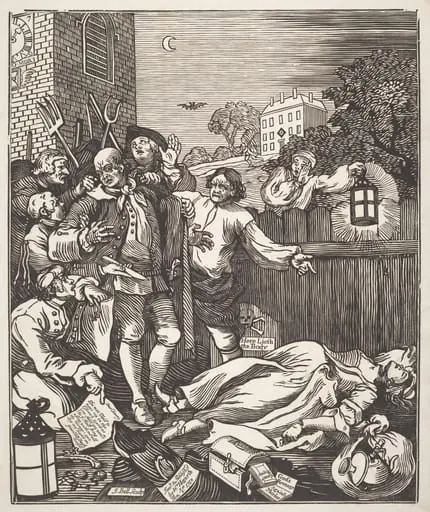 Cruelty in Perfection
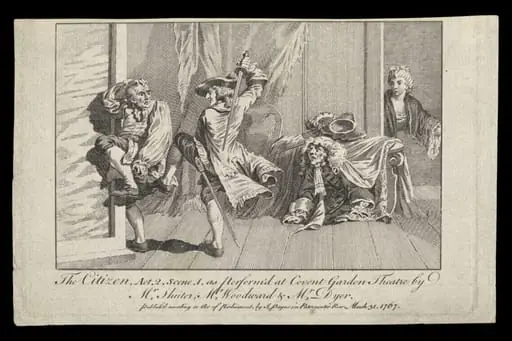 Print Collection
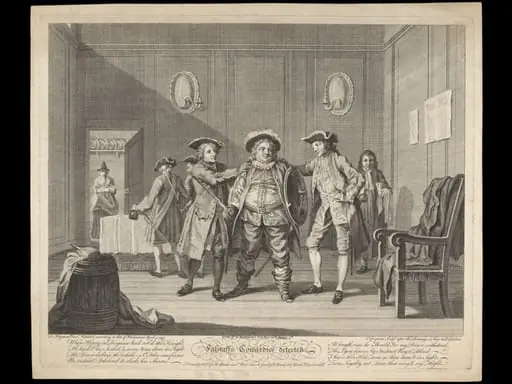 H Beard Print Collection
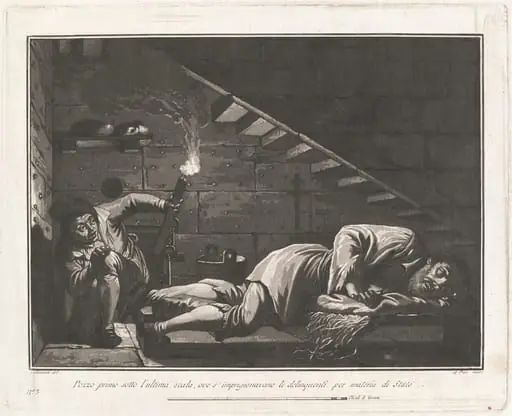 The "Well," for Violators of State Law
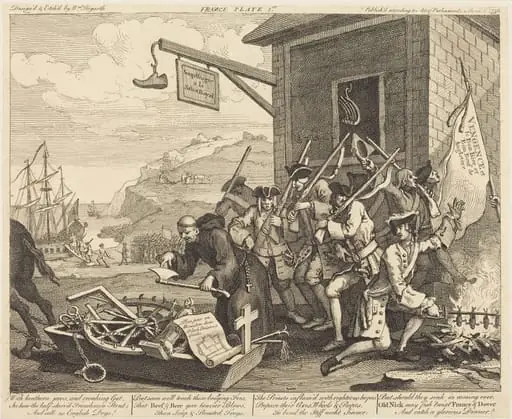 France
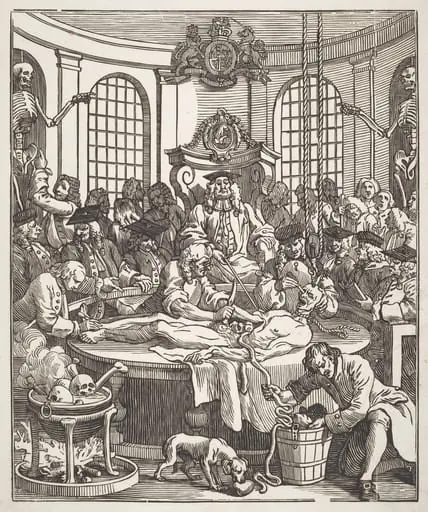 The Reward of Cruelty
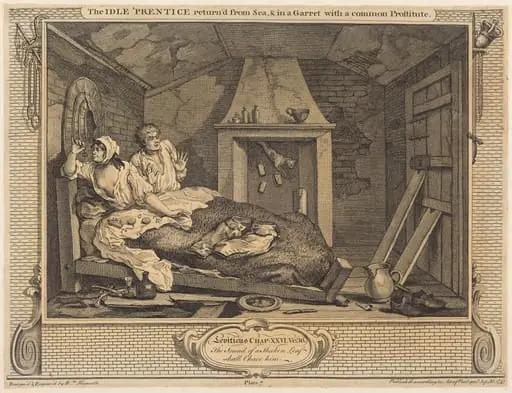 The Idle 'Prentice return'd from Sea & in a Garret with a common Prostitute