Artwork
The Idle 'Prentice return'd from Sea & in a Garret with a common Prostitute
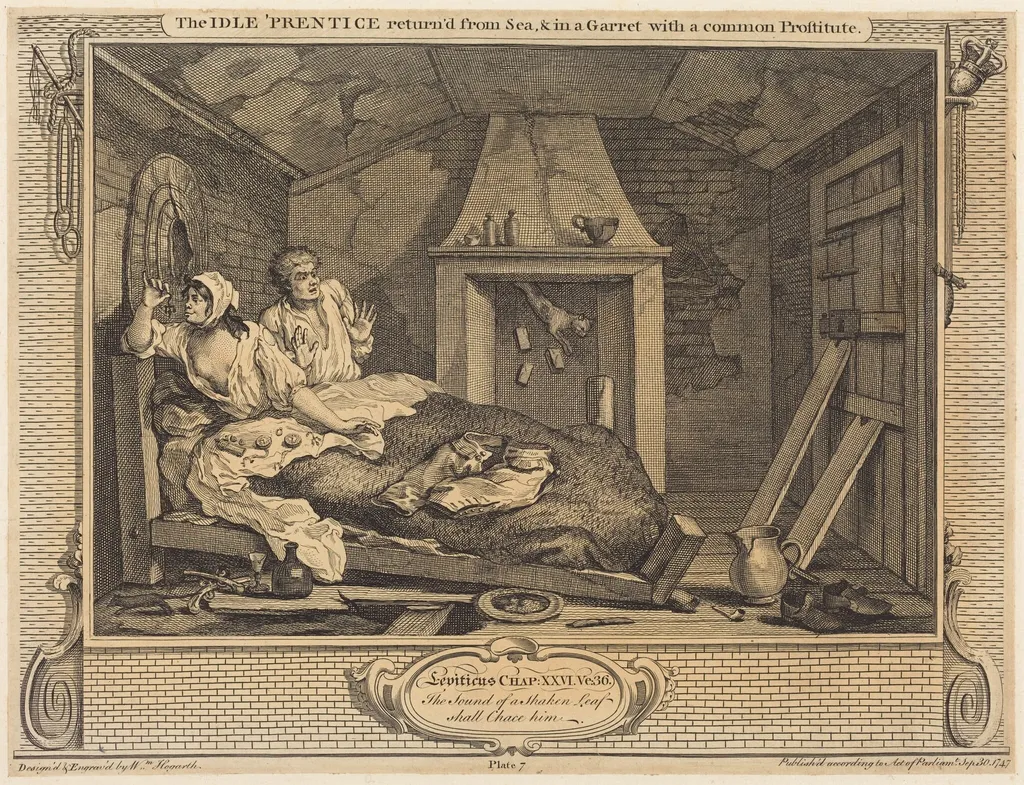
The Idle 'Prentice return'd from Sea & in a Garret with a common Prostitute is an ink print by the Baroque artist William Hogarth. It dates from 1747 and is held in the collection of the National Gallery of Art.
About this work
Overview
Hogarth used sequential imagery to trace moral decline, a technique that distinguished his work from isolated genre scenes of the period.
Created in 1747, this etching and engraving is the eighth and final plate in William Hogarth’s series *A Rake’s Progress*. It portrays the downfall of Tom Rakewell, a young man who squandered his inheritance through reckless behavior. The scene captures his final state: destitute, physically worn, and confined in a squalid attic. Hogarth used sequential imagery to trace moral decline, a technique that distinguished his work from isolated genre scenes of the period.
Subject & Meaning
The figure of Tom Rakewell, once a privileged youth, now lies exhausted beside a prostitute in a cluttered garret, his sailor’s uniform discarded. The presence of a Bible verse at the base of the print underscores the moral condemnation of his path. The broken chair, scattered belongings, and barred window suggest entrapment and spiritual ruin. Hogarth frames his decline not as misfortune but as consequence, linking personal vice to societal decay.
Technique & Style
Hogarth employed fine-line etching and engraving to render intricate textures—the frayed fabric of clothing, the rough plaster of walls, the glint of metal objects. His precise linework conveys both physical detail and emotional weight. The composition is deliberately cluttered, guiding the viewer’s eye through the chaos of the room. The dim, slanted light from the barred window enhances the gloom, reinforcing the narrative’s somber tone.
History & Provenance
The print was issued as part of a series published in 1747, following the success of *A Harlot’s Progress*. Hogarth retained control over its reproduction, selling subscriptions to ensure quality and prevent piracy. Original impressions were distributed to subscribers and later collected by institutions and private patrons. The work’s moral clarity and technical precision ensured its continued circulation throughout the 18th century.
Context
In mid-18th-century London, rapid urbanization and shifting class structures fueled anxieties about moral corruption. Hogarth’s series responded to these concerns by dramatizing the consequences of idleness and excess. His prints were accessible to the middle class, functioning as both entertainment and ethical instruction. The inclusion of biblical text aligned his work with contemporary sermons that warned against worldly indulgence.
Legacy
Hogarth’s narrative sequences established a precedent for visual storytelling in print media. His blend of realism and moral critique influenced later satirists, including Gillray and Rowlandson. The structure of *A Rake’s Progress*—a linear descent into ruin—became a model for sequential art. Though rooted in its time, the work’s examination of personal responsibility and societal neglect retains resonance in later visual culture.
Artist & collection
Artist
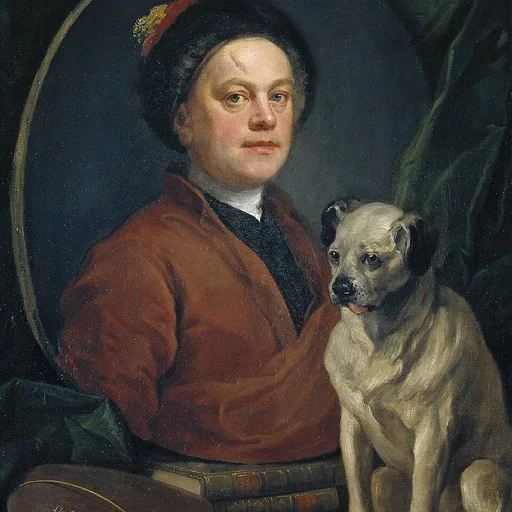
William Hogarth (; 10 November 1697 – 26 October 1764) was an English painter, engraver, satirist, cartoonist and writer.

 The Distressed Poet
 Ma chemise brule
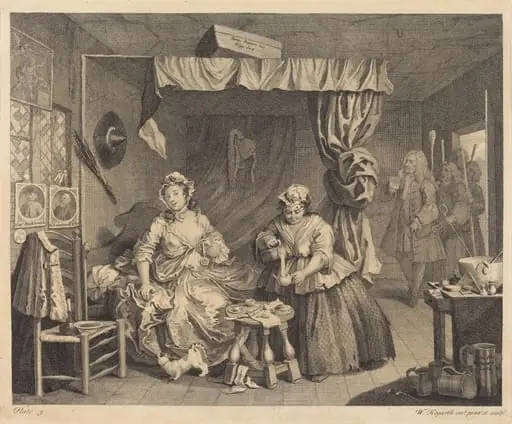 A Harlot's Progress: pl.3
 Le savetier
 Le savetier
 Le savetier
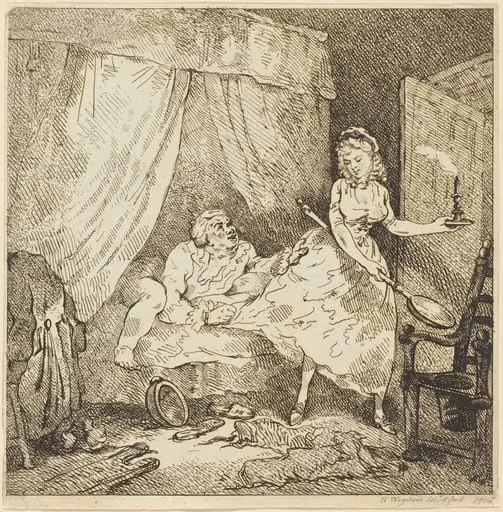 A Bed-warmer
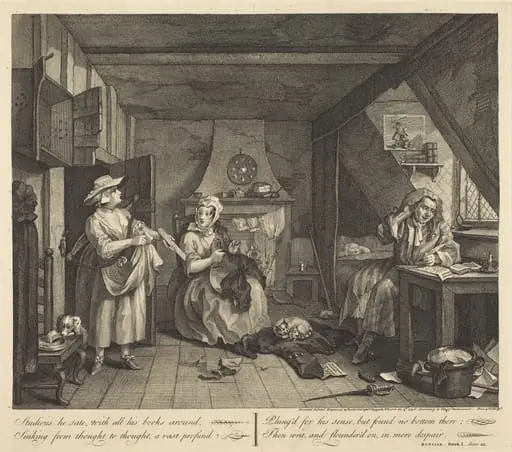
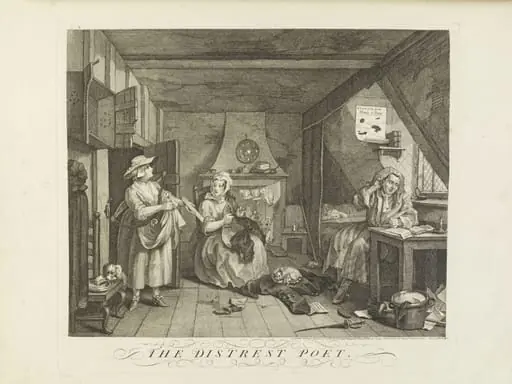 The Distressed Poet
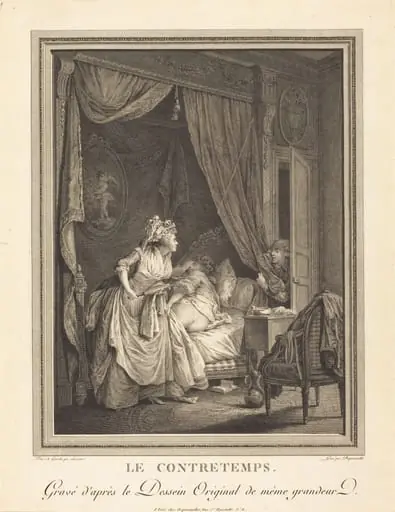 Le contretemps
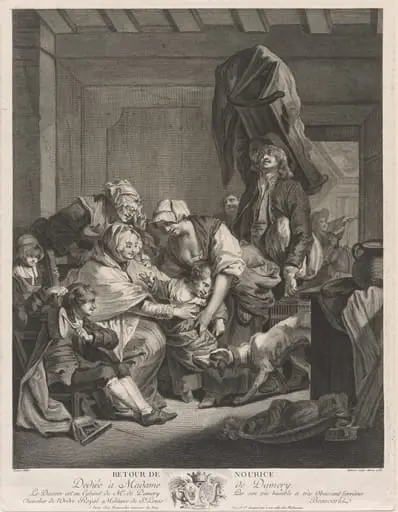 Retour de Nour(r)ice (Return from the Wet Nurse)
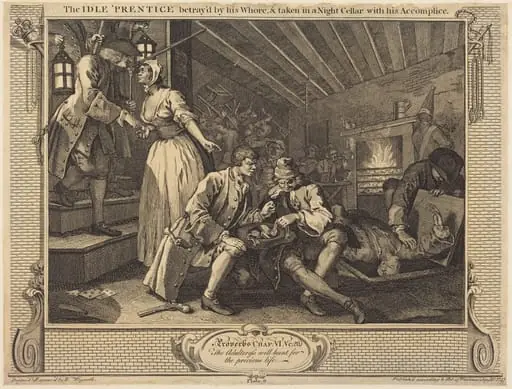 The Idle 'Prentice betray'd by his Whore, & taken in a Night Cellar with his Accomplice
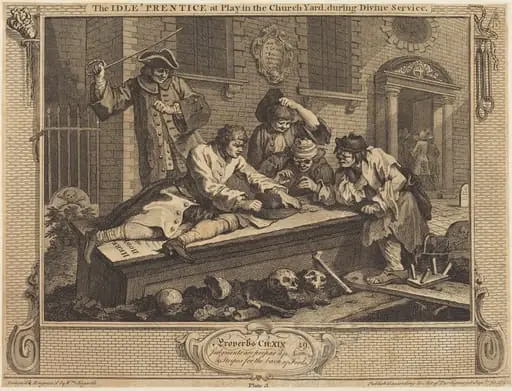 The Idle 'Prentice at Play in the Church Yard, during Divine Service