Artwork
『名物革仝印籠仝根付』 印籠根付『春雨集』 摺物帖|“Inrō and Netsuke,” from the series Famous Leathers, Inrō, and Netsuke (Meibutsu kawa, inrō, netsuke)From the Spring Rain Collection (Harusame shū), vol. 2
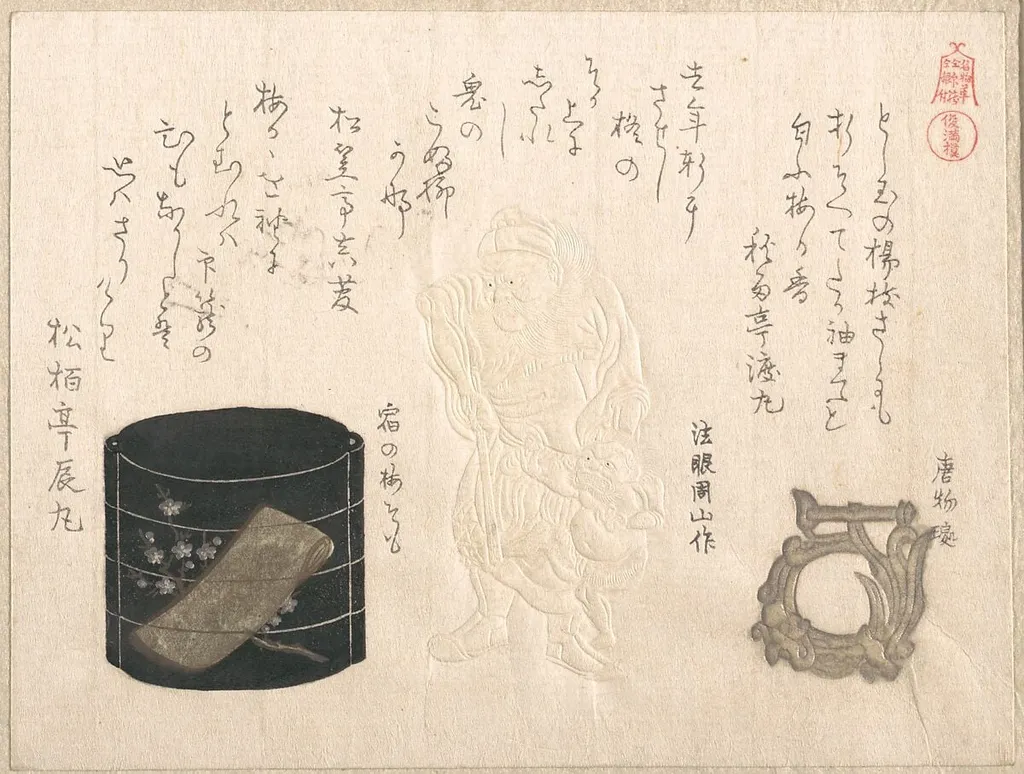
『名物革仝印籠仝根付』 印籠根付『春雨集』 摺物帖|“Inrō and Netsuke,” from the series Famous Leathers, Inrō, and Netsuke (Meibutsu kawa, inrō, netsuke)From the Spring Rain Collection (Harusame shū), vol. 2 is an ink print by the Romanticist artist Kubo Shunman. It dates from 1814 and is held in the collection of the Metropolitan Museum of Art.
About this work
Overview
Created by Kubo Shunman, it depicts three traditional Japanese items: an inrō, a netsuke, and a leather case.
This surimono woodblock print, dated around 1814, is part of the second volume of the Spring Rain Collection, a series dedicated to refined personal accessories. Created by Kubo Shunman, it depicts three traditional Japanese items: an inrō, a netsuke, and a leather case. Rendered in ink and subtle color, the composition emphasizes delicate detail and restrained elegance, typical of private-printed works for connoisseurs rather than mass audiences.
Subject & Meaning
The print presents three objects associated with the kimono sash: a lacquered inrō with a carved fish and floral motif, a netsuke depicting a guardian figure holding an infant, and a ring-shaped holder with a twisted clasp. The guardian figure likely symbolizes protection or familial continuity, common themes in Edo-period iconography. The inscriptions surrounding the image offer poetic or descriptive text, reinforcing the cultural significance of these everyday items as expressions of taste and identity.
Technique & Style
Executed in the surimono style, the print uses fine linework and layered washes to suggest texture and depth without heavy color. Cross-hatching defines the carved surfaces of the inrō and the folds of the netsuke’s garment, while the background remains largely uncolored to focus attention on the objects. The composition is tightly framed, reflecting the intimate scale and refined aesthetic favored in private commissions, where craftsmanship and subtlety outweigh dramatic effect.
History & Provenance
Produced circa 1814, this print was likely commissioned by a collector or literary circle associated with the Spring Rain Collection, a series of privately printed works celebrating art and poetry. It entered the collection of The Metropolitan Museum of Art through documented acquisition, preserving its original condition and inscriptions. As a surimono, it was never mass-produced, making it a rare artifact of Edo-period elite culture and printmaking innovation.
Context
During the early 19th century, inrō and netsuke were not merely functional but emblematic of personal refinement. Their design reflected the owner’s aesthetic sensibilities and social standing. The Spring Rain Collection emerged from literary circles that blended poetry, calligraphy, and visual art, often celebrating objects imbued with cultural memory. This print situates everyday items within a broader tradition of connoisseurship, where the mundane became a vessel for artistic and poetic expression.
Legacy
As a surviving example of surimono, this print contributes to the understanding of Edo-period print culture beyond commercial ukiyo-e. It illustrates how private commissions allowed artists like Kubo Shunman to explore nuanced themes and techniques. Today, it remains a key reference for scholars studying the intersection of material culture, poetry, and print in early 19th-century Japan, preserving the quiet dignity of objects once carried daily by the literate elite.
Artist & collection


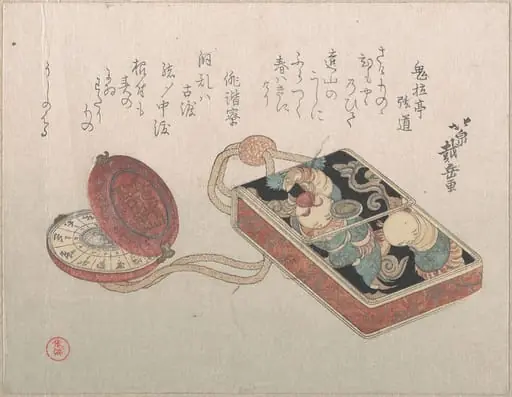 胴乱印籠と懐中時計根付『春雨集』 摺物帖|Dōran (Square Leather Box Used as an Inrō) with a Watch as a NetsukeFrom the Spring Rain Collection (Harusame shū), vol. 3
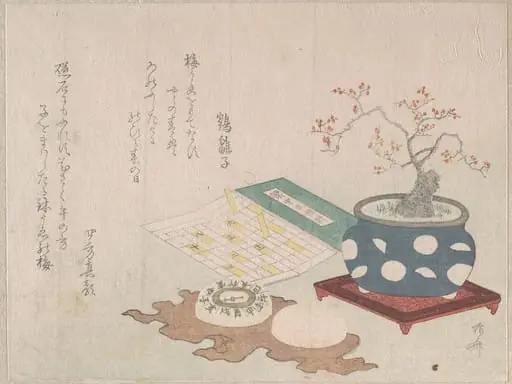 鉢梅、懐中日時計、羅針盤|Bonsai Plum, Compass, and Pocket Sundial with Design of Calendar, from Spring Rain Surimono Album (Harusame surimono-jō, vol. 3)
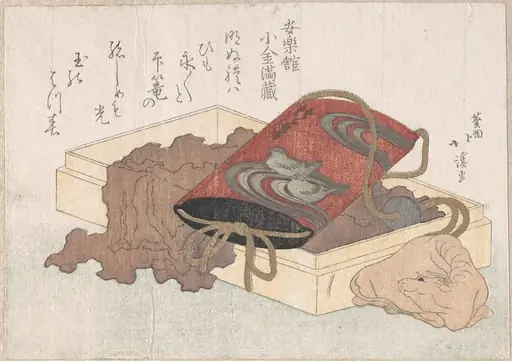 印籠と牛根付『春雨集』 摺物帖|Lacquer Inrō with Waterbirds and Ox-shaped Netsuke in a BoxFrom the Spring Rain Collection (Harusame shū), vol. 3
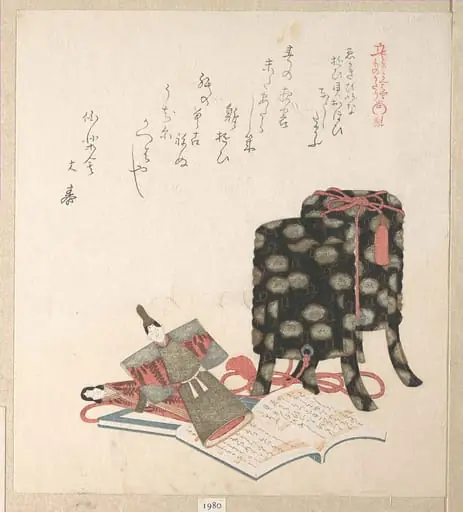
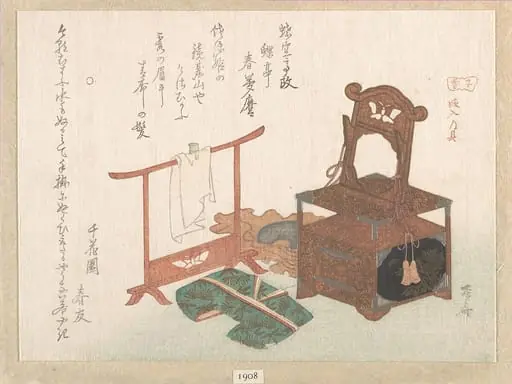 柳々居辰斎画 子春 嫁入の具『春雨集』 摺物帖|Accoutrements for a Bride, from the Spring Rain Collection (Harusame shū), vol. 1
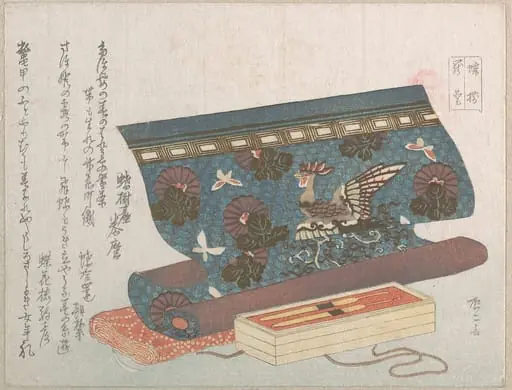 『蝶揃・寵愛』帯と簪|Roll of Cloth for an Obi and Tortoise-shell Hair Ornaments (“Presents for One’s Beloved”), from the Butterfly Series, from Spring Rain Surimono Album (Harusame surimono-jō, vol. 3)
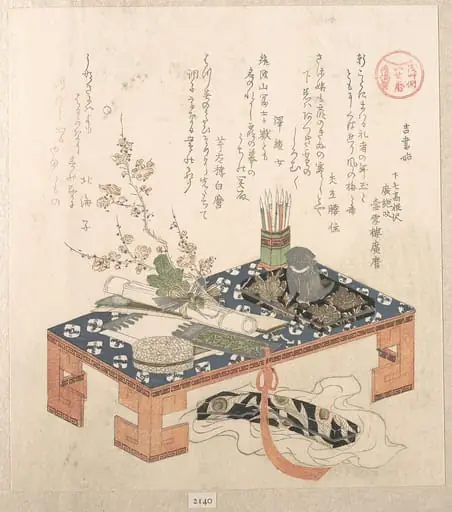 『浅草側いせ暦』 文房具と梅熨斗『春雨集』 摺物帖 |“Desk with Writing Set and Plum Flowers,” from the series Ise Calendars for the Asakusa Group (Asakusa-gawa Ise goyomi)From the Spring Rain Collection (Harusame shū), vol. 2
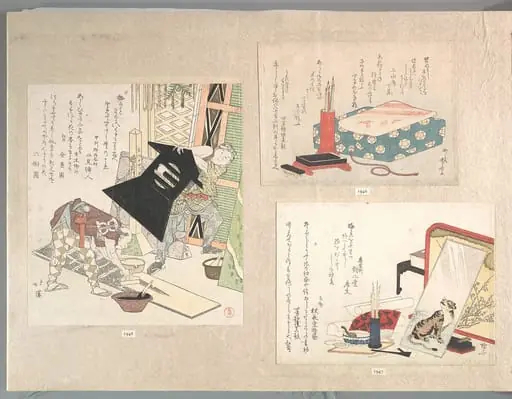 衝立、虎図、文具一式|Desk Screen, Writing Set, Painting of Tiger, and Mounting Paraphernalia, from Spring Rain Surimono Album (Harusame surimono-jō, vol. 1)
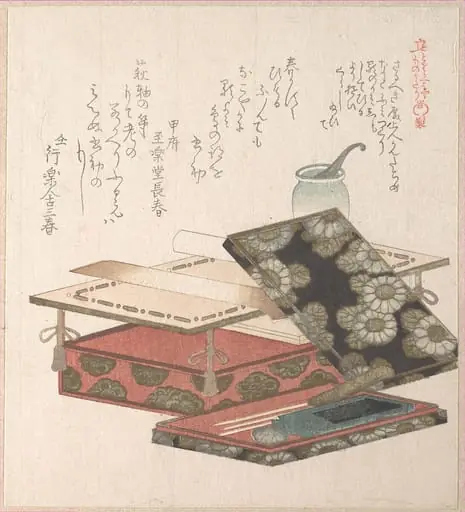
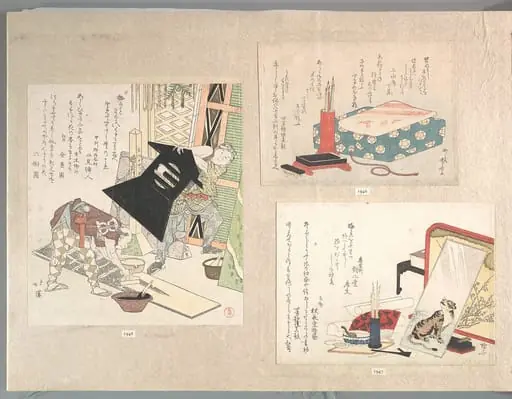 文具一式|Writing Set and Poem Card Box (Shikishi-bako), from Spring Rain Surimono Album (Harusame surimono-jō), vol. 1